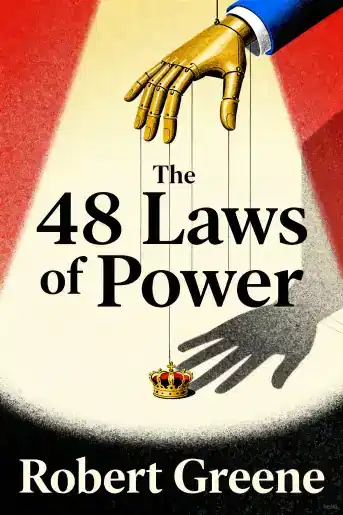
The 48 Laws of Power: Player or Pawn?
Explore the amoral and controversial strategies of Robert Greene’s 'mega cult classic.' This episode deconstructs ruthless historical lessons to help you navigate modern power dynamics without being crushed.

Meilleure citation de The 48 Laws of Power: Player or Pawn?
The central tension is that Greene argues you can’t actually opt out of the power game—if you try to be 'good' all the time, he says you’ll just be crushed by those who aren't.
Generated by Freedee_0438C457
48 LAWS OF POWER

Foire aux questions
According to the script, Law 1 suggests that being too excellent can trigger deep insecurities in those above you. People in power need to feel comfortably superior to their subordinates. If you appear too brilliant or ambitious, your manager may perceive you as a threat to their position or ego rather than a high performer. This can lead to you being sidelined or buried. The strategic move is to frame your successes as an extension of your master’s guidance so that your brilliance makes them look good rather than making them feel replaceable.
While Greene’s Law 4 advises that saying less than necessary makes you appear more profound and powerful, modern research suggests a "babble hypothesis of leadership." This theory posits that in group settings, the person who speaks the most is often perceived as the leader, regardless of the quality of their input. The script suggests a calibration between these two ideas: you might need to "babble" to gain visibility and status early in your career, but use strategic silence to maintain mystique and intimidation once you have reached a position of authority.
The script highlights Law 2, which warns against putting too much trust in friends because they are easily aroused to envy and can quickly become ungrateful. Greene suggests that a former enemy is often more loyal because they have more to prove to you. However, the podcast also notes a modern counter-argument: evolutionary biology suggests that "proven friends" with a history of cooperation are often more reliable than strangers. The key is to avoid isolation while remaining vigilant about the envy that close proximity can create.
Formlessness, or Law 48, is described in the script as the ultimate tool for adaptation. In a modern context, this is often referred to as "pivoting." Because market conditions and social dynamics are constantly changing, staying rigid or relying on a single lasting order makes a person or company vulnerable. By being fluid like water and not betting on stability, you can adjust to new information and market signals quickly, ensuring that your opponents or competitors cannot find a fixed target to attack.
Cree par des anciens de Columbia University a San Francisco
"Instead of endless scrolling, I just hit play on BeFreed. It saves me so much time."


"I never knew where to start with nonfiction—BeFreed’s book lists turned into podcasts gave me a clear path."


"Perfect balance between learning and entertainment. Finished ‘Thinking, Fast and Slow’ on my commute this week."
"Crazy how much I learned while walking the dog. BeFreed = small habits → big gains."
"Reading used to feel like a chore. Now it’s just part of my lifestyle."

"Feels effortless compared to reading. I’ve finished 6 books this month already."
"BeFreed turned my guilty doomscrolling into something that feels productive and inspiring."

"BeFreed turned my commute into learning time. 20-min podcasts are perfect for finishing books I never had time for."
"BeFreed replaced my podcast queue. Imagine Spotify for books — that’s it. 🙌"

"It is great for me to learn something from the book without reading it."
"The themed book list podcasts help me connect ideas across authors—like a guided audio journey."
"Makes me feel smarter every time before going to work"
Cree par des anciens de Columbia University a San Francisco
"Instead of endless scrolling, I just hit play on BeFreed. It saves me so much time."
"I never knew where to start with nonfiction—BeFreed’s book lists turned into podcasts gave me a clear path."
"Perfect balance between learning and entertainment. Finished ‘Thinking, Fast and Slow’ on my commute this week."
"Crazy how much I learned while walking the dog. BeFreed = small habits → big gains."
"Reading used to feel like a chore. Now it’s just part of my lifestyle."
"Feels effortless compared to reading. I’ve finished 6 books this month already."
"BeFreed turned my guilty doomscrolling into something that feels productive and inspiring."
"BeFreed turned my commute into learning time. 20-min podcasts are perfect for finishing books I never had time for."
"BeFreed replaced my podcast queue. Imagine Spotify for books — that’s it. 🙌"
"It is great for me to learn something from the book without reading it."
"The themed book list podcasts help me connect ideas across authors—like a guided audio journey."
"Makes me feel smarter every time before going to work"
"Instead of endless scrolling, I just hit play on BeFreed. It saves me so much time."
"I never knew where to start with nonfiction—BeFreed’s book lists turned into podcasts gave me a clear path."
"Perfect balance between learning and entertainment. Finished ‘Thinking, Fast and Slow’ on my commute this week."
"Crazy how much I learned while walking the dog. BeFreed = small habits → big gains."
"Reading used to feel like a chore. Now it’s just part of my lifestyle."
"Feels effortless compared to reading. I’ve finished 6 books this month already."
"BeFreed turned my guilty doomscrolling into something that feels productive and inspiring."
"BeFreed turned my commute into learning time. 20-min podcasts are perfect for finishing books I never had time for."
"BeFreed replaced my podcast queue. Imagine Spotify for books — that’s it. 🙌"
"It is great for me to learn something from the book without reading it."
"The themed book list podcasts help me connect ideas across authors—like a guided audio journey."
"Makes me feel smarter every time before going to work"
"Instead of endless scrolling, I just hit play on BeFreed. It saves me so much time."
"I never knew where to start with nonfiction—BeFreed’s book lists turned into podcasts gave me a clear path."
"Perfect balance between learning and entertainment. Finished ‘Thinking, Fast and Slow’ on my commute this week."
"Crazy how much I learned while walking the dog. BeFreed = small habits → big gains."
"Reading used to feel like a chore. Now it’s just part of my lifestyle."
"Feels effortless compared to reading. I’ve finished 6 books this month already."
"BeFreed turned my guilty doomscrolling into something that feels productive and inspiring."
"BeFreed turned my commute into learning time. 20-min podcasts are perfect for finishing books I never had time for."
"BeFreed replaced my podcast queue. Imagine Spotify for books — that’s it. 🙌"
"It is great for me to learn something from the book without reading it."
"The themed book list podcasts help me connect ideas across authors—like a guided audio journey."
"Makes me feel smarter every time before going to work"