Tax reform and the 2025 fiscal Rubicon
Is the 2025 tax landscape a national emergency or a power grab? Explore the SAVE Act and fiscal policy through a surreal lens of history and power.
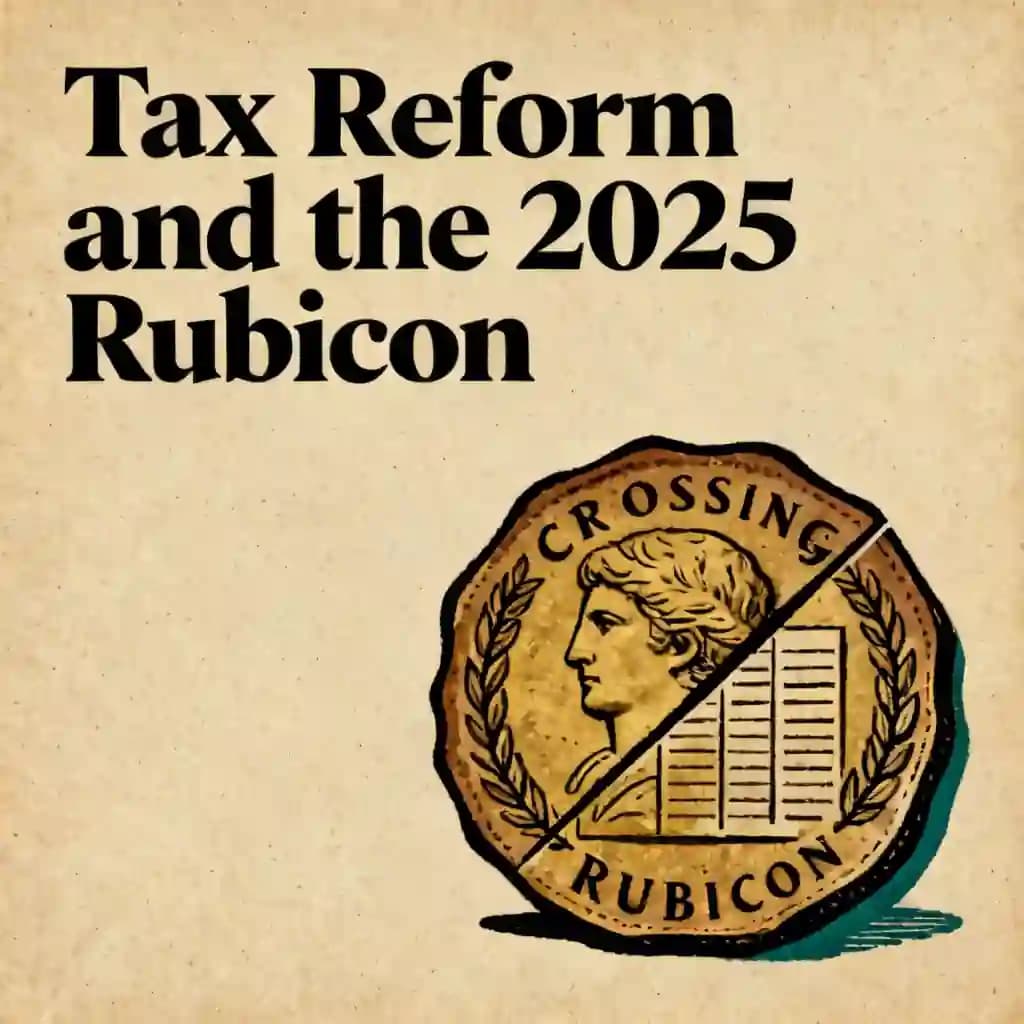
Meilleure citation de Tax reform and the 2025 fiscal Rubicon
Republics fail not because would-be Caesars seize power, but because cowards give it to them under the false pretense of an emergency.
Generated by John Aydin
Henry Truman, Kanye, and Caecilius from Cambridge Latin discussing caesar 's death and 2025 tax legislation of america

Foire aux questions
Caesarism refers to a shift in governance where a leader’s personal vision and executive will override historical legal guardrails and institutional checks and balances. The script illustrates this through the unilateral demolition of the White House East Wing to build a private ballroom and the proposal of a one-dollar coin featuring the living president’s likeness. In fiscal terms, it manifests as "personalist finance," where the tax code and tariffs are used arbitrarily to reward political allies or punish enemies, rather than serving as a neutral system for generating state revenue.
This legislation represents a massive shift toward targeted tax relief and executive control over the economy. Key provisions include the "no tax on tips" and "no tax on overtime" policies, which the script compares to ancient Roman gifts used to maintain popularity with the public. It also revives 100 percent bonus depreciation for businesses while repealing many green energy credits in favor of "America First" energy policies. Furthermore, the bill utilizes the budget reconciliation process to bypass the traditional sixty-vote Senate requirement, allowing for a sweeping overhaul of the economic landscape with only a simple majority.
Because the United States utilizes a citizen-based taxation system, any U.S. citizen living abroad—including the Chicago-born Pope Leo XIV—is required to report worldwide income to the IRS. This creates a complex legal situation where the head of the Catholic Church must navigate Foreign Bank Account Reporting (FBAR) and the Foreign Account Tax Compliance Act (FATCA). Under these rules, the Vatican Bank is contractually obligated to report the Pope’s financial activities to American authorities, highlighting the global reach and "fundamental absurdity" of U.S. tax jurisdiction.
The Safeguard American Voter Eligibility (SAVE) Act is a legislative push to require proof of citizenship for voting and to restrict mail-in ballots. The script describes this as a "dual strategy" alongside tax reform; while the tax code is used to create "fiscal islands" of support through targeted cuts, the SAVE Act seeks to reshape the electorate by tightening voting requirements. Critics argue this mirrors historical "Redeemer" tactics or the actions of Roman dictators like Sulla, who rewrote constitutional rules to ensure their specific faction remained in power indefinitely.
Taxpayers are advised to remain flexible and avoid making sudden financial changes based solely on campaign rhetoric or social media posts until official IRS guidance is released. For those with capital gains, the script suggests exploring new rural Opportunity Zones which offer a thirty percent step-up in basis, though these come with stricter surveillance and disclosure requirements. Business owners are encouraged to utilize the restored bonus depreciation for equipment purchases but must also account for the expiration of clean energy incentives and the temporary nature of the increased SALT deduction cap.
Cree par des anciens de Columbia University a San Francisco
"Instead of endless scrolling, I just hit play on BeFreed. It saves me so much time."


"I never knew where to start with nonfiction—BeFreed’s book lists turned into podcasts gave me a clear path."


"Perfect balance between learning and entertainment. Finished ‘Thinking, Fast and Slow’ on my commute this week."
"Crazy how much I learned while walking the dog. BeFreed = small habits → big gains."
"Reading used to feel like a chore. Now it’s just part of my lifestyle."

"Feels effortless compared to reading. I’ve finished 6 books this month already."
"BeFreed turned my guilty doomscrolling into something that feels productive and inspiring."

"BeFreed turned my commute into learning time. 20-min podcasts are perfect for finishing books I never had time for."
"BeFreed replaced my podcast queue. Imagine Spotify for books — that’s it. 🙌"

"It is great for me to learn something from the book without reading it."
"The themed book list podcasts help me connect ideas across authors—like a guided audio journey."
"Makes me feel smarter every time before going to work"
 Ask ChatGPT
 Ask Claude
Cree par des anciens de Columbia University a San Francisco
"Instead of endless scrolling, I just hit play on BeFreed. It saves me so much time."
"I never knew where to start with nonfiction—BeFreed’s book lists turned into podcasts gave me a clear path."
"Perfect balance between learning and entertainment. Finished ‘Thinking, Fast and Slow’ on my commute this week."
"Crazy how much I learned while walking the dog. BeFreed = small habits → big gains."
"Reading used to feel like a chore. Now it’s just part of my lifestyle."
"Feels effortless compared to reading. I’ve finished 6 books this month already."
"BeFreed turned my guilty doomscrolling into something that feels productive and inspiring."
"BeFreed turned my commute into learning time. 20-min podcasts are perfect for finishing books I never had time for."
"BeFreed replaced my podcast queue. Imagine Spotify for books — that’s it. 🙌"
"It is great for me to learn something from the book without reading it."
"The themed book list podcasts help me connect ideas across authors—like a guided audio journey."
"Makes me feel smarter every time before going to work"
"Instead of endless scrolling, I just hit play on BeFreed. It saves me so much time."
"I never knew where to start with nonfiction—BeFreed’s book lists turned into podcasts gave me a clear path."
"Perfect balance between learning and entertainment. Finished ‘Thinking, Fast and Slow’ on my commute this week."
"Crazy how much I learned while walking the dog. BeFreed = small habits → big gains."
"Reading used to feel like a chore. Now it’s just part of my lifestyle."
"Feels effortless compared to reading. I’ve finished 6 books this month already."
"BeFreed turned my guilty doomscrolling into something that feels productive and inspiring."
"BeFreed turned my commute into learning time. 20-min podcasts are perfect for finishing books I never had time for."
"BeFreed replaced my podcast queue. Imagine Spotify for books — that’s it. 🙌"
"It is great for me to learn something from the book without reading it."
"The themed book list podcasts help me connect ideas across authors—like a guided audio journey."
"Makes me feel smarter every time before going to work"
"Instead of endless scrolling, I just hit play on BeFreed. It saves me so much time."
"I never knew where to start with nonfiction—BeFreed’s book lists turned into podcasts gave me a clear path."
"Perfect balance between learning and entertainment. Finished ‘Thinking, Fast and Slow’ on my commute this week."
"Crazy how much I learned while walking the dog. BeFreed = small habits → big gains."
"Reading used to feel like a chore. Now it’s just part of my lifestyle."
"Feels effortless compared to reading. I’ve finished 6 books this month already."
"BeFreed turned my guilty doomscrolling into something that feels productive and inspiring."
"BeFreed turned my commute into learning time. 20-min podcasts are perfect for finishing books I never had time for."
"BeFreed replaced my podcast queue. Imagine Spotify for books — that’s it. 🙌"
"It is great for me to learn something from the book without reading it."
"The themed book list podcasts help me connect ideas across authors—like a guided audio journey."
"Makes me feel smarter every time before going to work"