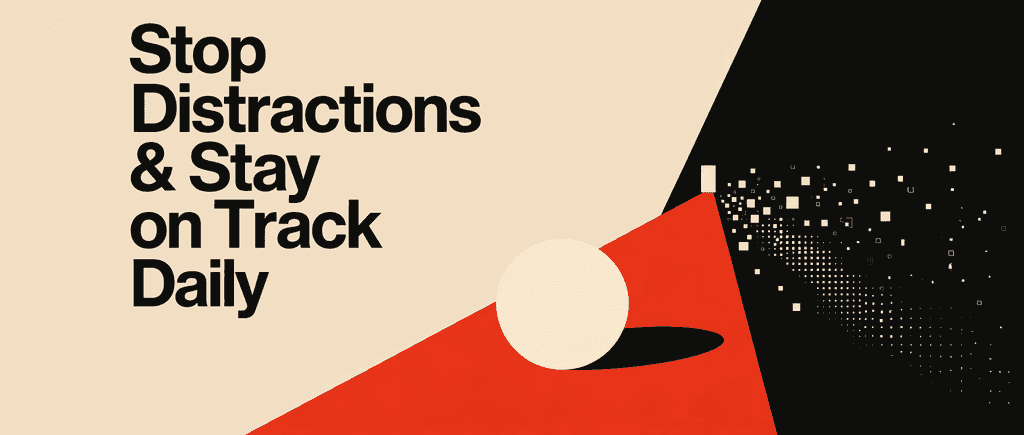
Stop doomscrolling to reclaim your focus and energy
Stuck in a digital threat loop? Learn why your brain hunts for bad news and how to break the cycle of passive scrolling to find real productivity.

Meilleure citation de Stop doomscrolling to reclaim your focus and energy
Reclaiming your attention isn't a retreat from reality; it’s actually a way to engage with reality more effectively. When you move from passive scrolling to intentional living, you regain the sense of agency that the digital threat loop steals from you.
Generated by Meg
benefits of stopping doom scrolling and how to be productive in life

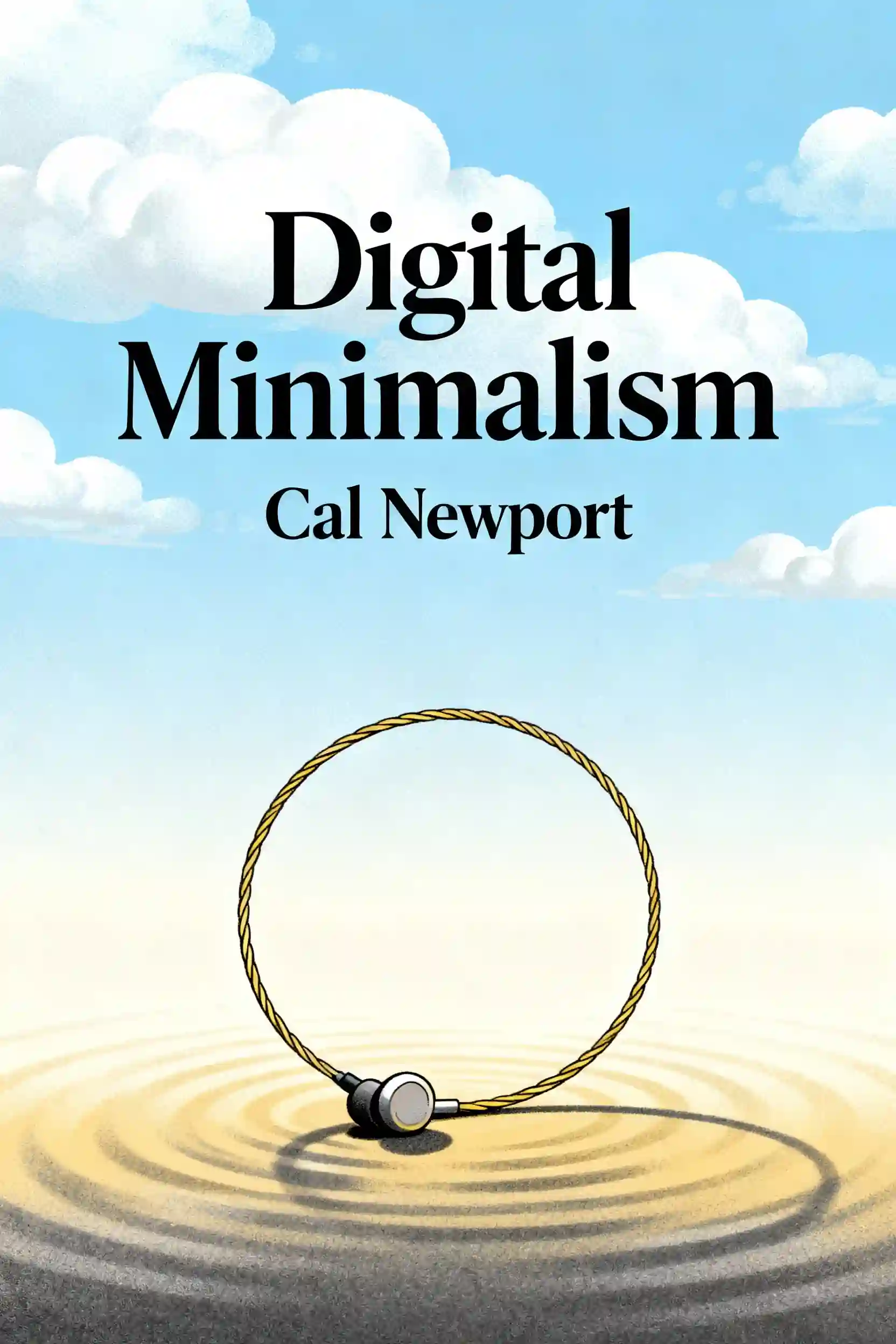
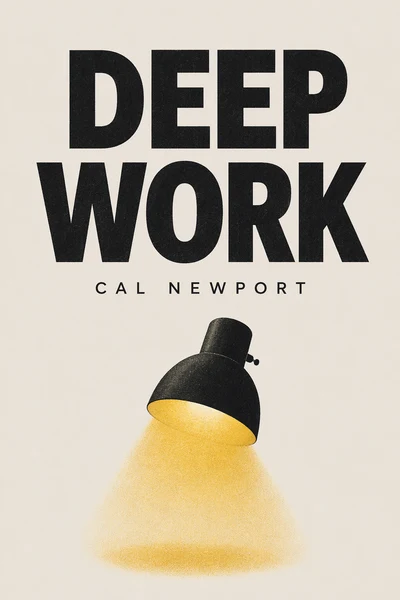
Foire aux questions
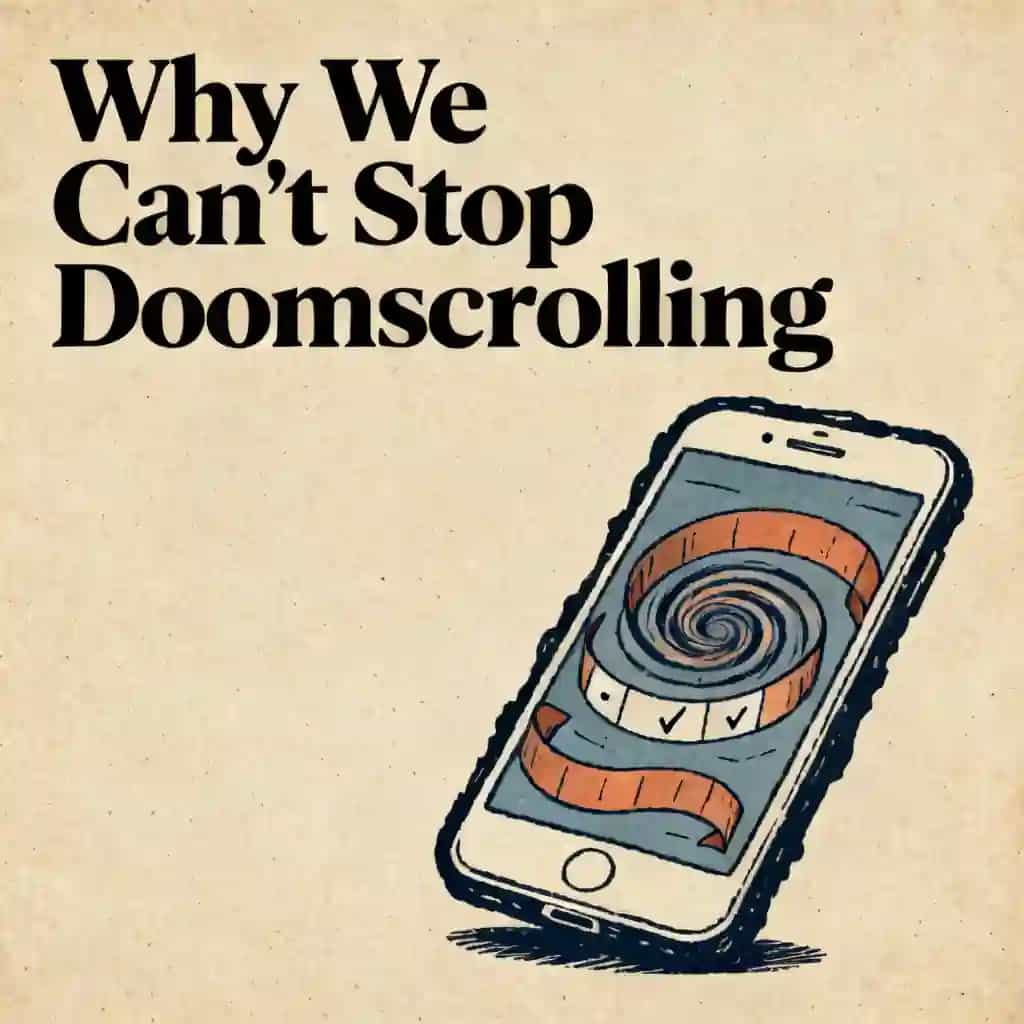
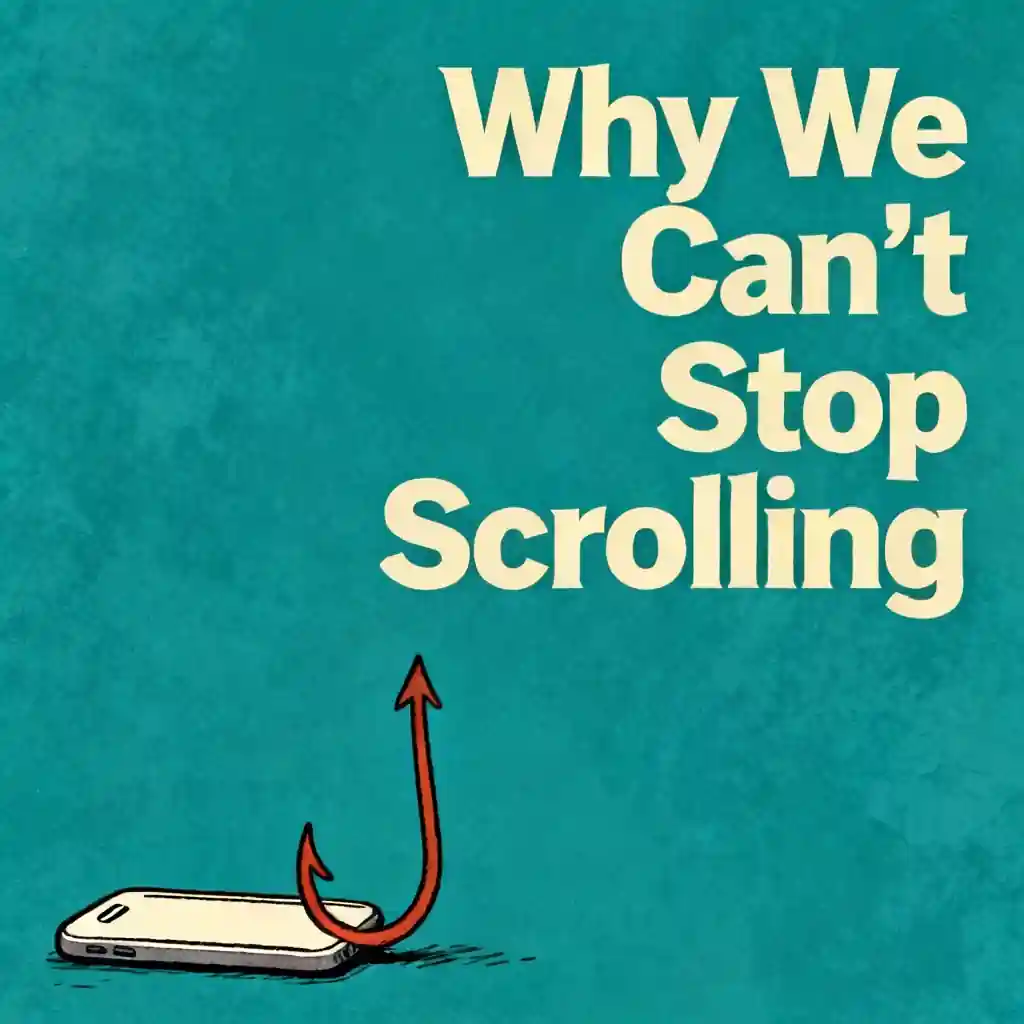
Doomscrolling taps into a primal survival mechanism known as the "threat loop" or negativity bias. Our brains are evolutionarily wired to hunt for danger to keep us safe, treating negative headlines like predators in the grass. Digital platforms exploit this by using algorithms that prioritize alarming content and "variable rewards"—the gambling mechanic where you keep scrolling in hopes of finding one piece of good news or "hopescrolling" to feel relief. This creates a compulsive cycle where the brain stays on high alert, seeking closure that the internet rarely provides.
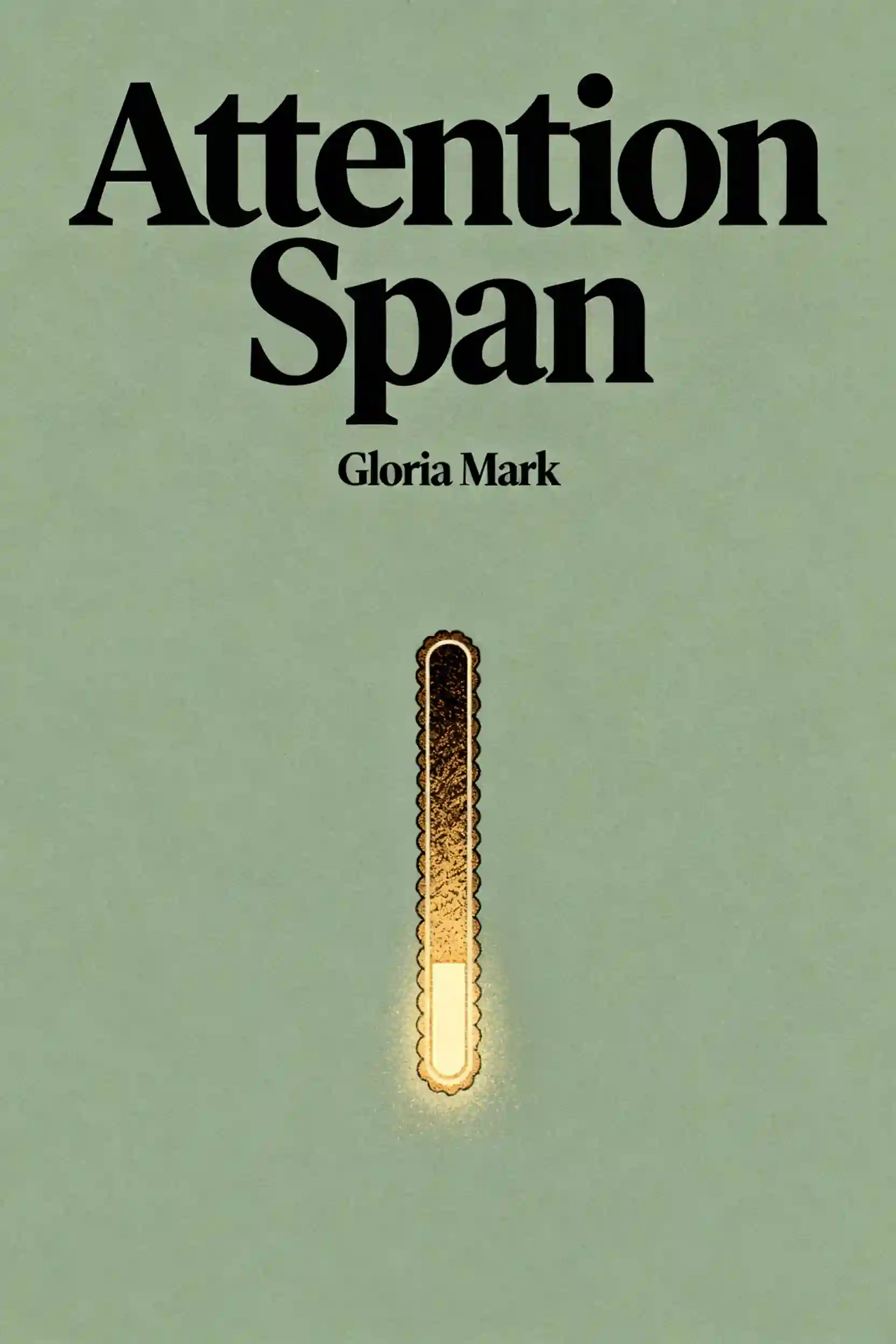
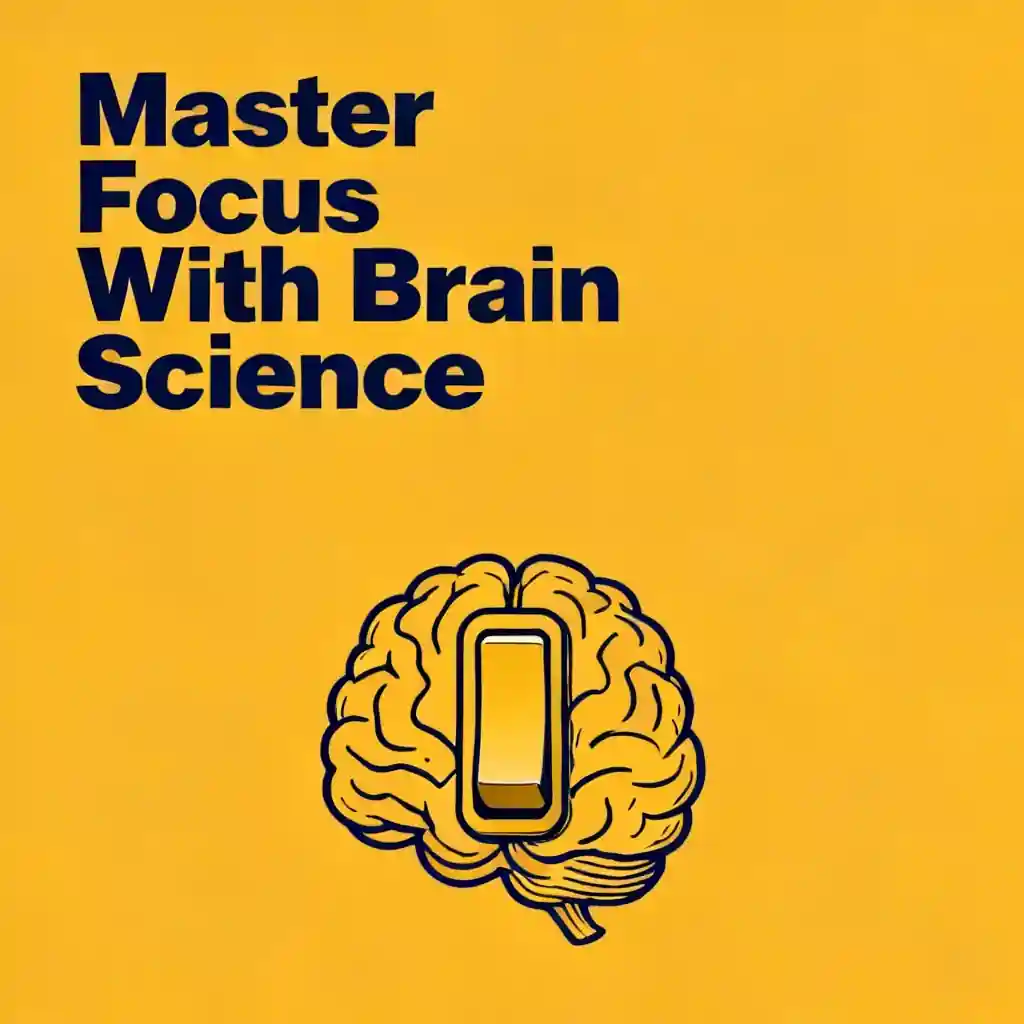
Research using neuroimaging shows that passive scrolling leads to a measurable decline in executive function. It effectively "fires" the internal CEO of your brain by decreasing activity in the dorsolateral prefrontal cortex, which is responsible for maintaining focus and manipulating information. At the same time, it increases cognitive effort in other areas, making the brain work harder but less efficiently. This results in "attention fragmentation," where the mind becomes trained for constant distraction and loses the capacity for deep, meaningful work.
Beyond mental fatigue, high levels of screen use are linked to "tech neck," headaches, and migraines due to poor posture and muscle strain. One of the most significant impacts is on sleep; blue light suppresses melatonin, while "cognitive arousal" from distressing news keeps the nervous system keyed up. This leads to "wired but tired" feelings and "revenge bedtime procrastination," where individuals stay up late to reclaim a sense of agency, ultimately delaying REM sleep and increasing irritability the following day.
You can break the habit by creating "environmental friction," such as moving triggering apps off your home screen or switching your phone to "grayscale mode" to make it less visually stimulating. Experts suggest the NEWS mnemonic: Notice your triggers, Edit your sources to favor curated summaries over live feeds, Window your time by setting specific 20-minute periods for news, and Substitute the urge to scroll with physical actions like reading a book or engaging in community service. These steps help transition you from a passive consumer to an intentional user of technology.
Cree par des anciens de Columbia University a San Francisco
BeFreed rassemble une communauté mondiale d'esprits curieux


"Instead of endless scrolling, I just hit play on BeFreed. It saves me so much time."


"I never knew where to start with nonfiction—BeFreed’s book lists turned into podcasts gave me a clear path."


"Perfect balance between learning and entertainment. Finished ‘Thinking, Fast and Slow’ on my commute this week."
"Crazy how much I learned while walking the dog. BeFreed = small habits → big gains."
"Reading used to feel like a chore. Now it’s just part of my lifestyle."

"Feels effortless compared to reading. I’ve finished 6 books this month already."
"BeFreed turned my guilty doomscrolling into something that feels productive and inspiring."

"BeFreed turned my commute into learning time. 20-min podcasts are perfect for finishing books I never had time for."
"BeFreed replaced my podcast queue. Imagine Spotify for books — that’s it. 🙌"

"It is great for me to learn something from the book without reading it."
"The themed book list podcasts help me connect ideas across authors—like a guided audio journey."
"Makes me feel smarter every time before going to work"
Cree par des anciens de Columbia University a San Francisco
BeFreed rassemble une communauté mondiale d'esprits curieux
"Instead of endless scrolling, I just hit play on BeFreed. It saves me so much time."
"I never knew where to start with nonfiction—BeFreed’s book lists turned into podcasts gave me a clear path."
"Perfect balance between learning and entertainment. Finished ‘Thinking, Fast and Slow’ on my commute this week."
"Crazy how much I learned while walking the dog. BeFreed = small habits → big gains."
"Reading used to feel like a chore. Now it’s just part of my lifestyle."
"Feels effortless compared to reading. I’ve finished 6 books this month already."
"BeFreed turned my guilty doomscrolling into something that feels productive and inspiring."
"BeFreed turned my commute into learning time. 20-min podcasts are perfect for finishing books I never had time for."
"BeFreed replaced my podcast queue. Imagine Spotify for books — that’s it. 🙌"
"It is great for me to learn something from the book without reading it."
"The themed book list podcasts help me connect ideas across authors—like a guided audio journey."
"Makes me feel smarter every time before going to work"
"Instead of endless scrolling, I just hit play on BeFreed. It saves me so much time."
"I never knew where to start with nonfiction—BeFreed’s book lists turned into podcasts gave me a clear path."
"Perfect balance between learning and entertainment. Finished ‘Thinking, Fast and Slow’ on my commute this week."
"Crazy how much I learned while walking the dog. BeFreed = small habits → big gains."
"Reading used to feel like a chore. Now it’s just part of my lifestyle."
"Feels effortless compared to reading. I’ve finished 6 books this month already."
"BeFreed turned my guilty doomscrolling into something that feels productive and inspiring."
"BeFreed turned my commute into learning time. 20-min podcasts are perfect for finishing books I never had time for."
"BeFreed replaced my podcast queue. Imagine Spotify for books — that’s it. 🙌"
"It is great for me to learn something from the book without reading it."
"The themed book list podcasts help me connect ideas across authors—like a guided audio journey."
"Makes me feel smarter every time before going to work"
"Instead of endless scrolling, I just hit play on BeFreed. It saves me so much time."
"I never knew where to start with nonfiction—BeFreed’s book lists turned into podcasts gave me a clear path."
"Perfect balance between learning and entertainment. Finished ‘Thinking, Fast and Slow’ on my commute this week."
"Crazy how much I learned while walking the dog. BeFreed = small habits → big gains."
"Reading used to feel like a chore. Now it’s just part of my lifestyle."
"Feels effortless compared to reading. I’ve finished 6 books this month already."
"BeFreed turned my guilty doomscrolling into something that feels productive and inspiring."
"BeFreed turned my commute into learning time. 20-min podcasts are perfect for finishing books I never had time for."
"BeFreed replaced my podcast queue. Imagine Spotify for books — that’s it. 🙌"
"It is great for me to learn something from the book without reading it."
"The themed book list podcasts help me connect ideas across authors—like a guided audio journey."
"Makes me feel smarter every time before going to work"