Stonewalling: The Quiet Habit That Predicts Divorce
When relationships fail, it’s rarely a loud explosion. Learn why emotional withdrawal happens and how to stop the slow erosion of intimacy.
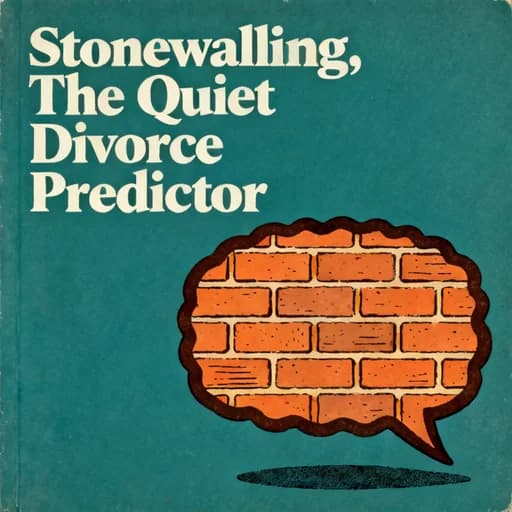
Meilleure citation de Stonewalling: The Quiet Habit That Predicts Divorce
Most marriages don't end in a firestorm; they end in a freeze. The silence you think is peace is actually resignation wearing sensible shoes—a slow erosion of intimacy that happens long before any legal paperwork is filed.
Generated with BeFreed
The Quiet Habit That Predicts Divorce






Foire aux questions
While both behaviors look like silence, they have very different motivations. The silent treatment is a deliberate, strategic choice used to punish or manipulate a partner into compliance. Stonewalling, however, is an involuntary biological collapse of the nervous system. It occurs when a person becomes "physiologically flooded," causing their brain to shut down communication as a desperate survival mechanism to protect itself from perceived threat.
Research indicates that approximately 85% of people who habitually stonewall are men. This is not due to a lack of character, but rather how the male nervous system typically processes stress. When conflict escalates, the heart rate can spike above 100 beats per minute, triggering a state of "hypoarousal" where the prefrontal cortex—the area responsible for logic and language—literally goes offline, making it biologically difficult to continue a conversation.
Bids for connection are small, seemingly mundane attempts to get a partner's attention, such as pointing out a bird or sighing. These tiny interactions are the primary front lines of a relationship's survival. Couples who stay together "turn toward" these bids 86% of the time, while those who divorce only do so 33% of the time. Ignoring these bids leads to "quiet divorcing," where partners slowly drift into parallel lives because they feel their thoughts and feelings no longer register with the other person.
The primary antidote is a "structured time-out." When one partner feels flooded, they must name the feeling, commit to a specific time to return (at least twenty minutes to allow stress hormones to clear), and then actually return to the conversation. During the break, the stonewaller should practice physiological self-soothing, like deep breathing, rather than ruminating on the conflict. When the conversation resumes, the other partner should use a "soft startup" by expressing feelings and needs rather than accusations.
Withdrawal becomes harmful or abusive when it is used as a permanent strategy to avoid accountability or is paired with tactics like financial control, isolation, or threats. If one partner’s shutdown is used to "veto" every difficult conversation and manipulate the other into compliance, the relationship has moved beyond a nervous system issue and into a damaging power dynamic that may require professional intervention.
Cree par des anciens de Columbia University a San Francisco
"Instead of endless scrolling, I just hit play on BeFreed. It saves me so much time."


"I never knew where to start with nonfiction—BeFreed’s book lists turned into podcasts gave me a clear path."


"Perfect balance between learning and entertainment. Finished ‘Thinking, Fast and Slow’ on my commute this week."
"Crazy how much I learned while walking the dog. BeFreed = small habits → big gains."
"Reading used to feel like a chore. Now it’s just part of my lifestyle."

"Feels effortless compared to reading. I’ve finished 6 books this month already."
"BeFreed turned my guilty doomscrolling into something that feels productive and inspiring."

"BeFreed turned my commute into learning time. 20-min podcasts are perfect for finishing books I never had time for."
"BeFreed replaced my podcast queue. Imagine Spotify for books — that’s it. 🙌"

"It is great for me to learn something from the book without reading it."
"The themed book list podcasts help me connect ideas across authors—like a guided audio journey."
"Makes me feel smarter every time before going to work"
Cree par des anciens de Columbia University a San Francisco
"Instead of endless scrolling, I just hit play on BeFreed. It saves me so much time."
"I never knew where to start with nonfiction—BeFreed’s book lists turned into podcasts gave me a clear path."
"Perfect balance between learning and entertainment. Finished ‘Thinking, Fast and Slow’ on my commute this week."
"Crazy how much I learned while walking the dog. BeFreed = small habits → big gains."
"Reading used to feel like a chore. Now it’s just part of my lifestyle."
"Feels effortless compared to reading. I’ve finished 6 books this month already."
"BeFreed turned my guilty doomscrolling into something that feels productive and inspiring."
"BeFreed turned my commute into learning time. 20-min podcasts are perfect for finishing books I never had time for."
"BeFreed replaced my podcast queue. Imagine Spotify for books — that’s it. 🙌"
"It is great for me to learn something from the book without reading it."
"The themed book list podcasts help me connect ideas across authors—like a guided audio journey."
"Makes me feel smarter every time before going to work"
"Instead of endless scrolling, I just hit play on BeFreed. It saves me so much time."
"I never knew where to start with nonfiction—BeFreed’s book lists turned into podcasts gave me a clear path."
"Perfect balance between learning and entertainment. Finished ‘Thinking, Fast and Slow’ on my commute this week."
"Crazy how much I learned while walking the dog. BeFreed = small habits → big gains."
"Reading used to feel like a chore. Now it’s just part of my lifestyle."
"Feels effortless compared to reading. I’ve finished 6 books this month already."
"BeFreed turned my guilty doomscrolling into something that feels productive and inspiring."
"BeFreed turned my commute into learning time. 20-min podcasts are perfect for finishing books I never had time for."
"BeFreed replaced my podcast queue. Imagine Spotify for books — that’s it. 🙌"
"It is great for me to learn something from the book without reading it."
"The themed book list podcasts help me connect ideas across authors—like a guided audio journey."
"Makes me feel smarter every time before going to work"
"Instead of endless scrolling, I just hit play on BeFreed. It saves me so much time."
"I never knew where to start with nonfiction—BeFreed’s book lists turned into podcasts gave me a clear path."
"Perfect balance between learning and entertainment. Finished ‘Thinking, Fast and Slow’ on my commute this week."
"Crazy how much I learned while walking the dog. BeFreed = small habits → big gains."
"Reading used to feel like a chore. Now it’s just part of my lifestyle."
"Feels effortless compared to reading. I’ve finished 6 books this month already."
"BeFreed turned my guilty doomscrolling into something that feels productive and inspiring."
"BeFreed turned my commute into learning time. 20-min podcasts are perfect for finishing books I never had time for."
"BeFreed replaced my podcast queue. Imagine Spotify for books — that’s it. 🙌"
"It is great for me to learn something from the book without reading it."
"The themed book list podcasts help me connect ideas across authors—like a guided audio journey."
"Makes me feel smarter every time before going to work"