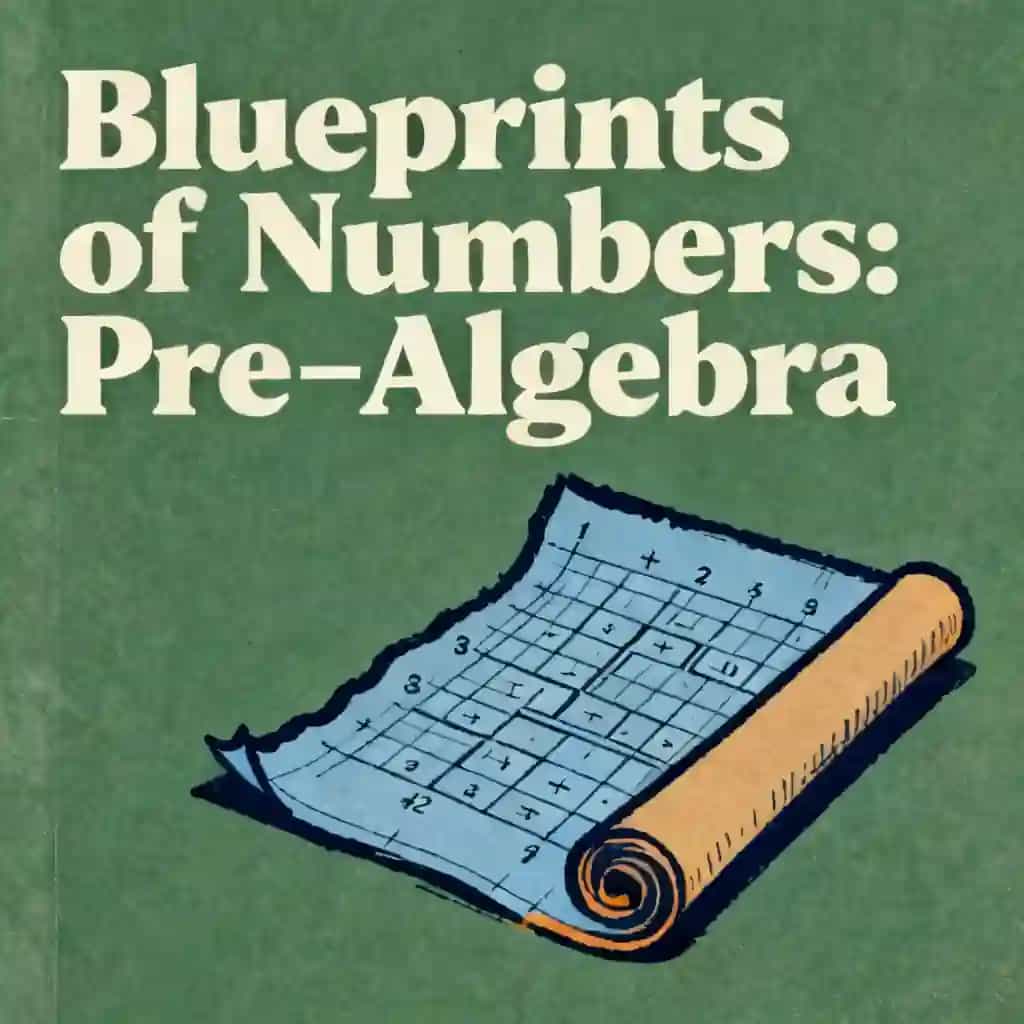
Systems of Linear Equations Explained: Methods and Solutions
Master systems of linear equations with our guide on graphing, substitution, and elimination methods. Learn to find solutions in linear algebra effectively.

Meilleure citation de Systems of Linear Equations Explained: Methods and Solutions
It’s not just about crunching the numbers—it’s about strategy. Being efficient means choosing the path that has the fewest opportunities for a mistake, acting as a math architect instead of just a math worker.
Generated by Freedee_8A67313C
Explain Systems of Linear Equations.


Foire aux questions
There are three main algebraic and visual methods used to solve systems of linear equations: graphing, substitution, and elimination. Graphing involves plotting both equations to find their intersection point, while the substitution method requires solving one equation for a variable and plugging it into the other. The elimination method, often used in linear algebra, involves adding or subtracting equations to cancel out a variable, making it easier to find the mathematical system's solution.
The substitution method is a fundamental technique for solving linear equations within a system. To use this method, you first isolate one variable in one of the equations. Once isolated, you substitute that expression into the second equation, resulting in a single-variable equation that is easier to solve. After finding the value of the first variable, you plug it back into the original equation to find the second value, completing the solution for the mathematical system.
The elimination method is particularly useful when the equations in a system are already lined up in standard form. This method works by multiplying one or both equations by specific numbers so that the coefficients of one variable are opposites. When you add the equations together, that variable is eliminated, allowing you to solve for the remaining one. It is often considered the most efficient approach for complex systems of linear equations in linear algebra.
In a system of linear equations, the solution represents the specific point or set of points where all equations in the system are simultaneously true. Graphically, this is the point where the lines intersect on a coordinate plane. Depending on the mathematical system, there may be one unique solution, infinitely many solutions if the lines are identical, or no solution at all if the lines are parallel and never meet.
Cree par des anciens de Columbia University a San Francisco
"Instead of endless scrolling, I just hit play on BeFreed. It saves me so much time."


"I never knew where to start with nonfiction—BeFreed’s book lists turned into podcasts gave me a clear path."


"Perfect balance between learning and entertainment. Finished ‘Thinking, Fast and Slow’ on my commute this week."
"Crazy how much I learned while walking the dog. BeFreed = small habits → big gains."
"Reading used to feel like a chore. Now it’s just part of my lifestyle."

"Feels effortless compared to reading. I’ve finished 6 books this month already."
"BeFreed turned my guilty doomscrolling into something that feels productive and inspiring."

"BeFreed turned my commute into learning time. 20-min podcasts are perfect for finishing books I never had time for."
"BeFreed replaced my podcast queue. Imagine Spotify for books — that’s it. 🙌"

"It is great for me to learn something from the book without reading it."
"The themed book list podcasts help me connect ideas across authors—like a guided audio journey."
"Makes me feel smarter every time before going to work"
Cree par des anciens de Columbia University a San Francisco
"Instead of endless scrolling, I just hit play on BeFreed. It saves me so much time."
"I never knew where to start with nonfiction—BeFreed’s book lists turned into podcasts gave me a clear path."
"Perfect balance between learning and entertainment. Finished ‘Thinking, Fast and Slow’ on my commute this week."
"Crazy how much I learned while walking the dog. BeFreed = small habits → big gains."
"Reading used to feel like a chore. Now it’s just part of my lifestyle."
"Feels effortless compared to reading. I’ve finished 6 books this month already."
"BeFreed turned my guilty doomscrolling into something that feels productive and inspiring."
"BeFreed turned my commute into learning time. 20-min podcasts are perfect for finishing books I never had time for."
"BeFreed replaced my podcast queue. Imagine Spotify for books — that’s it. 🙌"
"It is great for me to learn something from the book without reading it."
"The themed book list podcasts help me connect ideas across authors—like a guided audio journey."
"Makes me feel smarter every time before going to work"
"Instead of endless scrolling, I just hit play on BeFreed. It saves me so much time."
"I never knew where to start with nonfiction—BeFreed’s book lists turned into podcasts gave me a clear path."
"Perfect balance between learning and entertainment. Finished ‘Thinking, Fast and Slow’ on my commute this week."
"Crazy how much I learned while walking the dog. BeFreed = small habits → big gains."
"Reading used to feel like a chore. Now it’s just part of my lifestyle."
"Feels effortless compared to reading. I’ve finished 6 books this month already."
"BeFreed turned my guilty doomscrolling into something that feels productive and inspiring."
"BeFreed turned my commute into learning time. 20-min podcasts are perfect for finishing books I never had time for."
"BeFreed replaced my podcast queue. Imagine Spotify for books — that’s it. 🙌"
"It is great for me to learn something from the book without reading it."
"The themed book list podcasts help me connect ideas across authors—like a guided audio journey."
"Makes me feel smarter every time before going to work"
"Instead of endless scrolling, I just hit play on BeFreed. It saves me so much time."
"I never knew where to start with nonfiction—BeFreed’s book lists turned into podcasts gave me a clear path."
"Perfect balance between learning and entertainment. Finished ‘Thinking, Fast and Slow’ on my commute this week."
"Crazy how much I learned while walking the dog. BeFreed = small habits → big gains."
"Reading used to feel like a chore. Now it’s just part of my lifestyle."
"Feels effortless compared to reading. I’ve finished 6 books this month already."
"BeFreed turned my guilty doomscrolling into something that feels productive and inspiring."
"BeFreed turned my commute into learning time. 20-min podcasts are perfect for finishing books I never had time for."
"BeFreed replaced my podcast queue. Imagine Spotify for books — that’s it. 🙌"
"It is great for me to learn something from the book without reading it."
"The themed book list podcasts help me connect ideas across authors—like a guided audio journey."
"Makes me feel smarter every time before going to work"


![[ee3d71f2-5736-4f10-908d-dffcdfff5548:c0000] Chap-3 (8th Nov.) p1-1](/_next/image?url=https%3A%2F%2Fd1y2du6z1jfm9e.cloudfront.net%2Fassets%2Fpodcast%2Fgreen.png&w=1024&q=50)
![[ee3d71f2-5736-4f10-908d-dffcdfff5548:c0001] Chap-3 (8th Nov.) p1-1](/_next/image?url=https%3A%2F%2Fd1y2du6z1jfm9e.cloudfront.net%2Fassets%2Fpodcast%2Fblue.png&w=1024&q=50)