Saving money when you feel broke
Stop the cycle of living paycheck to paycheck by understanding the dopamine trap and using a simple three-account system to build lasting stability.

Meilleure citation de Saving money when you feel broke
Willpower is a finite resource; it’s like a battery that drains throughout the day. That’s why we have to stop relying on discipline and start looking at systems that protect us from our own biology.

Cette leçon audio a été créée par un membre de la communauté BeFreed
Saving money, 101 I need a fresh take on saving money and not spending when I have money. I’m usually broke

Foire aux questions
The difficulty stems from neuroscience rather than a lack of willpower. Research shows that dopamine peaks during the anticipation and "wanting" phase of shopping—such as browsing or adding items to a cart—rather than the actual ownership of the product. Retailers exploit this by removing "speed bumps" through one-click checkouts and infinite scrolls, which bypass the rational part of the brain. Because willpower is a finite resource that drains throughout the day, most people are biologically vulnerable to impulsive decisions when they are tired or stressed.
Traditional budgeting is usually based on hindsight, showing you what you spent in the past rather than intervening in the moment of a purchase. This "rearview mirror" approach often creates a cycle of shame when users see they have exceeded their limits, which can actually lead to more stress-spending. For neurodivergent individuals, such as those with ADHD, complex spreadsheets can cause task paralysis due to a lack of immediate stimulation or novelty, making the system feel like a chore rather than a helpful tool.
The Three-Account System is a behavioral strategy designed to automate financial decisions and reduce guilt. You split your income into three specific buckets: a "Bills" account for fixed monthly expenses, a "Future" account for savings, and a "Life" account for daily spending. A key component of this system is keeping the "Future" account at a separate bank without an easy-access debit card; this creates "friction" by requiring several days for transfers, allowing the initial dopamine urge to fade before you can spend your savings.
The "ADHD Tax" refers to the accumulated cost of executive dysfunction, such as late fees, forgotten subscriptions, and "fresh food tax" (buying groceries that rot because they are forgotten). These leaks can cost individuals thousands of dollars a year. To plug these leaks, the script suggests "environmental design" strategies: unsubscribing from marketing emails, deleting saved credit card information to force a cooling-off period, and using visual aids like "thermometer" charts or physical cash to make digital money feel more real.
One effective method is the "24-Hour Screenshot Method," where you take a picture of the item instead of buying it to give your brain a small "completion hit," then wait a full day to see if the urge persists. Another strategy is creating a "Dopamine Menu"—a list of free, non-financial activities like taking a walk or listening to music—to satisfy the brain's craving for stimulation without spending money. For larger purchases, the "72-Hour Rule" ensures that the emotional excitement of the "want" has settled before you commit to the expense.
Découvrir plus
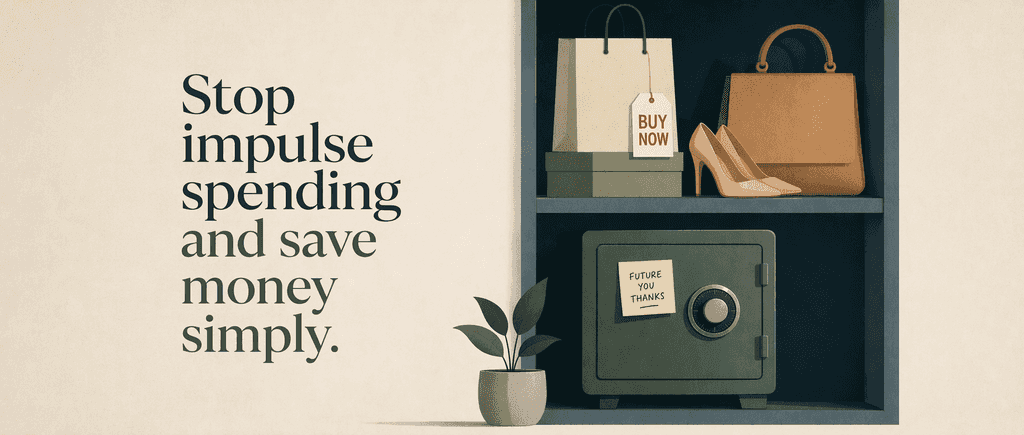
Stop impulse spending and save money simply.
This plan is essential for anyone struggling with paycheck-to-paycheck living or habitual impulse shopping. It combines psychological insights with automated systems to help modern consumers regain financial control and build wealth effortlessly.

Breaking the Bargain Cycle
This plan is essential for anyone who feels their spending is driven by impulse or emotional stress rather than necessity. It provides a psychological deep dive and practical toolkit for individuals looking to regain financial autonomy and break the cycle of compulsive shopping.

Money Systems for Busy Lives
This plan is designed for busy professionals who struggle with inconsistent saving habits and financial fatigue. It provides a strategic framework to move beyond manual budgeting by leveraging automation and behavioral psychology.

Learning to save money
Financial insecurity affects millions who lack basic money management skills, leading to stress, debt, and missed opportunities. This learning plan is essential for anyone wanting to break free from living paycheck-to-paycheck, whether you're just starting your career, recovering from financial setbacks, or ready to take your wealth-building to the next level. By mastering these principles, you'll gain the confidence and skills to achieve true financial freedom.

The Daily Tracking Habit
In an era of frictionless digital payments, many struggle with unconscious spending and lack of financial clarity. This plan is ideal for individuals looking to regain control of their finances by combining behavioral psychology with practical habit-building strategies.

How to be more frugal
This learning plan is essential for anyone feeling trapped by financial stress, living paycheck to paycheck, or wanting to take control of their financial future. It's particularly valuable for young professionals, families looking to reduce debt, or anyone seeking financial independence and the freedom that comes with intentional, frugal living. By combining mindset shifts with actionable strategies, this plan offers a comprehensive path from financial anxiety to empowered abundance.

The Self-Driving Money System
This plan is essential for professionals who struggle with manual budgeting and inconsistent savings. It provides a practical framework to automate personal finances, making it ideal for anyone looking to reduce financial stress and reclaim their time.

Overspending
Overspending affects millions who struggle to balance immediate desires with long-term financial health. This learning plan helps anyone caught in spend-regret cycles by addressing the psychological roots of money behaviors while providing practical systems for lasting financial control.
Cree par des anciens de Columbia University a San Francisco
"Instead of endless scrolling, I just hit play on BeFreed. It saves me so much time."


"I never knew where to start with nonfiction—BeFreed’s book lists turned into podcasts gave me a clear path."


"Perfect balance between learning and entertainment. Finished ‘Thinking, Fast and Slow’ on my commute this week."
"Crazy how much I learned while walking the dog. BeFreed = small habits → big gains."
"Reading used to feel like a chore. Now it’s just part of my lifestyle."

"Feels effortless compared to reading. I’ve finished 6 books this month already."
"BeFreed turned my guilty doomscrolling into something that feels productive and inspiring."

"BeFreed turned my commute into learning time. 20-min podcasts are perfect for finishing books I never had time for."
"BeFreed replaced my podcast queue. Imagine Spotify for books — that’s it. 🙌"

"It is great for me to learn something from the book without reading it."
"The themed book list podcasts help me connect ideas across authors—like a guided audio journey."
"Makes me feel smarter every time before going to work"
Cree par des anciens de Columbia University a San Francisco
"Instead of endless scrolling, I just hit play on BeFreed. It saves me so much time."
"I never knew where to start with nonfiction—BeFreed’s book lists turned into podcasts gave me a clear path."
"Perfect balance between learning and entertainment. Finished ‘Thinking, Fast and Slow’ on my commute this week."
"Crazy how much I learned while walking the dog. BeFreed = small habits → big gains."
"Reading used to feel like a chore. Now it’s just part of my lifestyle."
"Feels effortless compared to reading. I’ve finished 6 books this month already."
"BeFreed turned my guilty doomscrolling into something that feels productive and inspiring."
"BeFreed turned my commute into learning time. 20-min podcasts are perfect for finishing books I never had time for."
"BeFreed replaced my podcast queue. Imagine Spotify for books — that’s it. 🙌"
"It is great for me to learn something from the book without reading it."
"The themed book list podcasts help me connect ideas across authors—like a guided audio journey."
"Makes me feel smarter every time before going to work"
"Instead of endless scrolling, I just hit play on BeFreed. It saves me so much time."
"I never knew where to start with nonfiction—BeFreed’s book lists turned into podcasts gave me a clear path."
"Perfect balance between learning and entertainment. Finished ‘Thinking, Fast and Slow’ on my commute this week."
"Crazy how much I learned while walking the dog. BeFreed = small habits → big gains."
"Reading used to feel like a chore. Now it’s just part of my lifestyle."
"Feels effortless compared to reading. I’ve finished 6 books this month already."
"BeFreed turned my guilty doomscrolling into something that feels productive and inspiring."
"BeFreed turned my commute into learning time. 20-min podcasts are perfect for finishing books I never had time for."
"BeFreed replaced my podcast queue. Imagine Spotify for books — that’s it. 🙌"
"It is great for me to learn something from the book without reading it."
"The themed book list podcasts help me connect ideas across authors—like a guided audio journey."
"Makes me feel smarter every time before going to work"
"Instead of endless scrolling, I just hit play on BeFreed. It saves me so much time."
"I never knew where to start with nonfiction—BeFreed’s book lists turned into podcasts gave me a clear path."
"Perfect balance between learning and entertainment. Finished ‘Thinking, Fast and Slow’ on my commute this week."
"Crazy how much I learned while walking the dog. BeFreed = small habits → big gains."
"Reading used to feel like a chore. Now it’s just part of my lifestyle."
"Feels effortless compared to reading. I’ve finished 6 books this month already."
"BeFreed turned my guilty doomscrolling into something that feels productive and inspiring."
"BeFreed turned my commute into learning time. 20-min podcasts are perfect for finishing books I never had time for."
"BeFreed replaced my podcast queue. Imagine Spotify for books — that’s it. 🙌"
"It is great for me to learn something from the book without reading it."
"The themed book list podcasts help me connect ideas across authors—like a guided audio journey."
"Makes me feel smarter every time before going to work"