Power and the Art of Perception: Robert Greene and Social Dynamics
Explore how power and reputation management shape professional success. Learn why social reality and the art of perception are vital for career growth and ethics.

Meilleure citation de Power and the Art of Perception: Robert Greene and Social Dynamics
Power is not something you just 'have'—it is actually a social reality that exists entirely in the minds of other people. If people perceive you as influential, you are influential.

Cette leçon audio a été créée par un membre de la communauté BeFreed
This lesson is part of the learning plan: 'The 48 Laws of Power, Ethically Reinterpreted'. Lesson topic: Power and the Art of Perception Overview: In any hierarchy, talent alone isn't enough to succeed. Learn to manage your reputation and navigate authority to build influence without conflict. Key insights to cover in order: 1. Power is a social reality that exists in the minds of others, making reputation management a functional necessity rather than a vanity project. 2. Strategic silence and selective disclosure create a 'mystery' that commands respect and prevents others from mapping your vulnerabilities. 3. The 'Never Outshine the Master' rule is a defensive strategy to avoid triggering the deep-seated insecurities of those in authority. Listener profile: - Learning goal: Create a learning path titled exactly 'The 48 Laws of Power, Ethically Reinterpreted for modern world' — reinterpret Robert Greene's 48 Laws of Power through a modern, ethical lens for influence without manipulation - Background knowledge: I've never touched Greene's original work but want to reframe power through an ethical lens. - Guidance: Structure as 2-5 thematic modules with provocative names, each containing 2-3 sharp lessons. Focus on ethical influence principles rather than manipulation tactics. Tailor examples, pacing, and depth to this listener. Avoid analogies or references that assume knowledge outside this listener's profile.





Foire aux questions
In the podcast Power and the Art of Perception, power is described as a social reality that exists within the minds of others rather than just a personal trait. This means that if people perceive you as influential, you effectively gain that influence. Mastering the art of perception is a functional necessity for professional success, as managing your reputation allows you to navigate hierarchies where talent alone is only half the battle.
Robert Greene describes power as a neutral force, similar to gravity, that operates regardless of whether an individual chooses to acknowledge it. According to the discussion, ignoring these dynamics is like trying to fly while ignoring the laws of physics. Understanding these hidden rules is essential for career growth and ensures that individuals are not blindsided by the social realities of their professional environment or the 'court' they operate within.
The conversation suggests that being 'good' at power is not about being a villain; rather, it makes you a more effective person in both relationships and your career. By understanding the landscape of power dynamics and reputation management, you can approach your professional life through an ethical lens. This knowledge serves as a tool for survival and growth, allowing you to be more impactful without compromising your values.
Découvrir plus

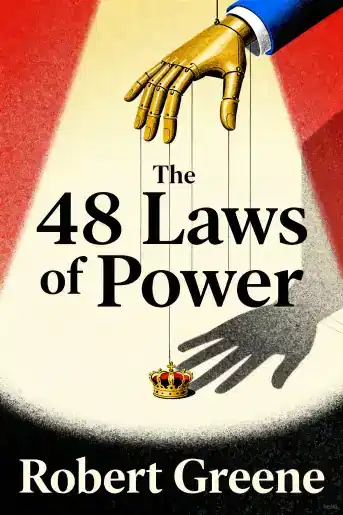
Laws of power
Laws of power
This plan bridges the gap between historical statecraft and modern psychological influence, offering a blueprint for navigating competitive environments. It is essential for aspiring leaders and professionals who want to master the art of ethical persuasion and strategic decision-making.

Build Influence Without Fo...
Build Influence Without Fo...
In today's matrix organizations and collaborative workplaces, the ability to influence without formal authority has become a critical professional skill. This learning plan helps professionals at any level develop the relationship-building, communication, and leadership capabilities needed to drive initiatives forward and create impact regardless of their position in the organizational hierarchy.

Command respect and presence naturally
Command respect and presence naturally
This plan is essential for professionals and aspiring leaders who feel overlooked or struggle to assert themselves in high-stakes environments. It provides a comprehensive roadmap for transforming internal self-belief into a powerful external presence that commands natural authority.

Master Gradual Influence & Build Trust
Master Gradual Influence & Build Trust
In an era where authority is earned rather than assigned, mastering ethical persuasion is essential for impactful leadership. This plan is designed for emerging leaders and professionals who want to build lasting professional relationships through psychological insight and authentic communication.

Influence, Speak Confidently & Be Memorable
Influence, Speak Confidently & Be Memorable
In an increasingly noisy world, the ability to communicate with authority and warmth is a critical career differentiator. This plan is designed for professionals and leaders who want to master the science of persuasion and storytelling to leave a lasting legacy.
How to be heard and respected
How to be heard and respected
In today’s competitive landscape, professional success depends on the ability to communicate with authority and influence others. This plan is designed for emerging leaders and professionals who want to overcome being overlooked by mastering the physical, vocal, and strategic elements of command presence.
Surpass All: Peak Power & Influence Master
Surpass All: Peak Power & Influence Master
In a competitive landscape, technical skills are secondary to the ability to influence and lead with authority. This plan is designed for ambitious professionals and aspiring leaders who want to master the psychological and strategic frameworks of power to achieve extraordinary results.
Master Persuasion and Machiavellian Tactics
Master Persuasion and Machiavellian Tactics
In a competitive world, understanding the mechanics of power and human psychology is essential for leadership and self-defense. This plan is designed for professionals and negotiators who want to master high-stakes influence while remaining ethically grounded.
Cree par des anciens de Columbia University a San Francisco
"Instead of endless scrolling, I just hit play on BeFreed. It saves me so much time."


"I never knew where to start with nonfiction—BeFreed’s book lists turned into podcasts gave me a clear path."


"Perfect balance between learning and entertainment. Finished ‘Thinking, Fast and Slow’ on my commute this week."
"Crazy how much I learned while walking the dog. BeFreed = small habits → big gains."
"Reading used to feel like a chore. Now it’s just part of my lifestyle."

"Feels effortless compared to reading. I’ve finished 6 books this month already."
"BeFreed turned my guilty doomscrolling into something that feels productive and inspiring."

"BeFreed turned my commute into learning time. 20-min podcasts are perfect for finishing books I never had time for."
"BeFreed replaced my podcast queue. Imagine Spotify for books — that’s it. 🙌"

"It is great for me to learn something from the book without reading it."
"The themed book list podcasts help me connect ideas across authors—like a guided audio journey."
"Makes me feel smarter every time before going to work"
Cree par des anciens de Columbia University a San Francisco
"Instead of endless scrolling, I just hit play on BeFreed. It saves me so much time."
"I never knew where to start with nonfiction—BeFreed’s book lists turned into podcasts gave me a clear path."
"Perfect balance between learning and entertainment. Finished ‘Thinking, Fast and Slow’ on my commute this week."
"Crazy how much I learned while walking the dog. BeFreed = small habits → big gains."
"Reading used to feel like a chore. Now it’s just part of my lifestyle."
"Feels effortless compared to reading. I’ve finished 6 books this month already."
"BeFreed turned my guilty doomscrolling into something that feels productive and inspiring."
"BeFreed turned my commute into learning time. 20-min podcasts are perfect for finishing books I never had time for."
"BeFreed replaced my podcast queue. Imagine Spotify for books — that’s it. 🙌"
"It is great for me to learn something from the book without reading it."
"The themed book list podcasts help me connect ideas across authors—like a guided audio journey."
"Makes me feel smarter every time before going to work"
"Instead of endless scrolling, I just hit play on BeFreed. It saves me so much time."
"I never knew where to start with nonfiction—BeFreed’s book lists turned into podcasts gave me a clear path."
"Perfect balance between learning and entertainment. Finished ‘Thinking, Fast and Slow’ on my commute this week."
"Crazy how much I learned while walking the dog. BeFreed = small habits → big gains."
"Reading used to feel like a chore. Now it’s just part of my lifestyle."
"Feels effortless compared to reading. I’ve finished 6 books this month already."
"BeFreed turned my guilty doomscrolling into something that feels productive and inspiring."
"BeFreed turned my commute into learning time. 20-min podcasts are perfect for finishing books I never had time for."
"BeFreed replaced my podcast queue. Imagine Spotify for books — that’s it. 🙌"
"It is great for me to learn something from the book without reading it."
"The themed book list podcasts help me connect ideas across authors—like a guided audio journey."
"Makes me feel smarter every time before going to work"
"Instead of endless scrolling, I just hit play on BeFreed. It saves me so much time."
"I never knew where to start with nonfiction—BeFreed’s book lists turned into podcasts gave me a clear path."
"Perfect balance between learning and entertainment. Finished ‘Thinking, Fast and Slow’ on my commute this week."
"Crazy how much I learned while walking the dog. BeFreed = small habits → big gains."
"Reading used to feel like a chore. Now it’s just part of my lifestyle."
"Feels effortless compared to reading. I’ve finished 6 books this month already."
"BeFreed turned my guilty doomscrolling into something that feels productive and inspiring."
"BeFreed turned my commute into learning time. 20-min podcasts are perfect for finishing books I never had time for."
"BeFreed replaced my podcast queue. Imagine Spotify for books — that’s it. 🙌"
"It is great for me to learn something from the book without reading it."
"The themed book list podcasts help me connect ideas across authors—like a guided audio journey."
"Makes me feel smarter every time before going to work"