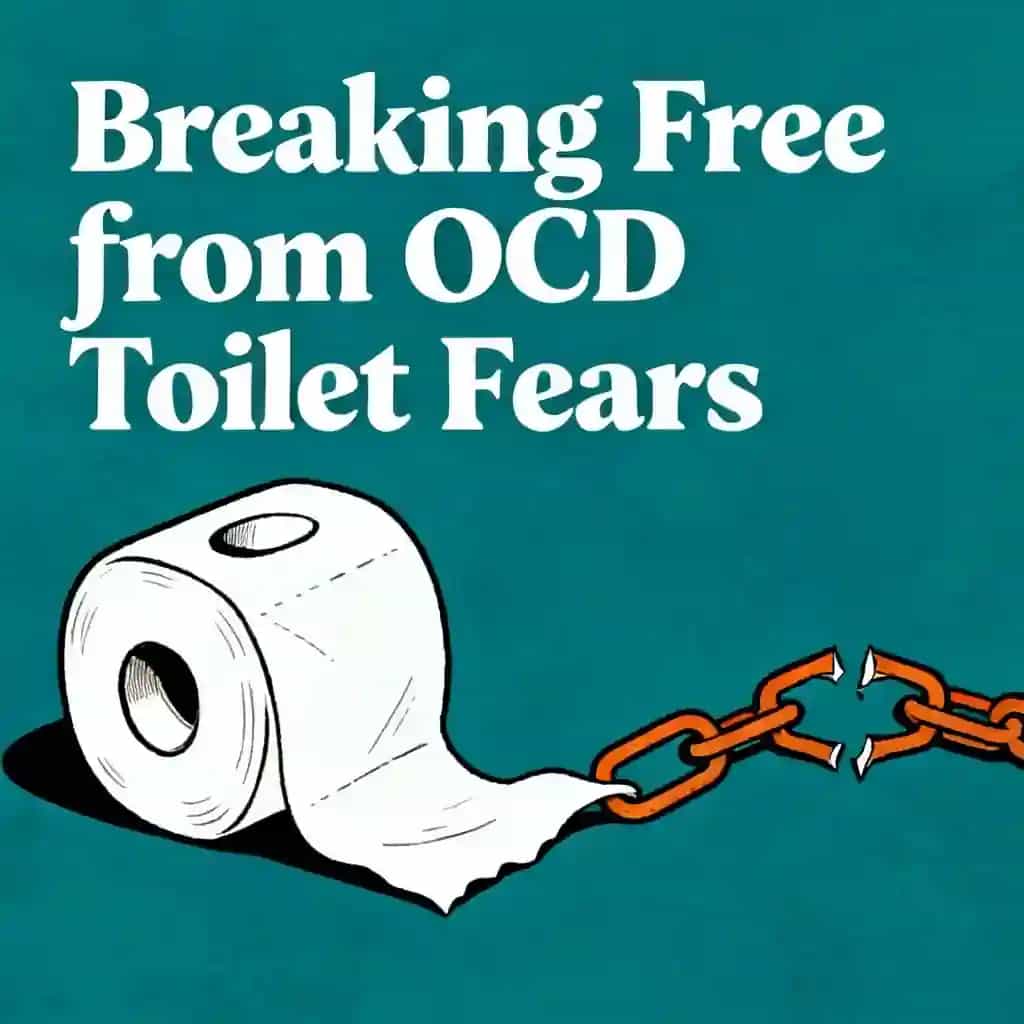
OCD Treatment: Beyond the Paradox of Intrusive Thoughts
Explore advanced OCD treatment strategies to help clients manage intrusive thoughts and mental fusion. Learn why standard reassurance backfires and how to move beyond the paradox.

Meilleure citation de OCD Treatment: Beyond the Paradox of Intrusive Thoughts
The paradox of OCD is that it is a disorder of trying too hard; the core struggle isn't just the scary thought itself, but the way the client tries to solve it.
Generated by Oli
Advanced strategies and clinical guidance for practicing therapists to help clients with OCD, focusing on effective treatment delivery and therapeutic nuances.





![[PDF] The I-CBT Practitioner's Manual by Lazaro Leon Palomares | 9781923646469](https://d1y2du6z1jfm9e.cloudfront.net/assets/podcast/blue.png)
Foire aux questions
The paradox of OCD is that it is often a disorder of trying too hard. When clients attempt to push away scary intrusive thoughts through compulsions like washing, checking, or seeking reassurance, those thoughts actually become bigger and louder. This creates an unwinnable tug-of-war where the effort to solve the problem through avoidance or suppression only reinforces the distress, making standard advice like "don't worry about it" ineffective for long-term symptom management.
While research indicates that almost everyone experiences occasional weird or intrusive thoughts, individuals with Obsessive-Compulsive Disorder experience mental fusion. For these clients, thoughts are not just background noise; they become fused to their identity and feel like urgent commands or threats. This makes thoughts about germs, mistakes, or frightening impulses feel like immediate crises that require action, rather than passing mental events that can be ignored.
Standard therapy strategies often backfire when they focus on simply telling a client to stop worrying. Because OCD functions like a game where trying not to think of something makes it more prominent, traditional reassurance can actually strengthen the cycle of the disorder. Effective OCD treatment requires moving beyond simple symptom management toward advanced strategies that help clients "drop the rope" and stop engaging in the mental struggle, allowing them to build a meaningful life despite their brain's intrusive patterns.
Cree par des anciens de Columbia University a San Francisco
"Instead of endless scrolling, I just hit play on BeFreed. It saves me so much time."


"I never knew where to start with nonfiction—BeFreed’s book lists turned into podcasts gave me a clear path."


"Perfect balance between learning and entertainment. Finished ‘Thinking, Fast and Slow’ on my commute this week."
"Crazy how much I learned while walking the dog. BeFreed = small habits → big gains."
"Reading used to feel like a chore. Now it’s just part of my lifestyle."

"Feels effortless compared to reading. I’ve finished 6 books this month already."
"BeFreed turned my guilty doomscrolling into something that feels productive and inspiring."

"BeFreed turned my commute into learning time. 20-min podcasts are perfect for finishing books I never had time for."
"BeFreed replaced my podcast queue. Imagine Spotify for books — that’s it. 🙌"

"It is great for me to learn something from the book without reading it."
"The themed book list podcasts help me connect ideas across authors—like a guided audio journey."
"Makes me feel smarter every time before going to work"
Cree par des anciens de Columbia University a San Francisco
"Instead of endless scrolling, I just hit play on BeFreed. It saves me so much time."
"I never knew where to start with nonfiction—BeFreed’s book lists turned into podcasts gave me a clear path."
"Perfect balance between learning and entertainment. Finished ‘Thinking, Fast and Slow’ on my commute this week."
"Crazy how much I learned while walking the dog. BeFreed = small habits → big gains."
"Reading used to feel like a chore. Now it’s just part of my lifestyle."
"Feels effortless compared to reading. I’ve finished 6 books this month already."
"BeFreed turned my guilty doomscrolling into something that feels productive and inspiring."
"BeFreed turned my commute into learning time. 20-min podcasts are perfect for finishing books I never had time for."
"BeFreed replaced my podcast queue. Imagine Spotify for books — that’s it. 🙌"
"It is great for me to learn something from the book without reading it."
"The themed book list podcasts help me connect ideas across authors—like a guided audio journey."
"Makes me feel smarter every time before going to work"
"Instead of endless scrolling, I just hit play on BeFreed. It saves me so much time."
"I never knew where to start with nonfiction—BeFreed’s book lists turned into podcasts gave me a clear path."
"Perfect balance between learning and entertainment. Finished ‘Thinking, Fast and Slow’ on my commute this week."
"Crazy how much I learned while walking the dog. BeFreed = small habits → big gains."
"Reading used to feel like a chore. Now it’s just part of my lifestyle."
"Feels effortless compared to reading. I’ve finished 6 books this month already."
"BeFreed turned my guilty doomscrolling into something that feels productive and inspiring."
"BeFreed turned my commute into learning time. 20-min podcasts are perfect for finishing books I never had time for."
"BeFreed replaced my podcast queue. Imagine Spotify for books — that’s it. 🙌"
"It is great for me to learn something from the book without reading it."
"The themed book list podcasts help me connect ideas across authors—like a guided audio journey."
"Makes me feel smarter every time before going to work"
"Instead of endless scrolling, I just hit play on BeFreed. It saves me so much time."
"I never knew where to start with nonfiction—BeFreed’s book lists turned into podcasts gave me a clear path."
"Perfect balance between learning and entertainment. Finished ‘Thinking, Fast and Slow’ on my commute this week."
"Crazy how much I learned while walking the dog. BeFreed = small habits → big gains."
"Reading used to feel like a chore. Now it’s just part of my lifestyle."
"Feels effortless compared to reading. I’ve finished 6 books this month already."
"BeFreed turned my guilty doomscrolling into something that feels productive and inspiring."
"BeFreed turned my commute into learning time. 20-min podcasts are perfect for finishing books I never had time for."
"BeFreed replaced my podcast queue. Imagine Spotify for books — that’s it. 🙌"
"It is great for me to learn something from the book without reading it."
"The themed book list podcasts help me connect ideas across authors—like a guided audio journey."
"Makes me feel smarter every time before going to work"