Meilleure citation de Kenya’s Housing Gap: Urban Home Ownership and Property Markets
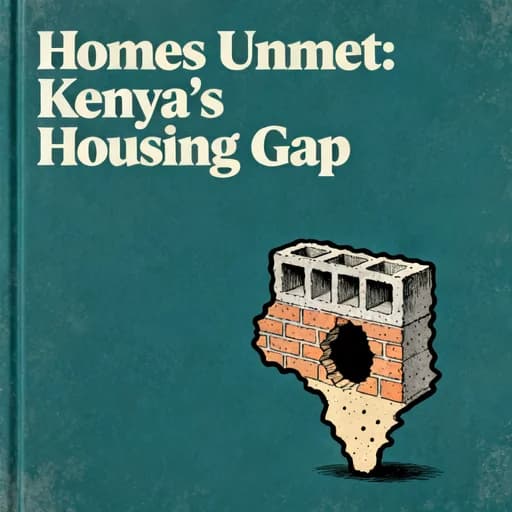
The urban home ownership rate in Kenya is sitting at a staggering 16%, meaning the vast majority of people living in cities are essentially locked out of owning the space they live in.

Cette leçon audio a été créée par un membre de la communauté BeFreed
https://docs.google.com/presentation/d/1_3BE-RUhgrCyGd4UuASlNSeKw5OpX-ZX/edit?usp=drivesdk&ouid=108139526514909840170&rtpof=true&sd=true



Foire aux questions
The urban home ownership rate in Kenya currently stands at a staggering 16%. This figure highlights a significant gap in the property market, indicating that the vast majority of people living in Kenyan cities are essentially locked out of owning their own homes. This low ownership rate is a central focus of the ongoing discussion regarding the country's housing crisis and real estate development.
Kenya faces a massive housing deficit where the annual demand for new units is approximately 200,000. However, the actual production of housing units is only hitting about 35,000 per year. This significant shortfall in supply versus demand is a primary driver of the current housing gap and presents a major challenge for the private sector and post-colonial property machinery.
Land and property ownership were at the heartbeat of Kenya's independence struggle. Since 1963, the story of the property market has been evolving from a fight over who gets to own, use, and dispose of land. Understanding today's real estate landscape requires looking back at this post-colonial history, where the right to control land was synonymous with the right to control one's destiny.
In the context of Kenya's housing market, property is defined as something of value that grants a legal right to control one's destiny. This includes tangible assets like land and houses, as well as intangible things like patents. The current struggle in the housing sector revolves around the ability of citizens to acquire these tangible assets amidst a market where the stakes for ownership have never been higher.
Découvrir plus

to get my first home and live indipendantly
Transitioning to independent living requires a blend of financial literacy, real estate knowledge, and practical life management. This plan is ideal for first-time buyers who want to move out with confidence and maintain their new home effectively.

Real estate
This plan provides a comprehensive roadmap for transitioning from a novice to a sophisticated real estate entrepreneur. It is ideal for aspiring investors looking to build sustainable wealth through data-driven property strategies and scalable systems.

Airbnb
This learning plan is essential for aspiring entrepreneurs and property owners looking to capitalize on the sharing economy. It provides a comprehensive roadmap for turning real estate into a professional, scalable business through hospitality excellence and financial strategy.

Automate property management
Property managers and real estate investors often struggle with time-consuming manual tasks that limit growth and profitability. This learning plan is designed for landlords, property managers, and real estate entrepreneurs who want to reduce operational overhead, improve tenant satisfaction, and scale their portfolio without proportionally increasing their workload.

Find housing & better relationships
This learning plan is designed for men facing overlapping challenges of housing insecurity, toxic social circles, and difficulty forming romantic connections. It recognizes that meaningful relationships—romantic and platonic—require first establishing personal stability, self-worth, and the ability to recognize and maintain healthy boundaries. Perfect for anyone who feels stuck in survival mode while longing for genuine human connection and a better social life.

Wealth and power breed social disconnection
Research consistently shows that power and wealth can fundamentally alter how people perceive and interact with others, often leading to reduced empathy and increased social distance. This learning plan is ideal for leaders, policymakers, wealth holders, and anyone interested in understanding how power dynamics shape social relationships and how to counteract their negative effects.

Rent vs. Buy: Housing Process Comparison
This learning plan is essential for individuals navigating the complex choice between renting and homeownership in a volatile market. It is ideal for first-time buyers and strategic investors seeking to align their housing decisions with long-term financial security.

Expert in Affordable Housing & Development
This plan addresses the critical global need for equitable urban growth by merging financial expertise with social advocacy. It is designed for aspiring developers, urban planners, and nonprofit leaders dedicated to solving the housing crisis through sustainable and inclusive development.
Cree par des anciens de Columbia University a San Francisco
"Instead of endless scrolling, I just hit play on BeFreed. It saves me so much time."


"I never knew where to start with nonfiction—BeFreed’s book lists turned into podcasts gave me a clear path."


"Perfect balance between learning and entertainment. Finished ‘Thinking, Fast and Slow’ on my commute this week."
"Crazy how much I learned while walking the dog. BeFreed = small habits → big gains."
"Reading used to feel like a chore. Now it’s just part of my lifestyle."

"Feels effortless compared to reading. I’ve finished 6 books this month already."
"BeFreed turned my guilty doomscrolling into something that feels productive and inspiring."

"BeFreed turned my commute into learning time. 20-min podcasts are perfect for finishing books I never had time for."
"BeFreed replaced my podcast queue. Imagine Spotify for books — that’s it. 🙌"

"It is great for me to learn something from the book without reading it."
"The themed book list podcasts help me connect ideas across authors—like a guided audio journey."
"Makes me feel smarter every time before going to work"
Cree par des anciens de Columbia University a San Francisco
"Instead of endless scrolling, I just hit play on BeFreed. It saves me so much time."
"I never knew where to start with nonfiction—BeFreed’s book lists turned into podcasts gave me a clear path."
"Perfect balance between learning and entertainment. Finished ‘Thinking, Fast and Slow’ on my commute this week."
"Crazy how much I learned while walking the dog. BeFreed = small habits → big gains."
"Reading used to feel like a chore. Now it’s just part of my lifestyle."
"Feels effortless compared to reading. I’ve finished 6 books this month already."
"BeFreed turned my guilty doomscrolling into something that feels productive and inspiring."
"BeFreed turned my commute into learning time. 20-min podcasts are perfect for finishing books I never had time for."
"BeFreed replaced my podcast queue. Imagine Spotify for books — that’s it. 🙌"
"It is great for me to learn something from the book without reading it."
"The themed book list podcasts help me connect ideas across authors—like a guided audio journey."
"Makes me feel smarter every time before going to work"
"Instead of endless scrolling, I just hit play on BeFreed. It saves me so much time."
"I never knew where to start with nonfiction—BeFreed’s book lists turned into podcasts gave me a clear path."
"Perfect balance between learning and entertainment. Finished ‘Thinking, Fast and Slow’ on my commute this week."
"Crazy how much I learned while walking the dog. BeFreed = small habits → big gains."
"Reading used to feel like a chore. Now it’s just part of my lifestyle."
"Feels effortless compared to reading. I’ve finished 6 books this month already."
"BeFreed turned my guilty doomscrolling into something that feels productive and inspiring."
"BeFreed turned my commute into learning time. 20-min podcasts are perfect for finishing books I never had time for."
"BeFreed replaced my podcast queue. Imagine Spotify for books — that’s it. 🙌"
"It is great for me to learn something from the book without reading it."
"The themed book list podcasts help me connect ideas across authors—like a guided audio journey."
"Makes me feel smarter every time before going to work"
"Instead of endless scrolling, I just hit play on BeFreed. It saves me so much time."
"I never knew where to start with nonfiction—BeFreed’s book lists turned into podcasts gave me a clear path."
"Perfect balance between learning and entertainment. Finished ‘Thinking, Fast and Slow’ on my commute this week."
"Crazy how much I learned while walking the dog. BeFreed = small habits → big gains."
"Reading used to feel like a chore. Now it’s just part of my lifestyle."
"Feels effortless compared to reading. I’ve finished 6 books this month already."
"BeFreed turned my guilty doomscrolling into something that feels productive and inspiring."
"BeFreed turned my commute into learning time. 20-min podcasts are perfect for finishing books I never had time for."
"BeFreed replaced my podcast queue. Imagine Spotify for books — that’s it. 🙌"
"It is great for me to learn something from the book without reading it."
"The themed book list podcasts help me connect ideas across authors—like a guided audio journey."
"Makes me feel smarter every time before going to work"