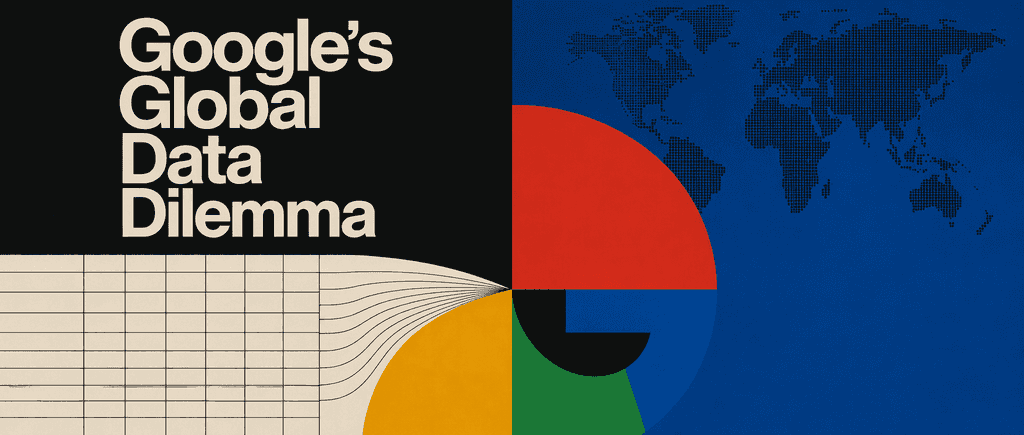
Explore Zak Doffman's Forbes report on major Gmail changes after 22 years. Learn why Google's security updates might mean you need a new email address today.

The very thing we valued—the longevity and stability of our old Gmail—is now the exact thing making us a target. It’s a fundamental warning that the 'one address to rule them all' strategy is a ticking time bomb.
https://www.forbes.com/sites/zakdoffman/2026/04/06/google-changes-gmail-after-22-years-why-you-need-a-new-email-address/


Cree par des anciens de Columbia University a San Francisco
"Instead of endless scrolling, I just hit play on BeFreed. It saves me so much time."
"I never knew where to start with nonfiction—BeFreed’s book lists turned into podcasts gave me a clear path."
"Perfect balance between learning and entertainment. Finished ‘Thinking, Fast and Slow’ on my commute this week."
"Crazy how much I learned while walking the dog. BeFreed = small habits → big gains."
"Reading used to feel like a chore. Now it’s just part of my lifestyle."
"Feels effortless compared to reading. I’ve finished 6 books this month already."
"BeFreed turned my guilty doomscrolling into something that feels productive and inspiring."
"BeFreed turned my commute into learning time. 20-min podcasts are perfect for finishing books I never had time for."
"BeFreed replaced my podcast queue. Imagine Spotify for books — that’s it. 🙌"
"It is great for me to learn something from the book without reading it."
"The themed book list podcasts help me connect ideas across authors—like a guided audio journey."
"Makes me feel smarter every time before going to work"
Cree par des anciens de Columbia University a San Francisco

Jackson: Nia, I was just looking at my inbox and realized I’ve had this same Gmail address for literally twenty-two years. It’s like a digital limb at this point!
Nia: Right? It’s basically our digital DNA. But here’s the plot twist: that two-decade era is officially hitting a massive wall. Google is rolling out changes that are making people realize the old way of doing email is effectively dead.
Jackson: It feels like a breakup after twenty years! I mean, I can’t even imagine the chaos of trying to pick a new username today. Everything cool was taken back in 2004.
Nia: Exactly, it’s a total identity crisis. But there’s a very specific reason why your old habits are suddenly a liability. It’s a dramatic shift in how we have to think about our primary accounts.
Jackson: So let’s dive into why your trusty old address might be the very thing putting you at risk.
Jackson: It really is wild when you think about it—twenty-two years. That’s longer than some of our listeners have been alive! And in that time, we’ve treated that single Gmail address like a universal skeleton key. You use it for your bank, your doctor, your social media, that random shoe site you bought from once in 2012—it’s everywhere.
Nia: And that’s exactly where the plot thickens. Think of it like this: if you use the same key for your front door, your car, your safe deposit box, and your office, you aren’t just making life convenient for yourself. You’re making life incredibly easy for a burglar. If they get that one key, they own your entire life. That’s the "Gmail Era" mentality we’ve all been living in. We thought we were being efficient, but we were actually creating a single point of failure that spans two decades of our personal history.
Jackson: It’s the ultimate irony, isn't it? The more "reliable" an account feels because we’ve had it forever, the more dangerous it actually becomes. I mean, if I look back at my own "sent" folder from fifteen years ago, there’s stuff in there I don't even remember writing—sensitive info, old addresses, maybe even some cringey poetry. But it’s all tied to that one ID.
Nia: Exactly! And Google’s latest shifts are a response to the fact that the threat landscape is just fundamentally different now. Back in 2004, email was mostly about communication. Today, your email address is your digital identity. It’s the anchor for every "Forgot Password" link you’ll ever click. So, if a hacker gets into that twenty-two-year-old account, they don't just see your emails; they get a roadmap to every other account you have. They can literally reset your entire life in a matter of minutes.
Jackson: So, when we talk about Google changing Gmail, it’s not just a UI update or a new button. It’s a fundamental warning that the "one address to rule them all" strategy is a ticking time bomb. It’s like we’ve been building this massive skyscraper on a foundation from the early 2000s, and the ground is starting to shake.
Nia: That’s a perfect analogy. We’re seeing a move toward what experts call "account compartmentalization." The idea is that you shouldn't have one giant, ancient bucket for everything. You need to start breaking things up. Because right now, that old Gmail address is effectively a map of your entire existence. If someone compromises it, they know where you shop, where you bank, and who your friends are. It’s a treasure trove of data that’s been accumulating for over twenty years.
Jackson: It’s almost like we’re digital hoarders without even realizing it. We’ve kept this address for so long that it’s become a liability because of the sheer volume of history attached to it. It’s not just an email address anymore; it’s a biography. And as Google tightens the screws on security, they’re basically telling us that the biography is getting too risky to keep in one place.
Nia: Right, and it’s not just about what *you* do. It’s about how the rest of the world uses your email address as a tracking token. Every time you sign up for a newsletter or a discount code, that twenty-two-year-old address is being pinged and shared. It’s out there in thousands of databases. So, the "change" Google is pushing for is really about forcing us to realize that the era of the "forever address" has to end for our own protection.
Jackson: So, Nia, you mentioned this "compartmentalization" thing. It sounds a bit like having different "zones" for your life, right? Like, you wouldn't keep your work tools in your kitchen pantry. But for twenty-two years, we’ve been doing exactly that with our email. Why is the "why" so urgent *now*? Why wasn't this a problem five or ten years ago?
Nia: Well, think about the scale of data breaches we see today. Back in the day, a "hack" might mean someone’s password got guessed. Today, we’re talking about massive databases of billions of credentials being leaked and traded on the dark web. If you’ve used that same Gmail address for twenty years, I can almost guarantee it’s been part of multiple major breaches. Maybe it was that LinkedIn leak years ago, or a retail site that got hit. Because that address is so old, it has more "surface area" for attackers to target.
Jackson: That makes total sense. It’s like an old house that’s been standing through twenty years of storms—eventually, it’s going to have some structural weaknesses. If I’ve used "JacksonIsCool123@gmail.com" since college, that name is probably in a thousand different marketing databases, half of which have probably been compromised at some point.
Nia: Exactly. And here’s the kicker: even if you’re super careful with your password, the sheer age of the account means it’s a high-value target. Hackers aren't just looking for random people; they’re looking for "anchor" accounts. If they see an account that’s been active for two decades, they know that’s the "gold mine." It’s the account that likely holds the keys to the kingdom. So, Google is essentially saying, "Look, the security measures we’re putting in place—like advanced AI filtering and stricter authentication—are great, but they can only do so much if the account itself is a massive, over-exposed target."
Jackson: So, it’s a bit of a plot twist. The very thing we valued—the longevity and stability of our old Gmail—is now the exact thing making us a target. It’s like wearing a vintage designer watch in a neighborhood where everyone knows its value. It looks great and it’s reliable, but it’s also a giant sign that says, "Rob me!"
Nia: Precisely! And the humor of it is, we all feel this weird emotional attachment to our usernames. I mean, remember the struggle of picking that first Gmail address? It felt so permanent. But now, that permanence is the problem. Google is moving toward a model where they want you to have more control, but they also want you to be more anonymous. The old way of having your full name in your email address—like "John.Doe.1984@gmail.com"—is basically handing a blueprint to a social engineer. They have your name, they have your birth year, and they have twenty years of history to dig through.
Jackson: It’s a total paradigm shift. We went from "I want everyone to know this is me" to "I really hope nobody figures out this is me." It’s like we’re all trying to go into witness protection within our own digital lives. But the transition is so messy! Imagine telling your grandma she needs to stop using the email address she finally learned how to type after fifteen years of trying.
Nia: Oh, the chaos is real! It’s not just about the technical switch; it’s about the "social" friction. You have to tell your bank, your utility company, your Aunt Martha... it feels like moving to a new house, but you have to personally invite every single piece of junk mail to follow you. But that’s the drama of this moment. Google is signaling that this friction is a small price to pay for not losing your entire digital identity. They’re making these changes—like stricter "bulk sender" rules and enhanced protection—to make the platform safer, but the ultimate safety move is on us: we have to stop being so attached to these old, vulnerable addresses.
Jackson: It’s like we’re finally being told that the "free ride" of the early internet—where we just signed up for everything with one account and never looked back—is over. The bill has come due, and the currency is our privacy and security.
Nia: You know, Jackson, I was thinking about that feeling of actually *trying* to change your email address. It’s like deciding to change your legal name while also moving to a different country. The sheer logistics of it are enough to make anyone just want to close their eyes and hope for the best.
Jackson: Right? It’s the ultimate "I’ll do it tomorrow" task. Because where do you even start? Do you start with the big stuff, like your mortgage or your primary bank? Or do you start with the low-stakes stuff, like your Netflix account or that one meditation app you haven't opened in six months? It feels like pulling a single thread on a sweater and realizing the whole thing is going to unravel.
Nia: And then there’s the username struggle! This is where the humor really kicks in. If you’re trying to move away from an old, exposed address, you want something clean, right? But good luck finding "Firstname.Lastname" in 2026. Unless your name is something like "Zebulon Quicksilver," everything is taken! You end up with something like "Jackson.Doe.78945.version2@gmail.com." It’s not exactly the sleek, professional vibe we were going for.
Jackson: Exactly! You go from "Jackson@gmail.com" because you were an early adopter in 2004 to "Jackson.ActuallyThisIsMyNewSecureAddress.2026@gmail.com." It’s a mouthful. But the roleplay of this is so real. Imagine you’re at the doctor’s office, and they ask for your email. You have to stand there and explain, "Well, I have my *old* one for records, but please send the actual results to my *new* one, which is Jackson dot secure underscore ninety-nine at..." By the time you’re done, the waiting room is staring at you like you’re a conspiracy theorist.
Nia: It really does feel like that! But that "conspiracy theorist" vibe is actually just modern common sense. The drama here is that we’re all being forced to become mini-security experts. We’re having to learn about "aliasing"—which is basically creating "throwaway" addresses that forward to your main one. It’s a brilliant solution, but it’s a far cry from the "set it and forget it" simplicity of the Gmail we grew up with.
Jackson: It’s like we’re all becoming secret agents. "Yes, use my 'Public Alias' for the grocery store rewards program, but only my 'Inner Circle' address for my actual financial transactions." It’s sophisticated, but man, it’s a lot of mental overhead. And let’s not even talk about the "password manager" conversation. If you’re switching addresses, you have to update every single login in your manager. It’s a weekend-long project, at least.
Nia: At *least*. And I think that’s why so many people are resisting this change. It’s not that they don't get the risk—it’s that the "fix" feels like a second job. But here’s the narrative twist: the risk of *not* doing it is becoming so high that Google is essentially making the old way "uncomfortable" to use. They’re adding more warnings, more prompts, more "Are you sure?" messages. They’re basically poking us with a stick until we finally move.
Jackson: It’s "tough love" from a tech giant. They’re saying, "We know you love your 2004 username, but it’s a neon sign for hackers. We’re going to make it so annoying to keep using it that you’ll eventually thank us for making you switch." It’s a bold move, but when you look at the sheer scale of identity theft today, you can see why they’re doing it.
Nia: Absolutely. And it’s not just Google—the whole industry is shifting. But since Gmail is the "big one" for so many of us, this change feels the most personal. It’s the "death" of our digital childhoods in a way. We’re moving into the "Adulthood of Email," where things are segmented, protected, and—let’s be honest—a lot less convenient. But that’s the price of living in a world where data is more valuable than oil.
Jackson: You know, Nia, as we’re talking about this, it strikes me that this isn't just about security. It’s about how we define ourselves online. For twenty years, that Gmail address *was* us. It was our "handle." And now, we’re being told that "being ourselves" is actually a security flaw. That’s a bit of a psychological trip, isn't it?
Nia: It really is! It’s like being told that your own name is a liability. We’ve spent two decades building this "digital reputation" tied to one address. If you’ve been a freelancer, or a student, or a parent using that same account, your entire history is baked into it. And now, the "plot twist" is that to be truly secure, you have to embrace a bit of anonymity. You have to stop being "Jackson@gmail.com" and start being "User_8472_Secure@provider.com."
Jackson: It feels so cold! So impersonal! I want people to know it’s me! But I guess that’s the point. If *everyone* knows it’s me, then the "bad guys" know it’s me too. They can see my patterns. They can see that I always get my power bill on the 15th and my gym membership renews on the 1st. They can build a "Jackson Profile" that’s scarily accurate.
Nia: Exactly. And that profile is what they use for those incredibly convincing "spear-phishing" attacks. You get an email that looks exactly like your power bill, arriving exactly when it should, because they’ve been monitoring that twenty-year-old address that’s been leaked in a dozen different places. The "plot twist" is that your own consistency is what betrays you. By moving to a new address—or better yet, multiple addresses for different purposes—you’re breaking that pattern. You’re becoming a "moving target."
Jackson: It’s like we’re in a spy movie, but instead of high-speed chases, we’re just managing email aliases. "Target has changed his communication channel! We’ve lost the trail!" It’s a lot less glamorous, but the stakes are just as high. And it really changes the "vibe" of the internet. It goes from being this friendly, open neighborhood where everyone knows your name to a place where you’re constantly checking your mirrors and making sure your doors are locked.
Nia: That’s a great way to put it. The "Gmail Era" was the era of the "Digital Front Porch." We were all out there, visible and accessible. But the world changed, and now we need to build "Digital Fences." And Google’s changes are basically giving us the tools to build those fences, but we have to be the ones to actually put them up. They can provide the "aliasing" features and the "passkey" support, but we have to make the hard choice to stop using the old, "easy" way.
Jackson: And that’s where the humor comes back in—the "identity crisis" of picking a new persona. Do I go for "Jackson.Professional" for my work-adjacent stuff? "Jackson.Shopping" for my endless stream of Amazon packages? "Jackson.Private" for my actual friends? It’s like I’m creating a bunch of mini-me’s to go out into the world and take the hits for me.
Nia: It’s like having a team of digital bodyguards! Each one handles a different part of your life, so if one gets "attacked"—like if your shopping email gets leaked—it doesn't affect your "private" or "financial" lives. It’s a complete shift in how we think about "who we are" online. We aren't just one person anymore; we’re a collection of compartmentalized identities. And while that feels a bit "Matrix-y," it’s actually the most empowering thing we can do to protect ourselves.
Jackson: So, the "death" of the old email habit is actually the birth of a more resilient digital self. It’s a bit of a struggle to get there, but the "plot twist" is that we’re actually gaining more control by letting go of that one, ancient address. We’re trading "longevity" for "security," and in 2026, that’s a trade we have to make.
Nia: Okay, Jackson, we’ve painted a pretty dramatic picture here—the "death" of the old ways, the "identity crisis," the digital bodyguards. But for our listeners who are sitting there thinking, "Okay, I’m convinced, but I’m also terrified—what do I actually *do*?" Let’s break it down into some real, actionable steps. Because it’s not as impossible as it feels.
Jackson: Right, let’s give them the "Survival Guide." First thing’s first: you don't have to delete your twenty-two-year-old account today. That would be madness. It would be like burning your house down because the locks are old. Instead, think of it as "phasing out" the old and "phasing in" the new. Step one is definitely creating that "Financial Fortress" address, right?
Nia: Absolutely. That’s the most critical move. Create a brand-new, clean email address that you use *only* for your most sensitive accounts—your primary bank, your investment accounts, your mortgage. Don't use this address for *anything* else. No newsletters, no shopping, no "sign in with Google" on random websites. This is your "inner sanctum." And because it’s clean, it’s not in any of those old leak databases.
Jackson: That’s such a smart move. It’s like having a private line that only your most important people have. And then, for the "chaotic" part of our lives—the shopping, the social media, the endless "sign up for 10% off" pop-ups—that’s where the "aliasing" comes in. Nia, how does that actually work in practice?
Nia: It’s actually pretty cool. Services like Apple’s "Hide My Email" or even some of the newer features Google is rolling out allow you to create a unique, random email address for every single site you sign up for. They all forward to your main "Management" inbox, but the site itself never sees your "real" address. So, if "ShoeStore.com" gets hacked, the only thing that leaks is a random string of characters that you can just "turn off" whenever you want. No more spam, and no more "skeleton key" for hackers.
Jackson: It’s like giving everyone a fake name at a party! If someone turns out to be a creep, you just never use that name again. It’s brilliant. So, we’ve got the "Financial Fortress" and the "Aliasing Army." What’s the next step for the old, legacy account?
Nia: The legacy account becomes your "Receptionist." You keep it active so you don't miss anything important, but you start moving the "important" stuff out of it. Every time you log into an old account and realize, "Hey, I actually care about this," you update the email to your new, secure one. Over time, that old Gmail address will mostly just be full of junk mail and old memories. You’ve successfully "de-risked" it.
Jackson: I love that. It’s a "slow and steady" approach. You’re not ripping the Band-Aid off; you’re just slowly building a better system. And let’s not forget the "Passkey" conversation! Google is pushing hard for passkeys over passwords. If you’re setting up these new accounts, that’s the perfect time to ditch the old "Password123" habit and move to something that’s actually tied to your physical device.
Nia: Yes! Passkeys are a game-changer. They use your phone’s biometric data—like your face or fingerprint—to log you in. No more passwords to remember, and more importantly, no more passwords for hackers to steal. It’s the final piece of the "Modern Email" puzzle. When you combine a clean "Financial Fortress" address, an "Aliasing Army" for the web, and "Passkeys" for security, you’re basically a digital fortress.
Jackson: It sounds like a lot when you list it all out, but if you do it one step at a time, it’s totally manageable. It’s about taking back control of your digital identity instead of just letting it "happen" to you like we did for the last twenty years.
Nia: So, Jackson, we’ve talked about the "why" and the "how," but let’s get really practical for a second. If someone is listening to this right now, in their car or at the gym, and they want to start this "migration" tonight, what’s the first, most impactful five minutes they can spend?
Jackson: That’s a great question. I think the first five minutes should be spent on an "Audit of Shame." Just open that old Gmail account, go to the search bar, and type in "Bank" or "Statement" or "Login." Look at how many high-stakes accounts are still tied to that ancient address. It’s a wake-up call. Seeing it all in one place—the sheer volume of your life that’s sitting in that one vulnerable bucket—is the best motivation to actually start the change.
Nia: "Audit of Shame"—I love it! It’s a bit of a reality check. And once you’ve had that moment of "Oh wow, I’m really exposed," the next step is the "One-Account-A-Day" rule. Don't try to move everything at once. Just pick one major account—maybe your primary bank or your main credit card—and move it to a new, secure address. Just one. It takes ten minutes, and you’ve already made yourself significantly safer.
Jackson: That’s so much more approachable. It’s like cleaning a messy house—you don't do the whole thing in an hour; you just start with one drawer. And here’s another pro-tip: when you’re setting up that new "Financial Fortress" address, don't make the username something obvious. Don't use your name and your birth year. Use something random or at least something that doesn't scream "This is Jackson!" It’s all about adding those layers of "anonymity-lite."
Nia: Exactly. And for the listeners who are worried about "forgetting" their new addresses—use a password manager! I know we say it all the time, but in this new world of compartmentalization, a password manager isn't just a luxury; it’s your central nervous system. It’s what keeps track of which "alias" goes to which store and which "secure address" goes to which bank. If you try to remember all of this in your head, you *will* fail, and you’ll go right back to your old, risky habits.
Jackson: It’s the "external brain" we all need. So, to summarize the playbook: do the "Audit of Shame," move one major account a day to a new "Fortress" address, use "Aliasing" for the junk, and let a "Password Manager" hold it all together. It’s a shift in mindset from "Email is a place where I get messages" to "Email is a tool I use to manage my security."
Nia: You’ve hit the nail on the head. It’s a transition from being a "passive user" to being an "active manager" of your digital life. And while it feels like a lot of work upfront, the peace of mind you get from knowing that a single data breach at a random retail site can’t take down your whole life? That’s worth every second of the effort.
Jackson: It really is. It’s like that feeling when you finally get your taxes done or clean out the garage. It’s a weight off your shoulders. You’re no longer walking around with a twenty-two-year-old target on your back. You’re modern, you’re secure, and you’re ready for whatever the next twenty-two years of the internet throw at us.
Nia: And honestly, it’s kind of fun once you get into it! You feel like you’re finally "playing the game" at a higher level. You’re not just a victim of the algorithm or the hackers; you’re the one setting the rules. That’s a powerful shift.
Jackson: Well, Nia, we’ve covered a lot of ground today. From the "death" of our two-decade-old Gmail habits to the "identity crisis" of picking new usernames, and finally to the "Survival Guide" for this new era. It’s been quite a journey through our digital past and into a much more secure future.
Nia: It really has. And I think the biggest takeaway for me is that while these changes from Google might feel like a "dramatic plot twist" or a massive inconvenience, they’re actually a huge opportunity. They’re a chance for all of us to "reset" our digital lives and build something much more resilient. We’ve been coasting on 2004 security for far too long, and it’s time to catch up to 2026.
Jackson: Absolutely. It’s about realizing that our digital presence isn't just something that "happens"—it’s something we have to actively shape and protect. That old Gmail address served us well for twenty-two years, but like a favorite pair of shoes that’s finally worn through the soles, it’s time to thank it for its service and move on to something that actually protects us.
Nia: That’s a beautiful way to put it. "Thank you for your service, JacksonIsCool123@gmail.com, but I’ve got it from here." So, as we wrap things up, I want to leave our listeners with one final thought: your digital security is a journey, not a destination. You don't have to be perfect today; you just have to be better than you were yesterday.
Jackson: Exactly. Just start with that "Audit of Shame." Take a look at what’s in there. You might be surprised—and a little motivated—by what you find. It’s the first step toward a much more secure, and ultimately more peaceful, digital life.
Nia: So, to everyone listening, thank you so much for joining us for this deep dive. We hope it’s given you some clarity, a few laughs, and a lot of motivation to take back control of your inbox. It’s a big shift, but you’ve totally got this.
Jackson: We really appreciate you spending your time with us today. It’s a lot to process, so take a moment to reflect on which of your accounts are the most "exposed" and maybe make that one change today. It’s a small move that makes a massive difference.
Nia: Thanks again for listening, everyone. It’s been a blast exploring the "death" and "rebirth" of email with you. Stay safe out there in the digital wild, and we’ll be thinking of you as you navigate your own "Great Migration."
Jackson: Take care, everyone. And remember—you’re more than just an email address! See you later.