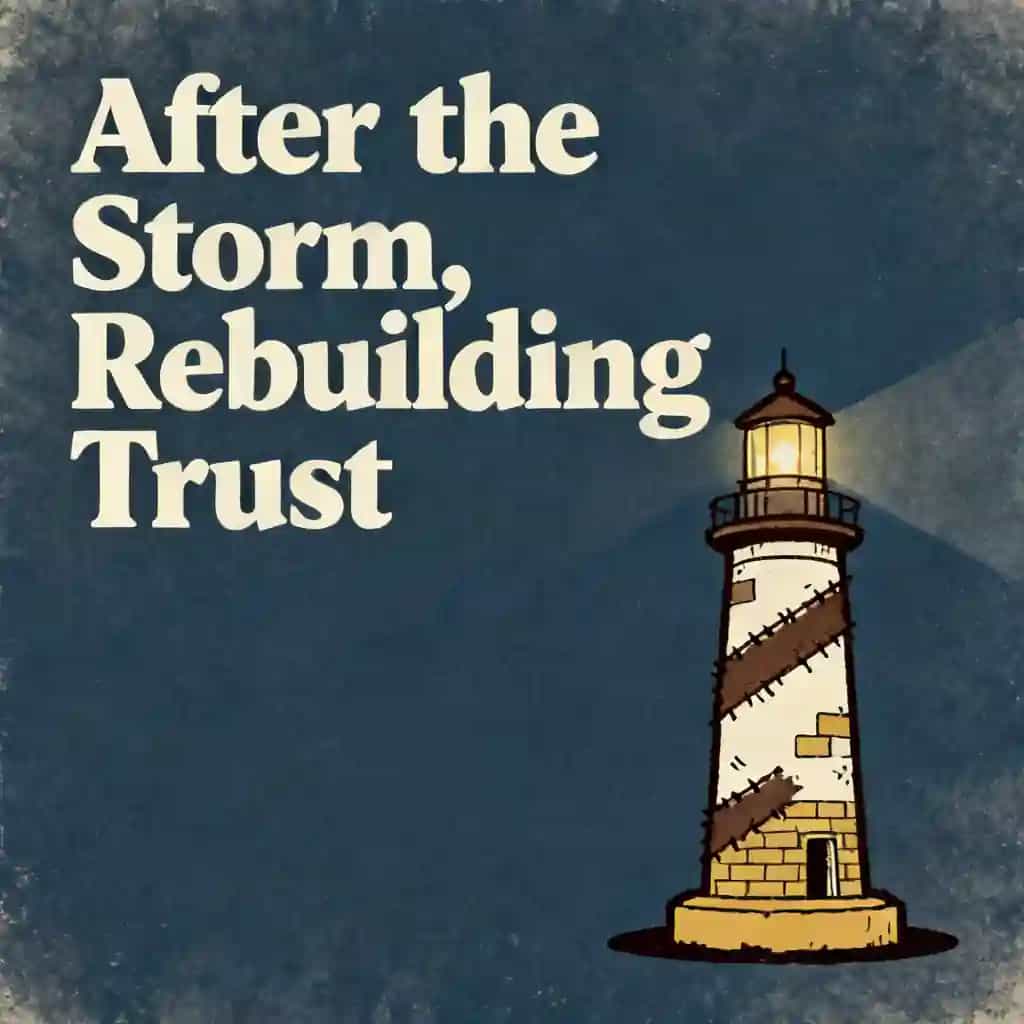
Depositions After a Car Accident: Why Truth Is Enough
Struggling with PTSD makes legal meetings feel like an ambush. Learn how to tell your story and navigate the process while protecting your peace.

Meilleure citation de Depositions After a Car Accident: Why Truth Is Enough
A deposition isn't actually a test you can fail; it’s really just a conversation where the most powerful thing you can do is simply tell your truth. The goal isn’t perfection, it’s honesty, and the most powerful tool you have is your own lived experience.

Cette leçon audio a été créée par un membre de la communauté BeFreed
I have to go in to talk to my lawyer and deposition From a car accident I’m so depressed I can work but I don’t know what to say I have so many sleepless nights , I’m tired drained and injures from my back and head the trams and ptsd has cause my head aches to come back and the back ache won’t let me stand or sit for a long period of time so I try to find work from home job but not able to get employed. I have to depend on people for money. I got hit on a mental hospital bus


Foire aux questions
A deposition is a formal, out-of-court testimony given under oath during the "discovery" phase of a lawsuit. It is not a test with a pass or fail grade, but rather a conversation where an opposing attorney gathers facts and evaluates your credibility as a witness. The goal is not to provide a perfect, rehearsed performance, but to tell your honest, lived experience. Legal experts emphasize that the most powerful tool you have is your truth, and it is perfectly acceptable to say "I don’t recall" if you are fuzzy on specific details.
The "Eggshell Plaintiff" rule is a legal principle stating that a negligent party is responsible for the harm they cause, regardless of whether the victim was more fragile or susceptible to injury than an average person. In legal terms, the defendant must "take the victim as they find them." This means that if a crash aggravated a pre-existing injury or "activated" a silent condition that wasn't previously causing pain, the at-fault party is still liable for that change from your baseline health.
Non-economic damages refer to "invisible" struggles like pain and suffering, emotional distress, and loss of enjoyment of life. Since these don't come with standard receipts, you must create evidence through consistent documentation. This can include keeping a daily pain journal that tracks functional limitations—such as missing family events or losing sleep—and obtaining statements from friends or family who can testify to the "before and after" of your personality and physical abilities. Clinical records from therapists or psychiatrists also serve as objective proof of conditions like PTSD.
Even if you were unemployed or seeking work at the time of the accident, you can still claim "loss of future earning capacity." Vocational experts can be brought in to analyze your education and skills to determine what work you could have done versus what you can do now with your injuries. If chronic pain or PTSD symptoms prevent you from handling the "cognitive load" of a job or the physical demands of sitting at a desk, those financial losses are considered compensable economic damages.
The "golden rule" of a deposition is that less is more; you should provide short, direct answers and only answer the specific question asked without volunteering extra information. To maintain control, you should pause before every answer to break the opposing attorney's rhythm and give your lawyer time to object to unfair questions. Additionally, you have the right to request breaks if you are experiencing physical pain or emotional exhaustion, as taking care of your physical needs is essential to providing clear testimony.
Découvrir plus

Disrupting the Juror Truth Default
This plan is essential for trial attorneys who need to overcome the natural human tendency to believe witnesses at face value. It provides a psychological framework and tactical toolkit for litigators looking to sharpen their influence during voir dire and cross-examination.
Rebuild life after trauma & inspire others
Trauma can fundamentally alter one's sense of self and safety, but healing is possible through deliberate, evidence-based approaches. This learning plan provides a roadmap for those ready to transform their trauma experience into growth, resilience, and ultimately, a platform to inspire others on similar journeys.

Combat CPTSD, Complex Trauma
Complex trauma from childhood abuse, neglect, or chronic relational wounds creates pervasive impacts on identity, relationships, and nervous system functioning that differ significantly from single-event PTSD. This learning plan is essential for individuals struggling with emotional dysregulation, relationship difficulties, or chronic feelings of unsafety stemming from developmental trauma who want to move from surviving to thriving. It combines neuroscience-informed approaches with compassionate inner work to address both the body-based and psychological dimensions of healing.

From Bracing to Breathing
This plan is essential for survivors of emotional abuse seeking to untangle their true identity from trauma-induced defense mechanisms. It is designed for anyone struggling with avoidant attachment or chronic hypervigilance who wants to restore a sense of safety and flow in their relationships.

Tactical Peace for Volatile Homes
This plan is essential for individuals navigating high-conflict domestic situations or post-separation abuse. It provides a strategic framework for those who need to prioritize safety, legal protection, and child well-being while disengaging from a volatile partner.

Surviving Divorce
Divorce is one of life's most challenging transitions, requiring both emotional resilience and practical strategy. This plan is designed for anyone navigating a separation who needs a roadmap for healing, legal stability, and personal reinvention.
Rebuilding my wife’s trust after betrayal.
Rebuilding trust after betrayal requires understanding, accountability, and consistent effort to heal deep emotional wounds. This learning plan guides individuals who have broken their partner's trust through a structured process of taking responsibility, implementing repair strategies, and developing the skills needed to rebuild a stronger, more authentic relationship.

Research trauma bonding & pimping psychology
This learning plan is essential for social workers, legal professionals, and survivors seeking to understand the deep-seated psychological mechanics of exploitation. It provides a critical lens into how trauma bonds are formed and maintained, offering a path toward professional intervention and personal recovery.
Cree par des anciens de Columbia University a San Francisco
"Instead of endless scrolling, I just hit play on BeFreed. It saves me so much time."


"I never knew where to start with nonfiction—BeFreed’s book lists turned into podcasts gave me a clear path."


"Perfect balance between learning and entertainment. Finished ‘Thinking, Fast and Slow’ on my commute this week."
"Crazy how much I learned while walking the dog. BeFreed = small habits → big gains."
"Reading used to feel like a chore. Now it’s just part of my lifestyle."

"Feels effortless compared to reading. I’ve finished 6 books this month already."
"BeFreed turned my guilty doomscrolling into something that feels productive and inspiring."

"BeFreed turned my commute into learning time. 20-min podcasts are perfect for finishing books I never had time for."
"BeFreed replaced my podcast queue. Imagine Spotify for books — that’s it. 🙌"

"It is great for me to learn something from the book without reading it."
"The themed book list podcasts help me connect ideas across authors—like a guided audio journey."
"Makes me feel smarter every time before going to work"
Cree par des anciens de Columbia University a San Francisco
"Instead of endless scrolling, I just hit play on BeFreed. It saves me so much time."
"I never knew where to start with nonfiction—BeFreed’s book lists turned into podcasts gave me a clear path."
"Perfect balance between learning and entertainment. Finished ‘Thinking, Fast and Slow’ on my commute this week."
"Crazy how much I learned while walking the dog. BeFreed = small habits → big gains."
"Reading used to feel like a chore. Now it’s just part of my lifestyle."
"Feels effortless compared to reading. I’ve finished 6 books this month already."
"BeFreed turned my guilty doomscrolling into something that feels productive and inspiring."
"BeFreed turned my commute into learning time. 20-min podcasts are perfect for finishing books I never had time for."
"BeFreed replaced my podcast queue. Imagine Spotify for books — that’s it. 🙌"
"It is great for me to learn something from the book without reading it."
"The themed book list podcasts help me connect ideas across authors—like a guided audio journey."
"Makes me feel smarter every time before going to work"
"Instead of endless scrolling, I just hit play on BeFreed. It saves me so much time."
"I never knew where to start with nonfiction—BeFreed’s book lists turned into podcasts gave me a clear path."
"Perfect balance between learning and entertainment. Finished ‘Thinking, Fast and Slow’ on my commute this week."
"Crazy how much I learned while walking the dog. BeFreed = small habits → big gains."
"Reading used to feel like a chore. Now it’s just part of my lifestyle."
"Feels effortless compared to reading. I’ve finished 6 books this month already."
"BeFreed turned my guilty doomscrolling into something that feels productive and inspiring."
"BeFreed turned my commute into learning time. 20-min podcasts are perfect for finishing books I never had time for."
"BeFreed replaced my podcast queue. Imagine Spotify for books — that’s it. 🙌"
"It is great for me to learn something from the book without reading it."
"The themed book list podcasts help me connect ideas across authors—like a guided audio journey."
"Makes me feel smarter every time before going to work"
"Instead of endless scrolling, I just hit play on BeFreed. It saves me so much time."
"I never knew where to start with nonfiction—BeFreed’s book lists turned into podcasts gave me a clear path."
"Perfect balance between learning and entertainment. Finished ‘Thinking, Fast and Slow’ on my commute this week."
"Crazy how much I learned while walking the dog. BeFreed = small habits → big gains."
"Reading used to feel like a chore. Now it’s just part of my lifestyle."
"Feels effortless compared to reading. I’ve finished 6 books this month already."
"BeFreed turned my guilty doomscrolling into something that feels productive and inspiring."
"BeFreed turned my commute into learning time. 20-min podcasts are perfect for finishing books I never had time for."
"BeFreed replaced my podcast queue. Imagine Spotify for books — that’s it. 🙌"
"It is great for me to learn something from the book without reading it."
"The themed book list podcasts help me connect ideas across authors—like a guided audio journey."
"Makes me feel smarter every time before going to work"