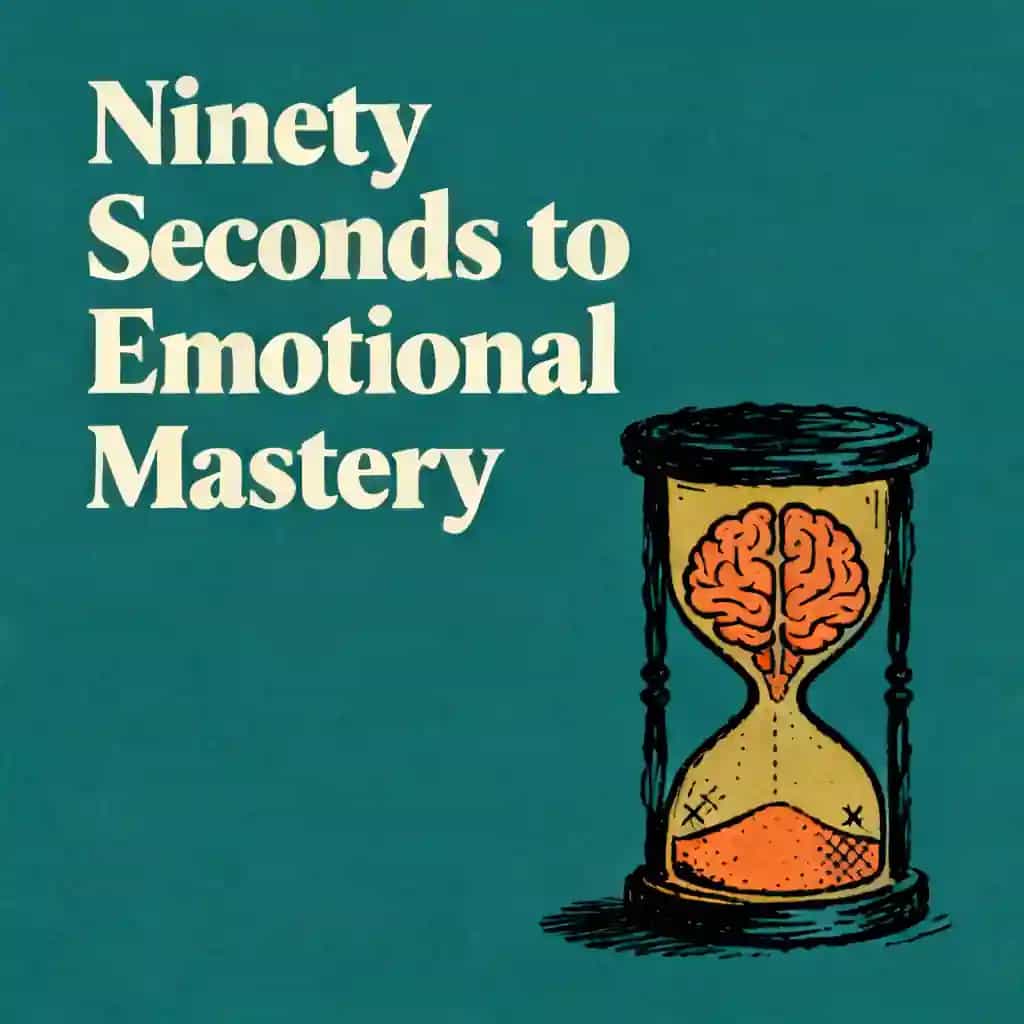
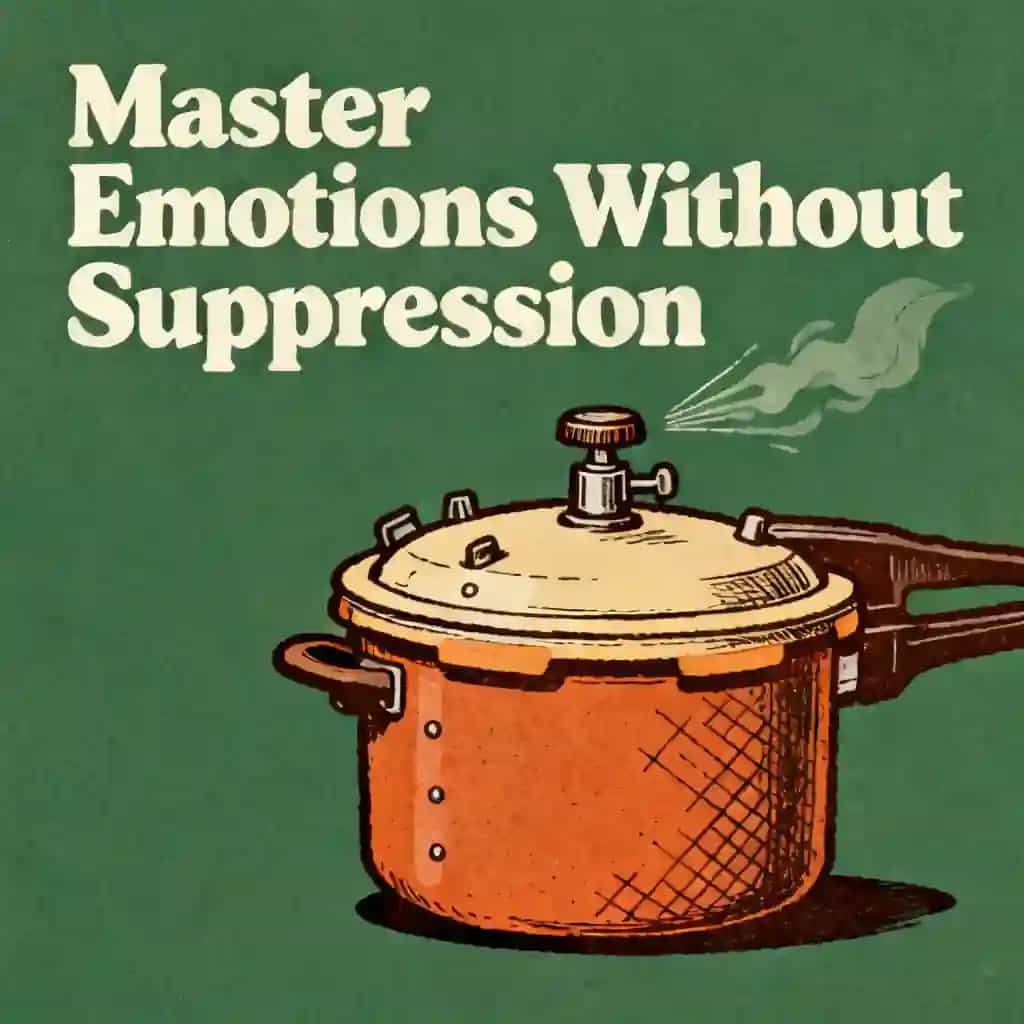
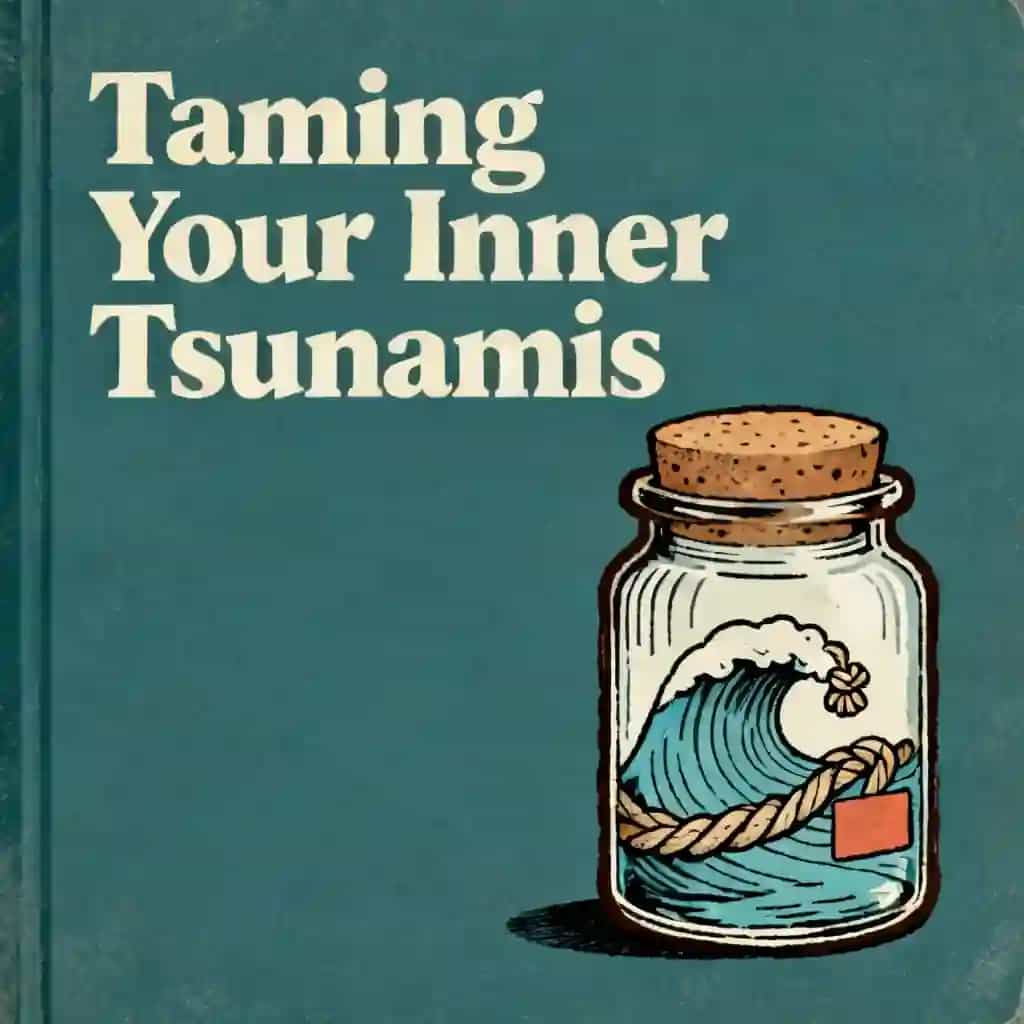
Calm as a Skill: Emotions as Data and Emotional Regulation
Learn how to view feelings as data rather than directives. Explore emotional regulation and mindfulness techniques to manage stress and improve self-regulation.

Meilleure citation de Calm as a Skill: Emotions as Data and Emotional Regulation
Feelings are data, not directives. The goal is not to 'win' the moment or the argument; the goal is to protect the outcome.
Generated by Ricky
Create a practical audio training lesson on emotional regulation. Key Concept: Emotions are data/signals, not directives. The goal is to lower intensity and choose a response that protects the outcome rather than 'winning' the moment. Core Phrases to repeat: - Feelings are data, not directives. - Respect the signal. Question the story. Choose the response. - Facts first, story second. - Lower the heat before solving the problem. - Calm is a skill, not a mood. Mental Model: Emotion (Data) -> Story (Interpretation) -> Action (Choice). Structure: 1. Intro: Emotional regulation as a skill/early warning signs (body cues). 2. The Pause Protocol: Stop, Breathe, Name, Read Data, Check Story, Choose Action. 3. Data vs. Interpretation: Distinguishing facts (e.g., 'no reply') from stories (e.g., 'they are ignoring me'). 4. In-the-moment tools: Breathing, relaxing jaw, respectful timeouts, delaying responses. 5. Memorizable Scripts: 'I need a minute,' 'Help me understand,' 'I reacted too strongly.' 6. Real-life scenarios: Work, family, text messages, feeling criticized/ignored. 7. After-action review: How to repair and learn when you react poorly. 8. Daily practice routine and flashcard recap. Tone: Calm coach, practical, warm, direct, training-focused. Verbatim URLs/Text provided: Include all specific phrases and questions listed in the request.

Foire aux questions
Viewing feelings as data means recognizing that emotions are signals or information rather than orders you must follow. In the podcast Calm as a Skill, Cedric explains that while emotions like a racing heart or a spike of heat are vivid and demand attention, they are not necessarily literal maps of reality. By treating these feelings as a weather report or information, you can choose how to respond instead of reacting impulsively to the loud signals your mind sends.
Emotional regulation is a skill that allows you to process intense physical and mental signals without letting them dictate your actions. When you experience a sudden spike of heat or anxiety from a simple text message, self-regulation skills help you realize that the 'messenger' in your mind isn't the boss of you. By understanding that emotions are data, you can avoid defensive reactions and instead manage your stress by observing the signal without feeling forced to obey it.
Strong physical reactions, such as a racing heart or a feeling of heat in the chest, often occur because our minds interpret small cues—like a period instead of an exclamation mark—as major threats. This phenomenon is like a frantic messenger screaming that the house is on fire. Developing emotional intelligence involves recognizing these signals as distorted mirrors or melting clocks in a gallery; they are striking and demand attention, but they don't have to result in an immediate, defensive reaction.
Cree par des anciens de Columbia University a San Francisco
"Instead of endless scrolling, I just hit play on BeFreed. It saves me so much time."


"I never knew where to start with nonfiction—BeFreed’s book lists turned into podcasts gave me a clear path."


"Perfect balance between learning and entertainment. Finished ‘Thinking, Fast and Slow’ on my commute this week."
"Crazy how much I learned while walking the dog. BeFreed = small habits → big gains."
"Reading used to feel like a chore. Now it’s just part of my lifestyle."

"Feels effortless compared to reading. I’ve finished 6 books this month already."
"BeFreed turned my guilty doomscrolling into something that feels productive and inspiring."

"BeFreed turned my commute into learning time. 20-min podcasts are perfect for finishing books I never had time for."
"BeFreed replaced my podcast queue. Imagine Spotify for books — that’s it. 🙌"

"It is great for me to learn something from the book without reading it."
"The themed book list podcasts help me connect ideas across authors—like a guided audio journey."
"Makes me feel smarter every time before going to work"
Cree par des anciens de Columbia University a San Francisco
"Instead of endless scrolling, I just hit play on BeFreed. It saves me so much time."
"I never knew where to start with nonfiction—BeFreed’s book lists turned into podcasts gave me a clear path."
"Perfect balance between learning and entertainment. Finished ‘Thinking, Fast and Slow’ on my commute this week."
"Crazy how much I learned while walking the dog. BeFreed = small habits → big gains."
"Reading used to feel like a chore. Now it’s just part of my lifestyle."
"Feels effortless compared to reading. I’ve finished 6 books this month already."
"BeFreed turned my guilty doomscrolling into something that feels productive and inspiring."
"BeFreed turned my commute into learning time. 20-min podcasts are perfect for finishing books I never had time for."
"BeFreed replaced my podcast queue. Imagine Spotify for books — that’s it. 🙌"
"It is great for me to learn something from the book without reading it."
"The themed book list podcasts help me connect ideas across authors—like a guided audio journey."
"Makes me feel smarter every time before going to work"
"Instead of endless scrolling, I just hit play on BeFreed. It saves me so much time."
"I never knew where to start with nonfiction—BeFreed’s book lists turned into podcasts gave me a clear path."
"Perfect balance between learning and entertainment. Finished ‘Thinking, Fast and Slow’ on my commute this week."
"Crazy how much I learned while walking the dog. BeFreed = small habits → big gains."
"Reading used to feel like a chore. Now it’s just part of my lifestyle."
"Feels effortless compared to reading. I’ve finished 6 books this month already."
"BeFreed turned my guilty doomscrolling into something that feels productive and inspiring."
"BeFreed turned my commute into learning time. 20-min podcasts are perfect for finishing books I never had time for."
"BeFreed replaced my podcast queue. Imagine Spotify for books — that’s it. 🙌"
"It is great for me to learn something from the book without reading it."
"The themed book list podcasts help me connect ideas across authors—like a guided audio journey."
"Makes me feel smarter every time before going to work"
"Instead of endless scrolling, I just hit play on BeFreed. It saves me so much time."
"I never knew where to start with nonfiction—BeFreed’s book lists turned into podcasts gave me a clear path."
"Perfect balance between learning and entertainment. Finished ‘Thinking, Fast and Slow’ on my commute this week."
"Crazy how much I learned while walking the dog. BeFreed = small habits → big gains."
"Reading used to feel like a chore. Now it’s just part of my lifestyle."
"Feels effortless compared to reading. I’ve finished 6 books this month already."
"BeFreed turned my guilty doomscrolling into something that feels productive and inspiring."
"BeFreed turned my commute into learning time. 20-min podcasts are perfect for finishing books I never had time for."
"BeFreed replaced my podcast queue. Imagine Spotify for books — that’s it. 🙌"
"It is great for me to learn something from the book without reading it."
"The themed book list podcasts help me connect ideas across authors—like a guided audio journey."
"Makes me feel smarter every time before going to work"