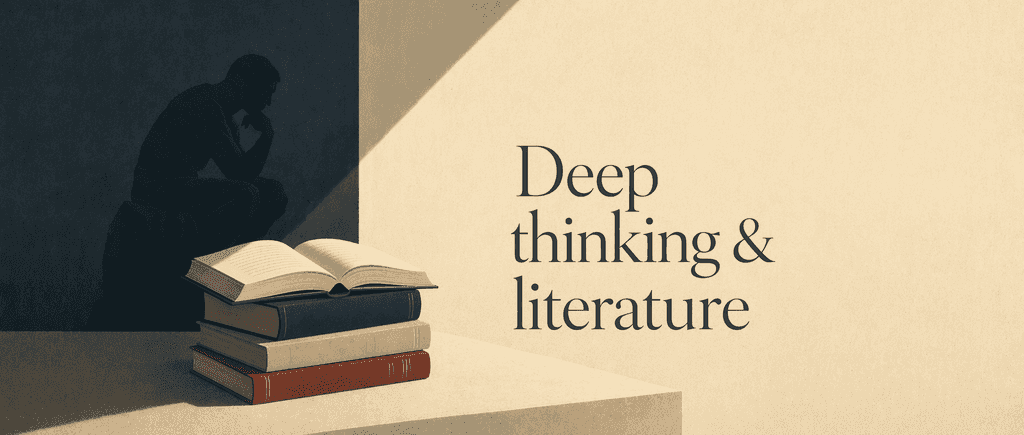
Beyond the Plot: Mastering Literary Lenses
Discover how literary theory transforms reading from a passive hobby into a dynamic decoding process. Learn to apply diverse critical frameworks—from power to psychology—to unlock new meanings in every book.

Meilleure citation de Beyond the Plot: Mastering Literary Lenses
Literary theory is a set of tools that lets us 'zoom in' on specific ideas—like power, gender, or history—rather than just looking at the plot. It’s the difference between just reading a story and actually decoding how it works.
Generated by Lilly
Learning the basics of literary theory

Foire aux questions
New Criticism, which was prominent in the mid-twentieth century, treats a piece of literature as a self-contained, "sealed" artifact. This lens focuses strictly on "close reading," meaning the analyzer only looks at the words on the page, metaphors, and symbols to find a singular, polished meaning. Under this theory, you are discouraged from looking at the author’s biography, the historical time period, or even your own emotional response, as these are considered "fallacies" that cloud objective analysis.
While New Criticism looks at the specific "what" of a single book, Structuralism looks at the "how" of all books. Influenced by linguistics, Structuralists believe that underneath every story is a universal "narrative grammar" or a skeletal structure that repeats across all myths and tales. Instead of focusing on the unique genius of an author, they look for "binary oppositions"—such as good versus evil or nature versus culture—and recurring functions that generate the tension in a story.
Both Marxist and Feminist theories move away from the idea of literature as "timeless art" and instead view it as a reflection of real-world power dynamics. A Marxist critic examines literature as a product of material conditions, looking for class struggle and the "silences" regarding labor and exploitation. Similarly, a Feminist critic looks for gendered power structures, questioning the roles women play in a story and how patriarchal frameworks might marginalize or silence female voices. Both lenses seek to "de-idealize" the text to see how it reinforces or challenges social ideologies.
Proposed by Roland Barthes, the "Death of the Author" suggests that once a book is written, the author’s original intentions or "correct" meanings no longer matter. Instead, the "birth of the reader" occurs, meaning that the power to create meaning shifts entirely to the person reading the text. This perspective views literature as a "playground" where meaning is a fluid transaction between the page and the reader’s own history and baggage, rather than a secret code left behind by a god-like creator.
Ecocriticism shifts the perspective from "anthropocentrism" (human-centered) to "ecocentrism" (nature-centered). Instead of viewing the natural world as a mere backdrop or resource for human drama, this lens asks what the environment itself is doing and whether it has its own agency. It examines how stories shape our relationship with the Earth, often critiquing "man versus nature" narratives and looking for an "environmental unconscious" that reflects our interdependence with ecosystems.
Cree par des anciens de Columbia University a San Francisco
"Instead of endless scrolling, I just hit play on BeFreed. It saves me so much time."


"I never knew where to start with nonfiction—BeFreed’s book lists turned into podcasts gave me a clear path."


"Perfect balance between learning and entertainment. Finished ‘Thinking, Fast and Slow’ on my commute this week."
"Crazy how much I learned while walking the dog. BeFreed = small habits → big gains."
"Reading used to feel like a chore. Now it’s just part of my lifestyle."

"Feels effortless compared to reading. I’ve finished 6 books this month already."
"BeFreed turned my guilty doomscrolling into something that feels productive and inspiring."

"BeFreed turned my commute into learning time. 20-min podcasts are perfect for finishing books I never had time for."
"BeFreed replaced my podcast queue. Imagine Spotify for books — that’s it. 🙌"

"It is great for me to learn something from the book without reading it."
"The themed book list podcasts help me connect ideas across authors—like a guided audio journey."
"Makes me feel smarter every time before going to work"
Cree par des anciens de Columbia University a San Francisco
"Instead of endless scrolling, I just hit play on BeFreed. It saves me so much time."
"I never knew where to start with nonfiction—BeFreed’s book lists turned into podcasts gave me a clear path."
"Perfect balance between learning and entertainment. Finished ‘Thinking, Fast and Slow’ on my commute this week."
"Crazy how much I learned while walking the dog. BeFreed = small habits → big gains."
"Reading used to feel like a chore. Now it’s just part of my lifestyle."
"Feels effortless compared to reading. I’ve finished 6 books this month already."
"BeFreed turned my guilty doomscrolling into something that feels productive and inspiring."
"BeFreed turned my commute into learning time. 20-min podcasts are perfect for finishing books I never had time for."
"BeFreed replaced my podcast queue. Imagine Spotify for books — that’s it. 🙌"
"It is great for me to learn something from the book without reading it."
"The themed book list podcasts help me connect ideas across authors—like a guided audio journey."
"Makes me feel smarter every time before going to work"
"Instead of endless scrolling, I just hit play on BeFreed. It saves me so much time."
"I never knew where to start with nonfiction—BeFreed’s book lists turned into podcasts gave me a clear path."
"Perfect balance between learning and entertainment. Finished ‘Thinking, Fast and Slow’ on my commute this week."
"Crazy how much I learned while walking the dog. BeFreed = small habits → big gains."
"Reading used to feel like a chore. Now it’s just part of my lifestyle."
"Feels effortless compared to reading. I’ve finished 6 books this month already."
"BeFreed turned my guilty doomscrolling into something that feels productive and inspiring."
"BeFreed turned my commute into learning time. 20-min podcasts are perfect for finishing books I never had time for."
"BeFreed replaced my podcast queue. Imagine Spotify for books — that’s it. 🙌"
"It is great for me to learn something from the book without reading it."
"The themed book list podcasts help me connect ideas across authors—like a guided audio journey."
"Makes me feel smarter every time before going to work"
"Instead of endless scrolling, I just hit play on BeFreed. It saves me so much time."
"I never knew where to start with nonfiction—BeFreed’s book lists turned into podcasts gave me a clear path."
"Perfect balance between learning and entertainment. Finished ‘Thinking, Fast and Slow’ on my commute this week."
"Crazy how much I learned while walking the dog. BeFreed = small habits → big gains."
"Reading used to feel like a chore. Now it’s just part of my lifestyle."
"Feels effortless compared to reading. I’ve finished 6 books this month already."
"BeFreed turned my guilty doomscrolling into something that feels productive and inspiring."
"BeFreed turned my commute into learning time. 20-min podcasts are perfect for finishing books I never had time for."
"BeFreed replaced my podcast queue. Imagine Spotify for books — that’s it. 🙌"
"It is great for me to learn something from the book without reading it."
"The themed book list podcasts help me connect ideas across authors—like a guided audio journey."
"Makes me feel smarter every time before going to work"