Most people stay at the same happiness level for decades. Learn the science-backed habits that help you break the cycle and boost your joy baseline.

Happiness isn’t something that happens to us—it’s something we practice. It’s a skill, and when we lean into the forty percent of our well-being determined by intentional activities, we can actually outperform our genetics.
Cree par des anciens de Columbia University a San Francisco
"Instead of endless scrolling, I just hit play on BeFreed. It saves me so much time."
"I never knew where to start with nonfiction—BeFreed’s book lists turned into podcasts gave me a clear path."
"Perfect balance between learning and entertainment. Finished ‘Thinking, Fast and Slow’ on my commute this week."
"Crazy how much I learned while walking the dog. BeFreed = small habits → big gains."
"Reading used to feel like a chore. Now it’s just part of my lifestyle."
"Feels effortless compared to reading. I’ve finished 6 books this month already."
"BeFreed turned my guilty doomscrolling into something that feels productive and inspiring."
"BeFreed turned my commute into learning time. 20-min podcasts are perfect for finishing books I never had time for."
"BeFreed replaced my podcast queue. Imagine Spotify for books — that’s it. 🙌"
"It is great for me to learn something from the book without reading it."
"The themed book list podcasts help me connect ideas across authors—like a guided audio journey."
"Makes me feel smarter every time before going to work"
Cree par des anciens de Columbia University a San Francisco

Lena: Eli, I was looking at some new data from 2026, and it turns out most of us are totally wrong about how happiness works. We think it’s this mountain we climb as we get older and more successful, but a twenty-year study found that most people die only a few percentage points happier than they were as kids!
Eli: It’s wild, right? We’re on this "hedonic treadmill" where the big stuff—like a promotion or a bigger house—just becomes the new normal. But here’s the hook: there are "outliers" in the research who actually boosted their baseline happiness by up to 50% over those two decades.
Lena: 50%? That’s a massive jump. So, it’s not about luck; it’s about acting with intention.
Eli: Exactly. It’s about using a specific toolkit of science-backed habits. We’ve narrowed it down to the ten best moves you can make today.
Lena: Let’s dive into the first few strategies for rewiring that baseline.
Lena: So, if most people only move the needle a tiny bit over their whole lives, what are these outliers doing differently? I mean—a fifty percent jump in happiness isn’t just a good week—that’s a total life transformation.
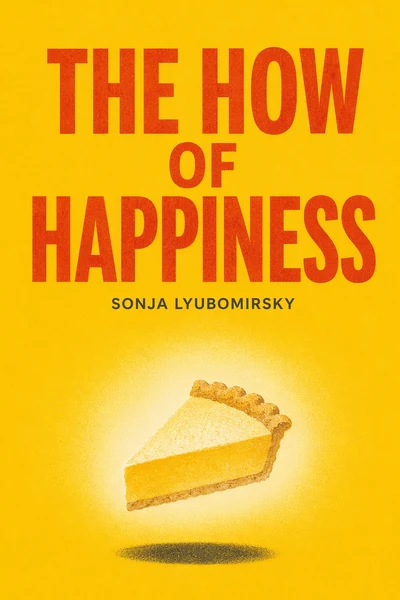
Eli: It really is. And to understand how they do it, we have to look at what scientists call the Happiness Pie Chart. This is a classic model from researchers like Sonja Lyubomirsky. They found that our happiness levels are basically broken down into three slices. About fifty percent is your genetic set point—basically the temperament you were born with. Some people are just naturally more "glass half full" than others.
Lena: Okay, so half is just the hand we’re dealt. What about the rest? I bet people think the other fifty percent is all about how much money they make or if they’re married.
Eli: That’s the big misconception! Life circumstances—your income, your house, even your health or marital status—only account for about ten percent of the variance in happiness between people. Only ten percent!
Lena: Wait, only ten percent? That’s tiny! We spend so much time chasing that ten percent—working overtime for the raise, scrolling through Zillow for the dream home—and it barely moves the needle?
Eli: Exactly. It’s because of that hedonic adaptation we mentioned. You get the house, you love it for three months, and then it’s just... the place where you live. But here’s the gold mine: the remaining forty percent is determined by intentional activities. Your daily habits, your mindset, and the choices you make every single day.
Lena: So forty percent of our happiness is actually under our direct control. That’s incredibly empowering. It means happiness isn’t something that happens to us—it’s something we practice.
Eli: Precisely. It’s a skill. And the latest research from early 2026—including a massive meta-analysis of over one hundred and eighty studies—shows that when we lean into that forty percent with the right tools, we can actually "outperform" our genetics.
Lena: I love that. "Outperforming your genetics." But I have to ask—since we have all these options, from gratitude to exercise to meditation—does it matter which one we pick? Or is there one "magic pill" that works for everyone?
Eli: That’s actually one of the most surprising findings from that 2026 Nature Human Behaviour study. They compared a dozen different interventions head-to-head—things like mindfulness, yoga, and positive psychology—and found that most of them performed remarkably similarly. There isn’t necessarily one "superior" habit.
Lena: So it’s more about what you’ll actually stick with?
Eli: You hit the nail on the head. Because the efficacy is so similar across the board, adherence becomes the ultimate tie-breaker. If you hate meditating but love a brisk walk, the walk is going to do way more for your happiness because you’ll actually do it. It’s about finding the "best fit" for your personality.
Lena: That takes so much pressure off. It’s not about doing the "perfect" thing; it’s about doing *something* intentional. Let’s start breaking down these tools so people can figure out which ones fit their toolkit.
Eli: If we’re building a happiness toolkit, we have to start with the body. I know it sounds basic, but the data is undeniable: physical health is the biological foundation of joy.
Lena: Right, I saw a study mentioning that regular exercise increases happiness just as much as doubling your income would. Which—let’s be honest—is a lot easier to start today than getting a hundred percent raise!
Eli: It’s true! In one study, after just eight weeks of exercising for thirty minutes three times a week, people reported a twelve percent boost in their well-being. And get this—the same study showed that doubling your salary only gives you about a ten percent boost.
Lena: That is wild. We’re literally leaving happiness on the table by sitting on the couch. But why does it work so well? Is it just the "runner’s high"?
Eli: It’s actually a "triple threat" of biological and psychological factors. First, you’ve got the chemical hypothesis—exercise releases endorphins and serotonin, and it boosts something called BDNF, which is basically like "Miracle-Gro" for your brain cells. It literally improves how your brain functions.
Lena: "Miracle-Gro for the brain"—I’m definitely remembering that one. What are the other two?
Eli: Then you have the mastery hypothesis. When you push your body and hit a new goal—even if it’s just walking an extra ten minutes—it builds self-esteem and self-efficacy. You’re proving to yourself that you’re capable. And finally, there’s the distraction hypothesis. Exercise acts like a forced meditation—it breaks the cycle of daily stress.
Lena: But I’ve noticed that when I’m really stressed, I sometimes *don’t* want to move. I’d rather vent to a friend or just sit and stew.
Eli: That’s a huge pitfall! We often think "venting" our anger or frustration is healthy—like letting steam out of a pressure cooker. But the research actually shows that venting often just "pours fuel on the fire." It keeps your brain focused on the negative. Exercise, on the other hand, shifts your physiology.
Lena: So instead of complaining about a bad day, I should probably just go for a run?
Eli: Exactly. And if you want to supercharge it, the 2026 meta-analysis found that the "gold medalist" of all interventions was combining exercise with a psychological element.
Lena: Like what? Listening to a philosophy podcast while jogging?
Eli: It could be that, or it could be an "awe walk"—where you walk and intentionally look for things that amaze you—or even "meditation combined with brisk walking." That combination of moving the body while engaging the mind produced the largest statistical effect in the entire study.
Lena: So it’s not just about the sweat; it’s about the intention behind the movement. But what if someone isn’t a "gym person"? Does yoga count?
Eli: Yoga is actually fascinating in the data. It ranked incredibly high—sometimes even higher than standard gym workouts. The researchers think it’s because yoga isn’t just physical; it’s a "multi-modal" practice. You’re doing the postures, but you’re also practicing breath regulation—Pranayama—and focus.
Lena: So you’re getting the "Miracle-Gro" for the brain *plus* the mindfulness benefits all in one go.
Eli: Exactly. It’s like a Swiss Army knife for your well-being. Whether it’s yoga, a walk, or a high-intensity workout, the key is to stop seeing exercise as a "chore" for your weight and start seeing it as a "wonder drug" for your mood.
Lena: Okay, so we’ve got the physical foundation. But let’s talk about the mind. I’ve heard so much about gratitude journals—it almost sounds too simple to be effective. Is it actually backed by hard science?
Eli: It is probably the most well-replicated intervention in all of positive psychology. Robert Emmons, one of the leading researchers in this field, found that regularly practicing gratitude can increase happiness by about twenty-five percent.
Lena: Twenty-five percent just from writing things down? How does that even work?
Eli: It’s all about counteracting our "negativity bias." Our brains are evolved to scan the horizon for threats—saber-toothed tigers, or in 2026, a passive-aggressive email from the boss. We’re hardwired to notice what’s going wrong. Gratitude is like a deliberate "re-training" program for your attention.
Lena: So it’s like exercising a "gratitude muscle"?
Eli: That’s a perfect analogy. Every time you write down three specific things you’re grateful for, you’re strengthening the neural pathways responsible for finding reasons to be happy. If you do it consistently, your brain starts doing it automatically, even when you’re not journaling.
Lena: I’ve tried it before, but I feel like I just end up writing "my dog, my coffee, my bed" every day. Does it still work if it becomes repetitive?
Eli: That’s a common pitfall! To get the real boost, you have to be specific and you have to *savor* it. Instead of just "coffee," write "the way the steam smelled in the morning sunlight." That specificity triggers a real emotional response, which is what actually moves the needle.
Lena: Ah, so it’s the *feeling* of gratitude, not just the list. I also read about something called "counterfactual thinking"—which sounds like the opposite of gratitude but somehow helps?
Eli: It’s a bit of a "brain hack." Instead of just thinking about what you have, you spend a moment visualizing a world where you *don’t* have it. Like, "What if I had never met my best friend?" or "What if I didn't have this job?"
Lena: That sounds a little depressing, Eli!
Eli: It feels that way for a second, but it creates this "It’s a Wonderful Life" effect. When you "mentally subtract" a positive event from your life, it makes the reality of having it feel much more surprising and precious. It breaks through that "hedonic adaptation" we talked about.
Lena: It’s like a reset button for taking things for granted.
Eli: Exactly. And speaking of reset buttons, another high-performer in the research is "savoring." This is the deliberate act of amplifying a positive experience while it’s happening. If you’re eating a great meal, don’t scroll through your phone. Put the phone away, notice the flavors, and tell yourself, "I am really enjoying this right now."
Lena: I’m definitely guilty of the "scroll and eat" habit. It’s like I’m physically there, but my brain is somewhere else entirely.
Eli: And that’s the problem! A famous Harvard study found that our minds wander about forty-seven percent of the time—and mind-wandering is a huge predictor of unhappiness. We’re often "mentally time-traveling" to a stressful meeting in the future or a mistake in the past. Savoring anchors you in the "now," which is where happiness actually lives.
Lena: So the toolkit so far is: move the body—ideally with a mental element—and then train the brain to spot and savor the good. It sounds like we’re building a shield against that "flat-line" happiness most people experience.
Eli: That’s exactly what it is. It’s about taking that forty percent of intentional activity and using it to build a life that actually feels better from the inside out.
Lena: Eli, we’ve talked about exercise and mindset, but there’s one thing that keeps coming up in every major study I look at. It’s not money, it’s not fame—it’s people.
Eli: You’re talking about the Harvard Study of Adult Development, aren’t you?
Lena: Yes! It’s been running since 1938—that’s over eighty-five years of data. They’ve tracked people from all walks of life, and the current director, Robert Waldinger, says the conclusion is simple: "Good relationships keep us happier and healthier. Period."
Eli: It’s the single strongest predictor of well-being. And what’s fascinating is that it’s not about the *number* of friends you have on social media. In 2026, we’re more "connected" than ever, but loneliness is at an all-time high. The study shows that what matters is the *quality* of your close relationships—the trust, the emotional intimacy, and having people you can actually count on.
Lena: It’s interesting how that ties back to the 2026 meta-analysis we keep mentioning. They looked at "socially supported interventions" and found that doing happiness-boosting activities in a group often acted like a "booster shot" for the results.
Eli: It makes total sense. We’re social animals. Even for introverts, "meaningful human connection" is a core biological need. One study found that the happiest people spent seventy percent more time talking and twenty-five percent less time alone than the unhappiest people.
Lena: Seventy percent more talking! That’s a huge difference. But I wonder—does it matter *what* we’re talking about? Because I feel like I spend a lot of time on small talk, and it doesn't always make me feel "happier."
Eli: You’ve hit on a really important distinction. The research shows that the happiest participants spend almost *half* of their social time in deep conversation, whereas the unhappiest spend only about twenty percent. Small talk is fine for "social grease," but deep conversation—talking about your fears, your goals, or what you’re really thinking—is what actually builds the bond.
Lena: So, "Eavesdropping on Happiness"—I love that study name—basically proved that substantive talk beats small talk every time. But it can be awkward to just jump into the deep end, right?
Eli: Totally. A great way to bridge that gap is through something called "Active-Constructive Responding." It’s a specific way of reacting when someone tells you good news.
Lena: Like when a friend says they got a promotion?
Eli: Exactly. Most people give a "Passive-Constructive" response, like "Oh, that’s great, congrats!" But "Active-Constructive" means you really lean in. You ask for details: "That’s amazing! How did you feel when they told you? Where were you? Let's celebrate!" You’re basically "reliving" the joy with them.
Lena: And that makes *both* people happier. It’s like you’re amplifying the good stuff.
Eli: It really is. And it works the other way, too—performing small acts of kindness for others. There’s a "helper’s high" that’s backed by neuroscience. When you spend money on others or volunteer your time, your brain releases oxytocin and hits those reward centers even harder than when you spend on yourself.
Lena: It’s counterintuitive, because we think "I’ll be happy if I buy myself this treat," but the science says I’ll actually be happier if I buy *you* the treat.
Eli: Precisely! It reinforces your view of yourself as a generous, connected person. So if you’re looking for a quick win today, don't just "treat yourself"—treat someone else. Whether it’s a deep conversation, an act of kindness, or just prioritizing a phone call over a Netflix show, your social life is the ultimate "happiness insurance."
Lena: We’ve talked about what to do, but I think we also need to talk about what to *avoid*. In 2026, it feels like our environment is almost "designed" to make us unhappy. I mean, look at social media—it’s literally a comparison machine.
Eli: You’re so right. There’s this phenomenon called "Facebook Envy," and it’s only gotten more intense as the algorithms get better at showing us everyone else’s "highlight reel." When you see everyone else on vacation or succeeding, your brain instinctively compares their "best" to your "average."
Lena: And that ties back to your "happiness equals reality minus expectations" formula. If social media is constantly inflating our expectations of what a "normal" life should look like, our reality is always going to feel like it’s falling short.
Eli: Exactly. And it’s not just social media—it’s the "arrival fallacy." That belief that "I’ll be happy when..." When I get the promotion, when I find "The One," when I lose ten pounds. We’re constantly putting our happiness on layaway.
Lena: But as we established, even when you "arrive," hedonic adaptation kicks in and you just find a new thing to want.
Eli: Right! One of the funniest—and most sobering—findings in the research is about money. We think more money is the answer, and while financial security *does* matter, it has diminishing returns. Once your basic needs are met, the difference in happiness between someone making seventy-five thousand and someone making seven hundred and fifty thousand is much smaller than you’d think.
Lena: So if money isn't the big winner, what about "experiences over things"? I’ve heard that a lot lately.
Eli: The data on that is rock solid. Thomas Gilovich at Cornell has shown that we get way more "bang for our buck" from experiences—like a concert, a trip, or even a nice meal with friends—than from material objects.
Lena: Because objects just sit there and get old, but memories actually get *better* over time?
Eli: That’s one reason. But also, experiences become part of our identity. You *are* the person who hiked that mountain; you aren’t the person who owns that specific brand of laptop. Plus, we’re less likely to compare our experiences to others. I might be jealous of your car, but I’m less likely to feel "less than" because your vacation was different than mine.
Lena: That’s a great point. Another trap I fall into is "passive leisure"—like just zoning out in front of the TV for three hours. I think I’m "relaxing," but I usually don't feel better afterward.
Eli: That’s because of what Mihaly Csikszentmihalyi calls "Flow." We’re actually at our happiest when we’re deeply engaged in a challenge that matches our skills—whether that’s playing an instrument, gardening, or even a complex task at work. Passive leisure is fine in small doses, but it doesn't give you that deep sense of fulfillment that "Flow" does.
Lena: So the "modern trap" is choosing the easy, passive stuff—scrolling, watching TV, buying things—over the intentional, active stuff—experiences, social connection, and deep engagement.
Eli: You hit the nail on the head. We’re evolved to want the easy stuff because it saves energy, but our "higher" brain needs the active stuff to actually flourish. If you can recognize those traps, you’re already miles ahead of the average person on that hedonic treadmill.
Lena: Okay, Eli, we’ve covered a lot of ground—from the "Miracle-Gro" of exercise to the "social insurance" of deep relationships. If someone is listening to this and feeling a bit overwhelmed by all the options, how do they actually start?
Eli: The most important thing to remember is that you don't need to do all fifty-four things we’ve mentioned in this toolkit. In fact, trying to do too much is a surefire way to burn out. The outliers—those people who boosted their happiness by fifty percent—didn't change their whole lives overnight. They built "micro-habits."
Lena: I love that. "Small consistency creates big transformation." So, what’s step one?
Eli: Step one is the "Best Fit" Audit. Look at the list we’ve discussed—exercise, gratitude, social connection, mindfulness, kindness—and pick the *two* that feel the most natural to you. If you’re a social butterfly, maybe start with Active-Constructive Responding and a weekly "deep talk" with a friend. If you’re more of an introvert, maybe it’s a morning gratitude journal and a solo yoga practice.
Lena: That makes sense. Don't fight your personality—use it! What’s step two?
Eli: Step two is "Pay Now, Consume Later." This is a great way to build anticipation, which we know is a huge happiness booster. If you’re planning a treat—maybe it’s a weekend trip or even just a fancy dinner—book it or buy it a few weeks in advance. Let the "joy of looking forward to it" work its magic.
Lena: It’s like getting two vacations for the price of one. The mental one and the physical one.
Eli: Exactly! Step three is "The Ten-Minute Rule." Almost every high-impact habit—from meditation to a gratitude list to a brisk walk—can be done in ten minutes. If you tell yourself you have to do an hour of yoga, you’ll find an excuse. If you tell yourself you’re just going to do ten minutes of stretching, you’ll actually do it.
Lena: And once you’re ten minutes in, you usually want to keep going anyway.
Eli: Right. Now, step four is a bit of a "defense" move: Set Screen Boundaries. The 2026 data is so clear on this—protecting the first and last sixty minutes of your day from "algorithmic noise" is a game-changer for your baseline mood. Use that time for your intentional activities instead.
Lena: No scrolling before bed. Got it. And what about when life gets "messy"? Because we’re not going to be happy all the time, right?
Eli: That’s a critical point. Happiness isn’t a constant state of "high." Step five is practicing Self-Compassion. The research shows that being kind to yourself when you fail or when you’re having a bad day is actually a stronger predictor of long-term resilience than "self-esteem." Don't beat yourself up for not being "happy enough."
Lena: I think that’s the most important one. It’s okay to have a "ten percent" day as long as you’re still tending to your toolkit.
Eli: Precisely. To recap the playbook: Pick your "best fit" habits, build in anticipation, start with ten-minute blocks, protect your "mental space" from screens, and be kind to yourself when you stumble. If you do those five things, you aren't just "chasing" happiness—you’re literally building it into the fabric of your day.
Lena: Eli, as we bring this to a close, I’m reflecting on how much of this comes back to that one core idea: happiness is a practice, not a destination. It’s not something you "find" once you get all your ducks in a row.
Eli: You’re absolutely right. I think the biggest takeaway from all these 2026 studies—whether it’s the massive meta-analysis or the eighty-year Harvard study—is that the "good life" is built from small, intentional choices. It’s the three things you write in your journal, the ten minutes you spend moving your body, and the extra question you ask a friend to turn a shallow chat into a deep one.
Lena: It really shifts the power back to the individual. We might not be able to change our genetics or the state of the world, but we can absolutely change that forty percent of our "happiness pie."
Eli: And it’s a virtuous cycle. When you act with intention, you feel better; when you feel better, you’re more generous and creative; and that makes the people around you better, too. Happiness isn't selfish—it’s actually one of the best things you can do for the world.
Lena: I love that. "Your flourishing is a gift to others." To everyone listening, I hope you feel a little more equipped to tackle that forty percent. Maybe take a moment right now to think: what’s *one* thing from today’s toolkit that you actually want to try?
Eli: Just one. You don't need fifty-four. Just one move to start rewiring that baseline.
Lena: Thank you for joining us for this deep dive into the science of happiness. It’s been such an eye-opening conversation.
Eli: It really has. I’m going to go for an "awe walk" right after this.
Lena: And I think I’m going to go write a gratitude letter to my sister. Thank you all for listening, and we hope you find some joy in the practice today.