Chapitre 1
Unveiling the Hidden Voices in Your Mind
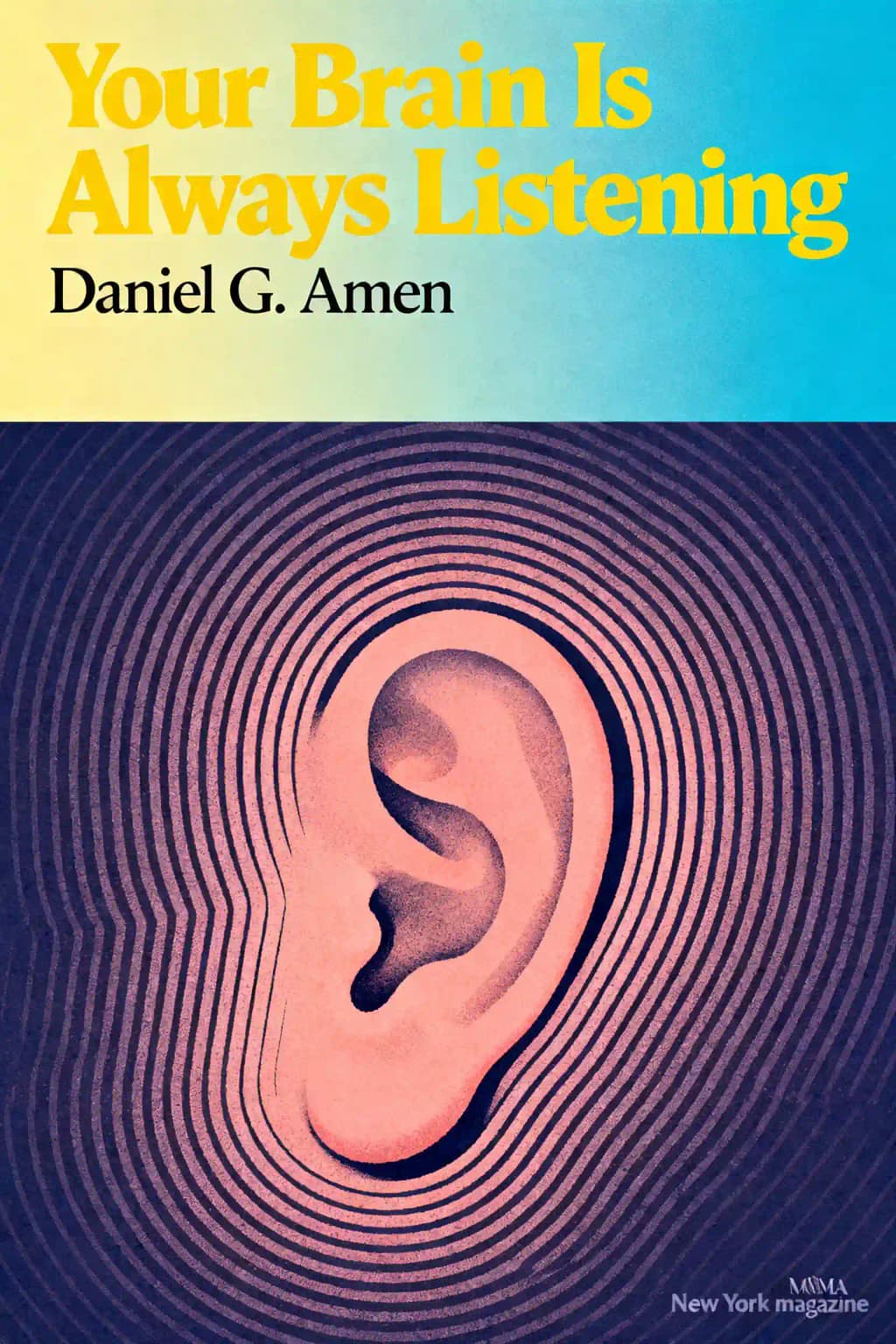
Your brain is constantly listening-not just to the world around you, but to hidden emotional patterns that shape your thoughts, behaviors, and happiness. In his groundbreaking book "Your Brain Is Always Listening," Dr. Daniel Amen draws on over 40 years of clinical experience and 175,000 brain scans to reveal how these invisible influences-which he calls "dragons"-can either enhance or damage our mental health. The book has garnered praise from celebrities like Miley Cyrus, who credits Dr. Amen's techniques with helping manage her anxiety during the pandemic. As one of America's most influential psychiatrists according to The Washington Post, Dr. Amen's approach has revolutionized how we understand the connection between brain function and emotional well-being. His work has been featured in Emmy Award-winning shows and has helped countless patients, from professional athletes to everyday people struggling with emotional dragons.
Chapitre 2
The Dragons Within: Understanding Your Brain's Hidden Influences
Our brains are constantly processing information from both external and internal sources. Dr. Amen explains that while we can't change our past, we can change how our brains respond to it. He identifies several categories of dragons that influence our thoughts and behaviors: Dragons from the Past (traumatic memories and emotional patterns), They/Them Dragons (other people's influences), ANTs (automatic negative thoughts), Bad Habit Dragons (harmful automated behaviors), Scheming Dragons (external manipulators), and Addicted Dragons.
Understanding these dragons requires basic knowledge of key brain systems. The prefrontal cortex serves as our "Dragon Tamer," providing executive functions like impulse control and planning. The anterior cingulate gyrus helps shift attention, while the amygdala detects threats and processes emotions. The hippocampus manages memory and mood, the basal ganglia forms habits and processes rewards, and the cerebellum coordinates physical movements and processes information.
These brain systems operate within four circles of health that affect our wellbeing: biological (physical brain function), psychological (self-talk and self-concept), social (relationships and life stresses), and spiritual (connection to deeper meaning). When any circle is unhealthy, dragons gain control over our thoughts and behaviors.
For example, Jimmy, a patient whose SPECT brain scan revealed low activity in his left temporal lobe and increased activity in his limbic system, experienced dramatic improvements in mood, anxiety, and overall functioning after addressing his dragons and improving his brain health through diet and lifestyle changes. His transformation demonstrates how understanding and taming our dragons can lead to profound healing.
Chapitre 3
Taming the Dragons from Your Past: Rewriting Your Life Story
Since the dawn of humanity, we've communicated through stories that shape our understanding of the world. The personal stories we tell ourselves create constant mental movies about who we are-a good parent, a failure, a victim, or a success. These narratives become dragons that whisper to our brains, influencing how we think, feel, and behave.
Dr. Amen identifies thirteen Dragons from the Past that can haunt our unconscious minds: Abandoned/Invisible/Insignificant Dragons, Inferior/Flawed Dragons, Anxious Dragons, Wounded Dragons, Should/Shaming Dragons, Special/Spoiled/Entitled Dragons, Responsible Dragons, Angry Dragons, Judgmental Dragons, Death Dragons, Grief/Loss Dragons, Hopeless/Helpless Dragons, and Ancestral Dragons.
Abandoned Dragons emerge when others fail to see or recognize you, making you feel unimportant and lonely. These dragons are common in middle children or those with unavailable parents. To tame them, find your life's purpose, make a difference in others' lives, and practice affirmations like "I am significant" and "I am seen."
Inferior Dragons arise when you feel "less than" others in ability, looks, or achievements. Social media has intensified these dragons, driving an epidemic of anxiety and depression, especially among young people. Dr. Amen shares his personal experience with these dragons, feeling "short and funny looking" as a child despite having a successful father. He teaches that self-esteem is the difference between where you believe you are and where you think you should be compared to others. Taming these dragons involves focusing on your strengths and following the 18-40-60 rule: at 18 you worry what others think, at 40 you don't care, and at 60 you realize no one was thinking about you anyway.
Anxious Dragons emerge when you grew up feeling afraid or overwhelmed. Dr. Amen's own Anxious Dragons developed from bedwetting until age nine and growing up during air-raid drills and the Vietnam War. Tools to tame these dragons include diaphragmatic breathing, prayer, and loving-kindness meditation, which research shows increases positive emotions and reduces pain and PTSD symptoms.
Wounded Dragons arise from trauma-physical, emotional, or sexual abuse, intense stress, or natural disasters. To tame these dragons, recognize when your nervous system is unbalanced, try trauma-focused therapy, write your life story, and practice affirmations like "I am safe in this moment" and "That was then; this is now."
Should and Shaming Dragons emerge when you're raised in a culture of guilt. Dr. Amen's own dragons were activated when his mother once told him he was "going to hell" for lying. To tame these dragons, replace "I should" statements with "I want to" or "It's my goal to," and practice forgiveness for yourself and others.
Ancestral Dragons are your parents' or grandparents' issues passed down through genes, behaviors, or cultural expectations. Children of Holocaust survivors, 9/11 survivors, and those who experienced abandonment often have nervous systems so deeply affected that it changes their genes, impacting offspring for generations. Black Americans' feelings of worthlessness and sadness connect to generations of racism, with events like George Floyd's killing triggering ancestral pain.
The good news is that Dragons from the Past don't have to control you. You can rewrite their stories by identifying the dragons blocking your path, seeing yourself as the creator of your story, knowing what you want, focusing on the positive, and remembering it's never too late to change your narrative.
Chapitre 4
The Voices of Others: How They, Them, and Other Dragons Shape Your Reality
Beyond our personal Dragons from the Past, our minds constantly listen to the words and actions of others who have their own dragons. This is why relationships become messy; we're never just dealing with the present moment but with all the accumulated moments of everyone involved.
Your brain constantly listens to your parents' voices-their criticism, guidance, and expectations. These words become ingrained in your neural pathways, which is why you might catch yourself repeating to your children the very phrases you promised never to use. Jimmy's gang leader father would "test his mettle" by deliberately putting himself in dangerous situations, influencing Jimmy to persist at challenging tasks even when they weren't right for him.
Birth order significantly impacts development. Firstborns receive 3,000 more hours of parental attention, start at higher-paying jobs, and often fill leadership positions (14 of 45 US Presidents were firstborns), but may develop narcissistic traits. Middle children tend to be mediators and loyal, avoid conflict, and have fewer emotional problems. Youngest children are typically charming and social but may blame others, view siblings as superior, and have higher incidence of substance abuse treatment.
Your brain also replays the voices of teachers who graded your intelligence and coaches who assessed your abilities. When Dr. Amen told his college speech team coach about his medical school ambitions, she discouraged him, saying her brother was "twice as smart" and couldn't get in. His father wisely advised avoiding her, noting "people are contagious." Conversely, his second-year medical school pathology professor's kindness and mentorship cemented his interest in medicine.
Romantic relationships create the most emotionally charged dragons. Love is actually a neurological phenomenon primarily housed in your brain, not your heart. Anthropologist Helen Fisher's research shows that viewing pictures of loved ones activates the brain's pleasure centers rich in dopamine. New love works in the same brain areas as cocaine, causing giddiness and poor decision-making, while lasting love provides deeper bonding and warmth.
Everyone has energy that impacts brains around them-negative people infect groups with stress while positive people increase joy. At Amen Clinics, brain imaging studies have shown how external energies can physically affect brain function, as demonstrated in a qi gong study where a master's directed healing energy increased blood flow in subjects' brains.
Chapitre 5
The Power of Thoughts: How ANTs Fuel Your Dragons
Your brain constantly responds to every thought you have, especially stressful and positive ones. Using biofeedback techniques, Dr. Amen discovered how emotionally loaded words trigger significant physiological reactions. Negative thoughts immediately release chemicals affecting every cell in your body, while positive thoughts do the opposite. Research shows repetitive negative thinking may even promote harmful brain deposits associated with Alzheimer's disease.
In the early nineties, Dr. Amen coined the term "automatic negative thoughts" (ANTs) after noticing how negativity infested his patients' minds, similar to an ant infestation in his kitchen. He realized teaching patients to eliminate these ANTs would help tame their emotional dragons, making them happier and less anxious.
Dr. Amen identifies nine common ANTs that fuel emotional suffering and relationship problems:
1. All-or-Nothing ANTs attack whenever you think in absolute terms without acknowledging life's complexities. They use words like "all," "always," "never," and "everyone." This black-or-white thinking splits reality into rigid categories without nuance.
2. Less-Than ANTs are particularly toxic to self-esteem, attacking whenever you compare yourself negatively to others. These ANTs contribute to teenage depression and suicide, especially with social media's influence, where teens compare themselves to others' curated lives.
3. Just-the-Bad ANTs see only negative aspects of situations while ignoring anything positive. Human minds evolved to focus on the negative for survival, and though physical threats like predators are rare today, our brains still prioritize potential dangers.
4. Guilt-Beating ANTs originate from moral beatings received from authority figures and manifest through words like "should," "must," "ought," or "have to." These thoughts beat you up with guilt, which often backfires as a motivational strategy.
5. Labeling ANTs involve attaching negative terms to yourself or others, which strengthens negative neural pathways and inhibits honest self-assessment. These labels make change seem impossible and lead to giving up before trying.
6. Fortune-Telling ANTs predict worst-case scenarios, fueling anxiety and panic by linking, stacking, and attacking negative thoughts. They create catastrophic thought chains that fill the future with fear.
7. Mind-Reading ANTs convince you that you can see inside someone else's mind without being told. These thoughts, like "Everyone thinks I'm stupid" or "They're laughing at me," fuel feelings of abandonment and anxiety.
8. If-Only and I'll-Be-Happy-When ANTs take you out of the present moment, either through regret about the past or unhappiness with the present while hoping for a different future. Both patterns ensure self-defeating thoughts by keeping you from appreciating what you have now.
9. Blaming ANTs are the most toxic-Dr. Amen calls them "red ANTs" because they not only steal happiness but drain personal power. When you blame others, you become a victim of circumstances who can't change your situation.
One of Dr. Amen's first exercises for patients is writing down 100 of their worst ANTs, then subjecting each to an elimination process. Whenever you feel sad, mad, nervous, or out of control, write down your ANTs, identify their type, and ask yourself five questions: Is it true? Is it absolutely true with 100% certainty? How do I feel when I believe this thought? How would I feel if I couldn't have this thought? What if the opposite were true?
Chapitre 6
Breaking Free from Bad Habits: The Automated Behaviors That Sabotage Success
Our lives are largely governed by habits-automatic behaviors we've developed over our lifetimes. As Carl Jung noted, "Until you make the unconscious conscious, it will direct your life and you will call it fate." Bad habit dragons represent these unconscious behaviors that can sabotage our wellbeing when left unexamined.
Our lives run on habits-automated behaviors stored in the basal ganglia that require minimal conscious thought. There's a constant dance between our Dragon Tamer (prefrontal cortex), emotional brain (amygdala), and habit center (basal ganglia). When our Dragon Tamer is strong, it helps form healthy habits; when weak, untamed dragons take over, creating destructive patterns.
Dr. Amen identifies ten Bad Habit Dragons that can ruin our lives:
1. Saying Yes When You Should Say No Dragons overwhelm us by making us reflexively agree to requests without considering consequences. The solution? Practice saying "I have to think about it" and filter every request through one question: "Does this fit the goals I have for my life?"
2. Automatic No or Arguing Dragons are stuck in the terrible twos, automatically responding with "no" to requests. Associated with overactivity in the anterior cingulate gyrus, they manifest as cognitive inflexibility and oppositional behavior.
3. Interrupting, No-Filter Dragons don't listen and say the first thing that comes to mind. With low activity in their prefrontal cortex, they don't filter their words before speaking. This behavior shuts down communication and damages relationships.
4. Trouble With The Truth Dragons lead to mistrust in relationships and self-deception. Most people lie once or twice daily for various reasons, from avoiding punishment to protecting others. While "normal liars" tell harmless white lies, pathological liars lie habitually without clear benefit.
5. Distracted, Obsessive, Multitasking Dragons have hijacked our attention spans. Research shows humans now have shorter attention spans than goldfish-just eight seconds compared to nine! This digital addiction has serious consequences: increased obesity, depression, and diminished work capacity.
6. Procrastinating Dragons unnecessarily postpone decisions or actions, increasing stress and irritating others. This habit often stems from ADHD, abstract goals, depression, perfectionism, fear of failure, or low energy.
7. Disorganized Dragons frustrate everyone around you. People who struggle with organization tend to be chronically late, finish tasks at the last moment, and have messy spaces. This habit can stem from saying yes too often, being easily distracted, or simply being overloaded.
8. Let's Have a Problem Dragons habitually find negativity and conflict everywhere. Without sufficient prefrontal cortex stimulation, the brain seeks ways to increase activity-being upset or angry releases adrenaline, acting as a stimulant.
9. Overeating Dragons are fed by the Standard American Diet (SAD), which contains pro-inflammatory foods increasing risks of diabetes, heart disease, cancer, depression, dementia, and obesity. Research shows that as weight increases, brain size and function decrease.
10. Oblivious Dragons operate when you don't think about consequences before acting. This dragon thrives when your brain runs on autopilot, listening to the loudest dragons and influences while ignoring what it needs to stay healthy.
Bad habits can be retrained through five steps: identifying and tracking the habit, recognizing triggers, understanding the rewards you seek, finding healthier alternatives, and building new routines.
Chapitre 7
Outsmarting External Manipulators: How Scheming Dragons Exploit Your Brain
Even after taming your personal dragons, Scheming Dragons still assault you from every direction, deviously sending messages that feed your dragons and make you fat, depressed, and feebleminded. They're everywhere-from foot-long hot dogs at ballparks to billboards hyping monster foods that kill you early.
These Scheming Dragons use sophisticated neuroscience to hook you, capitalizing on research about habits and addiction to make your brain crave their products. According to Nir Eyal's book "Hooked," they use a four-step process: a trigger starts the behavior, you take action expecting a reward, the reward varies (which increases dopamine and addiction), and you engage with the product to make future use easier.
Dr. Amen identifies five Scheming Dragons that work to hook you into harmful habits:
1. Food Pusher Dragons engineer junk foods to reach the brain's "bliss point"-creating addiction for profit. They target children with toys, use attractive models in ads, and employ celebrities to create false associations between success and unhealthy products. Even "health" food pushers exploit wellness trends with misleading labels like "gluten-free" and "sugar-free" while hiding harmful ingredients.
2. Substance and Toxin Pusher Dragons include marijuana dispensaries, alcohol advertisers, and tobacco companies marketing vaping as "healthy." Studies show marijuana decreases brain blood flow and accelerates brain aging. Pharmaceutical companies use emotional imagery in ads while rapidly listing side effects, knowing our brains retain the positive visuals, not the warnings.
3. Digital Dragons-tech companies, game developers, news outlets, social networks, and porn sites-have hijacked our brains and stolen our attention. These companies employ proven marketing strategies like scarcity, personalization, reciprocity, and social proof to create compulsive users. News outlets run 24/7 fear-inducing content, exploiting our brain's negativity bias to keep us hooked.
4. Contact Sports Dragons make billions by glorifying dangerous sports while downplaying head injuries. The NFL claims helmets make players safe, but research shows this isn't true. At Amen Clinics, brain imaging reveals clear evidence of traumatic brain injuries in players at all levels-from Pop Warner to NFL-with damage worsening the longer they play.
5. Holiday Dragons promote festive cheer while actually causing stress, overspending, poor health choices, and even depression. They pressure you to attend parties with excessive eating and drinking, and bombard you with commercials showing idealized family gatherings that may not match your reality.
To outfox these dragons: recognize their presence, look past the messenger, get the whole picture before acting, don't make it easier for them to hook you, and limit your exposure to these dragons by setting boundaries on media consumption and avoiding trigger locations.
Chapitre 8
Healing Addicted Dragons: A Brain-Based Approach to Recovery
When Bad Habit and Scheming Dragons remain untamed or when your Dragon Tamer is weak, you become vulnerable to addictions, especially during high-stress periods. While many people stop destructive behaviors after experiencing negative consequences, others continue despite the devastation. Healing requires addressing all four circles of health-biological, psychological, social, and spiritual-while taming other dragons and healing the brain.
While traditional 12-step programs like Alcoholics Anonymous have transformed countless lives, they were created in 1935 without knowledge of modern brain science. They address psychological, social, and spiritual aspects but neglect the biological circle of health-the brain itself. Studies show only 43% of attendees remain sober after 18 months, partly because traditional recovery programs miss this critical physical component of addiction.
Dr. Amen's updated approach to addiction recovery balances all four health circles through twelve steps:
1. Know what you want in life. When you tell your brain what you want, it helps make it happen.
2. Recognize when your Addicted Dragons have taken you hostage. You're an addict when your behavior gets you into trouble-and you do it again.
3. Make a decision to care for, balance, and repair your brain. When your brain works right, you work right.
4. Reach for forgiveness for yourself and others. Research shows forgiveness reduces anxiety, depression, and physical health symptoms.
5. Know your Addicted Dragon's brain type. Dr. Amen identifies five basic brain types: Balanced (healthy, focused), Spontaneous (creative but easily distracted), Persistent (tenacious but prone to worry), Sensitive (empathic but vulnerable to mood issues), and Cautious (prepared but anxious).
6. Lock up the Craving Dragons through strategies like balancing blood sugar, managing stress, and getting adequate sleep.
7. Drip dopamine; stop dumping it to keep your pleasure centers healthy. "Dripping" dopamine through activities like eating berries releases small, sustainable amounts, while "dumping" dopamine through cocaine or high-sugar foods floods your system, draining your stores.
8. Eliminate the Dragon Pushers and Users who make you vulnerable. You become like the people you spend time with.
9. Tame your Dragons from the Past and kill the ANTs that perpetuate your behavior.
10. Get help from those who have tamed their own Addicted Dragons. Success leaves clues.
11. List the people your Addicted Dragons have hurt, share it with a mentor or sponsor, and make amends if you can.
12. Carry the message of brain health to others and continue to practice these 12 steps. By teaching others, you create your own support network.
Chapitre 9
The Dragon Tamer: Strengthening Your Brain's Executive Function
The prefrontal cortex (PFC) acts as your brain's Dragon Tamer, protecting you from impulsive thoughts and behaviors. During vulnerable moments like grief or stress, a healthy Dragon Tamer keeps destructive impulses in check.
The PFC serves as the leader of the four health circles: biological, psychological, social, and spiritual. A weak Dragon Tamer allows dragons to run wild, destroying one or more circles. An overcontrolling one leads to obsession and micromanagement, making dragons worse. When properly balanced, your Dragon Tamer helps dragons work together harmoniously toward your goals.
As the most human part of the brain, the PFC occupies 30% of the human brain compared to just 11% in chimpanzees. Its duties include supervision, impulse control, goal setting, planning, focus, judgment, empathy, organization, learning from mistakes, and conscientiousness. The PFC develops last, not fully maturing until the mid-to-late twenties, explaining why teenagers often struggle with goals and impulse control.
When your Dragon Tamer is off duty, injured, or underdeveloped, your emotional brain and Dragons from the Past take control. Low PFC activity manifests as poor supervision, impulsivity, lack of goals, distractibility, poor judgment, disorganization, low empathy, and difficulty learning from mistakes. Research shows this state leads to higher rates of school failure, divorce, job loss, legal troubles, financial problems, and mental health issues like ADHD.
Several factors can damage your prefrontal cortex: reduced blood flow to the brain, aging, inflammation, head trauma, toxins, obesity, blood sugar issues, and poor sleep. When the Dragon Tamer is weak, people often exhibit signs of ADHD-short attention span, distractibility, disorganization, procrastination, and impulse control issues.
To strengthen your Dragon Tamer: clearly define your life goals, then ask daily, "Does my behavior get me what I want?" The One Page Miracle is a simple yet powerful exercise to help you clarify what you want in relationships, work, money, and self. Exercise to boost blood flow, learn new things, take omega-3 supplements, optimize vitamin D, protect your brain from trauma, avoid toxins, maintain healthy weight, prioritize 7-8 hours of sleep nightly, and keep blood sugar stable.
When your Dragon Tamer is strong, you're in charge-not your dragons.
Chapitre 10
Reclaiming Your Mind: The Journey to Dragon Mastery
Brain health has been Dr. Amen's passion for 40 years. Looking at the brain changed how he practices medicine and psychiatry, as well as how he lives his life. After 175,000 brain scans, it's clear that what we treat aren't mental health issues but brain health issues that steal your mind. Enhancing brain health is foundational to helping patients, but taming dragons is another crucial piece of wellness.
When life throws you for a loop-like the coronavirus pandemic-it can unleash once-tamed dragons. This happened to Dr. Amen when his father died after beating COVID-19. Despite knowing what to do, he was vulnerable to Grief, Loss, and Death Dragons. He recognized them and used the strategies in this book to minimize their destruction. He was still sad and grieving, but he didn't let Dragons from the Past derail his brain-healthy habits or make him vulnerable to Scheming Dragons.
Dragons assault you daily-sometimes whispering, sometimes screaming when stress peaks. Whether you listen depends on your brain health and Dragon Tamer strength. When tamed, dragons fuel your purpose rather than impair your thoughts, feelings, and actions.
Sam, a sports marketing entrepreneur who lost all income during the pandemic, initially responded with anxiety, anger, and blame. His Dragons from the Past were breathing fire on his brain, leading to drinking, yelling at family, and social media ranting. After working on taming his dragons and enhancing brain health, he stopped dwelling on problems, took responsibility, managed his frustration, quit drinking, and redirected his focus to building a new business.
By sharing what you've learned with others, you create more Dragon Tamers, spreading peace and happiness throughout society. Start today by sharing with someone you love. Remember that understanding these hidden dragons is the first step toward emotional freedom and better brain health.