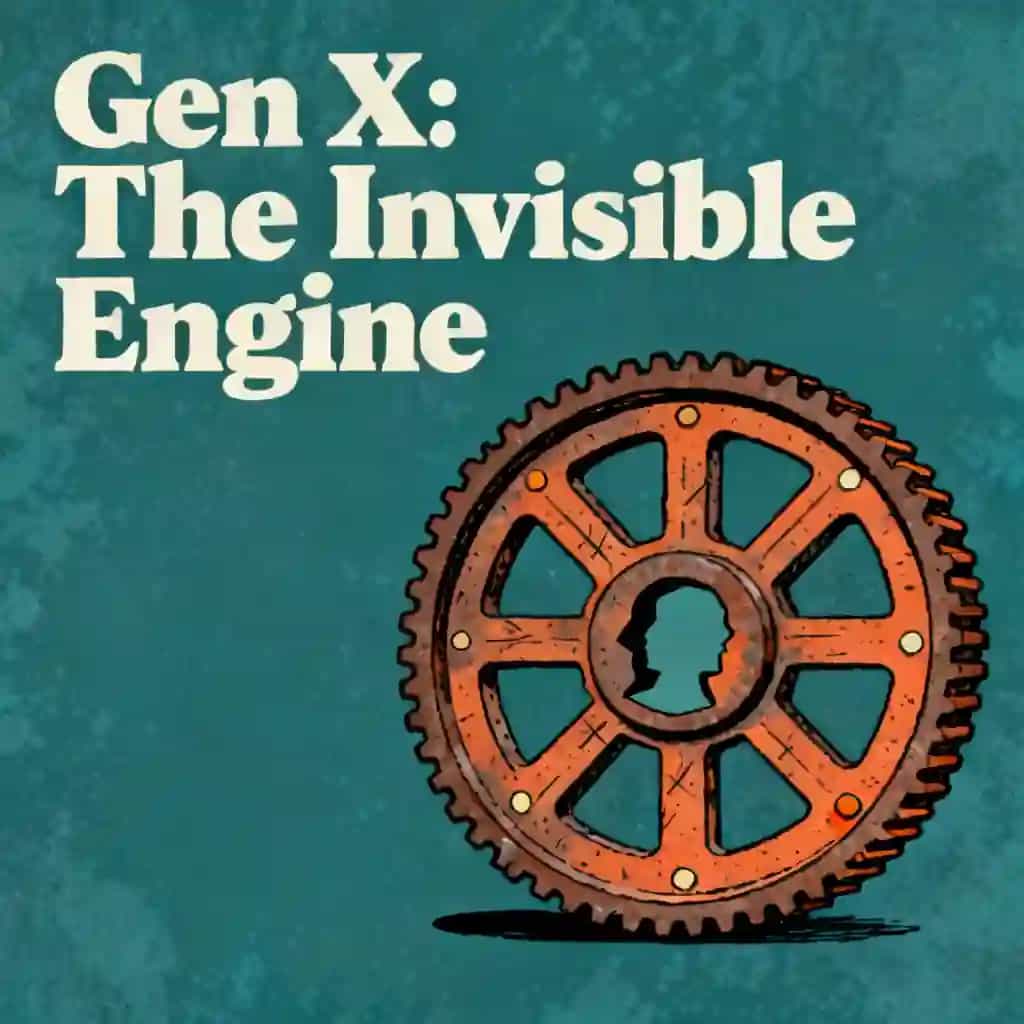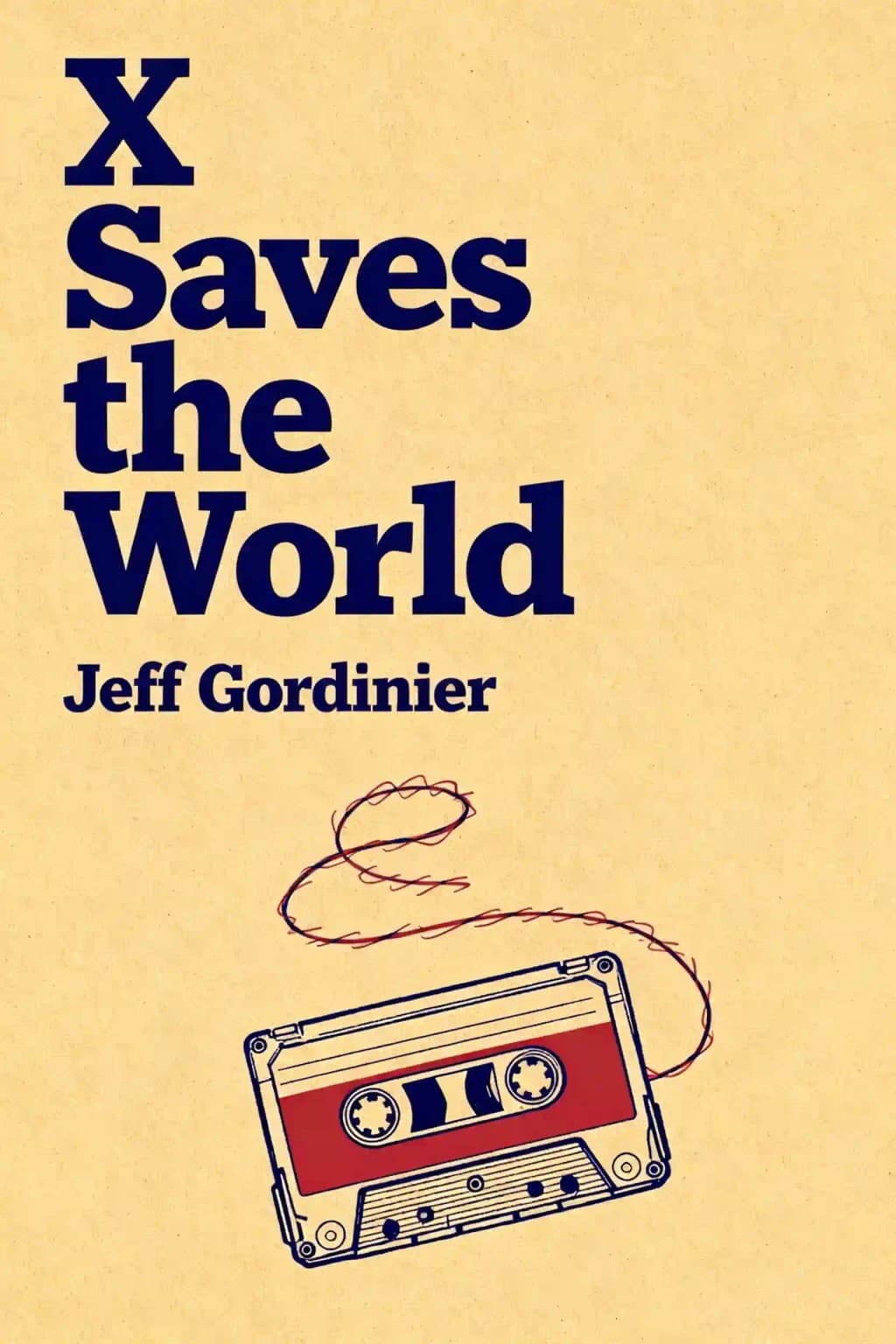
Between Baby Boomers and Millennials lies Generation X - the overlooked innovators quietly reshaping culture. Nick Hornby calls Gordinier's manifesto "impassioned" and "moving," revealing how these so-called "slackers" are actually society's unsung heroes, subtly saving us all from cultural oblivion.
Jeff Gordinier, author of X Saves the World, is a cultural critic and acclaimed journalist renowned for his incisive explorations of generational identity and contemporary society. As a contributing writer for The New York Times and food-and-drinks editor at Esquire, Gordinier examines underappreciated cultural forces with wit and depth—a perspective honed through decades of reporting on music, technology, and food.
His debut book, X Saves the World (2009), blends memoir and cultural analysis to challenge stereotypes about Generation X, framing its members as stealth innovators in the digital age. Gordinier’s later works, including Hungry: Eating, Road-Tripping, and Risking It All with the Greatest Chef in the World, further showcase his ability to intertwine personal narrative with larger cultural themes.
His writing appears in anthologies like Best American Nonrequired Reading and Best Creative Nonfiction, and he has been featured on Netflix’s Chef’s Table. A Pasadena native and father of four, Gordinier splits his time between suburban parenting and globetrotting journalism. X Saves the World remains a cult classic, praised for reshaping conversations about generational impact and included in university curricula on media studies.
X Saves the World (2009) explores Generation X’s cultural influence, arguing that this cohort—born between 1965–1980—quietly reshaped technology, media, and entrepreneurship through skepticism, adaptability, and DIY innovation. Gordinier contrasts Gen X’s understated impact with Baby Boomer idealism and Millennial tech utopianism, highlighting their role in pioneering indie music, grunge, and early internet counterculture.
This book suits Gen X readers seeking validation of their cultural legacy, millennials studying pre-digital rebellion, or anyone analyzing generational dynamics. It’s particularly relevant for sociologists, marketers, and music/film enthusiasts interested in 1990s–2000s alt-culture movements driven by artists like Kurt Cobain and filmmakers like Richard Linklater.
Yes—its analysis of Gen X’s “stealth revolution” remains timely amid debates about AI, remote work, and indie business models. Gordinier’s sharp wit and references to Nirvana, Reality Bites, and early web forums offer nostalgia while contextualizing modern resilience strategies against corporate conformity.
Unlike Strauss & Howe’s Generations or Jean Twenge’s work, Gordinier avoids rigid archetypes. He frames Gen X as reactive sculptors of culture rather than demographic trendsetters, offering a nuanced midpoint between Boomer idealism and Millennial disruption.
While Hungry (2019) chronicles culinary adventures with chef René Redzepi, both books share themes of purposeful rebellion. X Saves the World mirrors Hungry’s focus on risk-taking but applies it to generational identity rather than gastronomy.
Some critics argue Gordinier overstates Gen X’s impact while underselling Millennial contributions. Others note the 2009 publication misses later developments like the gig economy’s pitfalls or Gen Z’s activism—gaps readers might address through supplemental research.
The book frames Gen X’s career fluidity—juggling side hustles, creative pivots, and freelance work—as a blueprint for surviving AI-driven job markets. Its case studies on indie entrepreneurs offer strategies for balancing autonomy with financial stability.
Gordinier dissects:
It traces how Gen X’s embrace of blogs, podcasts, and self-publishing laid groundwork for today’s influencer economy. The book’s themes of curated authenticity resonate in an era of TikTok creators and Substack newsletters.
No—the 2009 original remains the definitive text. For contemporary insights, pair it with Gordinier’s Hungry (2019) or Malcolm Harris’s Kids These Days (2017) examining Millennial/Gen Z dynamics.
Ressentez le livre à travers la voix de l'auteur
Transformez les connaissances en idées captivantes et riches en exemples
Capturez les idées clés en un éclair pour un apprentissage rapide
Profitez du livre de manière ludique et engageante
Generation X had arrived, though they'd never admit to wanting the spotlight.
"Here we are now" becomes the rallying cry for a generation.
Cobain saved the world by steering his generation away from that delusion.
Finding your own path through this maze of programming and pressures.
Hey, look at me, I'm a fuckin' idiot.
Décomposez les idées clés de X saves the world en points faciles à comprendre pour découvrir comment les équipes innovantes créent, collaborent et grandissent.
Condensez X saves the world en indices de mémoire rapides mettant en évidence les principes clés de franchise, de travail d'équipe et de résilience créative.

Découvrez X saves the world à travers des récits vivants qui transforment les leçons d'innovation en moments mémorables et applicables.
Posez n'importe quelle question, choisissez la voix et co-créez des idées qui résonnent vraiment avec vous.

Cree par des anciens de Columbia University a San Francisco
"Instead of endless scrolling, I just hit play on BeFreed. It saves me so much time."
"I never knew where to start with nonfiction—BeFreed’s book lists turned into podcasts gave me a clear path."
"Perfect balance between learning and entertainment. Finished ‘Thinking, Fast and Slow’ on my commute this week."
"Crazy how much I learned while walking the dog. BeFreed = small habits → big gains."
"Reading used to feel like a chore. Now it’s just part of my lifestyle."
"Feels effortless compared to reading. I’ve finished 6 books this month already."
"BeFreed turned my guilty doomscrolling into something that feels productive and inspiring."
"BeFreed turned my commute into learning time. 20-min podcasts are perfect for finishing books I never had time for."
"BeFreed replaced my podcast queue. Imagine Spotify for books — that’s it. 🙌"
"It is great for me to learn something from the book without reading it."
"The themed book list podcasts help me connect ideas across authors—like a guided audio journey."
"Makes me feel smarter every time before going to work"
Cree par des anciens de Columbia University a San Francisco

Obtenez le resume de X saves the world en PDF ou EPUB gratuit. Imprimez-le ou lisez-le hors ligne a tout moment.
In 1991, a disheveled young man in a striped Charlie Brown shirt lurched across MTV screens, unleashing guitar chords that would rewire a generation's neural pathways. Kurt Cobain wasn't trying to start a revolution - he just wanted to make noise. Yet "Smells Like Teen Spirit" became the battle cry for 46 million Americans caught between boomer idealism and millennial optimism. Generation X had arrived, though they'd never admit to wanting the spotlight. These were the children who grew up with divorce rates doubling, economic recession looming, and nuclear annihilation threatening. They developed a protective shell of irony, a distrust of institutions, and a fierce independence born from necessity rather than ideology. What made this moment so powerful wasn't just the music - it was the collective recognition. Suddenly, people who had felt invisible saw themselves reflected in culture. The cheerleaders with anarchy symbols, the janitor headbanging with his mop, the genuine chaos of kids piling down from bleachers - this wasn't manufactured rebellion but authentic expression. By January 1992, Nirvana had knocked Michael Jackson off the Billboard charts with an album featuring bizarre lyrics about mosquitoes and libidos. The mainstream was being infiltrated by the margins. Beyond Nirvana, powerful voices like Sinead O'Connor, Bjork, and Courtney Love redefined expression while tech innovators created digital infrastructure from basements. The world was changing, and the change was coming from the most unexpected places - from the slackers, the drifters, the ones who supposedly didn't care.