Chapitre 1
A Fairy Tale Reimagined in the Stars
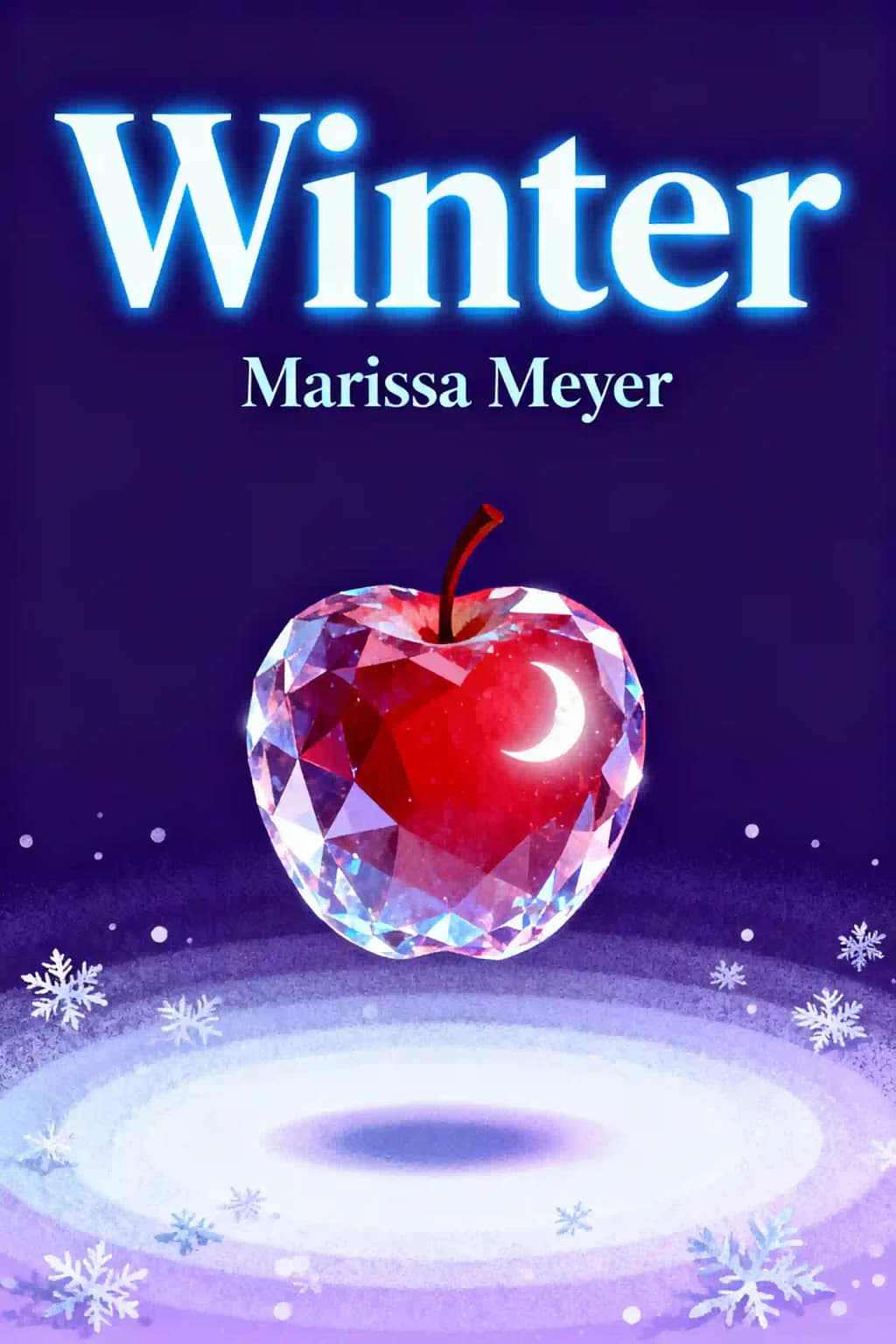
Winter by Marissa Meyer brings the beloved Lunar Chronicles series to its dramatic conclusion, blending the familiar tale of Snow White with a futuristic sci-fi setting that has captivated millions of readers worldwide. Since the release of Cinder in 2012, Meyer's series has sold over 7 million copies and been translated into 33 languages, with Winter spending an impressive 9 weeks on the New York Times bestseller list. The series has garnered a dedicated following among young adult readers and adults alike, with celebrities like Emma Watson and Taylor Swift citing it among their favorite modern fairy tale retellings. What makes this final installment so compelling is how it weaves together the threads of three previous books while introducing us to the haunted, beautiful Princess Winter-a character whose struggle with mental illness and refusal to use her powers makes her both vulnerable and extraordinarily brave.
Chapitre 2
The Lunar World: Beauty and Brutality
The story opens on Luna, Earth's colonized moon, where Princess Winter sits beside her stepmother, Queen Levana, in the opulent throne room of Artemisia Palace. They witness a heart-wrenching scene - a desperate father sentenced to death for attempting to rescue his "shell" son from a medical facility. Shells, Lunars born without the genetic gift for bioelectrical manipulation, are supposedly euthanized at birth for the good of society. This devastating truth masks an even darker reality that Winter will eventually uncover: these children are actually kept alive in secret facilities, their blood harvested to create antidotes for the letumosis plague ravaging Earth. This opening sequence perfectly encapsulates the dual nature of Lunar society, where breathtaking beauty conceals unspeakable horrors.
Winter, despite being one of the most privileged members of Lunar society, bears her own deep scars - both literal and metaphorical. Her face, marked by three distinct scars down her right cheek, only enhances her legendary beauty. Yet beneath this exterior lies a troubled mind, plagued by increasingly severe hallucinations. These mental breaks are the price she pays for her moral stand against using her Lunar gift to manipulate others' minds and emotions - a choice that sets her apart in a society built on manipulation. Despite her struggles, or perhaps because of them, she's become beloved among Luna's citizens, who see in her a rare combination of genuine kindness and natural beauty in a world of artifice.
The return of Jacin Clay, her childhood friend and trusted palace guard, brings both comfort and complications. Fresh from his capture on Earth by Linh Cinder - the cyborg mechanic now revealed as Princess Selene, Luna's rightful heir - Jacin faces accusations of treason. In a calculated move to save his life, he reveals intelligence about a device capable of neutralizing Lunar gifts, a revelation that spares him execution but earns him a brutal sentence: thirty lashes and forty hours of penance in the palace square.
Meyer's worldbuilding of Luna is intricate and haunting. The capital city Artemisia stands as a testament to Lunar engineering and artistry - its massive dome cities gleaming with an otherworldly beauty, its architecture defying Earth's conventional limitations. Yet this splendor masks a rigid social hierarchy enforced through sector designations tattooed onto citizens' skin, marking them as property of the crown. The contrast between the aristocracy's extravagant lifestyle and the outer sectors' grinding poverty creates perfect conditions for revolution. In the labyrinthine tunnels beneath the city, growing dissent manifests in bold graffiti denouncing Levana's rule, while whispered conversations in shadows speak of change to come. This carefully constructed world serves as both setting and metaphor - a society whose beautiful surface conceals rot at its core, primed for dramatic transformation.
Chapitre 3
Allies Reunited and Separated
As Winter secretly visits Jacin in the palace dungeons after his brutal punishment for perceived disloyalty, we shift perspectives to Cinder and her diverse band of revolutionaries aboard their stolen military vessel, the Rampion. This unlikely crew has grown from a small band of fugitives into a formidable team: Emperor Kai of the Eastern Commonwealth, forcibly removed from his palace by Cinder to prevent a catastrophic political marriage; Wolf, the genetically enhanced Lunar operative whose loyalty has shifted to Earth; Scarlet Benoit, the fierce French farmer now imprisoned in Luna's menagerie; Cress, the formerly isolated shell hacker whose technical brilliance proves invaluable; and Iko, Cinder's android companion whose personality chip has evolved far beyond its original programming to display remarkably human traits and unwavering friendship.
Their ambitious plan carries enormous risks - to infiltrate Luna's heavily guarded society, spark a revolution among the oppressed sectors, and depose Queen Levana before her marriage to Kai can cement her power over both Luna and Earth. Upon reaching Luna's orbit, they execute a carefully orchestrated split: Kai returns to the capital to maintain the wedding charade, buying precious time for the resistance, while Cinder leads her team into Luna's outer sectors, seeking both Wolf's long-lost family and crucial support from the downtrodden population.
In Luna's exotic menagerie, Scarlet endures life as a human exhibit, her dignity stripped away but her spirit unbroken. Here she encounters Princess Winter, Levana's stepdaughter, whose haunting beauty and gentle nature mask a sharp mind and deep compassion. Despite their vastly different backgrounds - one a practical Earth farmer, the other a mentally fragile lunar princess - they forge a powerful alliance. Their unexpected friendship becomes even more vital when Levana, paranoid about Winter's growing popularity, orders Jacin to eliminate the princess. Quick-thinking Jacin manages to fake Winter's death by sacrificing her beloved pet wolf instead, enabling both women to escape and seek out Cinder's resistance movement.
The narrative skillfully interweaves these separate storylines, each thread building tension while revealing new aspects of Lunar society. Through Kai's eyes, we see the opulent but poisonous court culture; through Cinder's group, we witness the harsh realities of the outer sectors; and through Scarlet and Winter, we explore the complex relationships between Lunars of different social classes. As each group faces unique challenges - from maintaining cover stories to avoiding thaumaturge patrols - Meyer creates a rich tapestry of suspense and character development, all while maintaining the story's momentum toward an inevitable convergence of these scattered allies.
Chapitre 4
The Cost of Power and Refusal
At the heart of Winter lies a profound exploration of power-how it corrupts, how it heals, and the cost of both using and refusing it. This theme manifests most clearly through Winter and Levana, two women who represent opposite approaches to the Lunar gift.
Winter has sworn never to use her gift after witnessing how it harmed others, even though this decision causes her to suffer hallucinations and mental deterioration. Her refusal is a moral stance-she would rather damage herself than manipulate others. When she explains to Scarlet why she refuses to use her glamour, she recounts helping a suicidal servant only to give her more time to be tortured by Thaumaturge Aimery before the woman eventually killed herself. This traumatic experience convinced Winter that using her gift, even with good intentions, could cause harm.
In stark contrast, Queen Levana uses her power constantly, maintaining an illusion of perfect beauty to hide her severely scarred face and body. When Cinder's video later reveals Levana's true appearance-burn scars sealing her left eye shut and extending down her neck and arm-we learn these injuries were inflicted by Cinder's mother, Queen Channary, who at thirteen forced six-year-old Levana into a fireplace. This revelation adds complexity to Levana's character; her cruelty stems partly from the trauma she experienced.
The cost of power extends beyond these two characters. Wolf is forcibly transformed into a more monstrous version of himself to serve in Levana's guard. Cinder must decide when controlling others is justified in service of revolution. Even Kai exercises power by threatening to bomb Artemisia if Levana harms the Earthen delegates. Through these varied examples, Meyer asks readers to consider not just whether power corrupts, but how different characters respond to having or lacking power, and what moral lines they will or won't cross.
Chapitre 5
Revolution and Sacrifice
As Cinder's revolution gains momentum, the story explores the complicated nature of rebellion and the sacrifices it demands. After broadcasting a message revealing her identity as Princess Selene and calling for revolution, Cinder witnesses both the hope and violence her words inspire. When guards brutally beat a defiant man in Regolith Mining Sector 9, a woman steps forward using her Lunar gift to freeze a guard. Others join in, controlling the remaining guards, but when one woman prepares to make a guard slit his own throat, Cinder intervenes: "Don't become like the queen and her court. Don't kill them."
This moment highlights Cinder's moral struggle-she wants to overthrow Levana's tyranny without becoming a tyrant herself. Yet revolution inevitably brings bloodshed. When Thaumaturge Aimery captures Cinder and Wolf, he publicly executes Wolf's mother Maha Kesley for harboring them. Her death becomes a rallying cry, with citizens across Luna rising up in her name.
The cost of revolution is measured not just in lives lost but in psychological trauma. Winter suffers a complete mental breakdown after using her gift to manipulate Scarlet into killing Aimery. Though she saves Jacin's life, the violence of her own actions-using the very gift she had sworn never to use-sends her spiraling into a psychotic break. She becomes trapped in her own mind, screaming and comparing herself to "an animal, a killer, a predator."
Through these events, Meyer avoids romanticizing revolution while still affirming its necessity. The characters make difficult choices, sometimes crossing their own moral boundaries, raising questions about whether the ends justify the means and how to rebuild a society after overthrowing its oppressors.
Chapitre 6
Identity and Transformation
Throughout Winter, characters grapple with profound questions of identity and undergo transformative journeys that challenge their understanding of themselves and their place in the world. Cinder's evolution from a despised cyborg mechanic to revolutionary leader represents one of the most dramatic arcs. Initially ashamed of her mechanical parts and Lunar heritage, she gradually comes to embrace both aspects of her nature. Her cybernetic components-once a source of shame-become powerful assets in her fight against Levana. When she finally confronts her aunt in the throne room, she stands proud with her metal hand gleaming, demonstrating that true strength comes from accepting all parts of oneself.
Wolf's transformation is perhaps the most physically dramatic and psychologically devastating. Levana's scientists brutally reshape his body, giving him a protruding jaw, enlarged teeth, curved shoulders, and paw-like feet-modifications that push him further from his human form. His desperate struggle to maintain his humanity despite his increasingly bestial appearance becomes a powerful metaphor for the series' exploration of identity versus appearance. The tender moment when he reunites with Scarlet after his transformation captures this conflict perfectly. His anguished declaration-"I'm dangerous"-reveals his deep fear of rejection, while Scarlet's immediate response-"You're still you"-powerfully affirms that identity runs deeper than physical form. Their relationship demonstrates how love can anchor someone to their humanity even when everything else seems lost.
Winter's transformation unfolds primarily in the psychological realm, as she battles increasingly severe hallucinations. Her decision to refuse Lunar glamour, though noble, exacts a devastating toll on her mental stability. Throughout the story, her grip on reality becomes increasingly tenuous, culminating in a complete break during the battle for Artemisia. Yet even in her deepest madness, Winter displays remarkable clarity about fundamental truths. Her confrontation with the wolf soldiers in the lava tubes beneath Luna proves particularly powerful-she sees past their monstrous exterior to recognize the human boys trapped within. Her appeal to their forgotten humanity-"You were boys once and you can be boys again"-demonstrates how even broken minds can access profound wisdom.
Iko's transformation stands apart, raising fascinating questions about consciousness and humanity. Though "merely" an android with a personality chip, she develops genuine emotions and forms deep attachments. Her willingness to sacrifice herself for her friends-particularly Cinder-challenges traditional definitions of what makes someone human. Her declaration to Cinder-"I'd do anything to keep you safe. Besides, if anything happens to me, I know you can fix it"-reveals both her capacity for selfless love and her unique perspective as a mechanical being. Through Iko, the story explores whether humanity is defined by biological components, conscious awareness, or the capacity for love and sacrifice. Her journey suggests that true personhood transcends mere physical form, residing instead in one's capacity for connection, growth, and self-sacrifice.
Chapitre 7
Love Across Boundaries
Against the backdrop of revolution, Winter weaves multiple love stories that cross boundaries of class, species, and even humanity. These relationships are not mere subplots but integral to the characters' motivations and growth.
Cinder and Kai's relationship faces the greatest political obstacles. As the rightful queen of Luna and the emperor of the Eastern Commonwealth, their romance has interplanetary implications. Their stolen moments amid crisis-Kai watching Cinder repair the ship's oxygen filters, Cinder manipulating his bioelectricity to calm him during her trial-show how their connection persists despite the weight of their responsibilities. When Kai suggests Cinder might "someday" consider becoming an empress after establishing a Lunar republic, their personal happiness aligns with their political goals.
Scarlet and Wolf's relationship represents love that transcends species boundaries. Wolf's genetic modifications make him something other than fully human, yet Scarlet's acceptance of him-both before and after his more extreme transformation-affirms his humanity. Their reunion in Wolf's childhood home is one of the novel's most emotional moments, with Wolf confirming his identity by sharing the moment he fell in love with her in Rieux.
Winter and Jacin's relationship spans class divisions-she a princess, he a guard-and demonstrates unwavering loyalty through extreme circumstances. When ordered to kill Winter, Jacin risks everything to fake her death and help her escape. Later, as she struggles with worsening hallucinations, he remains by her side, calling her "snow girl" and playing along with her delusions rather than abandoning her.
Cress and Thorne's relationship evolves from her unrequited crush to mutual love as Thorne recognizes her worth beyond her technical skills. When he finally confesses his feelings, he admits he's told twenty-four girls he loved them before but "I never meant it until now." His plan to become worthy of her-getting a legitimate job, legally buying his ship, stopping his thieving ways-shows significant character growth from the self-centered criminal introduced earlier in the series.
These diverse relationships demonstrate that love requires seeing beyond appearances, social divisions, and even species differences to recognize another's true worth.
Chapitre 8
Mental Illness and Healing
Winter's portrayal of mental illness through Princess Winter's character offers a nuanced and compassionate exploration of psychological trauma and healing. Winter's hallucinations - seeing ice creeping up her body, blood dripping from walls, or her dead wolf Ryu - result from her principled refusal to use her Lunar gift, described as "like straining an unused muscle." Yet her condition stems from multiple sources: the trauma of growing up under Levana's cruelty, witnessing countless acts of violence, and the physiological toll of suppressing her natural abilities. These layered origins reflect the complex nature of mental health challenges.
The novel skillfully avoids common pitfalls in depicting mental illness. It neither romanticizes Winter's condition as a mystical gift nor suggests it makes her weak or less capable. Instead, her hallucinations are presented as both a significant burden and, occasionally, a unique lens through which she perceives the world. When confronting the genetically modified wolf soldiers, Winter's apparent madness helps her see past their monstrous appearances to recognize the innocent boys they once were. Her "scattered pieces," as Scarlet describes them, sometimes allow her to perceive emotional and social truths that others miss, highlighting how different ways of experiencing reality can offer valuable perspectives.
The healing process in Winter is portrayed with particular authenticity and complexity. After her breakdown during the climactic battle, Winter remains in restraints, speaking dreamily about snow even after the revolution succeeds. Jacin, despite his medical training and deep love for Winter, feels helpless to cure her condition - a common experience for those supporting loved ones with mental illness. Yet he demonstrates true understanding by accepting this "gentler version of her madness," affectionately calling her "snow girl" and learning to work within her reality rather than fighting against it. This approach suggests that healing sometimes means acceptance and adaptation rather than pursuing an elusive "cure," and that love can persist and even deepen through mental illness.
The novel extends its examination of trauma beyond individual experience to explore collective trauma through Luna's citizens, who have endured generations of manipulation, fear, and systematic abuse. The society's wounds run deep, manifesting in widespread distrust, normalized violence, and internalized oppression. When Cinder proposes establishing a republic after dissolving the monarchy, she acknowledges that healing Luna will require fundamental systemic change, not just replacing one ruler with another. This parallel between personal and societal healing suggests that recovery requires addressing both individual symptoms and the broader conditions that create and perpetuate trauma.
Through these various threads, the novel presents mental illness and healing as complex, ongoing processes that require patience, understanding, and systemic support - a message that resonates deeply with real-world experiences of mental health challenges.
Chapitre 9
A New Beginning, Not Just an Ending
The conclusion of Winter feels less like an ending than a new beginning for both the characters and their worlds. After Levana's defeat and Cinder's coronation, we glimpse the characters' futures through a series of epilogue-like chapters that show them embarking on new journeys.
Cinder reveals her plan to eventually dissolve the Lunar monarchy and establish a republic with elected officials. This decision demonstrates her growth from someone who initially rejected her royal heritage to someone who accepts power temporarily to create a more just system. Her dropping her old cyborg foot-once a symbol of her worthlessness-into the lake below the palace symbolizes her final release from past shame.
Thorne receives a pardon arranged by Cinder, along with a legitimate job distributing letumosis antidotes using his beloved ship, the Rampion. This transformation from criminal to humanitarian represents his moral growth throughout the series. His relationship with Cress promises further adventures as he shows her the Earth she's only seen from screens.
Winter agrees to become Luna's first ambassador to Earth with Jacin accompanying her. Though still experiencing occasional hallucinations, she volunteers to test Dr. Nandez's prototype device based on Cinder's bioelectricity-blocking technology, suggesting she's ready to face her fears and possibly find healing.
Scarlet reconnects with her friend Emilie via video call, learning she's become a local hero in their hometown of Rieux. Though still grieving her grandmother's death, she's found a new family with Wolf and their friends, bridging her Earth origins with her Lunar experiences.
Perhaps most significantly, Cinder reveals that her deceased stepfather Linh Garan invented a device that prevents Lunar manipulation, with the software backup hidden in Iko's personality chip. This technology promises to transform Earth-Luna relations by removing the threat of Lunar mind control, allowing for genuine trust between the planets.
The novel's final line-"And they all lived happily to the end of their days"-evokes traditional fairy tale endings while feeling earned rather than formulaic. These characters have fought, suffered, and transformed. Their happiness comes not from magic or divine intervention but from their own courage, sacrifice, and love for one another. In this way, Winter honors the fairy tale tradition while reimagining it for a world where happily ever after requires ongoing work to build a more just society.
Chapitre 10
The Power of Choice in Determining Destiny
Throughout Winter, characters repeatedly face moments where they must choose between accepting the roles assigned to them and forging their own paths. This emphasis on choice rather than destiny distinguishes Meyer's fairy tale retelling from traditional versions where characters' fates seem predetermined.
Winter chooses to refuse her Lunar gift despite the personal cost, rejecting the manipulation that defines Lunar society. Cinder chooses to embrace her heritage as Princess Selene not for personal power but to free Luna from tyranny. Wolf chooses to fight against his programming even after being further modified to serve Levana. Kai chooses to marry Levana temporarily to protect Earth while secretly supporting Cinder's revolution. Even Levana's villainy stems partly from her choices-her decision to use her power to control rather than connect with others.
The novel's climactic confrontation between Cinder and Levana in the throne room crystallizes this theme. When Levana appears to surrender, relinquishing her crown, Cinder chooses to accept it rather than kill her aunt-a moment of mercy that nearly costs her life when Levana stabs her. Yet even as she lies dying, Cinder makes one final choice to fire her gun, ending Levana's reign of terror.
This emphasis on choice extends to the epilogue, where Cinder chooses to eventually dissolve the monarchy rather than rule indefinitely. By rejecting the traditional fairy tale ending where the princess becomes queen forever, Meyer suggests that true heroism lies not in claiming power but in using it to create systems where power is shared more equitably.
The power of choice is perhaps best summarized in Cinder's declaration during her confrontation with Aimery: "This isn't about me. It's about the people who have lived in oppression for far too long." In this moment, she reframes the revolution from a personal quest to reclaim her birthright into a collective movement for justice. By choosing to see herself as a catalyst rather than a savior, Cinder transcends the limitations of both fairy tale princess and science fiction hero to become something more complex and inspiring-a leader who understands that true change comes not from one person's actions but from many people choosing a better future together.