Chapitre 1
The Art of the Deal: Trump's Blueprint for Success
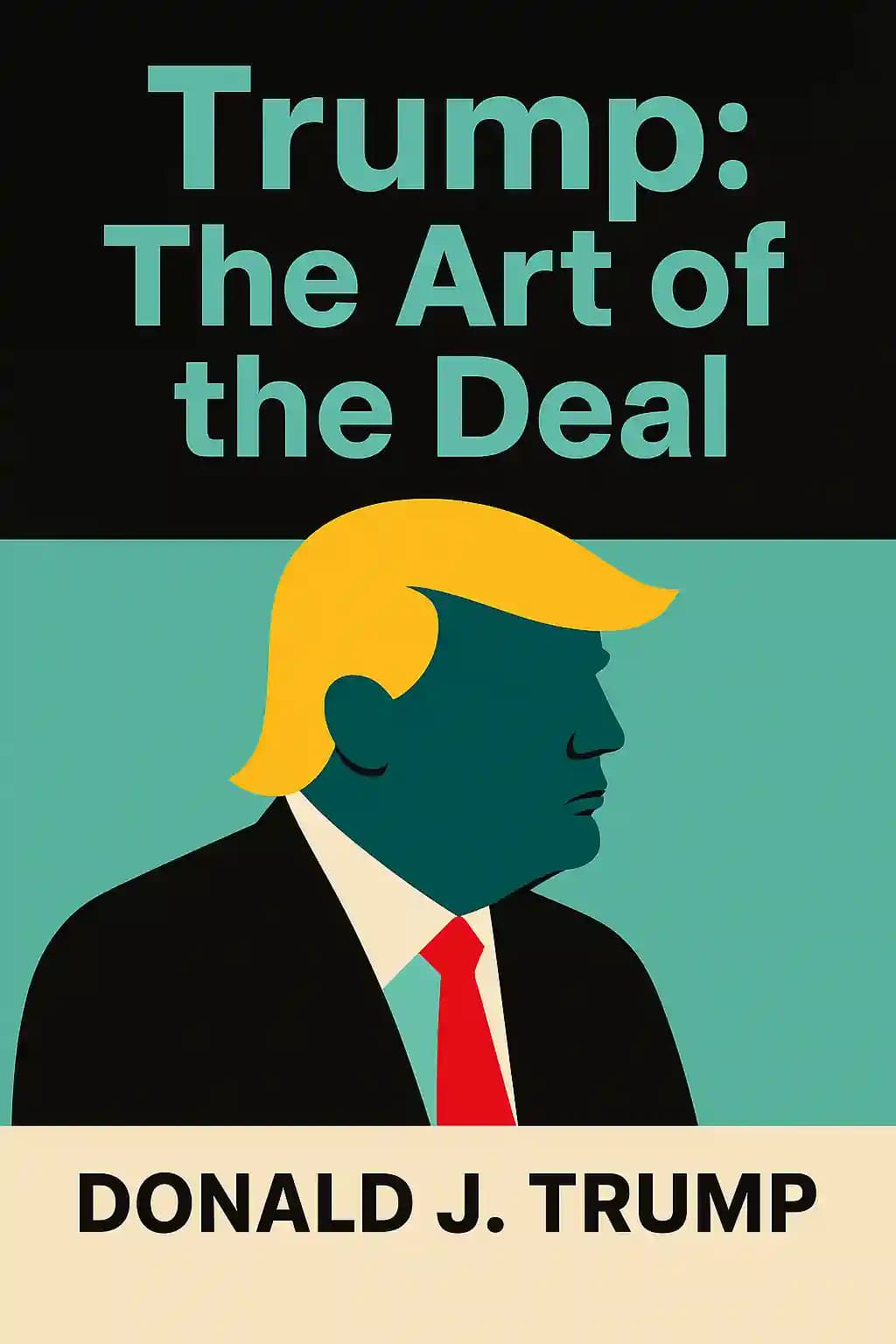
In 1987, a book hit the shelves that would forever change how America viewed business negotiation and the art of dealmaking. "Trump: The Art of the Deal" became not just a business bestseller but a cultural phenomenon that launched Donald Trump from New York real estate mogul to national celebrity. The book spent 48 weeks on The New York Times bestseller list, with 13 weeks at #1. Even Warren Buffett called it one of his favorite business books, noting that Trump's instincts for identifying undervalued properties showed remarkable business acumen. What made this book so compelling wasn't just Trump's larger-than-life personality, but his willingness to reveal the psychological tactics behind his success-a rare glimpse into the mind of someone who transformed the New York skyline through sheer force of will and negotiating prowess.
Chapitre 2
Think Big or Don't Think at All
Trump's philosophy begins with a simple yet powerful premise: if you're going to think anyway, why think small? While his father built modest housing in Brooklyn and Queens, Trump set his sights on Manhattan's prime locations and spectacular projects that would transform the skyline. This wasn't just ambition-it was strategic positioning. From his earliest days in real estate, he recognized that the highest rewards came from targeting the luxury market and prime locations where others feared to venture.
"Most people think small because they're afraid of success, afraid of making decisions, afraid of winning," Trump explains. This fear creates opportunity for those willing to embrace big thinking. The psychology behind this approach is fascinating-by aiming higher than others dare, Trump consistently positioned himself where competition was scarce. He observed that while dozens of developers might compete for modest projects, only a handful would pursue truly ambitious ventures.
This mindset manifested in projects like Trump Tower, where he created an unprecedented luxury experience rather than a standard apartment building. Every detail, from the six-story atrium with its pink marble walls to the 80-foot waterfall, was designed to exceed expectations. When developing casinos in Atlantic City, he didn't just build hotel rooms that might generate modest returns-he created entertainment complexes that earned fifty times more revenue. The Trump Plaza and Trump Taj Mahal became landmarks that redefined Atlantic City's skyline and gambling experience.
The big-thinking approach extends beyond physical structures to negotiation tactics. When dealing with city officials over the Commodore Hotel, Trump didn't request minor tax concessions-he boldly asked for a 40-year tax abatement. When questioned about this audacious request, he famously quipped: "Because I didn't ask for fifty." This strategy of asking for more than expected became a hallmark of his negotiation style, often resulting in concessions that others thought impossible to obtain.
However, Trump acknowledges this mindset requires a particular temperament: "The most successful people are the most competitive, the most driven, the most single-minded." This trait, which he describes as "almost a controlled neurosis," may not lead to personal happiness but creates extraordinary business results. It's a fascinating insight into the psychological cost of achievement-suggesting that extraordinary success requires extraordinary sacrifice. He points to numerous examples of highly successful individuals who share this trait, from top athletes to business titans, all of whom possess an almost obsessive drive to achieve their goals.
The big-thinking philosophy also demands resilience in the face of skepticism and criticism. Trump faced considerable opposition when announcing plans for Trump Tower, with many experts claiming the location couldn't support such an ambitious project. Similar skepticism greeted his Atlantic City ventures. Yet in each case, thinking big and persisting despite doubters proved profitable. This approach requires not just vision but the courage to stand firmly behind that vision when others predict failure.
Chapitre 3
Protect the Downside and the Upside Will Take Care of Itself
Despite his reputation for boldness and aggressive deal-making, Trump reveals himself as surprisingly risk-averse in his business approach. "I always go into the deal anticipating the worst," he explains. "If you plan for the worst-if you can live with the worst-the good will always take care of itself." This counterintuitive stance from a seemingly aggressive businessman offers valuable insights into successful risk management.
This philosophy of "negative thinking" stands in stark contrast to the positive thinking movement popular in business literature. While many self-help gurus advocate visualizing success, Trump's approach involves meticulously identifying everything that could go wrong and creating protection against those scenarios. He systematically analyzes potential pitfalls, from market downturns to partner disputes, from regulatory changes to construction delays. Only when the downside is secured does he proceed with any venture.
His Atlantic City casino deal exemplifies this principle perfectly. While competitors like Barron Hilton began construction before securing gaming licenses (ultimately losing hundreds of millions), Trump executed a masterful risk-minimization strategy. He first assembled land parcels with minimal upfront investment, using options and contingency clauses to maintain flexibility. He waited patiently for licensing approval, unlike his competitors who rushed ahead. Then, he partnered with Holiday Inns who not only paid back his investment and financed construction but also guaranteed against losses for five years - effectively creating a safety net for his investment.
The result? Trump accepted 50% ownership without risk rather than 100% with all the risk-a counterintuitive move for someone with his reputation, but perfectly aligned with his actual philosophy. When Hilton's project failed due to licensing issues, Trump purchased it at a fraction of its cost, demonstrating how protecting the downside can create unexpected opportunities. This pattern of turning others' distressed assets into profitable ventures became a hallmark of his business strategy.
This approach extends to financing strategies as well. For the Trump's Castle buyout, he chose public bonds over bank loans despite higher interest rates because it eliminated personal financial liability. While others might have opted for lower-interest bank financing, Trump prioritized structural protection over immediate costs. He consistently structured deals to limit personal exposure, often using corporate entities, partnerships, and creative financing to buffer against potential losses. As he puts it: "I've never been afraid to lose what I don't have."
The lesson is profound: true dealmakers aren't gamblers-they're chess players who systematically eliminate risk before making their moves. This approach requires patience, thorough due diligence, and the discipline to walk away from seemingly attractive opportunities that carry uncontrollable risks. Success in business, Trump demonstrates, often comes not from taking bold risks, but from methodically eliminating them while maintaining upside potential.
Chapitre 4
Leverage: The Art of Negotiating from Strength
"The worst thing you can possibly do in a deal is seem desperate to make it," Trump reveals. "That makes the other guy smell blood, and then you're dead." This insight forms the foundation of Trump's negotiating philosophy-never negotiate without leverage.
Leverage comes in many forms: something the other party wants or needs, something they can't do without, or even the perception of having something they want. When leverage isn't obvious, Trump creates it through imagination and salesmanship.
With the Commodore Hotel, Trump convinced the owners to announce their plans to close the property, creating leverage with city officials by highlighting how disastrous a boarded-up hotel would be for Grand Central area. With Holiday Inns, he created the impression his Atlantic City construction was further along than reality, making them eager to partner before "missing out." For Television City, he named the project specifically to leverage the city's fear of losing NBC to New Jersey.
Trump's approach to leverage extends to media relations. He understood that press coverage creates perceived value, which becomes actual value. "One thing I've learned about the press is that they're always hungry for a good story," he notes. "The point is that if you are a little different, or a little outrageous, or if you do things that are bold or controversial, the press is going to write about you."
This media leverage helped transform the value of Trump Tower from a building into a brand. Even negative coverage served his purposes by keeping his projects in the public eye. As he puts it: "The funny thing is that even a critical story, which may be hurtful personally, can be very valuable to your business."
Perhaps most interestingly, Trump reveals how he leverages human psychology in negotiations. He identifies the other party's desires and fears, then positions his proposals to address them. With banks during New York's fiscal crisis, he appealed to their guilt, fear, and moral obligation to the city when conventional approaches failed. With contractors, he leveraged their desperation during market downturns to negotiate favorable terms without forcing them into losing deals.
The lesson is clear: in any negotiation, the person with leverage controls the outcome. If you don't have it naturally, create it through creativity and psychological insight.
Chapitre 5
Location, Promotion, and the Psychology of Value
"Perhaps the most misunderstood concept in all of real estate is that the key to success is location, location, location," Trump writes, challenging conventional wisdom. "You don't necessarily need the best location. What you need is the best deal."
This insight reveals Trump's understanding that value isn't inherent-it's created through perception and promotion. Just as you can create leverage, you can enhance a location through marketing and psychology.
Trump Tower exemplifies this principle. While Fifth Avenue and 57th Street was already prestigious, Trump elevated it further through promotion and creating an "aura" that competitors like Museum Tower (with an equally prime location) never achieved. More impressively, he transformed Trump Plaza on Third Avenue-a mediocre location purchased inexpensively-into a prestigious address by attracting the right people and creating perception of exclusivity.
The psychology behind this approach is fascinating. Trump understood that luxury isn't just about quality-it's about scarcity and status. His marketing strategy deliberately played hard-to-get: "When people called about apartments, we'd say, 'I'm sorry, we're sold out.' That only made them want an apartment more desperately."
This strategy extended to pricing psychology. Trump kept raising prices on Trump Tower apartments twelve times, eventually selling two-bedroom units for $1.5 million. "The result of this psychological pricing strategy was that we ended up getting a higher price per square foot than I originally anticipated."
Even architectural elements were chosen for psychological impact. The Trump Tower atrium used Breccia Perniche marble specifically selected to create a flattering, energizing environment. The 80-foot waterfall wasn't just decoration-it created movement and excitement that traditional artwork couldn't match. The polished brass escalators and reflective glass made the space appear larger and more luxurious.
Trump's insight was recognizing that people don't buy properties-they buy feelings and identities. Trump Tower wasn't selling apartments; it was selling "the only place for a certain kind of very wealthy person to live." This understanding of consumer psychology transformed how luxury real estate is marketed to this day.
Chapitre 6
The Power of Execution: Delivering What Others Can't
While Trump's promotional abilities receive much attention, his execution skills proved equally important to his success. "You can create excitement, you can do wonderful promotion and get all kinds of press... but if you don't deliver the goods, people will eventually catch on," he writes.
This focus on execution manifested in several key principles that differentiated Trump's projects from competitors:
First, his obsession with quality materials and craftsmanship. For Trump Tower, he rejected 60% of marble from the quarry to get perfect slabs without white spots or veins. For the Grand Hyatt, he insisted on dramatic 170-foot glass-enclosed restaurant over 42nd Street despite the engineering challenges. These weren't just aesthetic choices-they created tangible value that competitors couldn't match.
Second, his hands-on management style. Trump personally visited construction sites daily, picked up the phone over $5,000 overcharges, and maintained relentless attention to detail. When renovating Wollman Rink, he discovered the city had hired refrigeration consultants who'd never built a skating rink. His direct involvement ensured projects finished on time and under budget when competitors routinely faced delays and overruns.
Third, his value engineering approach. Trump spent what was necessary for visible quality but ruthlessly eliminated unnecessary costs. For Trump's Castle in Atlantic City, they eliminated extra door hinges, relocated cooling towers, and created detailed plans for contractors to bid on every aspect of the job. The result? The first casino-hotel in Atlantic City ever built on time and on budget.
Fourth, his talent for hiring exceptional people. Trump's management philosophy was straightforward: hire the best people from competitors, pay them more, and give performance-based incentives. When taking over Harrah's Atlantic City operation, he hired Stephen Hyde and a dozen top executives from Golden Nugget, resulting in profits jumping from $35 million to nearly $58 million in the first year.
Finally, his willingness to fight for quality. When his wife Ivana pointed out cleanliness issues at the Grand Hyatt, Trump insisted on higher standards despite Hyatt's resistance. When buying out Equitable's share of Trump Tower, he refused to compromise on maintenance standards like polishing brass twice monthly. This insistence on excellence created lasting value that justified premium prices.
The lesson is clear: promotion gets attention, but execution creates sustainable success. As Trump puts it: "You can't con people for long... Eventually, people catch on."
Chapitre 7
Fighting Back: The Strategic Use of Conflict
"When people treat me badly or unfairly or try to take advantage of me, my general attitude, all my life, has been to fight back very hard," Trump reveals. This approach-while not suitable for everyone-became a signature element of his business strategy.
Trump's willingness to engage in conflict served several strategic purposes. First, it deterred others from taking advantage of him. When Holiday Inns performed poorly as his Atlantic City partners, he fought until they sold their share. When the city denied him standard tax breaks on Trump Tower, he battled through six courts and won. This reputation for fighting back made potential adversaries think twice before challenging him.
Second, conflict created leverage. During the USFL antitrust lawsuit against the NFL, Trump's aggressive stance put pressure on networks and the established league. With tenant disputes at 100 Central Park South, his refusal to settle quickly (unlike most landlords) strengthened his negotiating position. Even his public conflicts with Mayor Koch over Television City created media attention that increased project visibility.
Third, conflict revealed character. Trump notes that "success breeds jealousy" from "life's losers" who lack ability themselves. By engaging in these conflicts, he separated serious partners from those who would fold under pressure. His confrontation with Hyatt over the exclusive covenant preventing them from building competing hotels in New York revealed their true priorities and protected his investment.
However, Trump also demonstrates strategic restraint in conflicts. With A.N. Pritzker, Jay's father and Hyatt patriarch, Trump could never directly refuse his requests for another hotel because of deep respect. When A.N. died in 1986, Trump canceled an important business meeting to attend his funeral in Chicago. "Some people are worth your respect regardless of what it costs you," he notes-revealing that even his approach to conflict has nuance.
The most interesting aspect of Trump's conflict strategy is its psychological foundation. He recognizes that many people avoid conflict at all costs, creating opportunity for those willing to engage. As he puts it: "The cost of losing is far greater than the cost of fighting for what you believe in." This willingness to endure short-term discomfort for long-term advantage became a consistent competitive advantage.
Chapitre 8
The Human Element: Relationships and Instinct
Behind Trump's deal-making prowess lies a sophisticated understanding of human psychology and relationships. "Deal-making is not a science," he explains. "It's an art-an art that requires instinct more than intelligence."
This instinct manifests in Trump's ability to read people and situations. Rather than relying on market research, he conducts personal surveys-asking doormen about neighborhoods, cab drivers about local conditions, and residents about their needs. These conversations provided insights no consultant could match and developed his "gut feeling" about opportunities.
Trump's relationship approach varies strategically based on the situation. With tough negotiators like Victor Palmieri of Penn Central, he built rapport through directness and enthusiasm. With Atlantic City contractors desperate for work, he negotiated aggressively but avoided forcing them into losing deals that would create resentment. With the Pritzker family of Hyatt, he maintained respectful partnership despite disagreements.
Perhaps most fascinating is Trump's insight into motivation. He recognizes that different people are driven by different things-some by money, others by recognition, others by fear of failure. His ability to identify these motivations allowed him to structure deals that satisfied all parties' core needs.
This understanding extended to hiring decisions. When selecting Irving as manager for Swifton Village, Trump recognized that his questionable ethics were outweighed by his effectiveness. When putting Ivana in charge of Trump's Castle, he bet that good management skills were more important than gaming experience. Both decisions proved correct because they matched the person to the specific challenges they would face.
Trump also demonstrates remarkable self-awareness about his own motivations. "Money was never my motivation," he writes. "I've got enough, much more than I'll ever need. I do it to do it." This intrinsic motivation-the enjoyment of the process itself-explains his relentless drive and willingness to take on projects others considered impossible.
The human element extends to Trump's understanding of public psychology. He recognized that "truthful hyperbole"-an innocent form of exaggeration-plays to people's fantasies about something being the biggest and greatest. His announcement of the world's tallest building for Television City generated massive attention precisely because it tapped into human fascination with superlatives.
Chapitre 9
The Dealmaker's Mindset: Flexibility and Options
"I keep a lot of balls in the air, because most deals fall out, no matter how promising they seem at first," Trump reveals. This approach-maintaining maximum flexibility through multiple options-forms the foundation of his deal-making mindset.
For every deal, Trump develops at least six approaches, recognizing that circumstances can change rapidly. With Trump Tower, he could have built an office building if residential approvals failed. With his first Manhattan deal-the Penn Central railyards-he pivoted from government-financed housing to a convention center when the city's financial crisis made his original plan impossible.
This flexibility extends to project timing. Unlike developers who rush into construction, Trump patiently waits for optimal conditions. He passed on Atlantic City properties before the gambling referendum, preferring to pay more for certainty later. He let his option on the 60th Street yards expire to focus on better opportunities. With Television City, he noted: "I can afford to wait for the right market conditions... My time will come."
Trump's approach to business structure demonstrates similar flexibility. For the Commodore Hotel, he created a complex arrangement where he would buy the hotel for $10 million, sell it to the city for $1, then lease it back for 99 years. For Atlantic City casinos, he used different structures for each project based on specific circumstances. This willingness to create custom deal structures allowed him to overcome obstacles that stopped other developers.
Perhaps most interesting is Trump's flexibility regarding his own role. Sometimes he positioned himself as developer (Trump Tower), sometimes as builder (Wollman Rink), sometimes as operator (Trump's Castle), sometimes as partner (Hyatt), and sometimes as seller (Swifton Village). This chameleon-like ability to adapt his role to each opportunity's requirements maximized his options and returns.
The psychological foundation of this approach is Trump's comfort with uncertainty. While others need definitive plans, Trump thrives in fluid situations where circumstances evolve. As he puts it: "I don't spend much time worrying about what I should have done differently, or what's going to happen next." This present-focused mindset allows him to see opportunities others miss and pivot quickly when conditions change.
Chapitre 10
The Ultimate Deal: Finding Purpose Beyond Profit
In the book's final chapter, Trump reflects on his accomplishments and what comes next. After twenty years of building and achieving what many said couldn't be done, he identifies a new challenge: "finding creative ways to put what I've learned to use on behalf of myself, my family, and others."
This search for purpose beyond profit reveals a more contemplative side of Trump's personality. He acknowledges that money, while a useful scorecard, has never been his primary motivation. "The real excitement is playing the game," he writes. The thrill of the deal itself-the creative process of seeing opportunity, overcoming obstacles, and creating something new-drives him more than financial returns.
Trump recognizes that true wealth includes more than money: "Anyone who thinks my story is anywhere near over is sadly mistaken." His acquisition of Mar-a-Lago-which he describes as "close to paradise as I'm ever going to get"-suggests a growing appreciation for beauty and history alongside commercial value. His Moscow hotel explorations and international ventures indicate a desire to make a global impact beyond New York's skyline.
Most significantly, Trump acknowledges that time, not money, is his most valuable resource: "Anyone with a lot should be generous... But what I admire most are people who put themselves directly on the line." This recognition that personal involvement matters more than financial contribution hints at evolving priorities.
The book concludes with Trump still seeking his next challenge: "Fortunately, I don't know the answer, because that would take half the fun out of it." This openness to new possibilities-maintaining the excitement of discovery while applying accumulated wisdom-perhaps best captures the essence of Trump's approach to business and life.
As readers, we're left with the impression of a man whose greatest talent isn't just making deals, but reinventing himself and his goals as circumstances change. The true art of the deal, it seems, is not just knowing how to negotiate terms, but knowing when to pursue new directions altogether.