Chapitre 1
Redesigning Services: The Revolutionary World of Service Design Thinking
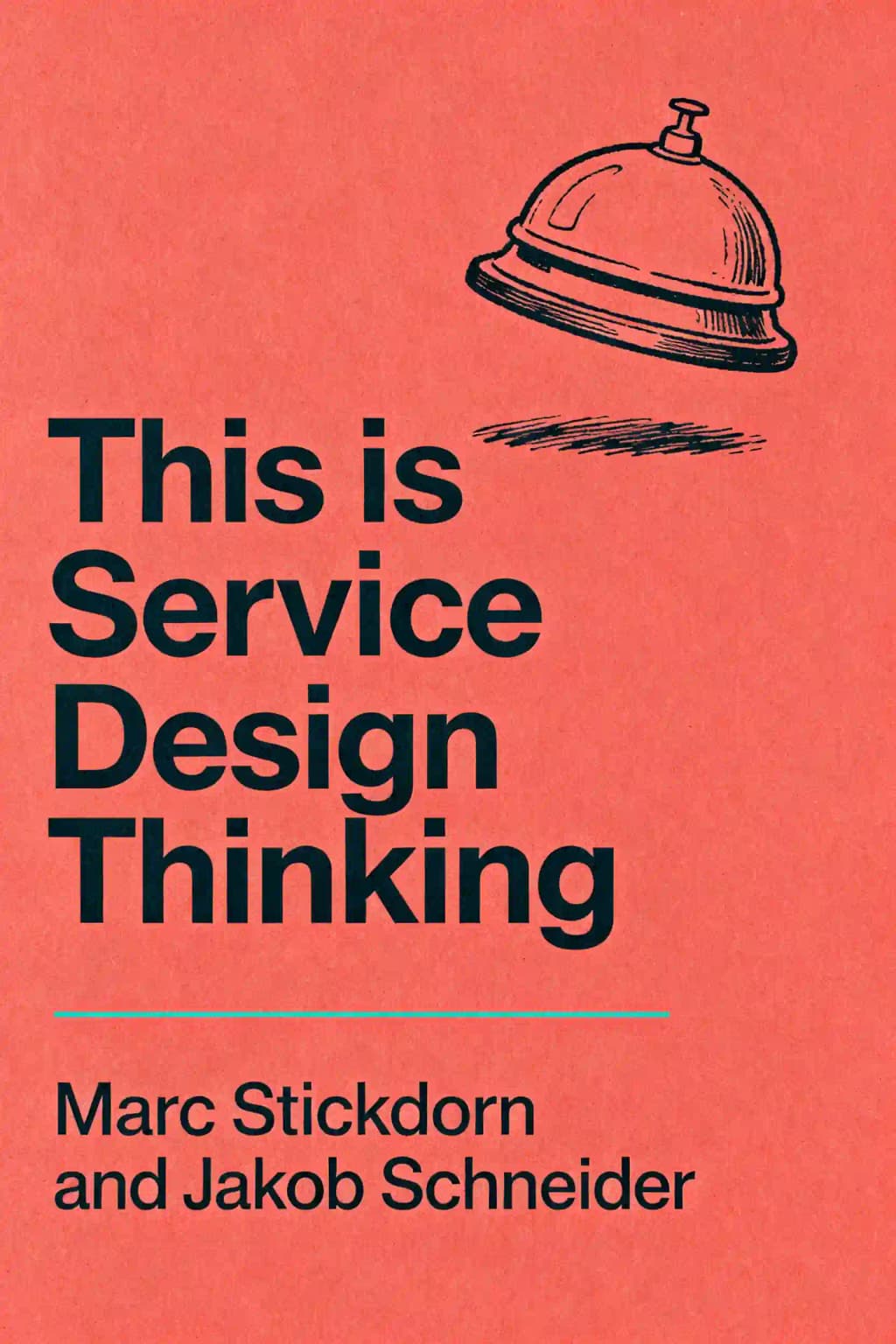
Have you ever wondered why some services leave you delighted while others make you want to pull your hair out? The difference often lies not in what these services offer, but in how thoughtfully they've been designed. In "This is Service Design Thinking," authors Marc Stickdorn and Jakob Schneider present a groundbreaking approach to creating services that truly work for people. Since its publication in 2010, this book has become the definitive guide for service designers worldwide, praised by industry leaders from IDEO to IBM. What makes it particularly fascinating is that the book itself was created using service design principles-it was crowdsourced from the global service design community, with over 50 methods evaluated through 1188 votes to determine which would make the final cut. Whether you're a business leader looking to transform customer experiences or simply someone curious about why some services feel effortless while others frustrate, this book reveals the invisible architecture behind the services that shape our daily lives.
Chapitre 2
Beyond Products: The Interdisciplinary Nature of Service Design
Service design isn't just another business buzzword-it's a fundamentally different way of thinking about how organizations create value. Unlike traditional product design, which focuses on tangible objects, service design addresses the intangible experiences that unfold over time between people, organizations, and systems. This shift from product-centric to service-oriented thinking represents a major evolution in how businesses approach value creation in the 21st century.
What makes service design unique is its interdisciplinary nature. Rather than being a standalone academic discipline, it's an approach that combines methods and tools from various fields including psychology, business strategy, interaction design, ethnography, and systems thinking. Ask ten people what service design is, and you might get eleven different answers! This diversity isn't a weakness but a strength, allowing service design to adapt to different contexts and challenges, from healthcare improvements to retail innovations and public sector transformations.
At its core, service design thinking revolves around five key principles. First, it's user-centered, placing customers at the heart of the design process and going beyond statistical descriptions to gain authentic insights into their habits, culture, and motivations. Consider Prince Charles and Ozzy Osbourne-both British men born in 1948 with similar demographic characteristics but vastly different needs and preferences. This example illustrates why deep customer understanding is essential. Service designers employ methods like shadowing, contextual interviews, and journey mapping to uncover these nuanced differences.
Second, service design is co-creative, involving all stakeholders-from customers to front-line staff, managers, and even non-human interfaces-in exploring and defining the service proposition. This collaborative approach leads to smoother interactions during service delivery and fosters a sense of co-ownership that enhances loyalty. For example, when designing a new hospital check-in process, service designers might involve doctors, nurses, administrators, patients, and technology providers in collaborative workshops.
Third, services are understood as sequences of interrelated actions unfolding over time, like scenes in a movie. The rhythm of these sequences significantly impacts customer mood-too slow causes boredom, too fast creates stress. Service designers orchestrate these sequences to maintain customer interest through good narrative rhythm. Consider a fine dining experience: from reservation to seating, ordering, serving, and payment, each moment is carefully choreographed to create a seamless experience.
Fourth, service design makes the intangible tangible through "evidencing"-creating physical artifacts that trigger memories of positive service moments. Think of the small shampoo bottles from a hotel that extend the service experience beyond the stay itself, or how airlines use boarding passes, lounges, and branded amenity kits to materialize their service experience. These physical touchpoints serve as anchors for the intangible service experience.
Finally, service design takes a holistic view, considering the wider context in which service processes take place-from individual touchpoints to organizational culture and structure. This comprehensive approach supports cross-disciplinary cooperation toward enhanced customer experiences and employee satisfaction. For instance, a bank redesigning its mortgage service would consider not just the application process, but also staff training, IT systems, regulatory requirements, and long-term customer relationship management.
The implementation of service design principles requires organizations to embrace new tools and methodologies, such as service blueprinting, customer journey mapping, and experience prototyping. These methods help visualize complex service systems and identify opportunities for innovation while ensuring that all components work together harmoniously to deliver value.
Chapitre 3
The Multidisciplinary Minds Behind Service Design
Service design thinking draws strength from diverse professional backgrounds, each contributing unique perspectives and methodologies to the field. This multidisciplinary approach is what makes service design so powerful and adaptable across different contexts.
Product designers bring valuable expertise in developing physical components of service experiences. Modern product design has evolved beyond creating objects based solely on form and function-today's designers work on managing design processes, conducting research, and focusing on interactions between people and technology. They understand that products often serve as platforms for experiences and services, creating what we might call "product-service hybrids."
Apple's iPod and iTunes package exemplifies this hybrid approach-a physical product inseparable from its service component. Similarly, KONE Corporation allows customizable elevator interiors that can be changed to suit different contexts or marketing campaigns. Developing such hybrids requires simultaneous creation of both product concepts and service systems, with stakeholders involved early in the development process.
Graphic designers play an essential role in making services understandable and accessible. In our visually-dominated world filled with information, graphic design helps users develop mental filter systems to make sense of complexity. Designers create visual metaphors that trigger familiar mental models-like how an online shopping cart helps users understand digital purchasing by referencing physical shopping experiences.
Visual presentation is crucial as it precedes the actual service, manages expectations, and builds trust during interaction. Inconsistencies between a service's nature and its visual identity create distrust-imagine messy design for a cleaning service or outdated web aesthetics for online tools. Effective visual design determines whether users can successfully interact with services, making visual control a key competence in design propositions.
Interaction designers focus on the series of touchpoints between customers and service systems throughout the customer journey. Despite being the sole way customers relate to services, these interactions are often poorly considered, creating a disconnect between services and people. Effective service design requires viewing services through customers' eyes and designing consistent, valuable experiences over time.
Desirable interactions create customer desire, generate word-of-mouth, build trust and loyalty, and deliver pleasurable emotional experiences. Companies like Apple, Amazon, and Nintendo understand this translates to profit. True desirability requires balancing utility (what a service does), usability (how easily customers can access value), and pleasurability (how enjoyable the experience feels)-like a mixing desk to fine-tune your interactive solution.
Chapitre 4
The Business Perspective: Strategy and Operations
Service design doesn't exist in a vacuum-it must align with business realities to deliver sustainable value. This requires understanding the strategic and operational dimensions that drive organizational decision-making, while balancing innovation with practical constraints.
Traditional management models at different strategic levels often fail to provide sufficient arguments for good service design. Corporate strategy, shaped by Porter's 5-Forces Model, typically treats service as merely an attribute rather than an industry-shaping force. This limited view fails to recognize how exceptional service design can restructure entire industries, as demonstrated by companies like Uber revolutionizing transportation or Airbnb transforming hospitality. Business strategy, guided by Porter's Generic Strategies model, positions service as a differentiation tool that increases costs rather than as a potential cost leadership strategy. This overlooks how thoughtful service design can simultaneously enhance customer experience and operational efficiency.
The critical obstacle is the assumed exclusivity between cost leadership and differentiation. Roger Martin's concept of "design thinking" offers an iterative "both...and" approach rather than "either...or" logic, helping overcome this exclusivity through new organizational designs and processes. Companies like Southwest Airlines and IKEA have proven that superior service design can achieve both cost advantages and meaningful differentiation. By framing service design concepts within management thinking, designers can bring their discipline closer to boardrooms and demonstrate tangible business impact.
From an operations management perspective, services have historically been approached from a production-oriented viewpoint, applying manufacturing principles to service environments. Ted Levitt's "production-line approach to services," exemplified by McDonald's, standardized both employee and customer behaviors through principles like specializing services for narrow market segments, deskilling customer-facing roles, and substituting technology for human judgment. This standardization enabled consistent service delivery but often at the cost of personalization and emotional connection.
This approach differs significantly from today's design-led approach to services. While not ignoring human elements, traditional operations management views employees and customers as components to be controlled, standardized, or eliminated through technology. In this abstract view, service is a machine whose parts can be engineered for maximum efficiency. Modern service design, however, recognizes the value of human interaction and emotional engagement, as demonstrated by companies like Ritz-Carlton and Apple, which combine operational excellence with high-touch personal service.
Technology has evolved from guiding and controlling employee behavior to completely replacing direct customer-employee contact. While early self-service technologies like vending machines required physical presence, the internet revolutionized services by allowing providers like Amazon to operate from anywhere, fundamentally changing service design possibilities. Digital transformation has enabled new service models that blend automation with human touch points, as seen in successful implementations by companies like Netflix and Spotify, which use algorithms to personalize recommendations while maintaining human-curated content and support services.
The challenge for modern organizations lies in finding the right balance between standardization and personalization, automation and human interaction, cost efficiency and service quality. Successful service design must navigate these tensions while creating sustainable competitive advantages that benefit both the business and its customers.
Chapitre 5
Understanding Users Through Design Ethnography
At the heart of service design lies a deep commitment to understanding the people who use services. Design ethnography provides a structured process for gaining this understanding, helping design teams develop empathy and identify with users to work from their perspective when creating new designs. This approach goes beyond simple observation, incorporating immersive experiences, contextual interviews, and participatory methods to uncover both explicit and tacit user needs.
Unlike traditional market research, design ethnography isn't isolated from the creative process but works collaboratively with the design team, facilitating empathic conversations between users, clients, designers, and other stakeholders. These conversations often take place in users' natural environments - their homes, workplaces, or wherever they typically interact with services. In service design's multidisciplinary environment, it provides a shared focus and language by connecting all disciplines through their common reference point: the end users. This shared understanding becomes particularly valuable when teams include members from diverse backgrounds such as business, technology, and design.
This human-centered approach is essential for services, which are intangible, difficult to standardize, and co-produced during delivery. Design ethnography helps communicate concepts and strategies throughout organizations, engaging with the hearts and minds of people to create successful services. For example, a healthcare service design project might involve shadowing patients through their entire journey, from scheduling appointments to follow-up care, revealing pain points and opportunities that wouldn't be visible through traditional research methods.
The approach builds on ethnography's long history, adapting proven tools and techniques for specific service design contexts. Early anthropologists like Jean Rouch pioneered co-creation and visualization methods, involving subjects not just as research participants but as active collaborators. Modern practitioners have expanded these methods to include digital ethnography, remote observation, and hybrid approaches that combine multiple research techniques. Today's design ethnography employs specialized methods for different stages: empathic conversations during immersion in everyday life, clustering and probing during analysis, and techniques for idea generation, concept development, co-creation, prototyping, and validation during development.
Successful service design requires strong connections between design and ethnographic research. The empathic conversations between various stakeholders demand both sensitivity and visual engagement, often utilizing tools like journey maps, personas, and service blueprints to capture and communicate insights. Research activities must be well-designed to elicit useful insights, incorporating methods like cultural probes, diary studies, and contextual inquiry. New designs must be researched again in an iterative improvement process, with each iteration building on learned insights. This approach places everyday life at the heart of the design process, not just as inspiration but as its foundation, ensuring that services are truly designed around user needs, behaviors, and contexts.
The impact of design ethnography extends beyond initial research phases, influencing organizational culture and decision-making processes. By bringing user perspectives into strategic discussions, it helps align business objectives with genuine user needs and creates services that resonate with their intended audiences while meeting organizational goals.
Chapitre 6
The Service Design Process: Exploration to Implementation
Service design isn't a linear process but an iterative journey of exploration, creation, reflection, and implementation. Each phase builds upon the insights of the previous one, with frequent loops back to refine and improve the service concept.
The exploration phase begins not with the customer but with understanding the company's culture and goals. Service designers must first grasp if the organization understands service design thinking and is prepared for the process. The second task involves identifying the real problem by gaining clear understanding from current and potential customers' perspectives. Ethnographic approaches are commonly employed to explore behavior and mindset of all stakeholders. The third task involves visualizing findings and underlying structures of previously intangible services, simplifying complex processes and promoting the possibility of change.
AT-ONE is one approach that assists project teams during early phases of service design, focusing on the unique aspects of services versus products with a user-experience focus. Run as a series of workshops, the method uses five different "innovation lenses" to explore design challenges:
A is for Actors, reflecting the shift toward value creation through collaborative networks rather than traditional expertise silos. Like Apple's integration of partners for iTunes, successful services require coordinating complex ecologies of partners.
T stands for Touchpoints-the various ways customers interact with a service. Within organizations, different departments often manage different touchpoints, creating inconsistencies. Service design coordinates the user experience across touchpoints to deliver a consistent brand message that meets user needs.
O represents Offering, recognizing that service brands differ from product brands, with typically less brand differentiation and a monolithic brand culture where service and brand are closely linked.
N focuses on Needs, going beyond quantitative customer data to reveal deep-seated needs and cultural trends through talking to, observing, and listening to customers.
E emphasizes Experiences that surprise and delight. In today's "Experience Economy," functionality and usability are baseline expectations; customers seek emotional bonds and experiences that help create and express their identities.
Following exploration, the creation phase involves visualizing insights into new ideas and concepts, while reflection tests these ideas to identify improvements. Holistic solutions require involving many stakeholders in the creative process. Finally, implementation tools help transfer new or improved service designs throughout an organization, engaging new audiences, involving staff in innovation, and building compelling cases for change.
Chapitre 7
The Service Designer's Toolbox: Methods for Creating Better Services
Service design offers a flexible toolbox of methods and tools rather than a rigid manual. These tools can be combined in countless ways across different project stages, as successful service design involves finding workable combinations that allow for conceptualizing, developing, and prototyping ideas through iterative improvement.
Stakeholder maps visually represent the various groups involved with a service, allowing analysis of their interplay. Creating these maps requires comprehensive stakeholder identification through interviews and research, revealing both known and unknown stakeholders along with their interests and motivations. The resulting visual overview helps identify pain points and opportunities and allows clustering by shared interests.
Service safaris send people "into the wild" to explore examples of good and bad service experiences. Using simple recording tools like cameras or notebooks, participants document their experiences with services in their own or other sectors. This approach helps people understand customer perspectives, identify common needs and problems, and develop insights that can lead to service innovations.
Customer journey maps provide structured yet vivid visualizations of service user experiences. They use touchpoints to construct an engaging story of the user's service interactions and accompanying emotions, making complex experiences highly accessible. The maps allow for both high-level overviews and detailed touchpoint analysis, enabling comparison between different service experiences and identifying both problem areas and innovation opportunities.
Contextual interviews take place in the environment where service interactions occur, combining observation with questioning to generate deeper insights. By conducting interviews in familiar settings, interviewees share more specific details and feel more comfortable providing insights.
Personas are fictional profiles representing particular customer groups based on shared interests. They provide engaging "characters" that design teams can connect with, shifting focus from abstract demographics to real people's wants and needs. Though fictional, these personas embody real-world perceptions gathered during research.
Service prototypes simulate service experiences, ranging from informal roleplay to full-scale recreations with user participation, props, and physical touchpoints. These mock-ups of service systems test proposed solutions in near real-world environments. Developed iteratively with constant refinements, service prototypes generate deeper understanding than written descriptions through "learning by doing."
Service blueprints specify every aspect of a service through visual schematics incorporating user, provider, and third-party perspectives, from customer touchpoints to behind-the-scenes processes. Often produced collaboratively in workshops, they bring together various departments to create a shared understanding of responsibilities.
Chapitre 8
Real-World Applications: Service Design in Action
Service design isn't just theoretical-its true value emerges when applied to real-world challenges across different sectors. Case studies demonstrate how service design thinking transforms organizations and customer experiences.
When NL Agency needed to become more customer-oriented, they worked with DesignThinkers using the Customer Journey LAB methodology. The process involved prioritizing issues on a Priority Grid to identify quick wins, co-creation sessions where customers developed strategic scenarios, creating Solution Service Blueprints that outlined objectives and required skills, and implementation through Visual Prototyping exercises. The Customer Journey LAB environment functioned as a mirror, making visible what was previously overlooked and bringing implicit organizational knowledge to the surface.
Mypolice, established in 2009, provides qualitative user experience information to UK police forces, helping create more empathic understanding of service delivery problems. Working with Snook, a Scottish social innovation design company, Mypolice addresses the breakdown in communication and trust between police and public. Their approach involved working backward from an initial idea, testing concepts using paper prototypes in community settings, conducting contextual interviews in locals' homes, creating personas as constant reminders of user needs, mapping touchpoints across various stakeholders, and immersing themselves in police culture through observation.
Hello Change, developed by Funky Projects, represents a shift from industrial-era recruitment to information-era talent identification, focusing on qualities like empathy, creativity, charisma, and attitude that traditional CV reviews miss. The service recognizes that employee happiness increases productivity and that finding the right fit creates sustainable relationships. Their process began with collaborative work sessions bringing together diverse professionals to establish the project's spirit, followed by candidate interviews and company research to map expectations. They prototyped the service during their own recruitment process, crafting language that would attract the right talent while filtering out irrelevant applications.
When UPMC's neurosurgery clinic needed to improve patient experience, they partnered with Carnegie Mellon University's School of Design. The design team began by creating a territory map to visualize the design opportunity space and conducted extensive observations, spending full days witnessing interactions and conducting one-on-one interviews with staff and patients. While the initial problems were identified as wait time, workflow, and wayfinding, the team reframed wait time as an opportunity to engage patients in supportive interactions after discovering it couldn't be reduced. Though leadership changes prevented implementation, the service design process proved invaluable in gaining insights about the differences between product and service design.
Chapitre 9
Toward a Deeper Understanding: The Philosophy of Service Design
Service design thinking extends beyond practical applications to deeper philosophical considerations about how we understand and create services that truly support human life and flourishing.
Motivation plays a crucial role in service design, as designers seek to understand and support human behavior. By adopting an organismic perspective based on Deci and Ryan's Self-Determination Theory, designers can view motivation as dynamic and malleable, positioning themselves like coaches who support and guide users toward shared performance goals. This approach recognizes that human motivation stems from individuals seeking to expand their sense of autonomy, social relatedness, and competence.
Service designers can incorporate motivational perspectives into their work by reconsidering the value their designs generate through a motivational lens. By mapping an individual's motivational state along a continuum from amotivated to intrinsically motivated, designers can complement existing customer journey techniques and view services from users' motivational perspectives.
The evolution of service design research reveals how the field has matured over time. Early research primarily focused on connecting service design to other disciplines while establishing its unique identity. Around 2008-2009, research shifted from justifying the field to exploring it deeply, with approaches either widening service design by integrating practices from non-design fields or challenging basic assumptions inherited from other disciplines.
Perhaps most profoundly, service design challenges our mechanical mindset that views the world primarily through the lens of physical objects. Design discourse often revolves around the production of objects-chairs, lamps, furniture-yet the multitude of objects design introduces into daily life suggests there are deeper considerations beyond physical items.
Service design offers intriguing foundations for a new design aesthetic. The concept that artifacts should perform service actions disrupts conventional focus on physical aspects. Service design shifts attention to immaterial and relational components, adopting a binocular rather than monocular view-seeing both the "thing" and what it "provokes." This perspective requires investigation, empathy, and qualitative understanding of the processes an artifact enters.
Service design must enter the fragile territory of human "action-patterns" while remaining responsive to everyone-young and old, rich and poor. Rather than pursuing innovation for its own sake, it must respond to what exists in the world. This approach makes design an "active philosophy" creating space for life-a manifestation of biophilia, the love of life. This principle offers the foundation for a new service design aesthetic where life, in all its incredible variety, becomes the key to understanding design.