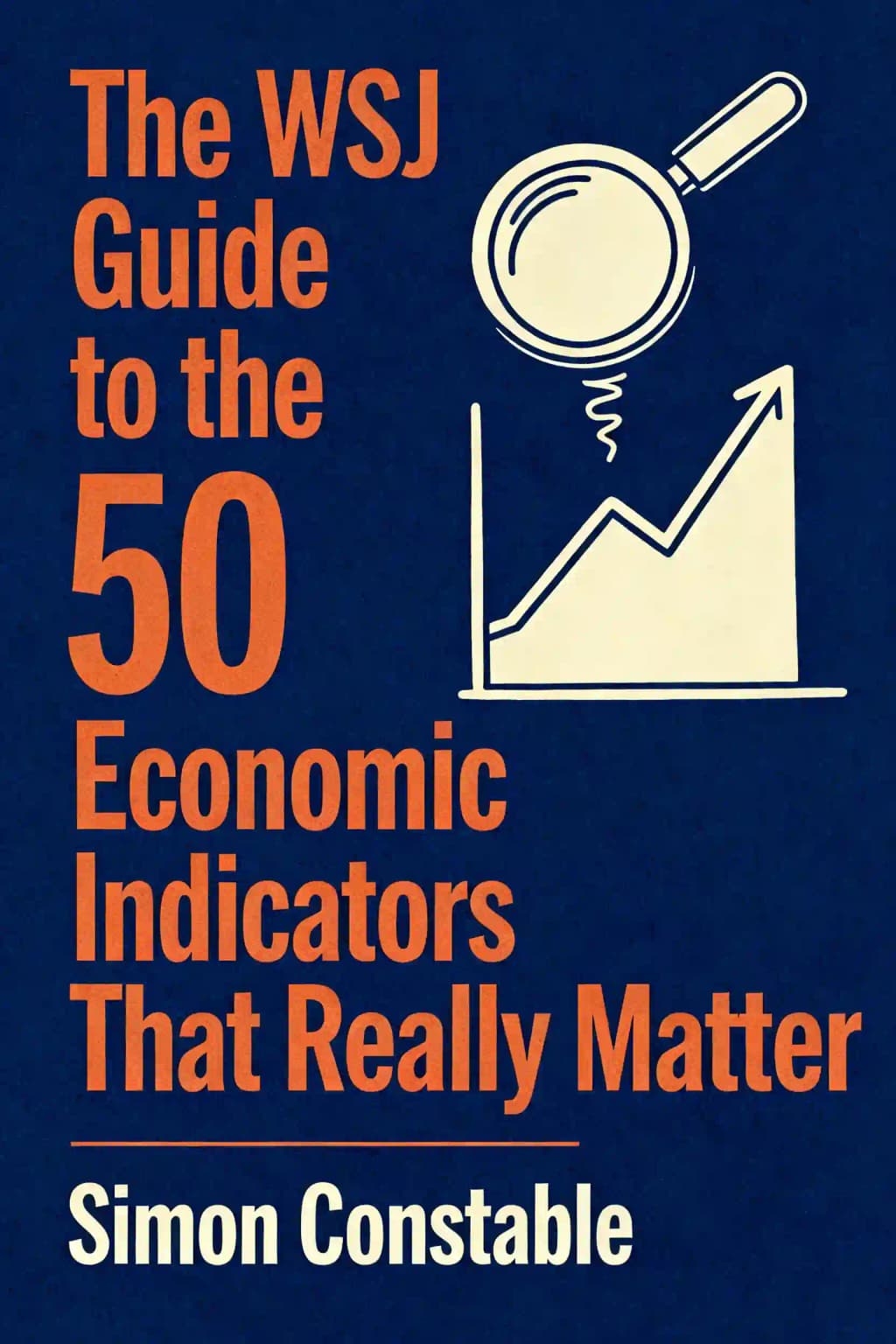
The Wall Street Journal Guide To The 50 Economic Indicators That Really Matter From Big Macs To Zombie Banks The Indicators Smart Investors Watch To Beat The Market
Aperçu de The Wall Street Journal Guide To The 50 Economic Indicators That Really Matter From Big Macs To Zombie Banks The Indicators Smart Investors Watch To Beat The Market
Decode the economic signals Wall Street insiders track. This award-winning WSJ guide reveals 50 indicators that truly predict market movements - from retail sales to housing trends. Named a Small Business Book Award winner, it's the secret weapon financial professionals don't want you to know about.
Thèmes clés dans The Wall Street Journal Guide To The 50 Economic Indicators That Really Matter From Big Macs To Zombie Banks The Indicators Smart Investors Watch To Beat The Market
- leading economic indicators
- market timing signals
- unconventional financial metrics
- consumer behavior analysis
- macroeconomic trend forecasting
Citations de The Wall Street Journal Guide To The 50 Economic Indicators That Really Matter From Big Macs To Zombie Banks The Indicators Smart Investors Watch To Beat The Market
The economy constantly emits signals about its health.
Consumer spending represents approximately 70% of the U.S. economy.
Smart investors focus on directional trends.
No single metric tells the complete story.
The real advantage comes from monitoring lesser-known metrics.
Personnages de The Wall Street Journal Guide To The 50 Economic Indicators That Really Matter From Big Macs To Zombie Banks The Indicators Smart Investors Watch To Beat The Market
- Simon ConstableAuthor and guide to economic indicators
- Campbell HarveyDuke University professor and economic expert
- Kristin BentzRetail analyst specializing in consumer trends
À propos de l'auteur
À propos de l'auteur de The Wall Street Journal Guide To The 50 Economic Indicators That Really Matter From Big Macs To Zombie Banks The Indicators Smart Investors Watch To Beat The Market
Simon Constable is the award-winning co-author of The WSJ Guide to the 50 Economic Indicators That Really Matter and a respected authority on economic analysis and financial markets.
A fellow at the Johns Hopkins Institute for Applied Economics, he combines academic rigor with real-world expertise, holding an MBA from the University of Virginia’s Darden School of Business and a master’s in economics from the University of St. Andrews.
His career spans Wall Street advisory roles, economic commentary for The Wall Street Journal, Barron’s, and Forbes, and hosting the Wall Street Journal’s daily TV show. Constable’s work focuses on translating complex economic data into actionable insights for investors and policymakers. He is also the author of The Real Money Guide to Investing in Gold, a practical primer on commodity markets.
The WSJ Guide to the 50 Economic Indicators That Really Matter, recognized as a 2012 Small Business Book Award winner, has sold over 80,000 copies worldwide and been translated into six languages, cementing its status as a global resource for economic literacy.
Telecharger le resume de The Wall Street Journal Guide To The 50 Economic Indicators That Really Matter From Big Macs To Zombie Banks The Indicators Smart Investors Watch To Beat The Market
Obtenez le resume de The Wall Street Journal Guide To The 50 Economic Indicators That Really Matter From Big Macs To Zombie Banks The Indicators Smart Investors Watch To Beat The Market en PDF ou EPUB gratuit. Imprimez-le ou lisez-le hors ligne a tout moment.
FAQ sur ce livre
The WSJ Guide to the 50 Economic Indicators That Really Matter identifies unconventional yet critical economic metrics—like the Big Mac Index and Zombie Bank Ratio—that help investors predict market shifts. It combines practical investment strategies with analysis of economic cycles, emphasizing long-term risk management over speculation. The book translates complex data into actionable insights for financial decision-making.
This book is essential for investors, financial analysts, and economics enthusiasts seeking to leverage overlooked indicators like the Crack Spread or Texas Ratio. It’s also valuable for business professionals aiming to understand macroeconomic trends or mitigate risks in volatile markets.
Yes—the book has sold over 80,000 copies globally, won industry awards, and is translated into multiple languages. It’s praised for turning niche metrics like the TIPS Spread into practical tools for anticipating inflation or recession risks, making it a unique resource for data-driven investors.
The Zombie Bank Ratio (or Texas Ratio) assesses bank stability by comparing bad loans to available capital. A ratio above 100% signals potential collapse, alerting investors to systemic risks in the financial sector. The book links this metric to broader credit market health and economic recovery challenges.
The Crack Spread measures refinery profitability by tracking the price difference between crude oil and its refined products (e.g., gasoline). Widening spreads signal rising energy demand or supply constraints, offering insights into energy sector investments and broader economic activity.
Beyond standard metrics like CPI, the book emphasizes the GDP Deflator (broad inflation across all goods) and the TIPS Spread (market expectations of future inflation). These help investors hedge against inflationary risks in portfolios.
The underemployment rate—released monthly—is a consumption indicator. When it rises, the book recommends investing in defensive sectors like pharmaceuticals or consumer staples, as economic uncertainty boosts demand for essential goods.
This real-time index, developed by the Philadelphia Fed, aggregates data on employment, production, and manufacturing to gauge U.S. economic health. The book highlights its timeliness over traditional quarterly metrics, helping investors react faster to macroeconomic shifts.
Co-author Simon Constable holds an economics degree and MBA, with Wall Street experience advising Fortune 500 companies. His background in financial journalism and market analysis ensures the indicators are both theoretically sound and practically tested.
The guide advocates for diversification across indicators—like combining consumption data with energy market metrics—to avoid overreliance on single metrics. It stresses proactive risk management and long-term strategy over reactionary trading.
The Big Mac Index, a lighthearted metric, compares global burger prices to assess currency valuation disparities. The book uses it to illustrate purchasing power parity theory and identify potential currency market imbalances.
Zombie banks—barely solvent institutions—constrain credit flow and slow economic recovery. By monitoring their prevalence via the Texas Ratio, investors can anticipate sector instability and adjust exposure to financial stocks.