Chapitre 1
Beyond the Balance Sheet: Discovering Life's True Treasures
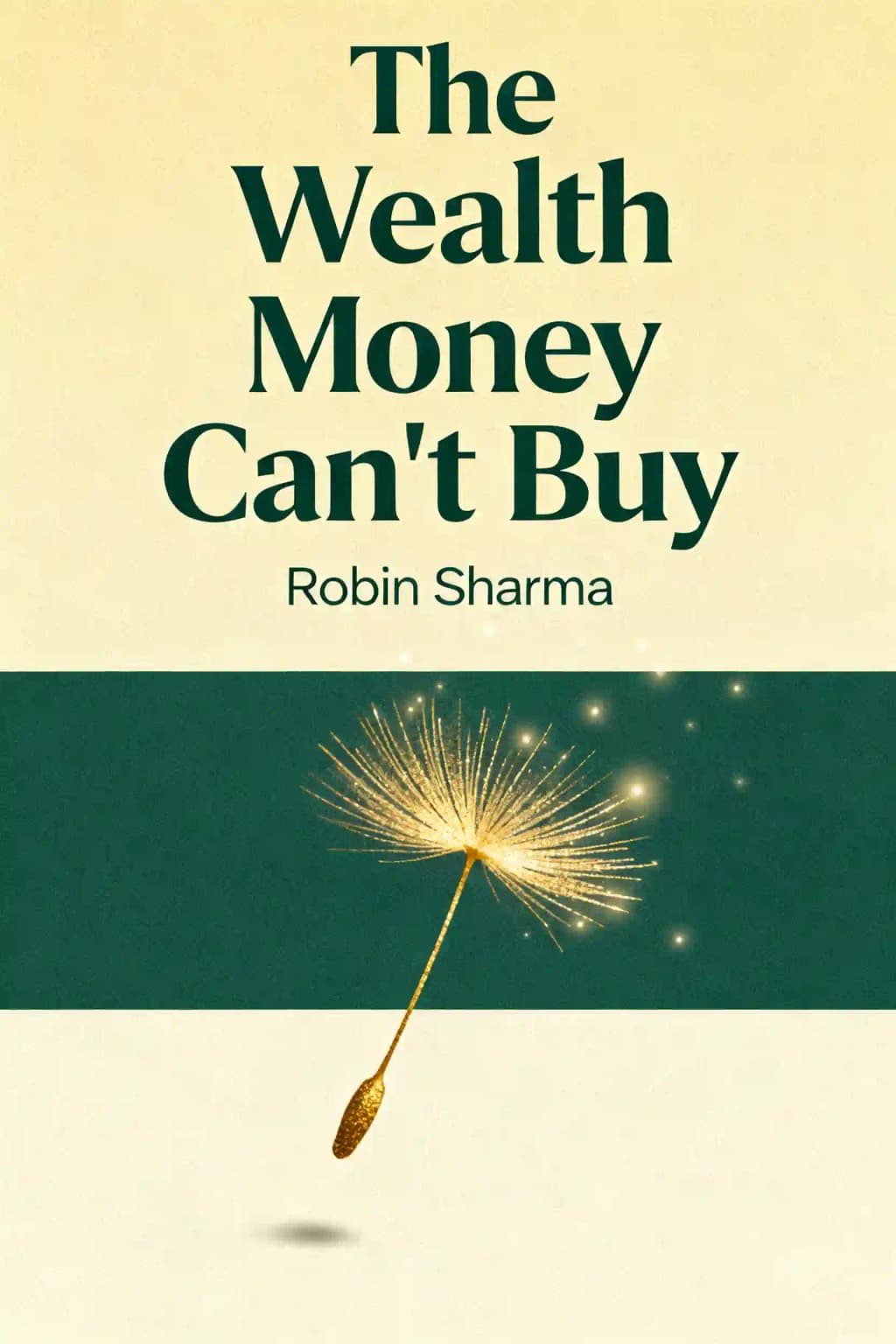
In a world obsessed with financial metrics and material success, Robin Sharma's "The Wealth Money Can't Buy" arrives as a revolutionary manifesto for those seeking deeper fulfillment. This isn't just another self-help book-it's a profound roadmap to a life of genuine abundance across eight distinct dimensions of wealth. As Deepak Chopra notes, Sharma is "an amazing mentor" and "major influencer," while Paulo Coelho recognizes how his works help people "lead great lives" worldwide. The book has become a favorite among celebrities and business titans alike, with entertainment mogul Jeezy calling it "a book of stunning power" with transformative potential. What makes this work particularly compelling is how it challenges our fundamental understanding of what it means to be truly rich in an age where success is often measured solely by bank account balances.
Chapitre 2
The Eight Currencies of an Extraordinary Life
Sharma introduces us to a revolutionary framework that redefines wealth through eight distinct forms: Growth, Wellness, Family, Craft, Money, Community, Adventure, and Service. This holistic approach emerged from his observations of countless "cash rich yet life poor" individuals-billionaires and high achievers who had mastered financial prosperity but remained deeply unfulfilled in other dimensions of life.
Writing from his Italian farmhouse overlooking misty hills and olive groves, Sharma shares the parable of a boy chasing a house with "golden windows," only to discover it was merely sunlight's reflection-a powerful metaphor for society's misguided pursuit of external validation. He argues that our cultural obsession with money, possessions, and status creates what he calls "The Suffering of Unworthiness"-an inner emptiness no external achievement can fill.
The framework isn't about rejecting financial success but rather placing it within a broader context of what constitutes a rich life. Each form of wealth corresponds to a specific habit that, when practiced consistently, leads to genuine fulfillment beyond material possessions. As Sharma puts it, "You know, ski instructors aren't rich, but we have a rich life"-a perspective that captures the essence of his philosophy that true prosperity transcends financial metrics.
Chapitre 3
Growth: The Foundation of All Wealth
Personal growth forms the bedrock of Sharma's wealth framework, described as "The Daily Self-Improvement Habit." This dimension recognizes that inner development and self-mastery are currencies more valuable than material wealth, though often undervalued by society. Quoting Gandhi-"The only devils in the world are those running around inside ourselves"-Sharma emphasizes that outer success begins with inner development.
The growth journey starts with honoring your greatness-appreciating yourself for all you've overcome and the good you've done. This isn't mere self-congratulation but recognition of the heroism required to maintain hope and seek personal growth in a culture where many are "sleepwalking through their most precious hours in a digital slumber." Sharma introduces his concept of the "Heroic Self" (contrasted with the limited "Egoic Self" shaped by past hurts), explaining that strengthening this relationship improves all other aspects of life.
A crucial growth principle is understanding that "outer change follows inner change." Through the parable of a father and son reassembling a torn picture of the globe, Sharma illustrates that personal transformation precedes external change: "Once you get yourself together, your world will be okay." This philosophy extends to letting go of resentments, which otherwise accumulate as a "Resentment Stack" that drains energy and colors our perception negatively.
Sharma challenges perfectionism with permission to "be sloppy"-balancing periods of heroic self-discipline with necessary rest. He introduces the PENAM principle (Parents, Environment, Nation, Associations, Media) to explain how we're shaped by external forces, and encourages us to start new ventures immediately rather than overthinking: "The best way to start is to start." By recognizing that "fears are ghost stories" we tell ourselves and avoiding phrases like "I'll try" (which Sharma calls "two dirty words"), we take responsibility for our growth journey.
The path includes becoming "the grown-up in the room" by accepting personal responsibility, celebrating "small steps" that compound into giant gains over time, and "worshiping your wounds" as sources of wisdom rather than shame. Reading emerges as a superpower in this domain-"the human who reads the most, wins"-as does understanding that discomfort during change isn't a warning sign but evidence of valuable progress.
Chapitre 4
Wellness: The Wealth That Enables All Others
Health represents a form of wealth without which all money and possessions mean nothing. Sharma shares a wisdom tradition: "When we are young, we sacrifice health for wealth; when old, we'd sacrifice all wealth for one day of good health." This dimension encompasses physical vitality, mental clarity, emotional balance, and spiritual nourishment-all essential components of a truly rich life.
Practical wellness strategies begin with "forest bathing" (shinrin-yoku), the Japanese practice of walking in nature to reduce blood pressure, anxiety, and cognitive confusion while enhancing creativity and spiritual vigor. Sharma challenges genetic determinism, explaining how epigenetics allows lifestyle choices to powerfully alter gene expression: "Your genes are not your destiny." Simple daily movement-"the elixir for an exceptional life"-combines with seeing "food as medicine" following Hippocrates' wisdom to create a foundation for physical wellness.
Mental health receives equal attention through practices that defend "the health of your mind." Since humans have a built-in negativity bias, Sharma offers four techniques to rewire neural pathways: writing a "How Could This Be Worse Paragraph" for perspective, practicing savoring to appreciate blessings, improving self-talk through kindness, and actively helping others. Meditation-even in "microdoses" of just five minutes-keeps you centered during challenges while promoting optimistic thinking and longevity.
The wellness portfolio expands with moderate sunlight exposure (the "Naked Sunbathing Rule"), regular exercise ("a sweaty workout is never a silly idea"), and eliminating sugar for thirty days. A "dopamine detox" helps break addiction to constant stimulation from social media, shopping, and other sources of immediate gratification. Quality sleep is non-negotiable-"nothing fails like success without rest"-and how you show up in the gym reflects how you'll show up in life.
Longevity practices like intermittent fasting (the OMAD-One Meal A Day-approach), cold exposure, and laughter further enhance wellness. As George Bernard Shaw noted, "We don't stop playing because we grow old; we grow old because we stop playing." The section concludes with attention to spiritual wellness-the often-neglected "Soulset" dimension of Sharma's "4 Interior Empires" framework that connects us to our wisest self.
Chapitre 5
Family: The Heart of a Rich Existence
To have the love of a good (yet never perfect) family represents "one of life's sweetest rewards and a currency exponentially more valuable than any amount of money." Sharma argues that you can't call yourself truly rich if you're financially wealthy but suffer from poverty of human connections with those who matter most. A strong, joy-filled family life forms a fundamental foundation for personal satisfaction.
This section opens with the touching story of Sharma's mother confronting a motorcycle gang that had moved onto her once-peaceful suburban street. Rather than escalating conflict, she directly asked them to slow down to protect her grandchildren. The result? "Ma'am, your granddaughter is our granddaughter. We'll be very careful." The gang members became protective neighbors, illustrating how family connections extend beyond blood relations.
Practical strategies for building family wealth include creating a "love account" through daily acts of kindness, living "The Loved Ones' Eyeballs Law" by making important what matters to those you love, and savoring small surprises like Sharma's mother bringing fresh mint for his morning tea. He warns against carrying grudges, sharing the story of brothers who lost fifty years of relationship over a forgotten disagreement, only reconciling days before one died.
The quality of intimate relationships receives particular attention, with Sharma noting that "your choice of mate is 90 percent of your joy." He advises finding someone who complements rather than needs fixing, and challenges the notion that "opposites attract," suggesting that compatibility in values and lifestyle makes relationships more sustainable. For friendships, he offers his father's wisdom: "If you have three great friends, you're a rich man."
Sharma encourages "recording the ride" by documenting family moments as his father did through photography, and suggests the "10,000 Dinners Question" when evaluating relationships: "Can you imagine having dinner with someone 10,000 times?" For parents, he emphasizes seeing "little children as giant gifts" whose childhood passes quickly, and for all relationships, he advocates balancing kindness with appropriate boundaries: "Do not be a doormat."
The section concludes with important distinctions between love and attachment, the health benefits of hugging, and becoming a "people-builder" who elevates others. As a "perfect moment creator," we should actively work to make memories with loved ones rather than postponing joy to some future date. True gifts are given without expectation of return, and listening completely to others represents "an act that is holy."
Chapitre 6
Craft: Mastery That Brings Meaning
One of our highest human hungers is the need for meaning, which Sharma addresses through the wealth dimension of Craft. While overwork can damage health and relationships, a wise balance with work and commitment to skillful execution honors our talents and delivers value to others. "A job is only a job when seen as a job"-employment becomes misery only when you ignore the opportunity for mastery.
This section opens with the moving story of a nun playing classical organ and singing with sincere conviction in an empty country church-performing as if for thousands despite being completely alone. This devotion exemplifies the commitment to craft that transforms work into art. Sharma encourages us not to be "so logical you can't see the magic," maintaining childlike wonder and playfulness in our creative endeavors.
The path to craft mastery combines personal responsibility with trust in larger forces: "We don't get lucky-we make lucky." Yet Sharma also acknowledges that "invisible hands guide our journey" when we do our part. He suggests creating a "Stop Doing List" alongside our To Do lists, recognizing that "a meaningful life is sometimes more about what you remove than what you add." Quality craftsmanship extends to unseen details, as illustrated by Steve Jobs's father who insisted on painting both sides of a fence because "we will" see the inside.
Practical strategies for developing craft include bringing "a security guard to work" (creating conditions that force project completion), using "The Virtuoso Algorithm" (a formula combining growth, practice, teachers, associations, resilience, and longevity), and recognizing that "learning is your superpower." Sharma advises developing "a lust for books" and living "The Grandmaster Beginner Law"-maintaining humility and hunger for improvement even at the height of success, as exemplified by Kobe Bryant's predawn workouts.
Each person has a "Project X"-a magnum opus that fills them with excitement and purpose. Sharma urges us to discover this singular enterprise rather than pursuing a hundred smaller projects. He reminds us that "hard work is great work" and that "first drafts are meant to be bad"-giving permission to create imperfect initial versions that can be refined later. Originality matters: "You can copy your heroes or influence your industry, but never both."
The section includes practical productivity techniques like setting "The Daily 5" (five small wins to accomplish each day), thinking "like an artist" regardless of profession, finding your personal "Goldeneye" (a space for focused creation), and "going the extra mile" through attention to detail. Patience, persistence, and balance between work and rest complete the craft portfolio: "When I work, I work swiftly, intensely, and precisely... And when I don't work, I enjoy my life."
Chapitre 7
Money: The Tool, Not the Master
Having enough income and financial worth to live life on your own terms is essential for a truly rich life. The key is using money to serve you rather than becoming captive to pursuing cash while neglecting the other seven currencies of wealth. As Sharma puts it, "You never want to be financially rich and happiness poor."
This section opens with the cautionary tale of Howard Hughes, who despite enormous success ended his days alone in a darkened hotel penthouse, struggling with addiction and poor health. Money itself isn't evil-it can solve problems and do tremendous good-but it must become "a gateway to goodness rather than a prison destroying your happiness."
To upgrade financial abundance, Sharma suggests first healing your "money wounds"-false beliefs and emotional injuries formed throughout life. Four practices help: treating yourself like visiting royalty to increase your "DeserveAbility," visiting super-rich places to absorb prosperity energy, doing a "Scarcity Inventory" of negative money beliefs, and creating an "Ideal Life Collage" to visualize your desired lifestyle.
Physical vitality serves financial success, as nearly every money master Sharma has encountered is extraordinarily fit. The equation is straightforward: "better health equals more energy, which means greater productivity, which creates superior value in your industry, which naturally results in higher income." Beyond health, the prime habit for financial success is "thinking for yourself" rather than following crowds or imitating influencers.
Gratitude emerges as a "money printer"-what you appreciate appreciates in value. Conversely, jealousy poisons creativity and productivity, so Sharma advises seeing "another's winning as your victory." He emphasizes that "habits beat IQ" in creating financial success and recommends using "wealth words" daily to boost influence and prosperity.
Practical financial wisdom includes "The Tracey Emin Anti-Cocaine Rule" (don't waste money on things that diminish your health or provide no return), living beneath your means, and developing "The Doubling Discipline" to efficiently multiply money. The "habit stack of super-wealthy people" includes monomaniacal focus, undefeatable positivity, unique unorthodoxy, extreme resolve, intelligent risk-taking, managed perfectionism, leader building, solution orientation, and sustained helpfulness.
Sharma encourages translating "video-watching into fortune-making" by reclaiming time from valueless online content, and questions "Why do it if it doesn't make you happy?" when considering career choices. Additional wealth-building practices include recruiting "a dead board of directors" through studying great thinkers, sitting quietly for rich ideas, blessing your money daily, maintaining integrity ("being good is good business"), and investing in yourself-"the investment with the highest return."
The section concludes with the reminder that "to make a million, help a million"-shifting from being a consumer to a creator who solves meaningful problems for others. "The bigger the problem you solve, the more people you'll help-and the money follows the value delivered."
Chapitre 8
Community: Your Social Ecosystem
Community extends beyond your neighborhood to encompass your wider social clan and human tribe-essential elements for creating a meaningful, cheerful, and rich existence. "Your network determines not just your net worth but also your self-worth," Sharma explains, noting that "just one conversation with an inspiring individual can change how you see the world."
This section begins with the advice to "choose a brighter neighborhood"-surrounding yourself with people who think, produce, live, and love better than you do. "You'll always play better when you play with better players," Sharma notes, encouraging us to expand our social horizons by imagining "whose life would you love to be living?" This exercise brings our ideal social network into sharper focus.
Building community wealth starts with reliability-"do what you say you'll do"-making you dependable, credible, and unforgettable to everyone you interact with. Sharma recommends starting a "mastermind alliance" of like-minded individuals who meet regularly to share progress and encourage each other. He emphasizes the power of handwritten thank you notes, sharing how he regularly sends them to people whose work has impressed him.
The principle that "karma is not mystical, it's practical" guides community interactions: "Good things happen to people who do good things." Sharma advises treating everyone as if you might never see them again (the "Vanishing Loved Ones Law") and asking "Why have an enemy when you can make a friend?" when conflicts arise. Generosity-being "a major gift giver"-creates unexpected rewards while enriching relationships.
Practical strategies for enhancing community connections include increasing your charisma through simple practices like using people's names, being on time, and showing genuine interest in others. Sharma encourages in-person connections ("Go see people in person") in an era of virtual interactions, treating everyone with respect because "you never know who someone will become," and taking time to "wish people a great day."
The section includes advice to "talk to weirdos"-people different from yourself-to grow in creativity and wisdom. "Your growth lives not in the safe harbor but out in the blue ocean," Sharma explains. He recommends "digging your well before you're thirsty" by building relationships before you need them, mastering your relationship with technology ("Don't be a servant to your phone"), and making others feel special-following Nelson Mandela's example of leaving bitterness behind to create meaningful connections.
Chapitre 9
Adventure: The Currency of Aliveness
Too many people "live the same year eighty times and call it a life"-same routines, thoughts, worries, places, foods, and faces. Adventure represents a currency of vast beauty that adds wonder to your days through travel, books, new routes, and fresh routines. As Marcus Aurelius said, "It is not death that one should fear but never having truly lived."
This section opens with the story of a man playing Van Halen's "Panama" in his minivan-his "invisible Panama" that raised his spirits before entering a soul-crushing workplace. Sharma encourages finding what lights you up and following that passion: "When you do what lights you up, you light up the world and model possibility for everyone."
Practical adventure strategies begin with watching documentaries that offer intimate knowledge of great lives in concentrated form, taking a weekly "digital sabbatical" to disconnect from technology, and releasing "energy vampires"-toxic people who drain your enthusiasm. Simple adventures like starting a garden, becoming "a poet" in your approach to life, and slowing everything down can transform ordinary days into extraordinary experiences.
For more dramatic transformation, Sharma suggests "going ghost for a year"-withdrawing from social obligations to focus monomaniacally on personal growth, physical conditioning, and mastery of your field. He encourages seeking "the mysterious in your work" by approaching your profession with an artist's eyes, pushing boundaries and breaking fresh ground rather than repeating familiar patterns.
The pursuit of adventure means prioritizing memories over possessions-"winning the memory lottery" rather than accumulating things. Sharma shares his sailing instructor Bob's strategy of doing something scary every three months and learning a new skill every two years to stay vibrant. He encourages readers to "pretend you're a pirate"-being slightly more dangerous and asking for what you want-and to pursue passions that feed enthusiasm rather than postponing joy.
The section includes finding balance between mastery and mystery ("don't be so busy being productive that you betray your soul's longings"), challenging assumptions ("stop salting your food before you taste it"), recognizing that "happiness is an inside job" rather than dependent on external conditions, and doing a "possessions purge" to create space for creativity and freedom. Sharma concludes with an "Anti-Hero Scenario" exercise-writing about the negative consequences of not following your dreams-and a warning to avoid "The Old Person Flaw" of living in the past rather than creating new adventures.
Chapitre 10
Service: The Ultimate Form of Wealth
Service to others represents an extraordinarily valuable currency and the culmination of Sharma's wealth framework. "Being good to people makes you wealthy in the ways that matter most," he explains, noting that "few virtues give as much personal fulfillment and inner peace as having a positive impact on many."
This section opens with psychologist Abraham Maslow's hierarchy of needs, noting that just before his death, Maslow added "self-transcendence" above self-actualization-recognizing that our highest hunger is to exist for something greater than ourselves. Sharma encourages us to "put your final day first" by imagining our deathbed scene and considering what accomplishments would matter most in that moment.
The legendary last wishes of Alexander the Great offer perspective: that the world's best doctors carry his coffin (showing that even great medicine cannot prevent death), that his wealth be scattered along the funeral procession (demonstrating that money made on Earth remains on Earth), and that his hands hang outside his coffin (illustrating that we are born with nothing and die empty-handed). These wishes remind us to focus on what truly matters.
Practical service strategies include leading without a formal title-"Leadership is simply the opposite of victimhood"-and trusting "the power of not caring" by holding whatever happens with a light grip while doing your best. Sharma explains that "your heart is wiser than your head," encouraging us to follow our Heroic Self (authentic self) rather than our Egoic Self (created by life's hurts and disappointments).
The section includes advice to protect your peace by not letting "another's bad day ruin yours," practicing forgiveness through "The Just Like Me Peacefulness Prayer," and seeing solitude as "the new status symbol" that allows reconnection with your truest self. Kindness emerges as a central virtue: "Nothing can make our life, or the lives of other people, more beautiful than perpetual kindness."
Sharma affirms that "doing a good thing is never a bad thing" despite cynical warnings, and offers perspective through "The Lost Sovereigns Law"-the realization that even history's most powerful leaders are now largely forgotten, which frees us to live authentically rather than seeking approval. The story of a greedy man who dies claiming vast lands but is buried in just six feet of earth reminds us that "helping others brings more value than acquiring possessions."
The section concludes with encouragement to "start a love revolution" through small acts of caring, take "the high road" in all interactions, "eat your last supper today" by defining and enjoying your ideal meal as a reminder of life's brevity, and perform "three anonymous acts of goodness" daily. Sharma reminds us that "you matter much more than you know" regardless of fame or fortune, and suggests having a "living funeral" to hear tributes and express appreciation while still alive. His final wish: "live fully so you can die empty."
Chapitre 11
The Alchemy of True Prosperity
Robin Sharma's "The Wealth Money Can't Buy" offers a revolutionary perspective on prosperity that transcends conventional financial metrics. By exploring eight distinct forms of wealth-Growth, Wellness, Family, Craft, Money, Community, Adventure, and Service-he creates a comprehensive blueprint for a genuinely rich life that balances material success with deeper forms of fulfillment.
The framework isn't about rejecting financial prosperity but placing it within a broader context of what constitutes a meaningful existence. As illustrated by the story of a billionaire living alone in a vast mansion with "no one" as his family, monetary wealth alone creates a peculiar form of poverty. Conversely, the ski instructor with rosy cheeks from sunshine, a loving family, and breathtaking mountain views represents someone Sharma considers "the wealthiest person I've ever known."
What makes this approach particularly powerful is its practicality. Each wealth dimension corresponds to specific habits and practices that, when implemented consistently, create compound benefits across all areas of life. From forest bathing and intermittent fasting for wellness to mastermind alliances for community building, these strategies offer concrete paths to enrichment beyond the balance sheet.
Perhaps most importantly, Sharma's philosophy addresses our culture's fundamental misunderstanding of what constitutes success. By redefining wealth to include personal growth, physical vitality, meaningful relationships, professional mastery, financial intelligence, social connection, life experiences, and contribution to others, he offers a more holistic and ultimately more satisfying vision of prosperity-one that ensures we'll never end up "cash rich yet life poor."