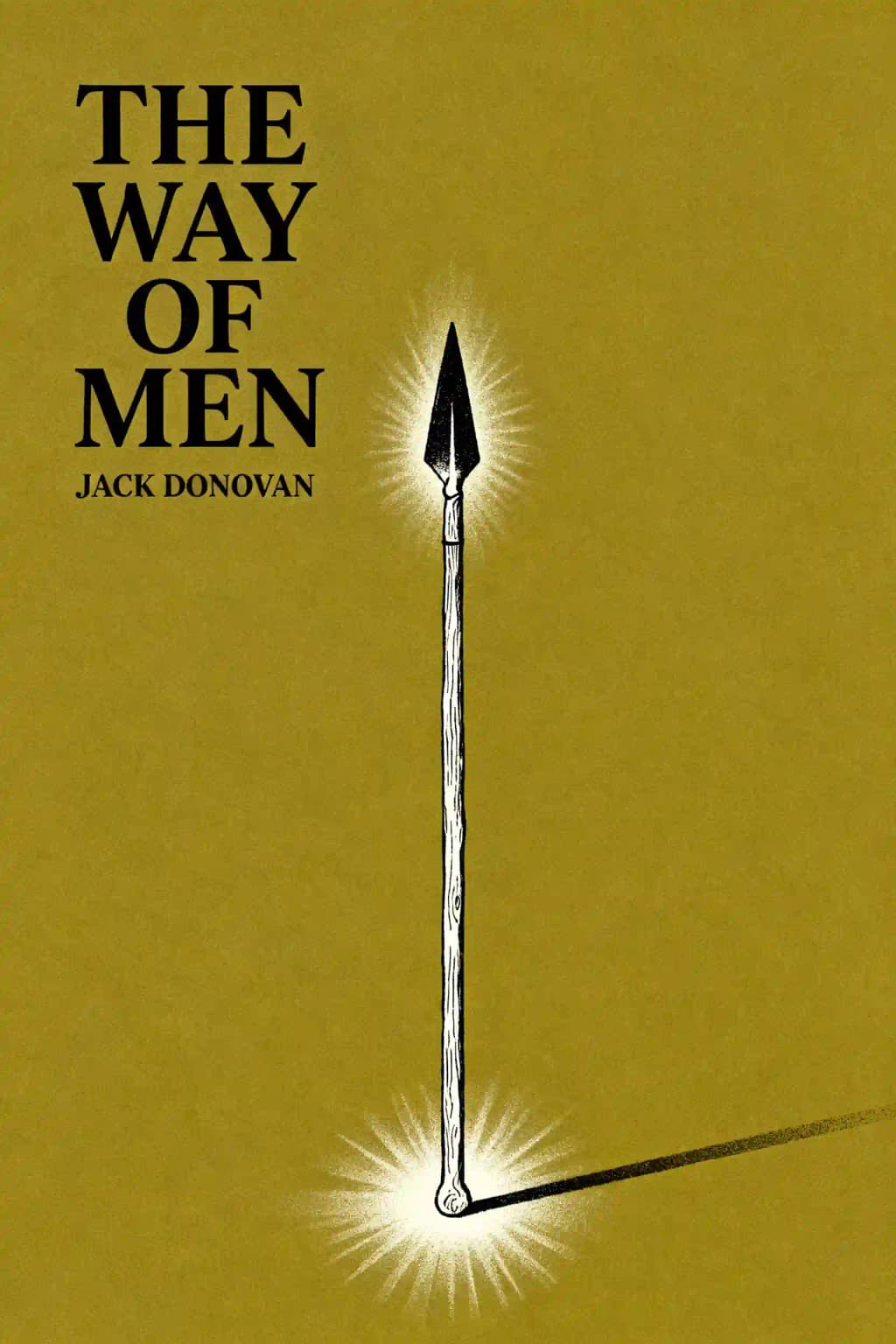
In "The Way of Men," Jack Donovan dissects masculinity through four primal virtues: strength, courage, mastery, and honor. This controversial 2012 manifesto sparked fierce debates about male identity in an era questioning traditional gender roles.
Jack Donovan is the author of The Way of Men and a prominent voice in masculine philosophy and men’s tribalist discourse. His work explores themes of primal masculinity, honor, and the challenges of living authentically masculine lives in modern society.
Drawing from cross-cultural anthropological insights, Donovan’s writing critiques civilization’s erosion of traditional male virtues while advocating for strength, courage, and brotherhood. A frequent podcast guest and speaker, he has addressed audiences at events like the 21 Convention and contributed to platforms such as AlternativeRight.com.
Beyond The Way of Men, Donovan expanded his philosophy in follow-up works like Becoming a Barbarian and A More Complete Beast, which dissect modern male identity and tribal dynamics. His books have sold over 100,000 copies worldwide and are translated into five languages, resonating with readers seeking pragmatic frameworks for masculine self-mastery.
Donovan trains in jiu-jitsu and lives in Arizona, embodying the physical and philosophical principles he champions.
The Way of Men explores primal masculinity through the lens of "tactical virtues"—strength, courage, mastery, and honor. Donovan argues that modern society has eroded traditional male roles, leading to a crisis of identity. The book emphasizes the importance of male bonding in "gangs" for survival, reputation, and upholding masculine values in a politicized world.
Men grappling with modern masculinity, fans of philosophical gender studies, or those seeking alternatives to conventional self-help narratives. It appeals to readers interested in tribal dynamics, male psychology, or critiques of progressive gender discourse.
Yes, for its provocative take on masculinity’s biological and social roots. While polarizing, it offers actionable frameworks for men seeking purpose. Critics argue it oversimplifies gender roles, but its cultural relevance in 2025 debates about male identity makes it a conversation starter.
Donovan’s four core virtues define masculine worth:
Masculinity is tied to a man’s ability to "guard the perimeter"—protecting his tribe from external threats. Donovan asserts men derive value from proving competence and reliability to other men, not from societal approval or female validation.
Donovan claims modern egalitarianism and individualism have stripped men of primal roles, leaving them adrift. He advocates a return to small-group loyalty, physical competency, and intergroup competition to rebuild purpose.
The gang represents the foundational male social unit, where men bond, compete, and validate each other’s virtues. Donovan contrasts this with today’s isolated lifestyles, arguing gangs historically ensured survival and cultural cohesion.
Critics call it reductionist, overly nostalgic for tribal hierarchies, and dismissive of emotional complexity. Some argue it conflates biological traits with cultural constructs, while others praise its unapologetic defense of masculine ideals.
Unlike self-help guides (e.g., 12 Rules for Life), Donovan rejects moralizing in favor of Darwinian pragmatism. It aligns with evolutionary psychology but diverges from feminist-influenced works by centering male tribalism over individualistic success.
As debates about gender roles intensify, the book provides a counter-narrative to progressive discourses. Its focus on male fraternity resonates with men seeking community in an increasingly digital, isolationist society.
Ressentez le livre à travers la voix de l'auteur
Transformez les connaissances en idées captivantes et riches en exemples
Capturez les idées clés en un éclair pour un apprentissage rapide
Profitez du livre de manière ludique et engageante
The way of men is the way of the gang, the warband, the tribe.
The tactical virtues are Strength, Courage, Mastery and Honor.
Masculinity isn't merely a social construct or biological destiny - it's a path men walk together.
The Way of Men is the way of the gang.
Décomposez les idées clés de The way of men en points faciles à comprendre pour découvrir comment les équipes innovantes créent, collaborent et grandissent.
Condensez The way of men en indices de mémoire rapides mettant en évidence les principes clés de franchise, de travail d'équipe et de résilience créative.

Découvrez The way of men à travers des récits vivants qui transforment les leçons d'innovation en moments mémorables et applicables.
Posez n'importe quelle question, choisissez la voix et co-créez des idées qui résonnent vraiment avec vous.

Cree par des anciens de Columbia University a San Francisco
"Instead of endless scrolling, I just hit play on BeFreed. It saves me so much time."
"I never knew where to start with nonfiction—BeFreed’s book lists turned into podcasts gave me a clear path."
"Perfect balance between learning and entertainment. Finished ‘Thinking, Fast and Slow’ on my commute this week."
"Crazy how much I learned while walking the dog. BeFreed = small habits → big gains."
"Reading used to feel like a chore. Now it’s just part of my lifestyle."
"Feels effortless compared to reading. I’ve finished 6 books this month already."
"BeFreed turned my guilty doomscrolling into something that feels productive and inspiring."
"BeFreed turned my commute into learning time. 20-min podcasts are perfect for finishing books I never had time for."
"BeFreed replaced my podcast queue. Imagine Spotify for books — that’s it. 🙌"
"It is great for me to learn something from the book without reading it."
"The themed book list podcasts help me connect ideas across authors—like a guided audio journey."
"Makes me feel smarter every time before going to work"
Cree par des anciens de Columbia University a San Francisco

Obtenez le resume de The way of men en PDF ou EPUB gratuit. Imprimez-le ou lisez-le hors ligne a tout moment.
What does it mean to be a man? This question haunts modern society, with endless debates about "toxic" versus "positive" masculinity. Jack Donovan's controversial work cuts through these debates with a startling clarity by examining what men have always been across cultures and throughout history. Rather than prescribing what men should be, he reveals the primal nature of masculinity that continues to shape our world, whether we acknowledge it or not. His anthropological approach has made this book an underground classic, influencing discussions about masculinity across political lines. The book's core insight? Masculinity isn't an individual trait but a social dynamic between men in groups - specifically, in gangs formed for survival and competition.