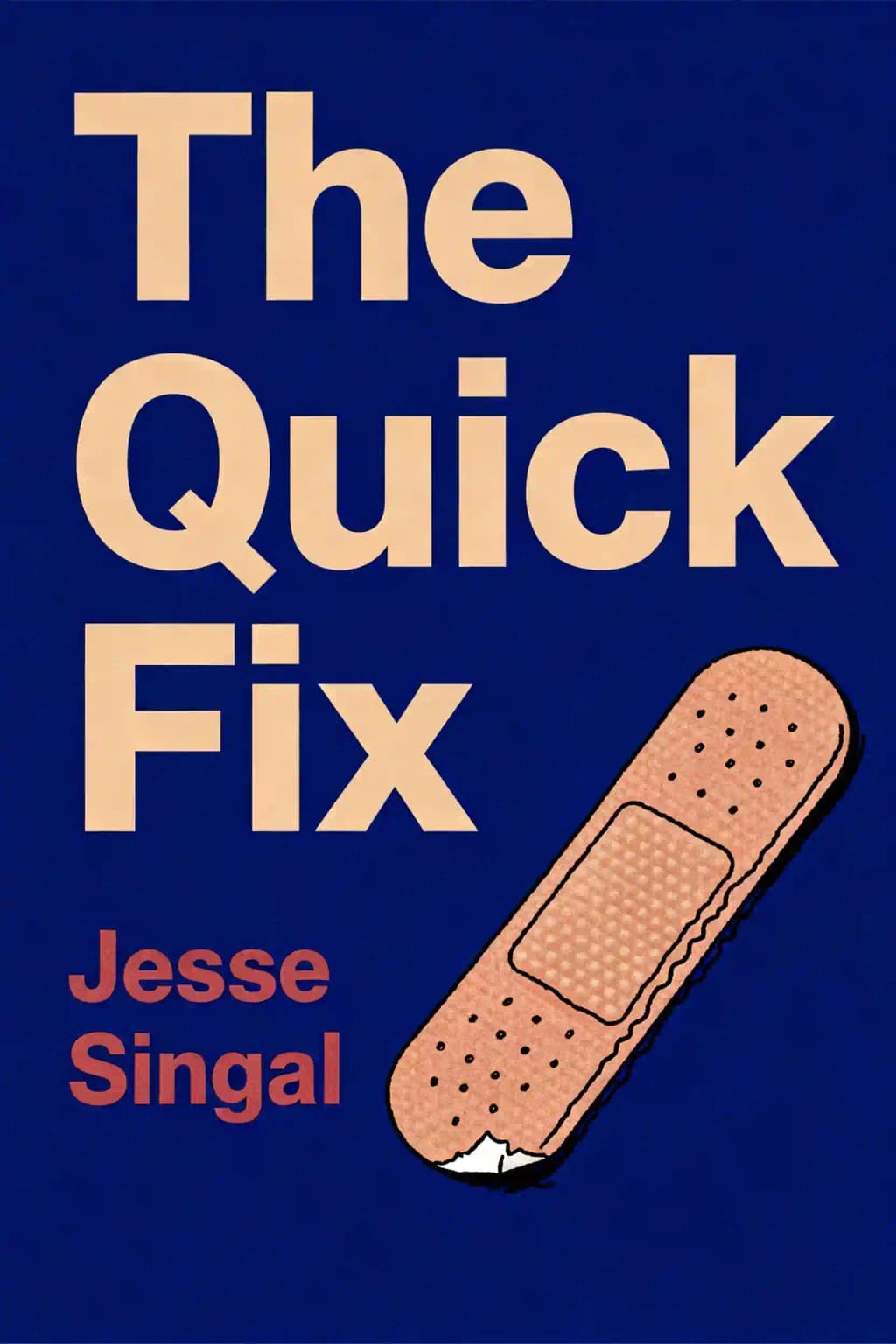
The Quick Fix
Why Fad Psychology Can't Cure Our Social Ills
Aperçu de The Quick Fix
In "The Quick Fix," Jesse Singal masterfully debunks trendy psychology fads - from self-esteem movements to implicit bias tests - that promise simple solutions to complex social problems. Why are educators increasingly skeptical of these appealing but unproven theories reshaping our schools and society?
Thèmes clés dans The Quick Fix
- replication crisis
- behavioral science skepticism
- pseudoscience in policy
- unintended consequences
- scientific misinformation
Citations de The Quick Fix
Politicians considered the idea self-evident.
The movement's residue remains in state laws across America.
America's justice system is not racist, not anymore.
The superpredator theory proved catastrophically wrong.
Personnages de The Quick Fix
- Jesse SingalAuthor and journalist examining behavioral science
- John VasconcellosCalifornia legislator who led self-esteem task force
- Roy BaumeisterResearcher who debunked the self-esteem movement
- John J. DiIulioPolitical scientist who proposed superpredator theory
- Nathaniel BrandenPsychologist whose writings influenced self-esteem
À propos de l'auteur
À propos de l'auteur de The Quick Fix
Jesse Singal is an award-winning journalist and social science commentator, author of The Quick Fix: Why Fad Psychology Can’t Cure Our Social Ills. With a Master’s in Public Affairs from Princeton University and a background as the founding editor of New York magazine’s Science of Us vertical, Singal combines investigative rigor with a critical eye toward behavioral science trends. His work, spanning The Atlantic, The New York Times, and his Singal-Minded newsletter, dissects societal challenges through evidence-based analysis.
The Quick Fix (2021), a psychology and critical analysis bestseller, critiques the allure of simplistic solutions to complex issues like diet culture and criminal justice reform. Singal’s expertise in debunking pseudoscientific claims stems from his decade-long career interrogating flawed research and media hype. He co-hosts the popular podcast Blocked and Reported, exploring controversies at the intersection of culture and science.
A trusted voice in media, Singal’s insights have shaped public discourse on topics from addiction to gender dysphoria. His upcoming book on youth gender medicine continues his commitment to rigorous, compassionate journalism. The Quick Fix has been widely cited in academic and mainstream circles, cementing Singal’s reputation as a leading skeptic of pop psychology.
Telecharger le resume de The Quick Fix
Obtenez le resume de The Quick Fix en PDF ou EPUB gratuit. Imprimez-le ou lisez-le hors ligne a tout moment.
FAQ sur ce livre
The Quick Fix critiques trendy psychology trends like implicit bias training, power posing, and positive thinking, arguing they oversimplify complex societal issues. Jesse Singal examines how these "half-baked" ideas, often popularized via TED Talks, lack robust evidence and divert attention from systemic solutions to problems like inequality and crime.
This book is ideal for skeptics of pop psychology, readers interested in social justice, and anyone curious about the science-behind-the-hype. It’s particularly valuable for those seeking a critical analysis of why quick fixes fail to address structural issues like poverty or education gaps.
Yes. Singal’s investigative rigor and engaging storytelling remain relevant, especially as society grapples with AI-driven self-help trends and persistent social inequities. The book provides timeless insights into distinguishing evidence-based strategies from manipulative pseudoscience.
Some reviewers argue Singal overly focuses on debunking fads without offering concrete alternatives. Publishers Weekly noted the critique can feel repetitive, though others praise its accessible dismantling of flawed research methods and corporate-driven psychology trends.
"Half-baked" refers to interventions with superficial evidence, such as implicit bias workshops or grit-based education reforms. Singal highlights how these concepts gain traction through media hype and charismatic speakers, despite weak statistical backing or replication failures.
- Implicit bias training: Lacks long-term behavioral impact.
- Power posing: Overstated claims about posture boosting confidence.
- Grit: Misapplied as a fix for systemic education gaps.
Singal argues TED Talks often prioritize compelling narratives over scientific rigor, amplifying oversimplified solutions like "mindset shifts" for poverty. These talks, while inspiring, sidestep deeper structural reforms needed for meaningful change.
The book attributes their popularity to societal desire for easy answers and corporations capitalizing on low-cost fixes. For example, companies adopt bias training to signal progressiveness without addressing pay equity or hiring practices.
As a science journalist and co-host of the Blocked and Reported podcast, Singal combines investigative depth with skepticism toward internet-driven trends. His prior work on flawed research, like the implicit association test, informs the book’s critical lens.
- Nuance matters: Complex problems resist one-size-fits-all fixes.
- Follow the evidence: Prioritize peer-reviewed studies over viral ideas.
- Advocate for systemic change: Redirect energy from individual hacks to policy reforms.
While Daniel Kahneman explores cognitive biases, Singal focuses on how those biases fuel pseudoscientific trends. The Quick Fix is more polemical, targeting specific fads rather than overarching theories of human behavior.
Many companies use personality tests or bias workshops to avoid costly diversity initiatives. Singal’s analysis helps HR teams identify ineffective programs and invest in equitable hiring/promotion practices instead.