Chapitre 1
The Psychology of Winning: Timeless Wisdom for Modern Success
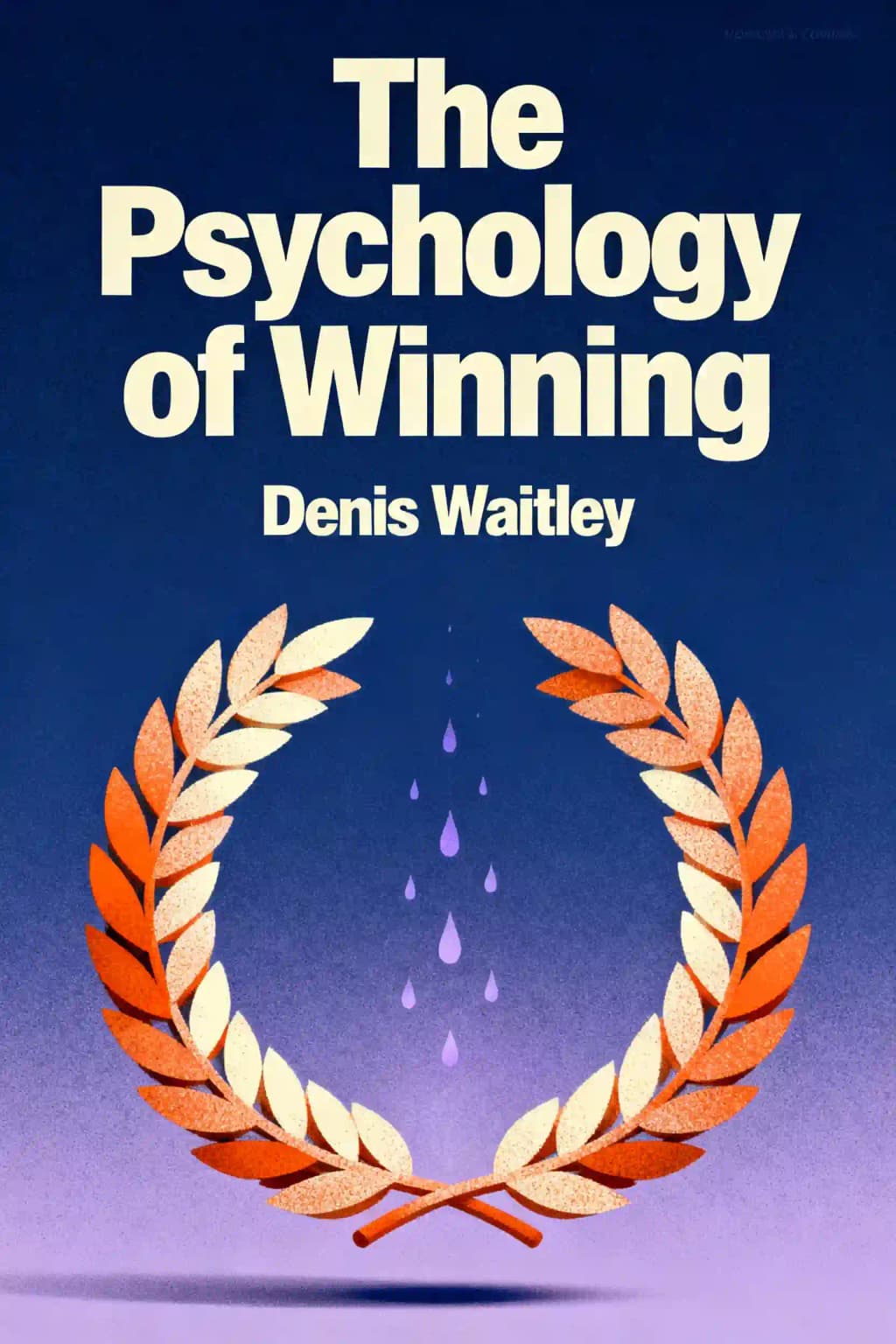
Have you ever wondered why some people consistently achieve their goals while others struggle despite similar circumstances? When Denis Waitley recorded The Psychology of Winning in 1976, he couldn't have known it would sell over two million copies and generate $100 million in sales. The program's remarkable success wasn't just timing-it tapped into something fundamental about human achievement. Endorsed by luminaries from Stephen Covey to Mary Kay Ash, the book became required reading for Olympic athletes, Fortune 500 executives, and anyone seeking to unlock their potential. What made this work so revolutionary was Waitley's unique background-a Naval Academy graduate who counseled Vietnam POWs, trained Apollo astronauts, and studied under pioneers like Viktor Frankl and Abraham Maslow. His central insight? That winning isn't about defeating others but maximizing your own potential through specific psychological principles that anyone can develop.
Chapitre 2
The Inner Game: Where Winning Begins
"The marvelous place between your right and left ear, your brain, is your universe. How you choose to view life will always be the way life will be to you." This wisdom from Waitley's father became the cornerstone of his philosophy. Despite growing up during the Depression in modest circumstances, Waitley discovered that life's perception through the beholder's eye determines our reality.
What's fascinating about the psychology of winning is that it doesn't require innate talent. Neuroscience has confirmed what Waitley intuited decades ago-our brains possess remarkable plasticity. We can overcome phobias, recover from strokes, and develop skills we weren't born with. While natural talents provide advantages, our adaptable brains allow us to excel beyond our genetic predispositions.
The most profound insight from Waitley's work is that self-esteem doesn't need to be earned-it's inherent in our creation, like an unpolished diamond waiting to be revealed. Self-confidence, however, comes from proving your belief through achievements. This distinction helps explain why some seemingly talented people never fulfill their potential while others with modest gifts accomplish remarkable things.
Think of your brain as an internal GPS-a goal positioning system. Just as a GPS needs specific addresses to navigate effectively, your brain requires clear destinations rather than vague aspirations like "getting rich" or "being happy." Without precise coordinates, any path will do, and whether you get up when the alarm rings becomes irrelevant. Focus precedes success, and when an image becomes a magnificent obsession, it directs your thinking and actions toward achievement.
Chapitre 3
The Ten Qualities of Winners: Timeless Principles Revisited
Waitley identified ten qualities that characterize total winners-principles that remain as relevant today as when first articulated. These qualities form the foundation of success, though our understanding of how to develop them has evolved with advances in neuroscience.
Positive self-motivation begins with understanding that motivation means "motive in action"-your dominant thoughts driving behavior. You have two fundamental motivational choices: dwelling on the rewards of success or the penalties of failure. While fear keeps us alive in dangerous situations, it motivates in the wrong direction. Winners focus on desired results rather than feared consequences, drawing strength from their personal "why" rather than external incentives or temporary pep talks.
Positive self-image has become especially crucial in today's screen-dominated world. As Einstein noted, knowledge is limited to what we currently know, while imagination extends to everything we might discover. Your brain cannot distinguish between a vividly imagined reality and actual experience when the mental image is emotionally grounded, repeated, and provides sensory feedback-making it essential to use imagination constructively rather than dwelling on worst-case scenarios.
Positive self-direction means knowing where you're going. Viktor Frankl's Holocaust survivors had specific goals-obtaining justice or reuniting with loved ones. In today's world of endless choices, this "tyranny of choice" can paralyze us. Determine your "why" early-what truly ignites your passion. No externally imposed goal has the same power as your inner drive.
Positive self-control embodies the principle that "if it is to be, it's up to me." Taking credit for your outcomes is one of life's greatest gifts-achieving through independent thinking rather than leaving your future to circumstance. Even in challenging environments, people must find ways to move upward through knowledge and willpower.
Positive self-discipline isn't about punishment-the word "disciple" means "one who is learning." It's developing habit patterns that let you do without while doing within. Every champion admits it takes work, but you must play the inner game before you can play it outside.
Positive self-esteem means "I'm glad I'm me"-recognizing your value despite flaws. For years Waitley believed performance determined worth, until realizing potential and self-belief matter more. You can't give love unless that love exists within you to give freely.
Positive self-dimension involves looking beyond yourself for meaning-fitting into the big picture and helping others. It's being cooperative rather than selfish, focusing on what truly matters. In our fast-paced world, we must avoid procrastination and embrace "nowness"-living in the moment but not for the moment.
Positive self-awareness means realistic self-assessment. How would you like being married to yourself? Having yourself as a friend, boss, or employee? Do you recognize limitations while focusing on potential rather than flaws? This quality forms the foundation for effective leadership.
Positive self-projection demonstrates these qualities through actions. Billy Graham taught Waitley that authenticity matters more than preaching. Actions speak louder than words-projection means authentically presenting yourself to the world.
Chapitre 4
Trust and Values in the Digital Age
In today's digital landscape, we must distinguish between online personas and genuine character. Many create impressive digital facades while neglecting their true selves. Trust and core values have become the great differentiators in an age where anyone can claim expertise without verification. Character cannot be manufactured-it's revealed through consistent actions, like rings in a tree trunk.
Trust functions as the essential glue holding relationships together-once broken, it's never fully restored. In our digital era, trust faces challenges from plagiarism, deceptive marketing "funnels," and self-proclaimed experts who haven't achieved what they claim. Unlike Waitley's mentors who taught sharing knowledge freely, today's speakers often use manipulative tactics to extract maximum profit.
Core values aren't downloadable or easily chosen-they develop early through observation and become principles you'd sacrifice everything for. Values like honesty are usually "caught rather than taught" as children watch their parents navigate ethical dilemmas. A notable Chicago Sun-Times article titled "It's OK, Kid, Everybody Does It" illustrated how children learn questionable ethics when parents justify dishonesty in everyday situations-from traffic tickets to insurance claims to academic cheating-only to face consequences when these behaviors eventually catch up with them.
Values stand on four essential foundations: belonging (our need for connection), individual identity (what makes us unique), worthiness (intrinsic value separate from performance), and competence/control (perhaps most crucial). Programs like the Delancey Street Foundation transform hardened criminals into productive citizens by teaching basic life skills and the power of incremental success-building self-efficacy where achievement becomes almost reflexive through consistent practice.
The integrity triad consists of three critical elements: standing up for truth under pressure, giving credit where rightfully due, and being genuine about who you really are. Stay humble, don't read your own press releases, and understand that being flawed is acceptable. Waitley wrote the original Psychology of Winning during personal struggles, not as a master but as a fellow traveler on the journey.
Chapitre 5
Self-Image: The Internal Thermostat
Our self-image functions like a thermostat rather than a thermometer. While a thermometer merely reflects external conditions, a thermostat controls them. Most people live externally, measuring themselves against standards set by society, celebrities, or parents. Waitley once limited himself to believing he'd never earn more than $1,000 monthly because his father never made over $200 a month.
The brain's reticular activating system acts as a psychological set point, filtering information to align with our dominant thoughts. Like how the hypothalamus regulates metabolism, our self-image regulates what we notice and achieve. We adapt to our expectations-people living near airports stop hearing planes just as New Yorkers tune out sirens. Whatever we focus on becomes our reality, whether desired or feared.
People with healthy self-esteem demonstrate genuine humility-they're secure enough to share themselves openly rather than feeling compelled to prove their importance. Their body language exudes confidence through good posture, purposeful movement, and comfortable eye contact. In contrast, those with low self-esteem often neglect personal hygiene, criticize others harshly, and reject compliments.
Our society increasingly confuses narcissism and inflated ego with genuine self-esteem, as evidenced by confrontational television and social media obsession with external validation. True self-esteem isn't about standing out through provocative behavior or accumulating digital approval-it's about authentic self-worth and contributing positively through civility and genuine confidence.
To develop positive self-esteem, start by presenting yourself well-not necessarily in designer clothes, but clean and appropriate for each situation. Improve your body language-stand upright, walk confidently, and maintain open posture. Dr. Amy Cuddy's research confirms that first impressions form in microseconds, with posture significantly influencing perceptions. Focus on developing natural strengths rather than obsessing over weaknesses, and make the first and last fifteen minutes of each day especially positive.
Chapitre 6
Choice versus Chance: The Winner's Approach
Life is fundamentally a do-it-yourself program-a duet with the Creator where personal responsibility remains essential. While circumstances may shape our starting point, our responses and decisions ultimately determine our path. We often stand in our own way, carrying baggage from youth and accepting limiting roles that others have assigned to us or that we've internalized through past experiences. These self-imposed limitations might stem from childhood messages, cultural expectations, or previous failures that we've allowed to define us.
Winners live by making choices, not taking chances. A choice involves thorough homework about possible outcomes, careful consideration of alternatives, and strategic planning for various scenarios. Taking a chance, conversely, means risking without understanding or preparing for consequences. When your gas tank approaches empty, taking a chance means hoping you'll reach your destination despite being in an unfamiliar area with a dying phone. Making a choice means evaluating how far you can safely go, identifying nearby gas stations, maintaining an emergency roadside kit, and having backup plans in place.
The distinction between choice and chance extends beyond immediate decisions to life's major crossroads. A job seeker taking chances might randomly apply to positions without research or preparation. A choice-maker researches companies, tailors applications, develops relevant skills, and builds professional networks before making moves.
The Serenity Prayer offers profound wisdom: "God, grant me the serenity to accept the things I cannot change, the courage to change the things I can, and the wisdom to know the difference." This breaks into three essential parts: accepting the unchangeable with serenity (everything that has happened up to now, including past decisions and their consequences), having courage to change what you can (through preparation, education, and calculated action rather than reckless moves), and developing wisdom to distinguish between the two. This wisdom comes through experience, self-reflection, and honest assessment of situations.
Winners understand that while they can't control every circumstance, they can control their responses, preparation, and approach to challenges. They recognize that success rarely comes from lucky breaks but rather from consistent, informed decision-making and preparedness. This might mean investing time in education before seeking career advancement, building relationships before needing support, or developing skills before opportunities arise.
Chapitre 7
Desire versus Fear: Motivation That Works
In our culture, fear motivation dominates, but desire motivation proves more effective for success. Fear motivation works for survival-it's based on compulsion and inhibition, warning of terrible consequences. It creates panic, raises blood pressure, and prepares you to fight or flee. While fear effectively inhibits life-threatening mistakes, it's counterproductive in business settings. Telling employees that "firings will continue until morale improves" only increases stress and errors.
We move in the direction of our dominant thoughts, so dwelling on fears often manifests them. Fear motivation may keep us within boundaries, but it's a terrible way to motivate employees and children except in genuinely dangerous situations.
Winners primarily focus on intrinsic motivation, yet our culture-driven by smartphones and social media-trains us for extrinsic motivation. While we're naturally motivated by outside forces to be accepted, this creates a trap where we please crowds instead of living by our own values. History shows empires failed when they prioritized proving greatness over maintaining the synergistic values that built them.
Scientists identified six motivation types: Status with experts (being respected for knowledge), acquisitiveness (gathering possessions), achievement via independence (controlling one's destiny), status with peers (belonging), competitiveness (coming in first), and concern for excellence. While competition drives society, it's best when focused on standards of excellence rather than proving superiority at others' expense.
The most important motivator is concern for excellence-the intrinsic passion for doing something well without needing external recognition. Many extraordinary people, like Bill Gates and Steven Spielberg, succeeded through inner passion, not for money or fame. We should focus on desired results rather than avoiding failure, remembering that failure is an event, not a person.
Chapitre 8
The Mind-Body Connection: How Beliefs Shape Reality
The power of belief shapes our reality through self-fulfilling prophecies-expectations that become true simply because we believe them. Our brains create the biochemistry needed to fulfill our dominant thoughts, making it crucial to carefully monitor what we dwell upon.
The placebo effect demonstrates belief's remarkable power in healing. From the Latin "I shall please," placebos work because patients believe they're receiving effective treatment, causing their brains to release healing chemicals naturally. Harvard Medical School studies this phenomenon seriously. Norman Cousins famously "laughed himself well" by watching comedies that triggered positive brain chemicals.
The effect is so powerful that "placebo surgery" for knee problems-where doctors only pretend to operate-shows nearly identical improvement rates as actual surgery. Our beliefs can work for or against us: a man locked in a ventilated boxcar died believing he was freezing, though temperatures were mild.
Research confirms the mind-body connection through endorphins ("morphine inside"), natural painkillers more powerful than morphine that our brains produce when we exercise, listen to music, or think positively. The Salk Institute found endorphins relieved pain as effectively as morphine injections, and remarkably, even patients receiving placebos produced their own natural painkillers when they believed they were getting the real thing.
Optimism isn't just Pollyannaish thinking but a biological necessity and the most valuable quality for personal fulfillment. Leaders who inspire dwell on ultimate victory rather than obstacles, gaining committed followers. The future belongs to optimists because they solve problems with imagination instead of creating more negativity.
Chapitre 9
The Power of Visualization: Programming Your Brain for Success
Einstein believed imagination trumps knowledge, even in our digital age where unlimited information is accessible. Everything created by humans began as thought-from 5G to wearable devices to brain-controlled technology. While knowledge can become outdated (like believing the earth was flat), imagination expands possibilities and drives innovation.
Innovation improves existing things, while creativity produces something entirely new. Americans excel at creativity through individualism rather than collective thinking. Creative people differ from organized types-their desks may appear chaotic but their minds aren't compartmentalized. They maintain childlike qualities, raising their hand for every question regardless of being right or wrong, letting imagination flow without seeking perfectionism.
Waitley first experienced visualization's power during his difficult childhood. At twelve, he repeatedly dreamed of performing in a grand hall with his family proudly watching. Decades later, this materialized when he gave an acceptance speech at Carnegie Hall for his philanthropic work. Similarly, Igor Sikorsky's childhood dream of a "flying boat" crossing oceans became reality when he built the first passenger plane to fly across an ocean.
Through his work with the U.S. Olympics Committee, Waitley learned that Olympians use visuomotor behavioral rehearsal (VMBR) to mentally practice perfect performances. Michael Phelps has mentally swum races since age seven, while Lindsey Vonn combined visualization with physical simulation. The mental edge distinguishes winners at world-class levels where physical abilities are nearly equal. Our brains store visualized experiences as fact, which explains why viewers would write to fictional TV doctors seeking medical advice.
To harness visualization effectively, set aside 20-30 minutes daily for relaxation and imagination. Ensure your visualizations involve movement-practice in empty venues, imagining audience reactions and positioning. Visualize both the successful outcome and incremental steps leading to it, like Jack Nicklaus who meticulously visualizes each golf shot. See yourself in the present tense actually performing the action, not as a spectator watching yourself. Use words rich in visual imagery-Olympic athletes use trigger words like "relax," "focus," "power" that evoke both pictures and emotions simultaneously.
Chapitre 10
Making Winning a Habit: Training Your Brain for Success
We form habits through observation, imitation, repetition and internalization-especially crucial in today's screen-dominated world where we're constantly being programmed by external influences. Contrary to popular belief, habits don't form in 21-30 days; neuroscience shows it takes three to six months, sometimes up to two years, to establish new neural pathways.
We don't break habits-we replace them by layering new behaviors over old ones. The foundation for developing good habits rests on four essential cornerstones. First, no one else can change you-change is an inside job that only you can initiate. Second, habits aren't broken but replaced; the "child of your past" always lurks beneath, ready to resurface if not properly overridden. Third, daily routines adhered to consistently become second nature-we're 80-90% habitual creatures, though we rarely recognize it. Finally, once you've changed a habit, avoid returning to environments that fostered your old destructive patterns.
Positive self-talk-the silent conversation we have with ourselves-is one of our most important habit developments. Our brain listens to our internal dialogue, which runs at about six hundred words per minute throughout our waking moments. Turn self-talk into confirmations (committed beliefs) rather than mere affirmations. Respond positively to others' negativity rather than reinforcing it. Focus on what you desire rather than what you want to avoid. Always use personal pronouns like "I" and "my." Keep self-talk in present tense to activate your brain's reticular system. Make your self-talk non-competitive-focus on personal excellence rather than outperforming others.
Looking back on his life, Waitley admits taking himself too seriously-constantly seeking achievement rather than living in the present. Now approaching ninety, he's finally living in the moment-appreciating every sight, sound, and sensation. He's learned he's just an imperfect gardener tending his garden, which always needs attention. Weeds blow in daily without effort, but the garden requires constant care. He wants to be remembered as someone who planted shade trees for future generations, who loved his family above all, who had a small circle of trusted friends, and who gave 100 percent to life. Though imperfect, he tried to plant seeds of greatness in everyone he met and always looked on the bright side of life.
Chapitre 11
The Legacy of Winning: From Competition to Contribution
The Psychology of Winning has evolved from its original competitive framework to a more holistic understanding of success. Waitley's perspective shifted from a performance-based approach to one focused on self-esteem, purpose, and enriching the world rather than just becoming materially rich. This transformation came through decades of observing that those who focused solely on competitive achievement often found themselves feeling empty despite their accomplishments.
This evolution reflects deeper wisdom: true winning isn't about defeating others but becoming your best self and contributing meaningfully to others. The most fulfilled individuals aren't those with the most possessions or accolades, but those who've developed their potential while helping others do the same. Research consistently shows that people who focus on personal growth while maintaining strong connections with others report higher levels of life satisfaction and resilience in facing challenges.
In today's world of social media comparison and digital distraction, these principles matter more than ever. We've become "moist robots"-human beings tethered to digital devices, constantly seeking validation through likes, shares, and followers. While technology gives us instant global communication and access to knowledge, it's also the enemy of true intimacy. A text isn't a touch; virtual connection isn't the same as being present with someone. Studies indicate that despite being more connected than ever, rates of loneliness and anxiety have increased significantly in the digital age.
The psychology of winning ultimately teaches us to step back from the canvas of life-to focus on self-awareness rather than how we appear to others, to develop our unique talents rather than chasing external validation, and to measure success by our contribution rather than our consumption. This means developing authentic relationships, pursuing meaningful work that aligns with our values, and creating positive impact in our communities. Successful individuals increasingly define their achievements not by their bank accounts but by their ability to inspire and empower others.
As Waitley learned through decades of teaching these principles, we're all imperfect gardeners tending the gardens of our lives, planting shade trees under which future generations will find shelter and inspiration. This metaphor emphasizes the importance of legacy thinking - understanding that our actions today create ripple effects that influence future generations. True winners focus on cultivating not just their own growth but nurturing an environment where others can thrive, creating a positive cycle of mutual development and support.
The modern interpretation of winning encompasses emotional intelligence, sustainable success practices, and the ability to build meaningful connections while maintaining personal well-being. It's about creating value rather than simply accumulating wealth, fostering collaboration instead of competition, and understanding that personal fulfillment comes from being part of something larger than ourselves.