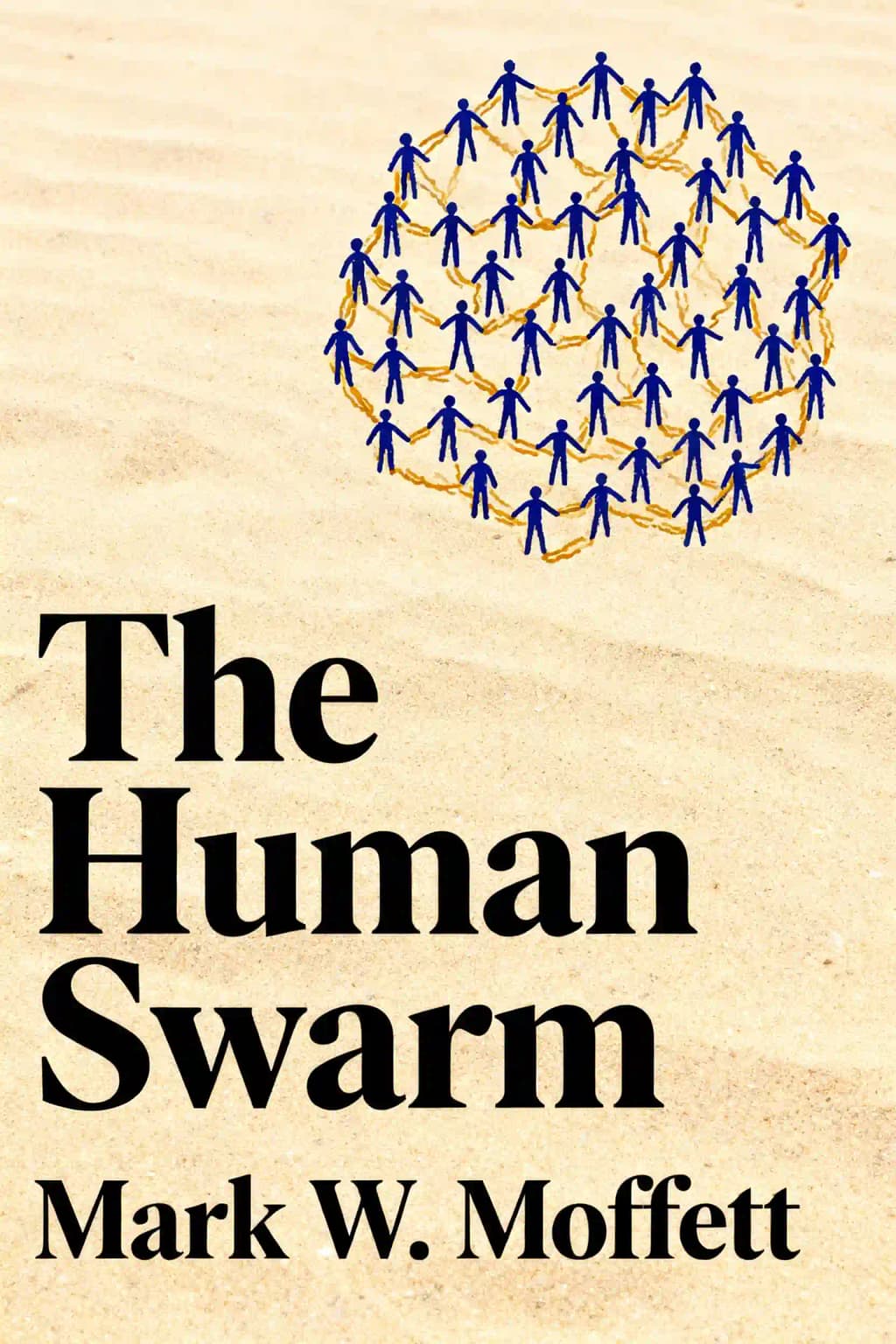
How do ants, wolves, and humans all build complex societies? "The Human Swarm" - acclaimed by Margaret Atwood and compared to Sapiens - reveals the surprising biological patterns behind civilization's rise and fall, challenging everything we thought about belonging and tribalism.
Ressentez le livre à travers la voix de l'auteur
Transformez les connaissances en idées captivantes et riches en exemples
Capturez les idées clés en un éclair pour un apprentissage rapide
Profitez du livre de manière ludique et engageante
Picture an ant colony under attack. Thousands of tiny warriors swarm to defend their nest, each one instantly recognizing friend from foe through chemical signatures on their bodies. Now picture a packed stadium during a World Cup match-tens of thousands of strangers united by a shared flag, anthem, and jersey color, ready to celebrate or mourn as one. What connects these scenes? Both reveal a profound truth about social life: the power of anonymous societies, where strangers cooperate not because they know each other personally, but because they share markers of belonging. Unlike our chimpanzee cousins who can only form societies of individuals they personally recognize, humans invented something revolutionary-the ability to feel kinship with millions we'll never meet. This capacity didn't emerge from modern nationalism or social media. It's woven into our evolutionary fabric, making us more similar to ants than to apes in how we organize our social worlds. We often assume cooperation defines societies, but that misses something fundamental. Cooperation exists everywhere in nature without creating lasting social bonds-bacteria cooperate, plants share nutrients through root networks, and even unrelated animals sometimes hunt together. What truly defines a society is something else entirely: a shared identity that persists across generations and creates clear boundaries between members and outsiders. Think of it as an invisible fence that determines who belongs and who doesn't, who receives trust and who faces suspicion. This boundary matters more than friendships or cooperation. Even in the smallest human societies, people don't befriend everyone-they choose companions carefully while still recognizing all members as "one of us." What binds these strangers together isn't affection but identity, a psychological sense of belonging that transcends personal relationships. This explains why societies can endure for centuries despite internal conflicts, dysfunction, and even violence. The glue isn't harmony-it's the shared conviction that "we" are fundamentally different from "them."
Décomposez les idées clés de The Human Swarm en points faciles à comprendre pour découvrir comment les équipes innovantes créent, collaborent et grandissent.
Condensez The Human Swarm en indices de mémoire rapides mettant en évidence les principes clés de franchise, de travail d'équipe et de résilience créative.

Découvrez The Human Swarm à travers des récits vivants qui transforment les leçons d'innovation en moments mémorables et applicables.
Posez n'importe quelle question, choisissez la voix et co-créez des idées qui résonnent vraiment avec vous.

Cree par des anciens de Columbia University a San Francisco
"Instead of endless scrolling, I just hit play on BeFreed. It saves me so much time."
"I never knew where to start with nonfiction—BeFreed’s book lists turned into podcasts gave me a clear path."
"Perfect balance between learning and entertainment. Finished ‘Thinking, Fast and Slow’ on my commute this week."
"Crazy how much I learned while walking the dog. BeFreed = small habits → big gains."
"Reading used to feel like a chore. Now it’s just part of my lifestyle."
"Feels effortless compared to reading. I’ve finished 6 books this month already."
"BeFreed turned my guilty doomscrolling into something that feels productive and inspiring."
"BeFreed turned my commute into learning time. 20-min podcasts are perfect for finishing books I never had time for."
"BeFreed replaced my podcast queue. Imagine Spotify for books — that’s it. 🙌"
"It is great for me to learn something from the book without reading it."
"The themed book list podcasts help me connect ideas across authors—like a guided audio journey."
"Makes me feel smarter every time before going to work"
Cree par des anciens de Columbia University a San Francisco

Obtenez le resume de The Human Swarm en PDF ou EPUB gratuit. Imprimez-le ou lisez-le hors ligne a tout moment.