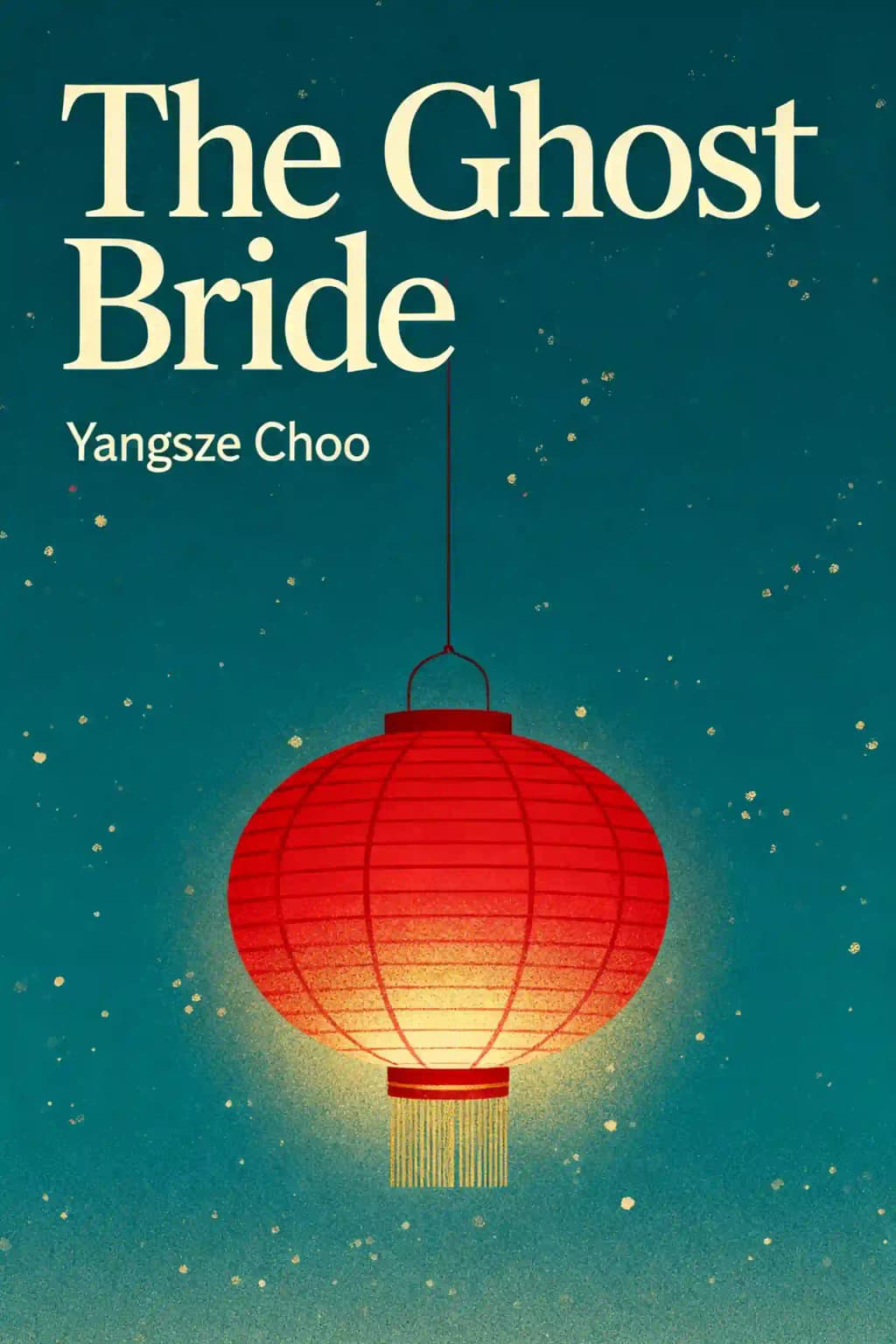
In 1890s Malacca, a desperate young woman agrees to marry a dead man, plunging into the shadowy Chinese afterlife. Yangsze Choo's bestselling debut - born from an elephant detective subplot - inspired Netflix's hit series that sent copies flying off shelves worldwide.
Yangsze Choo is the New York Times bestselling author of The Ghost Bride, a captivating blend of historical fiction and Chinese mythology.
A fourth-generation Malaysian of Chinese descent and Harvard graduate, Choo draws on her multicultural upbringing to craft immersive tales rooted in the folklore and supernatural traditions of her heritage. The Ghost Bride explores themes of spirit marriages, the Chinese afterlife, and family honor within colonial Malaya, reflecting her fascination with the cultural richness of Southeast Asia.
Before becoming a full-time novelist, she worked as a management consultant while writing fiction in her spare time. Her subsequent novels include The Night Tiger, a Reese's Book Club pick and Big Jubilee Read selection for Queen Elizabeth II's Platinum Jubilee, and the forthcoming The Fox Wife.
The Ghost Bride became an Oprah.com selection and was adapted into a Netflix Original series, cementing Choo's reputation as a distinctive voice in Asian-inspired fantasy fiction.
The Ghost Bride is a supernatural historical fiction novel set in 1893 Malaya, following seventeen-year-old Li Lan from a bankrupt family who receives an unusual proposal to become a "ghost bride" to the deceased heir of the wealthy Lim family. After rejecting the offer, Li Lan is haunted by the persistent ghost of Lim Tian Ching and accidentally enters the Chinese afterlife, where she must uncover dark family secrets while navigating between the living and spirit worlds.
The Ghost Bride appeals to readers who enjoy atmospheric historical fiction blended with supernatural elements and Asian folklore. This debut novel is perfect for fans of gothic romance, mystery, and Chinese mythology, particularly those interested in colonial Malaya's cultural traditions like ghost marriages. Readers who appreciate stories featuring strong female protagonists navigating otherworldly realms, family secrets, and forbidden romance will find this book captivating and immersive.
The Ghost Bride is worth reading for its unique blend of Chinese folklore, historical detail, and supernatural mystery set in 1890s Malaya. Yangsze Choo's 2013 debut novel offers rich cultural exploration of traditional ghost marriage practices rarely depicted in Western literature. The atmospheric world-building, compelling afterlife journey, and intriguing murder mystery make it engaging, though some readers may find the pacing uneven. The book's success led to a Netflix adaptation.
A ghost marriage in The Ghost Bride is a traditional Chinese practice used to placate restless spirits by marrying a living person to someone deceased. This rarely practiced custom would guarantee Li Lan financial security and a home for life through the wealthy Lim family, but would bind her to widowhood and servitude to a dead man she never knew. The practice serves as the novel's central conflict, forcing Li Lan into supernatural entanglement.
The main characters include Li Lan, the seventeen-year-old protagonist from a bankrupt family; Lim Tian Ching, the deceased heir haunting her; and Tian Bai, Tian Ching's cousin and new heir whom Li Lan loves. Other key characters are Madame Lim, the matriarch proposing the ghost marriage; Yan Hong, who befriends Li Lan; Er Lang, a heavenly official investigating the Lim family; and Fan, a ghost helping Li Lan navigate the afterlife. Li Lan's father struggles with opium addiction following his wife's death.
Li Lan accidentally overdoses on a medium's concoction meant to ward off Lim Tian Ching's ghost, causing her spirit to separate from her body and enter the Chinese afterlife. While navigating the Plains of the Dead, she investigates Tian Ching's mysterious death, uncovers a conspiracy involving the Lim family, and discovers shocking truths about her own mother. She encounters supernatural beings including Er Lang, a heavenly official, and must solve the mystery before she can return to the living world.
The Ghost Bride is set primarily in 1893 colonial Malaya (now Malaysia), within the wealthy Chinese merchant community. The story unfolds between two worlds: the living realm of British-controlled Malaya with its traditional Chinese families, and the elaborate Chinese afterlife including the Plains of the Dead, spirit mansions, and heavenly courts. This dual setting allows Yangsze Choo to explore Malaysian-Chinese cultural traditions, ghost lore, and ancestor worship while depicting colonial society's social hierarchies and customs.
The Ghost Bride explores themes of
The Ghost Bride deeply incorporates Chinese folklore through its depiction of the spirit world, including detailed descriptions of the Plains of the Dead, heavenly bureaucracy, and supernatural entities. Yangsze Choo weaves in traditional beliefs about ancestor worship, ghost marriages, hungry ghosts, and the Chinese afterlife's hierarchical structure with judges and officials. The novel references cultural practices like burning paper offerings, consulting mediums, and the Double Seventh Festival celebrating star-crossed lovers. These folkloric elements create an atmospheric blend of historical realism and supernatural mystery.
Er Lang is a "minor official" of the heavenly courts investigating supernatural corruption within the Lim family. As an immortal heavenly guard, he suspects Lim Tian Ching bribed gate guards to avoid proper afterlife judgment and wander freely as a ghost. Er Lang recruits Li Lan to spy on the Lim family to prevent potential war in the afterlife. His investigation reveals a larger conspiracy, and he develops a complex relationship with Li Lan throughout her journey between worlds.
Opium serves as both plot device and social commentary in The Ghost Bride, reflecting historical realities of colonial Malaya. Li Lan's father has been addicted to opium since his wife's death, leading to the family's financial ruin and social isolation. Li Lan herself accidentally overdoses on an opium-laced concoction from a medium intended to ward off Lim Tian Ching's ghost. This overdose catalyzes the story's supernatural turn by separating her spirit from her body, forcing her journey into the Chinese afterlife and the novel's central mystery.
Lim Tian Ching's death is central to The Ghost Bride's mystery, with the ghost claiming his cousin Tian Bai poisoned his tea to become the Lim family heir. Li Lan investigates during her time in the spirit world, discovering that Yan Hong hid the teacup, making her suspicious. The novel reveals a deeper conspiracy involving multiple characters, corruption in both living and spirit realms, and connections to Li Lan's own family history. The truth about who killed Tian Ching and why becomes entangled with supernatural politics and family power struggles.
Ressentez le livre à travers la voix de l'auteur
Transformez les connaissances en idées captivantes et riches en exemples
Capturez les idées clés en un éclair pour un apprentissage rapide
Profitez du livre de manière ludique et engageante
Ghost marriages-unions between the living and dead-are rare and typically considered dreadful fates.
Neither approach seems helpful against her growing dread.
"Every night we shall be together."
"Burn hell banknotes for yourself!"
"A veritable city of the dead."
Décomposez les idées clés de Ghost Bride en points faciles à comprendre pour découvrir comment les équipes innovantes créent, collaborent et grandissent.
Découvrez Ghost Bride à travers des récits vivants qui transforment les leçons d'innovation en moments mémorables et applicables.
Posez vos questions, choisissez votre style d’apprentissage et co-créez des idées qui vous correspondent vraiment.

Cree par des anciens de Columbia University a San Francisco
"Instead of endless scrolling, I just hit play on BeFreed. It saves me so much time."
"I never knew where to start with nonfiction—BeFreed’s book lists turned into podcasts gave me a clear path."
"Perfect balance between learning and entertainment. Finished ‘Thinking, Fast and Slow’ on my commute this week."
"Crazy how much I learned while walking the dog. BeFreed = small habits → big gains."
"Reading used to feel like a chore. Now it’s just part of my lifestyle."
"Feels effortless compared to reading. I’ve finished 6 books this month already."
"BeFreed turned my guilty doomscrolling into something that feels productive and inspiring."
"BeFreed turned my commute into learning time. 20-min podcasts are perfect for finishing books I never had time for."
"BeFreed replaced my podcast queue. Imagine Spotify for books — that’s it. 🙌"
"It is great for me to learn something from the book without reading it."
"The themed book list podcasts help me connect ideas across authors—like a guided audio journey."
"Makes me feel smarter every time before going to work"
Cree par des anciens de Columbia University a San Francisco

Obtenez le resume de Ghost Bride en PDF ou EPUB gratuit. Imprimez-le ou lisez-le hors ligne a tout moment.
In the sultry heat of colonial Malacca, 1893, a young woman's life hangs in the balance between the world of the living and the realm of the dead. Imagine receiving a marriage proposal-not from a living suitor, but from a deceased stranger. This is the extraordinary predicament facing Li Lan, the daughter of a once-prosperous Chinese family now fallen on hard times. Her father, lost in opium dreams and scholarly pursuits, casually suggests she become a "ghost bride" to the recently deceased son of the wealthy Lim family. What begins as a shocking proposal soon spirals into a supernatural ordeal that will challenge everything Li Lan understands about love, duty, and the thin veil between life and death.
After learning of the ghost marriage proposal, Li Lan's sleep is invaded by an inescapable presence. In her dreams, she wanders through the foggy Lim mansion with the sensation of being followed. The deceased heir, Lim Tian Ching, appears and attempts to court her amid garish funeral offerings. Night after night, she's pulled into his eerie world-attending empty feasts with display food, wandering through stables of paper horses, and encountering puppet-like servants who move with disturbing rustling sounds. Everything seems staged, with Lim Tian Ching always lurking nearby. When she refuses his advances, he threatens to ruin her father and haunt her family. The haunting takes a physical toll. Between nightmares and constant preoccupation, Li Lan loses weight and grows listless. The local doctor finds her qi severely depleted, as if half her vital energy had been drained. What began as dreams has become a battle for her soul-one that will soon pull her beyond the boundaries of the living world.
With her supernatural torment worsening, Li Lan turns to her elderly amah (nursemaid) for guidance. Amah explains how spirits leave the body after the hundred days of mourning and pass through the ten Courts of Hell. Good souls proceed to rebirth or paradise, while sinners face punishments-boiling in oil, climbing mountains of knives, or being sawed in half by demons. They visit a famous medium near Sam Poh Kong temple at Bukit China, an enormous cemetery with nearly twelve thousand graves-"a veritable city of the dead." The medium-an enormously fat woman with one clouded eye-immediately recognizes Li Lan's ghostly predicament and provides protective remedies, whispering a disturbing final instruction: "Burn hell banknotes for yourself!" Despite these precautions, supernatural disturbances plague their home-a bloody stain on their doorstep, spell papers fluttering without wind. In desperation, Li Lan consumes a dangerous amount of the medium's powder, unwittingly separating her spirit from her body-a development that will change her destiny forever.
Li Lan awakens as a spirit separated from her body, watching a doctor examine her unconscious form. Though no one hears her cries, she can slightly influence her body when positioned within it. In her spectral form, Li Lan discovers a hidden world populated by hungry ghosts with protruding ribs and leathery skin. She learns spirits struggle at corners and mirrors but can follow threads connecting them to loved ones or exchanged objects. With enough funeral money, spirits can bribe officials to delay judgment. At the Lim mansion, she overhears servants discussing Tian Ching's mysterious death. Following Yan Hong, she finds a hidden celadon teacup with a discolored rim, suggesting poison. She discovers Lim Tian Ching has gained importance in the afterlife, commanding ox-headed demons who patrol the underworld. Old Wong, her family's cook who sees ghosts, helps her plan to reach the Plains of the Dead to confront Lim Tian Ching and possibly find her deceased mother. But time is running out - if she stays away too long, her spirit will no longer fit her physical form.
Guided by Fan, a drowned ghost woman, Li Lan traverses the Plains of the Dead-a barren wasteland under a burning sky. In this ghostly Malacca, buildings show their history through overlapping structures as she searches for the Lim mansion and her ancestral home. At her family house, an old concubine reveals shocking truths: she had an affair with Li Lan's grandfather before becoming his concubine. Jealous of Li Lan's pregnant mother, she attacked her but accidentally broke her neck in a fall. After death, she traded her youth to a demon who sent smallpox to kill Li Lan's mother and grandfather. Most startling, the concubine reveals Li Lan's mother now lives as "a kept woman in the Lim family mansion"-her former lover was Lim Teck Kiong, father of Li Lan's tormentor Tian Ching. This connection explains Tian Ching's obsessive pursuit. Infiltrating the Lim mansion disguised as a kitchen servant, Li Lan uncovers a conspiracy involving Master Awyoung and "His Honor the Sixth Judge of Hell." When caught stealing evidence, she's imprisoned and confronted by Tian Ching, who remains determined to marry her.
With the help of Er Lang-a mysterious supernatural investigator-and Auntie Three (revealed to be Li Lan's mother who traded her youth to save Li Lan from smallpox), Li Lan escapes the Lim mansion. However, her return to the living world is complicated when she discovers Fan has possessed her body and is preparing to marry Tian Bai. As Li Lan's spirit fades, Er Lang reveals himself as a divine official with supernatural powers. He saves her by sharing his qi through a kiss that permeates her being, fundamentally altering her nature-she won't age normally and will outlive everyone around her. Back in her body, Li Lan faces two distinct paths. Tian Bai represents the traditional choice: security, family connections, and remaining in the familiar Malaccan Chinese community, though burdened by the Lim family's dark legacy. Er Lang offers an entirely different future-one filled with supernatural elements and existing between worlds. This path promises adventure but requires sacrifices: likely never bearing children and abandoning her place in mortal society.
Marrying Tian Bai would offer Li Lan normalcy - a chance to hide her otherworldly experiences. Despite his kindness, she recognizes this choice as cowardice; their inability to truly understand each other creates an unbridgeable divide. Her ghost world experiences have marked her irrevocably. Having walked forbidden paths and conversed with spirits, the mortal world now seems less substantial; once-impressive social gatherings feel hollow. When Er Lang arrives for her decision, Li Lan prepares to tell him she's always seen him as a monster - and that she chooses to become his bride. Having inhabited both realms, she embraces her transformation and the extraordinary path ahead. In this haunting tale, Li Lan's supernatural ordeal forces her to confront truths about her family, society, and her own desires. In choosing Er Lang, she embraces not just love but her transformed nature - belonging neither fully to the mortal world nor the spirit realm. Her journey symbolizes anyone caught between worlds, suggesting that sometimes the only way forward is forging an entirely new path.