Chapitre 1
The Courage to Stand Alone: Breaking Free from Others' Opinions
When Lauren Regula received an invitation to play softball in the 2020 Olympics after eleven years of retirement, she faced a dilemma that transcended sports. Despite her desire to pursue this dream, she hesitated-concerned about leaving her three children and business behind. The judgmental comments came swiftly: How could a mother abandon her family? Was she being selfish? Lauren was wrestling with FOPO-fear of people's opinions-which nearly cost her one last shot at Olympic glory.
This hidden epidemic may be the single greatest constrictor of human potential today. It causes us to lose faith in ourselves while our performance suffers. FOPO affects all aspects of modern life, making us play it safe, trade authenticity for approval, and externalize our self-worth. Though rooted in our ancient brain's craving for social acceptance, today's social media landscape and intense pressure to succeed has made FOPO more rampant than ever.
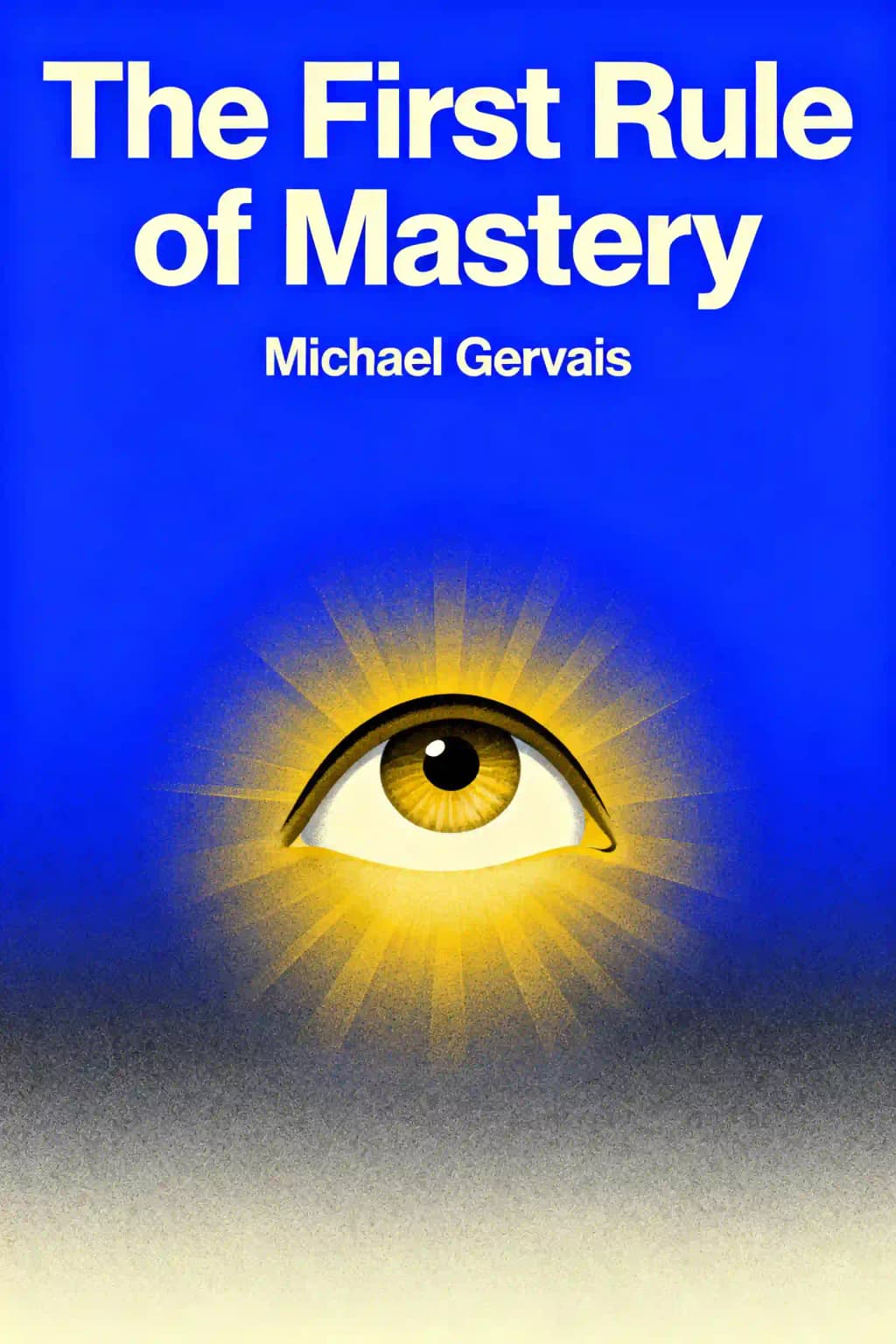
Michael Gervais's groundbreaking book has been embraced by elite performers across industries-from Olympic athletes to Fortune 500 CEOs-who recognize that mastering this fear is essential to reaching their full potential. As Brene Brown noted, "This book isn't just about performance-it's about freedom."
Chapitre 2
The Hidden Epidemic Limiting Your Potential
Our fear of people's opinions is a hidden epidemic that severely restricts human potential. When FOPO takes over, we lose faith in ourselves and our performance suffers. Instead of focusing on our own thoughts and feelings, we obsess about others' opinions-spoken or perceived-affecting our decisions and actions.
FOPO manifests everywhere in modern life: leaders avoid tough decisions, CEOs prioritize short-term gains over long-term health, and politicians vote with party over conscience. We play it safe, surrender our viewpoints, trade authenticity for approval, and chase others' dreams instead of our own.
The consequences are profound-we externalize our self-worth, seeing ourselves through others' eyes rather than our own. We hustle for approval while dismissing our own needs. By conforming to perceived expectations, we never discover who we're truly capable of becoming.
Consider Woody Hoburg's story, which exemplifies what's possible when we resist FOPO. Though his academic mentors discouraged his unrelated pursuit of joining Yosemite Search and Rescue during his PhD studies, Woody trusted his instincts: "At the end of the day, I just had to make a choice... I just knew I was going to do it and I'm so glad I did because it was one of the best experiences of my life."
After completing his PhD and teaching at MIT, Woody applied to NASA with "zero probability" expectations. Yet he was selected from over eighteen thousand applicants. Now Dr. Hoburg serves on the International Space Station, his childhood dream realized precisely because he refused to bow to others' opinions.
As a high-performance psychologist, I've witnessed extraordinary achievement firsthand-from Super Bowl victories to Olympic gold medals to record-breaking feats. What distinguishes these elite performers isn't just technical excellence but their pursuit of inner mastery.
The fundamental truth is that mastery in any domain-arts, business, parenting, sports-requires distinguishing between what we can and cannot control. When we focus on externals beyond our influence, we divert energy from what's truly within our power. The first rule of mastery demands looking inward and committing to master only what's 100 percent under your control. Nothing else can be mastered.
Chapitre 3
Beethoven's Battle with Others' Opinions
Even the greatest creative geniuses aren't immune to FOPO. Ludwig van Beethoven, despite his revolutionary musical brilliance, spent three years hiding a devastating secret: his deafness.
Beginning in his mid-twenties, Beethoven's hearing deteriorated, sending him on a desperate search for cures. Rather than revealing his condition, he masqueraded as an absentminded genius when he couldn't hear conversations. His fear wasn't just about his musical ability but about public perception: "If I belonged to any other profession it would be easier, but in my profession it is an awful state, the more since my enemies, who are not few, what would they say?"
Beethoven's sensitivity to external opinions was conditioned from childhood. His alcoholic father Johann, frustrated by his own failed musical ambitions, appointed himself as Beethoven's instructor and enforced practice through verbal and physical abuse. When Beethoven was seven, Johann even lied about his age to better market him as a prodigy.
From these experiences, Beethoven learned that upward mobility in Vienna's music world depended on others' approval, and more fundamentally, that love came through performance rather than inherent worth. This fusion of love and approval created a lifelong pattern of seeking validation through his musical achievements.
Beethoven found one refuge from others' opinions-his inner world. He developed the ability to immerse himself completely in his music, entering a state his contemporaries called "raptus." During these trances, he became oblivious to surroundings and self-consciousness, whether scribbling in notebooks or improvising before crowds.
Beethoven reached a breaking point when concealing his deafness became impossible. In his heartfelt Heiligenstadt Testament letter of 1802, he revealed his anguish: "Oh you men who think I am malevolent... you do not know the secret cause." He described the humiliation of standing beside someone who heard distant sounds while he heard nothing, driving him nearly to suicide.
When Beethoven stopped worrying about others' opinions, he shifted from performing for the external world to expressing his inner world-crossing to the path of mastery. Mastery is an inner-directed life externally expressed, a continuous journey of exploration without a finish line.
Beethoven demonstrated this by abandoning his career as a virtuoso pianist to focus on composing. When he let go of who he thought he should be, he became who he was capable of being, creating revolutionary music that changed the course of musical history.
Chapitre 4
Understanding the FOPO Loop
Moby, the Grammy Award-winning musician, describes the intoxicating yet destructive nature of external validation: "I saw myself on the cover of a magazine... and I was like, 'Oh my God, this is validation. This is love.'" He spent fifteen years obsessing over others' opinions before realizing it was destroying him, comparing it to alcohol and drugs that initially seem like solutions but ultimately become problems.
Eventually, Moby made a crucial shift: "I stopped reading social media comments. I stopped reading reviews... I cannot stay sane and calm if I'm constantly being torn apart by the opinions of people I've never actually met." He recognized that people weren't responding to him as a person but to an image or idea.
FOPO operates as an anticipatory mechanism involving psychological, physiological, and physical responses aimed at avoiding rejection and fostering connection. Rather than course-correcting based on actual feedback and internal perspective, FOPO attempts to preemptively adjust based on imagined scenarios.
Characterized by hypervigilant social scanning, FOPO involves exhaustively interpreting potential signals of rejection-body language, microexpressions, words, silence, actions, and inactions-all in an attempt to avoid negative evaluation. The problem isn't the actual negative opinion but the fear of it, driving us to constantly read environmental cues.
FOPO creates a circular psychological and behavioral cycle with three distinct phases that interrupt our ability to be fully present in interactions:
In the anticipation phase, we become preoccupied with imagining scenarios of acceptance or rejection, asking "Will I be accepted if...?" or "What will they think of me?" Rather than focusing on the shared experience, we fixate on potential approval or rejection.
During the checking phase, we constantly scan for external cues of acceptance or rejection-microexpressions, tone of voice, body language, and word choice. This exhaustive monitoring prevents full engagement and diverts attention from the actual experience.
In the responding phase, we react to our perception of acceptance or rejection. If we feel rejected, we typically respond in one of five ways: contorting ourselves to fit in, conforming to perceived norms, confronting others to gauge reactions, disconnecting from relationships, or-most healthily-turning inward to respond based on our own internal standards.
Two common pathways accelerate our entry into FOPO. A poor sense of self leads us to look outside ourselves for definition, assuming others can see us better than we can see ourselves. Similarly, a performance-based identity-defining ourselves by how well we perform relative to others-conditions us to value external feedback more highly than our internal assessment.
Chapitre 5
The Neurobiology of Fear and Performance
Fear is an adaptive evolutionary response designed to keep us safe by signaling danger. Our hunter-gatherer ancestors developed heightened vigilance to survive predators and maintain tribal connections. This evolutionary advantage meant our ancestors erred on the side of caution-fleeing from a potential tiger might waste time, but failing to detect the threat could be fatal.
The same principle applied socially. Being attuned to group needs was essential because exclusion from the tribe was effectively a death sentence in a world that was "solitary, poor, nasty, brutish, and short." Natural selection favored brains with heightened sensitivity to threats, creating deeply ingrained neural pathways that still influence our behavior today.
Fear triggers an involuntary physiological cascade. When we perceive a threat, the amygdala alerts the hypothalamus, activating our sympathetic nervous system. Adrenaline releases, heart rate increases, and glucose floods from the liver. Blood redirects from digestion to our limbs, creating the sensation of "butterflies" in our stomach.
To explore how fear operates under pressure, I conducted a study with the Red Bull High Performance program, measuring golfers' neurological and physiological responses during a three-stage pressure test. The experiment included professional golfer Rickie Fowler, a club pro, and an amateur weekend player.
In stage one (low pressure), Fowler made 15 of 18 putts but noted he "hit seventeen good shots," revealing his focus on process rather than outcome. In stage two, we added cameras, increasing pressure. Fowler quickly regulated his arousal and performed similarly. The weekend warrior enjoyed the spotlight, while the club pro's performance collapsed amid anxiety about being judged.
Stage three added an audience and charity competition. The results remained consistent: Fowler used mental skills to regulate his responses, the amateur enjoyed the experience with nothing at stake, but the club pro struggled because his identity as "the expert" was threatened. Without awareness of his triggering thoughts, he couldn't recalibrate and entered survival mode-on a sunny golf course in Florida.
Working as a sports psychologist, I helped a Cy Young Award-winning pitcher overcome crippling anxiety about being judged. Using systematic desensitization, I first needed to understand his experience-how central baseball was to his identity and whether his symptoms were more cognitive (overthinking mechanics, worrying about walking batters) or somatic (muscle tension, sweating, elevated heart rate).
Through systematic desensitization, we created a hierarchy of fear triggers from 1-100, with driving to practice at level 1 and being introduced as starting pitcher in postseason games at 100. We developed psychological skills including breathing techniques, mental imagery, optimism, self-talk, and cognitive restructuring. His transformation was remarkable-when next announced to pitch, instead of taking "the long walk" with dread, he jogged to the mound with the carefree joy of a ten-year-old, even tipping his cap to the crowd.
Chapitre 6
Identity: The Root of FOPO
Identity is one of the most fertile breeding grounds for fear of other people's opinions. When we're fused to an identity that's either untrue to who we are, too narrow to contain our whole self, or incapable of growth, others' opinions can feel like existential threats. The question becomes: if I fail to live up to my identity label, who am I then?
Identity is our subjective sense of self built from our experiences, beliefs, values, memories, and culture. It's a unique set of physical and psychological characteristics that distinguishes us from others. We naturally define ourselves in relationship to the world around us, constructing identities to understand our place in a complex social environment and reduce uncertainty.
In earlier times, identity was less complicated-assigned and assumed within stable societies where people remained in place. Last names, which became common in England after the Norman conquest in 1066, reflected four main categories: location (Underhill, Ford), occupation (Smith, Baker), patronymic connections (Davidson), or descriptive nicknames (Longfellow, Lilywhite).
In our contemporary world, traditional social sources of identity have weakened. Globalization has undermined national identification, increased mobility has disconnected us from known communities, and fewer people identify with religious groups. With these traditional anchors providing less guidance in answering "Who am I?", people are reaching for alternative forms of self-identification.
We live in a performance-obsessed culture where how well we perform affects not just others' perception of us but our self-definition. This fixation has infiltrated work, education, youth sports, and social media.
A performance-based identity defines us by how well we do something relative to others. According to developmental scientist Ben Houltberg, this identity is characterized by contingent self-worth, fear of failure, and perfectionism.
We trap ourselves in "if-then" statements-"If I get that promotion...If I win that tournament...If my post goes viral"-making our self-esteem dependent on achievements that provide only temporary relief before the next challenge. When self-worth hinges on results, mistakes and criticism become threats rather than learning opportunities.
Young people often prematurely commit to a performance-based identity before exploring all options. During critical identity-formation years (12-18), many talented youth stop exploring and identify solely with activities that bring praise.
Olympic gold medalist Missy Franklin shared how, despite her parents' efforts to ensure she wasn't just "Missy the swimmer," her identity became entangled with swimming. When her performance faltered at the Rio Olympics, she realized how much self-worth she'd invested in the sport: "My world was totally rocked."
The strongest defense against FOPO is developing a solid sense of self. When you truly know who you are, others' opinions cease to be threatening. As Joseph Campbell said, "The privilege of a lifetime is being who you are." The key isn't thinking less of yourself but thinking of yourself less often.
Chapitre 7
The Danger of Outsourcing Self-Worth
Hillary Allen, a world-ranked skyrunner and neuroscience PhD candidate, suffered a near-fatal 150-foot fall during a race in Norway. Upon regaining consciousness with fourteen broken bones, her first words to her rescuer were "Am I going to be okay?" This instinctive reaching outward for validation illuminates our reflexive tendency to check with others about our status when facing uncertainty.
Self-worth represents our core beliefs about our value as human beings-an internal measurement of how we see ourselves. William James, the father of American psychology, proposed that self-esteem equals success divided by pretensions-we can boost it by achieving more or adjusting our aspirations.
Crocker and Wolfe identified seven domains where people stake their self-worth: five external (appearance, academic competence, competition, others' approval, family support) and two internal (God's love, virtue). Their study of college freshmen revealed that basing self-worth on external validation negatively impacted health and performance, while internal sources led to better outcomes.
Outsourcing self-worth undermines our basic psychological needs identified in Self-Determination Theory: competence, relatedness, and autonomy. When self-worth depends on external validation, we become focused on proving ourselves rather than connecting with others, often needing to feel superior.
We respond to threats by blaming, withdrawing, or becoming aggressive, which damages relationships. We disregard helpful feedback to protect ourselves and become fixated on avoiding failure rather than pursuing goals. Most critically, contingent self-worth empowers others' opinions at the expense of our own autonomy, leaving us anxiously scanning our environment like Jason Bourne, constantly vigilant against threats to our self-image.
Our conditional self-worth begins in childhood when we're completely dependent on caregivers. Unlike animals that quickly become self-sufficient, humans remain dependent for over a decade, observing what pleases our caregivers and adjusting accordingly. When adults provide love conditionally-lavishing affection for success and withdrawing it after failures-children internalize the message that they're not inherently worthy.
The solution to conditional self-worth isn't complicated-it's recognizing your inherent value regardless of performance or achievement. As ad executive Rory Sutherland noted, "most problems are actually problems of perception." You simply need to understand that you are not your grade, job, age, marathon time, position, or relationship status. Your worth isn't calculated by your virtues or failures. Your value stems from your being, not your doing.
Chapitre 8
The Spotlight Effect and Mind-Reading Illusions
We dramatically overestimate how much attention others pay to us. Cornell Professor Thomas Gilovich's 2000 experiment demonstrated this "spotlight effect" by having students wear embarrassing Barry Manilow t-shirts in front of peers. While wearers believed about 50% of observers would notice their shirts, only 25% actually did.
This egocentric bias stems from living at the center of our own worlds-we're acutely focused on ourselves and incorrectly assume others share this focus. The spotlight effect distorts our perspective of our significance to others, causing us to misjudge situations based on exaggerated feelings of visibility.
The "false consensus effect" fuels our spotlight anxiety-we overestimate how much others share our beliefs and opinions. Because we're focused on our own thinking, we assume it's the norm and project it onto others. This bias is reinforced by our tendency to associate with like-minded people, creating a selective exposure that makes our views seem more commonplace than they actually are.
For high-stakes moments when attention genuinely is focused on you-like a crucial presentation or final interview-you must decide whether to treat it as "The Big Moment" or "just another moment." Either framework works, but you need psychological skills training regardless of your approach.
Simply recognizing that most people are moving through the world under their own spotlight-not focused on you-can help counteract FOPO. Ask yourself whether you spend more time judging others or worrying about their judgments of you. Most likely, you're busier with your own concerns, as are they.
Humans uniquely can think about their own minds and others', making inferences about intentions, thoughts, and beliefs. This mind-reading ability develops in early childhood and forms the foundation of social interaction. But how accurate are we? Harvard's Dr. Ziv Williams notes we must "paint a mental picture of someone's beliefs" while acknowledging they differ from our own.
In reality, we're surprisingly poor mind-readers. Nicholas Epley's research with long-term couples showed partners correctly predicted only 4.9 of 20 statements about each other's opinions-barely better than random guessing-yet believed they'd correctly predicted 12.6, revealing a massive overconfidence in our mind-reading abilities.
Despite Dale Carnegie's advice to "see things from the other person's point of view," research found no evidence that perspective-taking improves mind-reading accuracy. In fact, it sometimes decreases accuracy while increasing confidence in our judgments. The most effective strategy? Simple inquiry. Rather than guessing what someone thinks, ask them directly in a context where they can respond honestly.
Chapitre 9
The Filter of Perception
Our perception isn't a passive process of absorbing reality but an active construction filtered through our beliefs and assumptions. The viral "dress debate" of 2015 (blue/black or white/gold) demonstrates how our brains make different assumptions about ambient lighting, leading to dramatically different perceptions of the same image. This principle extends beyond visual perception to how we interpret others' opinions.
While we often think perception works bottom-up (piecing together sensory information without preconceptions), our brains actually create reality through belief filters. From childhood, we build mental models that predict what will happen, and these predictions become filters shaping our immediate experience. As psychology professor James Alcock notes, "Our thoughts and feelings, our actions and reactions, respond not to the world as it actually is-for we never know reality directly-but to the world as we believe it to be."
How we interpret others' opinions depends entirely on our beliefs and biases. FOPO operates preemptively-we try to anticipate what others think to maximize acceptance and avoid rejection. In this hypervigilant state, we scan for microclues and rely on our interpretations, which reflect more about our own beliefs than others' actual opinions.
Our minds naturally seek information that affirms existing beliefs while overlooking contradictory evidence. This process happens unconsciously, making us unaware of our biases. As Francis Bacon observed four centuries ago, once we adopt an opinion, we "draw all things else to support and agree with it," dismissing contrary evidence.
Our beliefs filter an infinite world into a specific perceptual experience of reality. Though we go to war, jail, or marriage for our beliefs, all beliefs ultimately limit us by defining us. When faced with someone's potentially threatening opinion, we can either validate our existing belief system (triggering FOPO) or choose curiosity.
Everyone harbors biases, preferences, and aversions-some we can't even recognize. Our brains naturally categorize things into groups, likes, and dislikes. To counter confirmation bias, we must actively seek information challenging our beliefs and consider alternative interpretations of others' opinions about us.
Chapitre 10
The Myth of the Separate Self
We are fundamentally social creatures who have learned to identify as separate selves, not individuals who learned to be social. FOPO stems from our deep biological need for acceptance and connection, with rejection being the feared consequence.
In sixth grade, I confessed to my mother about feeling an emptiness inside-"like God's not there, nothing is there." Though comforted by her embrace, that loneliness persisted beneath the surface for years. I coped by cycling through excitement (through high-risk sports), anxiousness (worrying about future problems), and anger (as a release mechanism). Looking back, this emptiness wasn't depression but a recognition of my disconnection from myself, others, and nature.
The belief in our separateness has created the modern phenomenon of the separate self. Throughout most of human history, individual needs were secondary to group survival. Today, physical threats have diminished, technology has weakened connections, and geographic mobility lets us move between communities while maintaining an illusion of connectedness.
Our culture of self fuels FOPO by making us believe achievements and failures depend entirely on our own efforts. We give ourselves too much credit for successes and too much blame for failures, constantly pursuing worth while evading feelings of inadequacy. Impostor syndrome emerges as we attribute success to luck rather than ability. Our need to prove ourselves undermines genuine connection, pushing others away into the realm of people whose opinions we fear.
The self-reliance myth makes for compelling stories but masks a fundamental truth: no one succeeds alone. Even the greatest individual athletes, artists and business leaders recognize that achievements require strong teams. The narrative of the lone genius who changes history through sheer determination doesn't reflect reality.
In 1995, psychologists Baumeister and Leary proposed that belonging isn't just a desire but a fundamental human need that shapes our thoughts, feelings, and behaviors. They suggested the desire for social acceptance may account for more human behavior than any other motive. Forming and maintaining bonds helped our ancestors survive-a solitary human couldn't have survived on the African savanna.
Connecting to something larger than ourselves makes us less susceptible to others' opinions. Counterintuitively, focusing outward rather than on fixing ourselves connects us with deeper parts of who we are. Contributing to the whole increases our sense of connection, while letting go of our self helps us access our true self.
Chapitre 11
The Courage to Live Authentically
When facing the end of life, our greatest regret is typically living for others' approval rather than being true to ourselves. This awareness of mortality can serve as a powerful tool for clarifying what truly matters, stripping away superficial concerns about others' opinions.
Australian caregiver Bronnie Ware, who tended to the dying, discovered their number one regret was not having the courage to live authentically instead of meeting others' expectations. This profound insight reveals that when life nears its end, people recognize they gave too much power to others' opinions, wasting precious time seeking approval rather than living according to their own values.
A Nobel Prize-winning study by Daniel Kahneman revealed a striking disconnect between what brings us satisfaction and how we spend our time. Women reported greater satisfaction from spiritual activities than watching television, yet spent five times longer watching TV. This dissonance between our stated values and actual choices demonstrates how easily we can fall out of alignment with what truly matters to us.
We live as if time is unlimited, pushing mortality to the background and failing to recognize time as our most precious resource. This mindset allows us to waste time on empty pursuits our culture validates-social media validation, material possessions, superficial appearances. Embracing our mortality brings clarity, helping us distinguish between what truly matters and what doesn't.
As Steve Jobs noted in his Stanford commencement address, "Remembering that you are going to die is the best way to avoid the trap of thinking you have something to lose." The Stoic philosophers similarly taught that contemplating death improves life quality by focusing us on what we can control-our thoughts, words, and actions aligned with our core values.
Contrary to expectations, contemplating mortality doesn't trigger despair but actually increases positive feelings. In experiments by psychologists DeWall and Baumeister, students prompted to think about death showed more positive unconscious emotions than those thinking about dental pain. This psychological immune response shields us from death's threat while helping us focus on what truly matters.
Your current regrets likely predict your end-of-life regrets, but with one crucial difference-you can still address them now. Whether it's being more present for your child or pursuing your dreams instead of settling for comfort, you face a choice in every moment: will you play the FOPO game, spending your limited time worrying about others' opinions?
Rather than reacting to opinions randomly, create a strategic "roundtable" of trusted advisors whose counsel matters to you. Select a small group of family members, friends, mentors or experts who genuinely support and understand you-not just your polished self, but your vulnerable, striving version. Choose people who have your back, remain committed to truth, and have lived lives you respect.
The antidote to FOPO has two dimensions: genuinely caring for others' well-being while acting in alignment with one's purpose, values, and goals-leaving little mental space for worrying about others' opinions. As Lauren Regula, who ultimately won an Olympic bronze medal with Team Canada at age thirty-nine, reflected: "FOPO. It's real. And I almost let it get in my way. Thank goodness I didn't. Thank goodness I had the confidence to listen to me."