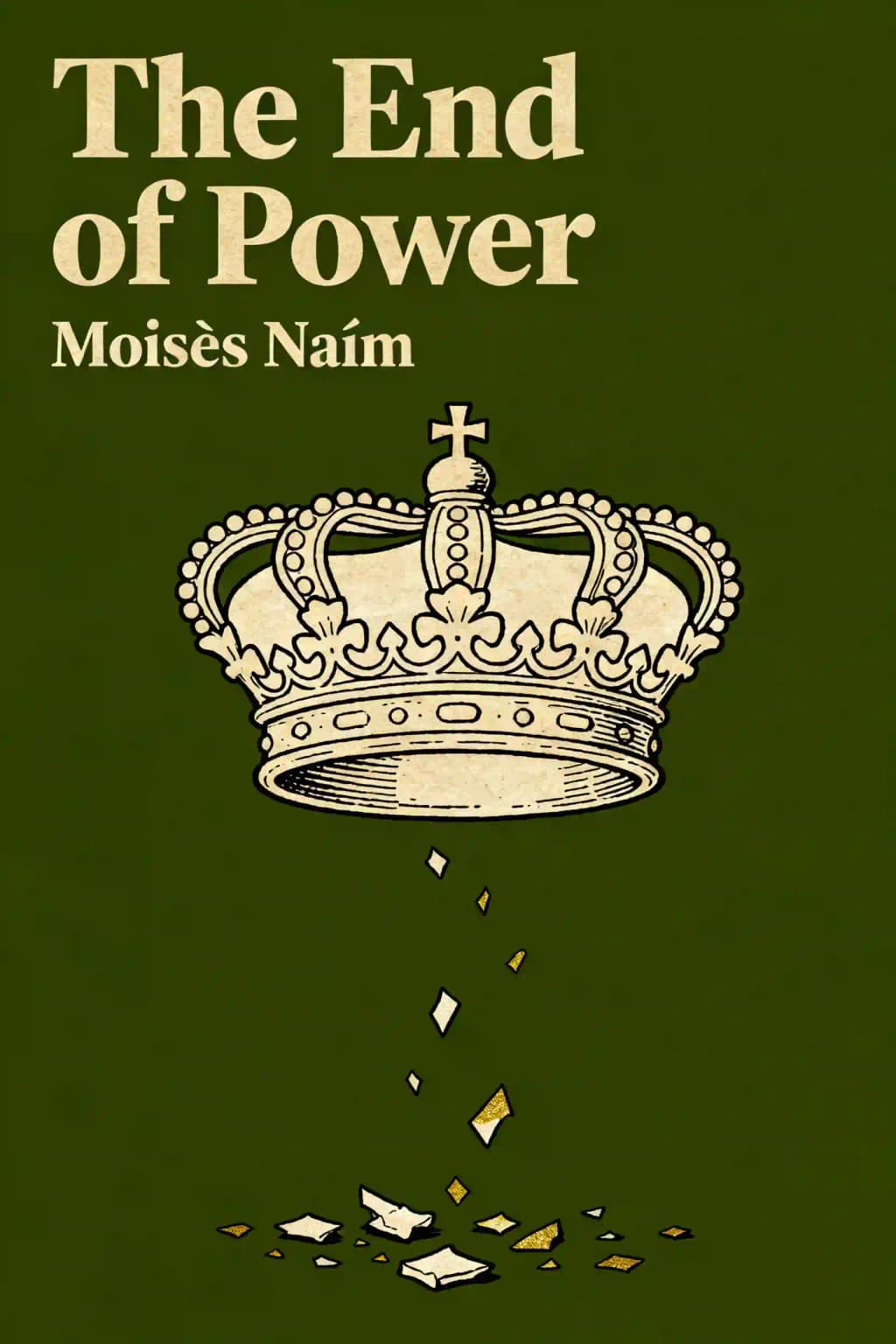
The end of power
Aperçu de The end of power
Power isn't what it used to be. Naim reveals why governments, corporations, and armies struggle to maintain control in our hyper-connected world. Mark Zuckerberg's first book club pick explores how three revolutions - More, Mobility, Mentality - have forever changed who wields influence.
Thèmes clés dans The end of power
- decay of authority
- micropower emergence
- institutional disruption
- barrier erosion
- political gridlock
Citations de The end of power
Power is not what it used to be.
Power hasn't disappeared.
It has become easier to obtain, harder to use, and far easier to lose.
Personnages de The end of power
- Moisés NaímAuthor and former holder of authority positions
Telecharger le resume de The end of power
Obtenez le resume de The end of power en PDF ou EPUB gratuit. Imprimez-le ou lisez-le hors ligne a tout moment.
FAQ sur ce livre
The End of Power examines the global decay of traditional power structures in politics, business, religion, and warfare. Moisés Naím argues that 21st-century power is harder to gain, retain, and wield due to rising competition, grassroots movements, and technological shifts. The book identifies "the end of power" as a defining trend reshaping hierarchies, with examples ranging from startups disrupting monopolies to populist movements challenging political elites.
This book is essential for policymakers, business leaders, and anyone analyzing global trends. It appeals to readers interested in geopolitics, organizational strategy, or societal change. Naím’s insights are particularly relevant for understanding disruptions like digital activism, decentralized innovation, and the decline of institutional authority.
Yes—it was a New York Times bestseller and acclaimed by the Washington Post and Financial Times as one of the best books of 2013. Naím’s blend of scholarly rigor and accessible analysis makes it a foundational text for understanding modern power dynamics, from corporate boardrooms to social movements.
Key concepts include:
- The “More Revolution”: Increased education, connectivity, and mobility erode centralized control.
- Borderless Challenges: Issues like climate change and cybercrime defy traditional power structures.
- Micropowers: Small actors (e.g., hackers, startups, activists) now rival established institutions.
Naím highlights shorter leadership tenures, fragmented electorates, and instant accountability via social media. Examples include the rapid rise and fall of populist movements and the inability of governments to enforce policies against grassroots resistance.
- “Power is decaying… the powerful face more constraints.”
- “The 21st century will be defined by the struggle to control decayed power.”
These lines underscore the book’s thesis that traditional authority is fragmenting in the digital age.
Naím links power decay to globalization’s “triple revolution”: cheaper communication, travel, and innovation. This empowers individuals and small groups to challenge multinational corporations, governments, and religious institutions.
Some scholars argue Naím overstates power’s decline, noting that elites still control key resources like data and finance. Others contend the book undervalues the resilience of authoritarian regimes.
While Illicit focuses on transnational crime networks, The End of Power broadens the lens to analyze all forms of institutional decay. Both books explore how globalization weakens traditional hierarchies but differ in scope and examples.
Its themes resonate amid AI-driven disinformation, decentralized finance (DeFi), and climate activism. Naím’s framework helps explain crises like cryptocurrency disrupting central banks or youth-led movements outpacing political parties.
It offers strategies for adapting to volatile markets, such as embracing flexibility over rigid hierarchies and leveraging grassroots innovation. Naím warns against relying on outdated top-down models in an era of micropowers.
In The Revenge of Power (2023), Naím updates his thesis, examining how autocrats exploit polarization and technology to regain control—a countertrend to the decentralization described in The End of Power.




