Chapitre 4
Yale Years: Ambition and Alcohol
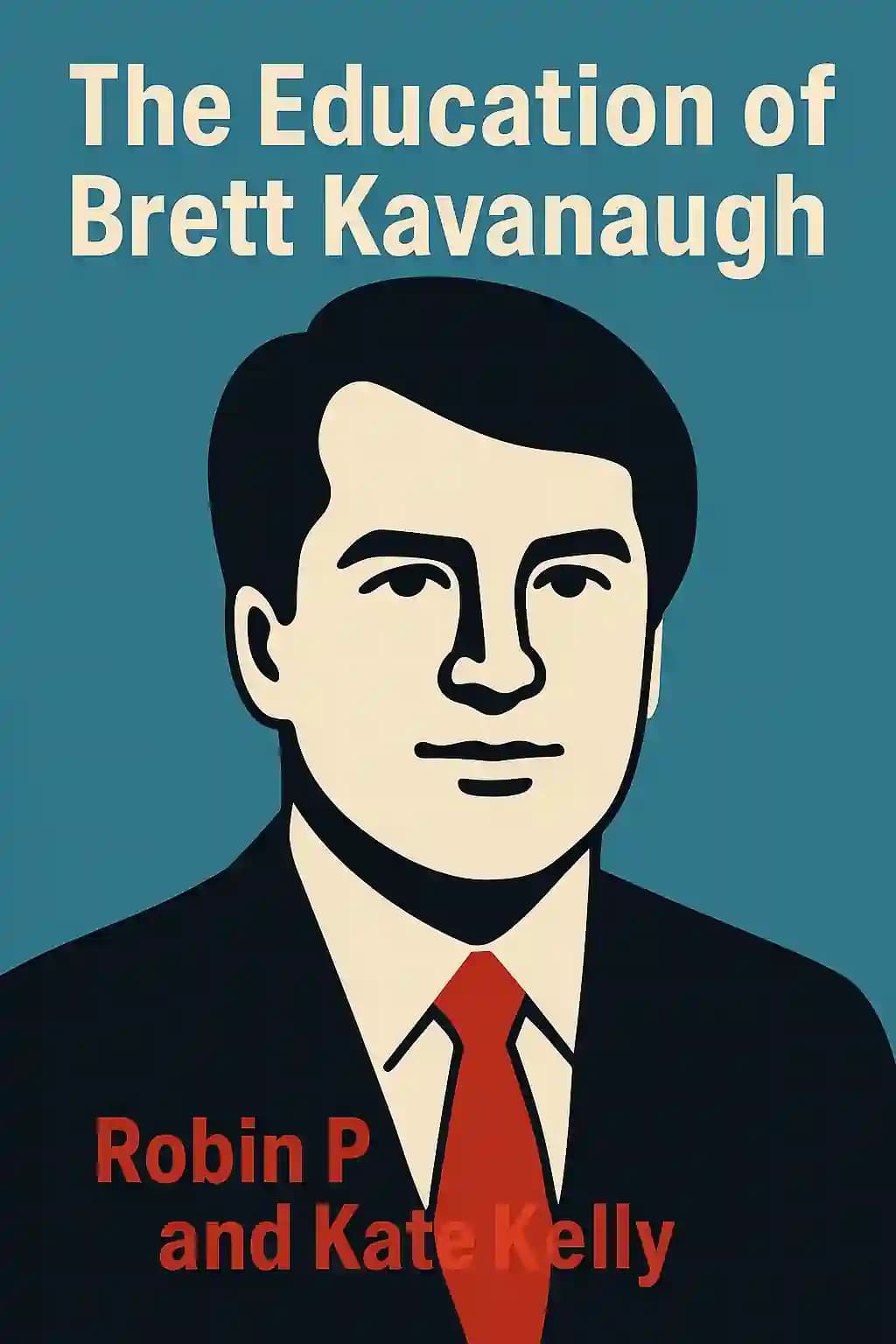
Kavanaugh's transition from Georgetown Prep to Yale College in 1983 marked a significant adjustment. At Prep, he had been a successful varsity athlete, popular with girls, and a top student. At Yale, he found himself among countless straight-A students, unable to make the varsity basketball team, and largely unlucky with women. He focused instead on building strong male friendships, maintaining good grades for law school, and decompressing with alcohol.
His roommate James Roche described Kavanaugh as clean-cut, about six feet tall, with a stiff smile and tendency toward chubbiness. Kavanaugh seemed socially insecure, rarely appearing to be in a relationship and affectionately teased for getting "no play" from girls. "He was a virgin through college," one friend said. "He was no sort of womanizer or lothario."
At parties and the local bar, Demery's, Kavanaugh appeared to use alcohol as a social lubricant. "Brett would hang out with guys who were getting the girls, and Brett was not getting the girls and sort of knew he had no chance of getting the girls," one male classmate said, "so he just would get really drunk."
Kavanaugh joined Delta Kappa Epsilon fraternity (DKE), notorious for drunkenness and misogyny. During his initiation, Lynne Brookes, captain of the varsity field hockey and lacrosse teams, saw him wearing a leather football helmet, grabbing his crotch, hopping on one leg, and chanting, "I'm a geek, I'm a geek, I'm a power tool. When I sing this song, I look like a fool."
While Kavanaugh maintained a neat bedroom decorated with a poster of his favorite Redskins player, John Riggins, his study habits reflected his ambition. "He would go down to Store 24 on Broadway and buy a two-liter bottle of Coke at ten o'clock and stick that bottle on his desk-'I'm just going to work until I collapse or until I'm done'-and go till three or four at night," recalled Malcolm Frank, who lived next to him during junior and senior years.
It was during freshman year that the incident with Deborah Ramirez allegedly occurred. According to Ramirez, at a party in Lawrance Hall, the guys kept targeting her to drink more until she became inebriated. Someone strapped on a fake penis, and later, she claimed, Kavanaugh thrust his real penis in her face. She remembered pushing it away, saying, "That's not a real penis," before realizing it was. She recalled Kevin Genda and David Todd laughing at her confusion, and Kavanaugh pulling up his pants while David White yelled down the hall, "Brett Kavanaugh just put his penis in Debbie's face."
For Ramirez, the incident was devastating, confirming her insecurities about belonging at Yale. "This whole identity had been ripped away from me," she said. "I'm no longer the good Catholic girl." She kept the experience private, only telling her mother years later that "Something happened at Yale," without sharing details.
Within days of the incident, Ken Appold heard about it from two Stiles freshmen. "Her story is exactly the same as I was told at the same time," he said. "This isn't the kind of thing you forget." Michael Wetstone later confirmed that Appold had told him about the incident in graduate school.
Chapitre 5
Christine Ford's Decision: From Private Pain to Public Testimony
When Justice Kennedy announced his retirement in June 2018, Christine Blasey Ford was on the beach in Santa Cruz, where her family had a small second home. As a professor with summers off, she typically spent June and July at the beach house, surfing while her boys attended junior lifeguard camp. Suddenly reading that the man she remembered as her assailant was in the running for a lifetime judicial position, Ford felt compelled to share her experience with officials in Washington.
"I just felt like I needed to tell them what happened," Ford said later. "If this is the only bad thing he's ever done, okay, people are going to decide what they're going to decide. I wasn't thinking, 'Oh, he did this to me, therefore he shouldn't be on the court.' I wasn't in that place at all. He did something to me when I was my kid's age, and I thought they should know, in case they care."
Ford debated her options both internally and with friends on the beach. She was leery of coming forward publicly, fearing unwanted scrutiny on her family. She considered contacting Kavanaugh directly to suggest they talk it through privately, or reaching out through Mark Judge, who she remembered as having been present during the assault.
On July 6, Ford left a message at Representative Anna Eshoo's Palo Alto office and contacted the Washington Post tip line: "Potential Supreme Court nominee with assistance from his friend assaulted me in mid 1980s in Maryland. Have therapy records talking about it." An hour later she added: "Brett Kavanaugh with Mark Judge and a bystander named PJ."
When President Trump named Kavanaugh as his Supreme Court pick on July 9, Eshoo's district chief of staff finally returned Ford's call and arranged a meeting. On July 20, the seventy-five-year-old congresswoman met with Ford in her Palo Alto office, scheduling her as the last appointment of the day to ensure they wouldn't be rushed.
For nearly two hours, Ford haltingly shared details of her encounter with Kavanaugh thirty-six years earlier, at times through tears that moved Eshoo to cry as well. Ford explained she wanted to share this information with the president or key decision-makers involved in the Supreme Court nomination, but anonymously to protect her family's privacy.
Eshoo found Ford honest and driven by civic duty, but also naive about what coming forward might entail. When Ford asked what Eshoo could do, the congresswoman suggested contacting Senator Dianne Feinstein, the ranking Democrat on the Senate Judiciary Committee.
On July 30, Ford emailed a letter to Eshoo's aide describing how "Brett Kavanaugh physically and sexually assaulted me during High School in the early 1980's" with his friend Mark Judge present. The letter detailed how Kavanaugh pushed her into a bedroom, locked the door, played loud music, and tried to disrobe her while covering her mouth. Ford requested confidentiality three times in the letter.
After speaking with Ford, Feinstein urged her to permit an investigation, which would require making her claims public. Ford refused, insisting on anonymity. Meanwhile, Ford's friends advised her to hire a lawyer. Through various connections, including a referral from Facebook COO Sheryl Sandberg, Ford eventually retained Debra Katz and Lisa Banks, who agreed to represent her pro bono.
On August 7, former FBI agent Jeremiah Hanafin administered a polygraph test to Ford at a Hilton hotel. After providing a written account of her memories, Ford answered two key questions: "Is any part of your statement false?" and "Did you make up any part of your statement?" She answered no to both, and Hanafin concluded the test results did not indicate deception.
Chapitre 6
When Private Allegations Become Public
As Kavanaugh's confirmation process unfolded, reporters frantically pursued leads about Ford's allegations. On September 13, Senator Feinstein publicly acknowledged receiving "information from an individual concerning the nomination" that she had referred to federal authorities. The New York Times revealed the matter involved "possible sexual misconduct between Judge Kavanaugh and a woman when they were both in high school."
The White House immediately counterattacked, portraying this as an "eleventh-hour attempt to delay his confirmation." Meanwhile, the Senate Judiciary Committee scheduled a vote for September 20, hoping to seat Kavanaugh by October 1 when the Supreme Court's new term began.
Beyond Ford's allegations, other troubling stories emerged. Yale classmate Kenneth Appold had heard freshman year that Kavanaugh exposed himself to Deborah Ramirez at a dorm party. Another classmate, Max Stier, reportedly witnessed a drunk Kavanaugh with his pants down at a different party where friends put Kavanaugh's penis in a female student's hand. These allegations reached senators but were never fully investigated.
Evidence also emerged suggesting Kavanaugh might have been reaching out to potential witnesses before the Ramirez story became public. Yale classmate Kathleen Charlton learned from David Todd that Kavanaugh had called him, apparently to ensure Todd would share "no bad" information with reporters investigating the Ramirez allegations. When Todd discovered Charlton had revealed this conversation to Robin Pogrebin of The New York Times, he sent an angry text message in all capitals demanding her silence.
Kavanaugh's supporters mobilized quickly. Meghan McCaleb gathered sixty-five women to sign a letter defending his character, stating he "has always treated women with decency and respect." Kavanaugh himself issued an unequivocal denial: "I categorically and unequivocally deny this allegation. I did not do this back in high school or at any time" - a statement that surprised some classmates with its absoluteness, given he hadn't yet heard Ford's specific claims.
As the hearing approached, Kavanaugh spent hours in grueling preparation sessions with White House officials, growing frustrated at having to defend his sexual history rather than his legal record. During one particularly uncomfortable phone call with Grassley's staff, he endured detailed questioning about sexual behaviors that left him feeling this was "not the sort of job interview Kavanaugh ever imagined for himself."
On September 24, Kavanaugh and his wife Ashley appeared on Fox News with Martha MacCallum, where he repeatedly stated "I've never sexually assaulted anyone" and "I'm just asking for a fair process." He maintained remarkable composure even when discussing intimate details, including that he "did not have sexual intercourse, or anything close to sexual intercourse, in high school, or for many years thereafter." Though Trump had called to pledge support, the president reportedly considered "plan B" after finding Kavanaugh's performance too tepid.
Chapitre 7
The Hearings: A Nation Transfixed
The day of Ford's testimony arrived with tense anticipation. Ford appeared both knowledgeable and naive during questioning, walking the fine line women often must navigate-appearing confident without seeming strident. Despite her occasionally halting delivery, she was firm on one critical point: she was "one hundred percent" certain Brett Kavanaugh had assaulted her.
Her testimony was compelling and emotional. "Indelible in the hippocampus is the laughter," she said tearfully, describing Kavanaugh and Judge's behavior during the alleged assault. Her scientific language and authentic demeanor struck many as credible, though Republicans quickly noted the lack of corroborating evidence.
The testimony resonated widely. The National Sexual Assault Hotline reported calls jumped 147 percent during her testimony. Celebrities expressed support, and people across the country confronted their own memories of sexual assault. Even President Trump initially called Ford "very credible," while Fox News host Chris Wallace deemed her testimony a "disaster" for Republicans.
When Kavanaugh's turn came, he delivered an opening statement filled with raw emotion and partisan anger. His voice cracking, he denounced the confirmation process as "a national disgrace" and "a calculated and orchestrated political hit" motivated by "revenge on behalf of the Clintons." This marked a stark departure from traditional judicial temperament, raising concerns about his impartiality.
Senator Lindsey Graham's explosive outburst became the turning point of the hearing, declaring it "the most unethical sham" in his political career and accusing Democrats: "Boy, y'all want power. God, I hope you never get it." His performance represented the anger Kavanaugh had struggled to contain, framing Democrats as political opportunists exploiting #MeToo to destroy an esteemed judge. "This is not a job interview," Graham thundered. "This is hell."
The hearing grew increasingly contentious as Democrats probed Kavanaugh's yearbook references. When questioned about "Ralph Club," "boofing," and "Devil's Triangle," Kavanaugh offered benign explanations-claiming the latter was merely "a quarters game"-while defensively citing his academic achievements: "I was at the top of my class academically, busted my butt in school."
Kavanaugh's demeanor deteriorated further during Senator Klobuchar's questioning about blackout drinking. After she vulnerably shared her father's alcoholism struggles, Kavanaugh retorted, "Have you?" when asked if he'd ever blacked out-a moment widely viewed as his lowest point. He later apologized, looking tearful: "Sorry I did that. This is a tough process."
Chapitre 8
Character Questions: Truth, Memory, and Temperament
Charles "Chad" Ludington, a former Yale basketball player turned history professor, felt compelled to speak out after watching Kavanaugh's testimony about his drinking habits. "I can unequivocally say that in denying the possibility that he ever blacked out from drinking, Brett has not told the truth," Ludington stated publicly, emphasizing he objected not to the drinking itself but to the dissembling.
Many Yale classmates shared this sentiment. Lynne Brookes questioned on ABC News, "If he's gonna lie about the little things, what about the big things?" James Roche, Kavanaugh's freshman roommate, claimed firsthand knowledge of Kavanaugh being "blackout drunk" frequently. Meanwhile, the White House countered with statements from Dan Murphy and Chris Dudley, who insisted they never saw Kavanaugh black out.
Kavanaugh's temperament during testimony also sparked fierce debate. Critics like law professor Kathleen Clark and conservative commentator Charlie Sykes found his partisan outburst disqualifying. Benjamin Wittes wrote in The Atlantic he could not "condone the partisanship-which was raw, undisguised, naked, and conspiratorial." Over 2,400 law professors signed a letter declaring him unfit, and even retired Justice John Paul Stevens withdrew his support.
Supporters argued his anger was justified for a man fighting false accusations. "I would defy anyone not to be angry about that," said Senator Cornyn. Former clerk Rebecca Taibleson observed, "Everyone who watched the testimony saw in there what they wanted to see." In the polarized political climate, Kavanaugh became a human Rorschach test-either a tragic casualty of #MeToo overreach or the embodiment of white male privilege.
Heavy drinking emerged as a consistent thread in the narrative. Despite Kavanaugh's insistence he never experienced alcohol-induced memory loss, friends and classmates described his slurring, stumbling reactions to alcohol in college, suggesting blackouts were possible. This raised the possibility he might have mistreated women but genuinely doesn't remember.
Kavanaugh's testimony contained apparent inaccuracies about the Renate references in his yearbook and his "Bart O'Kavanaugh" nickname. The New York Times reported on the "Renate Alumnius" references in his high school yearbook, suggesting he and thirteen other boys had boasted about sexual conquests with Renate Schroeder (now Dolphin). Though Kavanaugh denied this through his attorney, Dolphin called the insinuation "horrible, hurtful, and simply untrue."
Chapitre 9
The FBI Investigation and Final Vote
Late on September 27, 2018, after being confronted in an elevator by sexual assault survivors, a visibly shaken Senator Jeff Flake entered the committee room. Following impassioned speeches, Flake tapped Senator Coons's shoulder and they retreated to an anteroom where Flake agreed to pause for further investigation. After securing support from Senators Collins and Murkowski, Flake proposed delaying the floor vote for up to one week to allow a limited FBI investigation-hoping this would help the country begin to heal, even if it wouldn't change votes.
Despite confusion among Democrats about what exactly was being voted on, the committee advanced Kavanaugh's nomination with all Republicans in favor. McConnell was forced to agree to the delay, and Trump ordered a limited investigation.
The FBI investigation became increasingly controversial as partisan reactions hardened. Republicans claimed nothing new was discovered, with Grassley stating "There's nothing in it that we didn't already know." Democrats condemned the process-Representative Eshoo called it "a travesty" while Senator Whitehouse labeled it "bogus." Whitehouse, a former state attorney general, said he'd "never seen a situation where the FBI more diligently tried to fend off information as the clock ran out" and maintained the Ramirez allegations weren't "even remotely investigated."
Senator Flake, however, felt satisfied with the investigation's thoroughness regarding primary witnesses, stating "there was nothing that came out of those interviews that corroborated the initial allegation." On October 5, the Senate voted to advance Kavanaugh's nomination to a final vote. That same day, NBC News reported Ramirez had identified "eyewitnesses who were in the room" to the FBI, though this received little attention.
Grassley released an executive summary boldly concluding: "There is no corroboration of the allegations made by Dr. Ford or Ms. Ramirez." Senator Feinstein countered that Republicans hadn't shared this summary with the minority, noting it contained prohibited information about Ford's past relationships and relied on anonymous sources.
With Murkowski voting against confirmation, Susan Collins became the decisive vote. In a forty-five-minute speech on October 5, Collins defended the presumption of innocence and ultimately supported Kavanaugh. The following day, October 6, 2018, Vice President Pence announced Kavanaugh's confirmation by the closest vote for a Supreme Court justice in over 150 years: "The ayes are fifty. The nays are forty-eight."
Chapitre 10
Aftermath: A Nation Changed
The Kavanaugh confirmation had profound and lasting impacts on American politics and culture. The hearings sparked difficult national conversations about gender dynamics, consent, and power. Post-hearing polls showed 48% opposed his confirmation while 42% supported it, reflecting the deep divisions in American society.
While Kavanaugh began his Supreme Court tenure with collegiality, Ford faced a very different aftermath-continued threats, displacement from her home, and emotional distress. She considered writing a book but hesitated to relive her trauma, instead focusing on supporting sexual assault survivors and joining the Project on Institutional Courage.
As Georgetown Prep classmate Joe Conaghan reflected, the politicized process prevented any genuine healing: "If I'm right about what I suspect was true, which is that she was telling the truth, then perhaps Brett would have been able to render an apology to her that might have helped her heal in a real, genuine way."
The confirmation had direct political consequences-Democrats took control of the House in midterms while losing two Senate seats. Several red-state Democrats who voted against Kavanaugh lost their seats, while Joe Manchin preserved his by voting for confirmation. Republican leaders fought back against accusers, with Grassley referring Avenatti, Swetnick, and others for criminal investigation.
Several senators capitalized on their enhanced profiles from the hearings-Harris, Booker, and Klobuchar announced presidential runs, while Coons and Flake appeared together on talk shows discussing bipartisanship. Joe Biden apologized to Anita Hill for his handling of the Thomas hearings, though she did not accept.
The hyperbolic rhetoric continued after confirmation, with Trump claiming "it's a very scary time for young men in America" and McConnell calling the confirmation "the single most important thing I've been involved in in my career." Democrats like Feinstein warned Kavanaugh's confirmation put women's reproductive rights and other progressive priorities "at risk for a generation."
Martha Kavanaugh's prosecutorial wisdom-"Use your common sense. What rings true? What rings false?"-guided the authors' investigation. After examining extensive evidence, they found Ford and Ramirez's allegations credible while other accusations against Kavanaugh appeared dubious. At least five people recalled hearing about the Ramirez incident long before Kavanaugh became a federal judge, lending credibility to her account despite her acknowledged inebriation at the time.
As Kavanaugh completed his first term on the Court, whether he would prove a centrist like his mentor Justice Kennedy or a reliable conservative like his former schoolmate Justice Gorsuch remained to be seen. The confirmation battle revealed not just the character of one man, but the character of a nation struggling to reconcile its ideals with its realities in an era of unprecedented polarization. As Virgil wrote, "Someday it will be helpful to have recalled even these events."