Chapitre 1
The Power of Emotional Mastery: Finding Balance in Chaos
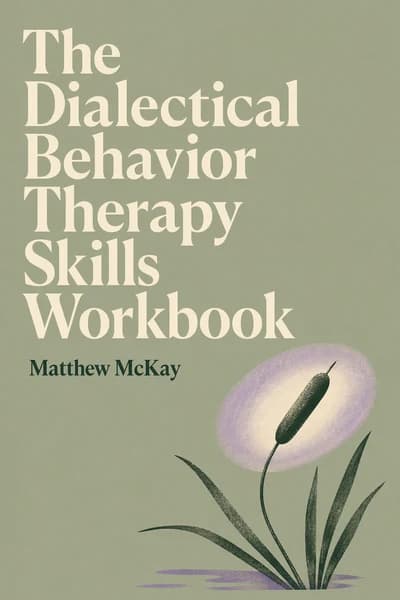
Imagine standing at the edge of an emotional cliff, feeling the overwhelming force of anger, sadness, or fear threatening to push you over. For millions of people worldwide, this isn't just a metaphor-it's daily reality. Dialectical Behavior Therapy (DBT) has emerged as a lifeline for those drowning in emotional tsunamis, offering practical skills to navigate life's turbulent waters. Since Marsha Linehan developed this approach over twenty-five years ago, it has transformed countless lives, expanding beyond its original focus on borderline personality disorder to effectively address anxiety, depression, PTSD, and relationship problems. The approach has gained such prominence that celebrities like Pete Davidson, Selena Gomez, and Brandon Marshall have openly credited DBT with helping them manage emotional challenges. What makes this therapy revolutionary isn't complex theory but its accessible, practical skills that anyone can learn-skills that don't just manage emotions but fundamentally change how we experience them.
Chapitre 2
The Four Pillars of Emotional Control
At its core, DBT teaches four essential skill sets that work together to create emotional stability. Distress tolerance builds resilience during painful events-like emotional antibodies that strengthen your system against life's inevitable wounds. This might involve techniques like radical acceptance of unchangeable situations or self-soothing practices during acute stress. Mindfulness anchors you in the present moment rather than being dragged into past regrets or future anxieties, teaching you to observe thoughts and feelings without judgment, much like watching clouds pass across the sky.
Emotion regulation provides tools to observe feelings without drowning in them, creating space between stimulus and response. This includes practical strategies like checking the facts of a situation, identifying triggers, and using opposite action - deliberately acting contrary to emotional urges when they don't serve us. Finally, interpersonal effectiveness equips you with techniques to express needs and set boundaries while preserving relationships, teaching specific formulas for making requests, saying no, and managing conflict.
These skills address a fundamental human challenge: we all experience emotions that sometimes feel overwhelming. For some people, these feelings arrive with extraordinary intensity-like having the volume permanently turned to maximum. Someone might feel rejection not as mere disappointment but as crushing devastation, or experience anger not as irritation but as volcanic rage. The natural response is often to suppress these emotions, but paradoxically, this only makes them more overwhelming, like trying to hold a beach ball underwater - it eventually explodes to the surface with even greater force.
Whether your emotional intensity is hardwired from birth or influenced by childhood experiences, these skills offer a path forward. They work equally well for someone born with heightened sensitivity and for those whose emotional responses were shaped by trauma or invalidating environments. The skills can be particularly transformative for people who've spent years being told they're "too sensitive" or should "just get over it."
The beauty of DBT lies in its practicality. It doesn't promise to eliminate painful emotions-an impossible goal-but rather teaches you to respond to them in ways that don't make situations worse. For instance, instead of lashing out in anger and damaging relationships, you might learn to take a timeout and use specific coping strategies. It acknowledges that while pain is sometimes unavoidable, suffering often is optional. By learning to tolerate distress, stay present, regulate emotions, and communicate effectively, you gain the power to transform your relationship with feelings that once seemed unmanageable. These skills become like emotional muscle memory, allowing you to navigate life's challenges with greater confidence and stability.
Chapitre 3
Surviving the Storm: Basic Distress Tolerance
When emotional pain hits, our instinctive reactions often make things worse. Many people respond with destructive coping mechanisms-dwelling on past hurts, isolating themselves, numbing with substances, lashing out at others, or engaging in self-harm. These strategies provide temporary relief but ultimately deepen suffering, creating a vicious cycle of pain and maladaptive responses. Common destructive patterns include excessive drinking, emotional eating, aggressive outbursts, compulsive shopping, or retreating completely from social connections.
The REST strategy offers a powerful alternative when emotions threaten to overwhelm you. REST stands for Relax, Evaluate, Set an intention, and Take action. When you feel the tide of emotion rising, first pause and breathe deeply, creating space between impulse and reaction. This might involve counting to ten, focusing on your breath for several cycles, or performing a quick body scan. Next, briefly assess what's happening without over-analyzing - identify the trigger, emotion, and your typical response pattern. Then set a goal for what you'll do instead of your habitual response, making it specific and achievable. Finally, mindfully implement your plan, staying present with each step. With practice, this sequence takes only seconds and can be repeated as needed throughout difficult situations.
Consider Lucy, who used to cut herself when overwhelmed by emotional pain. After learning distress tolerance skills, she discovered that drawing on herself with a red marker provided a similar sense of release without permanent damage. This harm reduction approach created space for her to develop healthier coping mechanisms over time. She gradually expanded her toolkit to include intense exercise, cold showers, holding ice cubes, and eventually journaling and meditation. Another example is Marcus, who replaced angry outbursts with brief walking breaks, allowing him to cool down and return to challenging situations with greater composure.
Radical acceptance forms another cornerstone of distress tolerance. This doesn't mean approving of painful situations but acknowledging reality without judgment. When you're overly critical or angry about circumstances, you miss important details and become paralyzed. Fighting against unchangeable past events only intensifies suffering. By accepting "this is the way it has to be" or "I can't change what's already happened," you free mental energy to focus on constructive responses. This might involve acknowledging a relationship's end, accepting a health diagnosis, or coming to terms with a career setback.
Effective distress tolerance also involves creating a personalized crisis survival kit. This can include comfort objects, inspiring quotes, photos of loved ones, stress balls, essential oils, or other sensory items that help ground you. Having these tools readily available, along with a list of emergency contacts and coping strategies, provides crucial support during overwhelming moments. Regular practice of these skills during less stressful times builds the foundation for resilience when major challenges arise.
Chapitre 4
The Art of Distraction: Creating Space for Healing
Distraction techniques serve as temporary bridges when emotions feel unbearable. Unlike avoidance, healthy distraction involves an intention to deal with problems later when emotions have calmed. The key is having multiple strategies ready before crisis strikes. This intentional pause allows the nervous system to reset and creates mental space for more balanced processing of difficult situations. Think of it as a strategic retreat rather than running away.
Pleasurable activities offer effective emotional diversion. Rather than waiting until overwhelmed, incorporate these activities into daily life as preventative medicine for emotional well-being. Exercise proves particularly beneficial, releasing natural endorphins that combat depression and anxiety. Even brief activities like a 10-minute walk or gentle stretching can shift emotional states. Other powerful distractions include focusing attention on someone else through volunteering or helping friends, engaging your thoughts through reading or puzzle-solving, physically leaving difficult situations for a change of environment, accomplishing small tasks and chores that provide a sense of control, or using simple counting techniques and mathematical problems to engage the logical mind.
Self-soothing skills complement distraction by helping you regain strength before addressing problems. Like refilling an empty gas tank, they bring peace and relief so you can determine next steps with clarity. These techniques engage your five senses systematically: enjoying pleasant scents like lavender candles, essential oils, or fresh flowers; viewing calming images, art, or natural beauty through windows or nature walks; listening to specifically chosen music, guided meditations, or natural sounds like rainfall; savoring comforting tastes mindfully through favorite beverages or small treats; and experiencing gentle touch through soft blankets, warm baths, or self-massage techniques.
The most effective approach combines these strategies into personalized distraction and relaxation plans, tailored to different situations and intensity levels. By documenting techniques that work specifically for you-both at home and away-you create accessible tools for emotional emergencies. Consider creating a "comfort kit" with portable items that engage your senses, like stress balls, favorite tea bags, or calming photos. This preparation prevents the common problem of forgetting coping skills precisely when you need them most. Regular practice of these techniques during calm periods strengthens their effectiveness during challenging times, much like building muscle memory through exercise.
Remember to include both quick techniques for immediate relief and longer activities for sustained support. Having options for various settings-work, home, public places-ensures you're never without tools for emotional regulation. The goal is to build a diverse toolkit that provides options for different situations and emotional states.
Chapitre 5
Advanced Distress Navigation: Finding Your North Star
Building on basic distress tolerance skills, advanced techniques help you feel more empowered during painful situations. Safe-place visualization leverages your brain's inability to distinguish between reality and vivid imagination. By creating a detailed mental sanctuary engaging all five senses, you establish a refuge you can visit whenever emotional support is needed.
Cue-controlled relaxation trains your body to release tension using a trigger word like "relax" or "peace." With regular practice, your body learns to respond automatically to this cue, providing quick relief during stressful situations. This technique pairs beautifully with diaphragmatic breathing, which engages your body's natural relaxation response.
Reconnecting with your values offers powerful motivation during difficult times. Values-your ethics, principles, and ideals-fill life with meaning and provide direction when challenges arise. By identifying discrepancies between what you value and how you actually live, you can realign your actions with your deepest beliefs, creating a more fulfilling existence.
When facing overwhelming emotions, self-encouraging coping thoughts provide crucial internal support. Statements like "This situation won't last forever" or "I've survived other situations like this" remind you of your resilience and strength. Similarly, self-affirming statements like "I might have some faults, but I'm still a good person" or "I accept who I am" help build a healthier self-image that withstands emotional storms.
The FTB-Cope skill addresses a common problem-the gap between emotional intensity and actual threat level. When emotions feel disproportionately intense compared to the situation's reality, this technique helps you recognize the imbalance and choose appropriate coping strategies rather than acting on emotional impulses.
Chapitre 6
The Mindful Path: Staying Present in a Chaotic World
Mindfulness-the ability to be aware of thoughts, emotions, physical sensations, and actions in the present moment without judgment-forms the foundation of emotional regulation. Though rooted in ancient meditation traditions, modern research confirms mindfulness reduces depression risk, decreases anxiety, alleviates chronic pain, reduces binge eating, increases distress tolerance, and enhances coping skills. Studies at major universities have shown that regular mindfulness practice can reduce cortisol levels by up to 15% and increase gray matter density in regions associated with learning, memory, and emotional regulation.
Most people frequently operate on autopilot, driving without remembering the journey, losing track of conversations, or being mentally elsewhere during intimate moments. While these examples seem harmless, being unmindful devastates those with overwhelming emotions. Consider Lee, who was so consumed by self-critical thoughts during a conversation with an attractive coworker that he missed her genuine interest, later incorrectly validating his negative assumptions when she left. Similarly, Sarah found herself repeatedly overeating at dinner parties because she wasn't paying attention to her body's satiety signals, leading to a cycle of guilt and shame that mindful eating eventually helped her break.
Mindfulness skills serve three crucial purposes: helping you focus on one thing at a time in the present moment, identifying and separating judgmental thoughts from experiences, and developing "wise mind"-the ability to make healthy decisions based on both rational thoughts and emotions. This integration of emotional and logical thinking allows for more balanced decision-making, whether in personal relationships, career choices, or daily challenges.
Basic mindfulness exercises build your mental muscles through practices like focusing on a single object, scanning your body with a visualized band of light, alternating attention between inner and outer experiences, observing your thoughts without judgment, and practicing mindful breathing. These techniques develop your ability to separate thoughts from emotions and physical sensations, giving you greater control over your responses. For instance, the "STOP" technique (Stop, Take a step back, Observe, Proceed mindfully) has helped countless individuals break free from reactive patterns and make more conscious choices.
Advanced practitioners often incorporate mindfulness into daily activities like eating, walking, or washing dishes. This "informal practice" helps bridge the gap between meditation and real-world challenges. Research shows that even brief moments of mindfulness throughout the day can significantly reduce stress and improve emotional resilience. The key is consistency rather than duration - five minutes of daily practice often proves more beneficial than occasional longer sessions.
Regular mindfulness practice also enhances relationships by improving emotional awareness and communication. Practitioners report greater empathy, better listening skills, and reduced reactivity in conflicts. By learning to observe thoughts and emotions without immediately acting on them, individuals develop the space needed for thoughtful responses rather than automatic reactions.
Chapitre 7
The Wisdom Beyond Thoughts: Advanced Mindfulness
Advanced mindfulness skills build on the foundation of present-moment awareness by teaching you how to engage with experience. Wise mind represents the ability to make healthy decisions by balancing emotional responses with rational thinking. Unlike "emotion mind" (making decisions solely based on feelings) or "reasonable mind" (using only analytical thinking), wise mind integrates both approaches. This intuitive wisdom often emerges from the center of the body-what some call the "gut feeling"-and research suggests these intuitions may connect to the complex network of nerves in the digestive system.
Radical acceptance takes mindfulness deeper by teaching you to tolerate experiences without judging them or trying to change them. When we judge others we get angry, and when we judge ourselves we get depressed. Judgments easily become obsessions that occupy thoughts-sometimes for an entire day-whether they're negative or positive assessments about ourselves or others. By practicing nonjudgment, you free yourself from this mental prison and create space for authentic experience.
Self-compassion-recognizing your own pain and treating yourself with kindness-forms another essential mindfulness skill. Many struggle with this because they believe they're undeserving, fear acknowledging pain, or never experienced compassion from others. However, self-compassion is essential for any lasting self-improvement. You deserve compassion precisely because you've experienced pain, losses, rejection, and difficult emotions.
Doing what's effective means taking appropriate actions to resolve problems or reach goals, even when those actions feel uncomfortable or contradict your emotional impulses. This isn't "selling out" but strategically choosing behaviors that serve your larger purposes, like staying in a long grocery line despite feeling like abandoning your cart, or using "I" statements during relationship conflicts instead of walking out.
Maintaining mindfulness throughout daily life requires consistent practice rather than strenuous effort. The FLAME approach helps integrate these skills: Focus and shift attention, Let go of distracting thoughts, use radical Acceptance, use wise Mind, and do what's Effective. By applying these principles to everyday activities like talking, walking, eating, and washing, mindfulness becomes a natural part of your experience rather than a separate practice.
Chapitre 8
Understanding Your Emotional Weather System
Emotions are bodily signals that inform you about what's happening. Primary emotions are immediate reactions that don't require thought-like feeling surprised when winning a contest or sad when someone dies. Secondary emotions are reactions to your primary emotions-feelings about your feelings. These can create complex chains of distress, as when anxiety about a presentation leads to depression, worthlessness, and guilt.
Understanding how emotions work helps you navigate them more effectively. They begin with sensory input processed by your limbic system, which then communicates with the rest of your brain and body. Emotions serve crucial purposes: helping you survive through fight-flight-freeze responses, remembering dangerous situations, communicating with others through universal expressions, coping with daily situations, avoiding pain, and seeking pleasure.
Learning to recognize emotions is the first step to controlling intense reactions. Many people either pay little attention to their feelings or only notice them once they've become overwhelming. By slowing down the emotional process, you can examine what happened, why you think it happened, how it made you feel emotionally and physically, what urges you experienced, what you actually did, and how these emotions and actions affected you later.
Your physical condition significantly influences emotional vulnerability. Proper nutrition, adequate sleep, regular exercise, and avoiding substance abuse create a foundation for emotional stability. Similarly, your thoughts affect emotions through "trigger thoughts"-self-critical ideas that cause suffering. Techniques like thought defusion (visualizing thoughts floating away), coping thoughts (self-soothing statements), and balancing thoughts (seeing the complete picture) help manage this cognitive vulnerability.
Chapitre 9
Mastering Your Emotional Responses
Advanced emotion regulation builds on basic skills with techniques that transform your relationship with feelings. Being mindful of emotions without judgment helps decrease their intensity by observing them as legitimate waves that naturally rise and fall. This creates space between feeling and reaction, allowing you to respond more thoughtfully.
Emotion exposure helps you face feelings instead of avoiding them. By observing emotions, labeling them, and describing their intensity without judgment, you learn that emotions have natural lifespans-they escalate, crest, and diminish. This knowledge prevents catastrophic thinking about feelings ("this will never end") and builds confidence in your ability to tolerate emotional discomfort.
Opposite action addresses the problem of emotion-driven behaviors that often create destructive outcomes. This technique involves acknowledging your emotion, determining if regulation is needed, noticing your specific body language and behaviors, identifying opposite actions, committing to a timeframe, and monitoring how emotions change. For example, when feeling angry, opposite actions might include using a soft voice and validating others; when scared, approaching what frightens you; when sad, becoming active and engaged.
Problem solving helps regulate emotions before they become overwhelming by identifying triggers and developing more effective responses. The process begins with behavior analysis-tracing the sequence of events leading to problematic emotions-followed by ABC Problem Solving: Alternatives (brainstorming new responses), Best ideas (evaluating options), and Commitment to implementation (specifying when and where to try new approaches).
Consistent practice of these skills creates lasting change. The Weekly Regulator Logsheet tracks six key areas: managing physical vulnerability, managing cognitive vulnerability, noticing positive events, watching and accepting emotions, practicing opposite action, and using problem solving. This systematic approach ensures you're implementing the full range of emotion regulation techniques in daily life.
Chapitre 10
Building Bridges: The Art of Interpersonal Effectiveness
Relationships bring love and support but can be fragile, requiring skills to maintain. Interpersonal effectiveness combines mindful attention, compassion for others, and assertiveness to create healthier connections. These skills help you balance getting what you want with preserving relationships and maintaining self-respect.
Mindful attention means staying present during interactions-observing facial expressions, body language, tone, and word choice to gauge mood and relationship status. Not paying attention leads to missing vital cues, projecting fears inaccurately, and reacting poorly to "surprises" you could have anticipated. When something seems unclear, asking clarifying questions like "How are we doing?" can prevent misunderstandings.
Compassion involves recognizing others' pain, offering help without judgment, and acknowledging that suffering connects all humans. We must understand that everyone is doing their best with the coping skills they have, rather than judging behaviors we disagree with. The Other-Compassion Meditation helps develop kindness toward all people by repeating phrases like "May you be peaceful" and "May you be safe."
Two behavior patterns frequently damage relationships: passive and aggressive behavior. Passivity might seem safe initially as you accommodate others' wants, but consistently abandoning your own needs creates internal frustration and resentment. Aggressive behavior similarly destroys relationships by pushing people away, stemming from a strong sense of how things should be and a need to control interpersonal events.
Assertiveness offers a middle path. Effective requests have four components: a brief justification, a softening statement ("Would you mind if..."), a direct specific question stating what you want clearly, and an appreciation statement. Assertiveness scripts provide structure with four key components: "I think" (stating facts without judgment), "I feel" (expressing emotions without blame), "I want" (making specific behavioral requests), and a self-care solution (explaining how you'll handle things if your request isn't met).
When facing resistance or conflict, five management skills help: mutual validation acknowledges both perspectives without requiring agreement; the broken record technique involves repeating your request firmly without arguing; probing uses questions to uncover underlying concerns; clouding lets you partially agree with criticism to defuse arguments; and assertive delay gives you time to think before responding when pressured.
Chapitre 11
Putting Theory Into Practice: The Daily Commitment
Skills learned throughout DBT require consistent practice to remain effective; without use, they become mere ideas with no power to help. A fifteen-minute daily practice regimen maintains emotional health, emphasizing habit formation rather than willpower. This "emotional exercise routine" consists of five components: mindfulness (3-5 minutes), deep relaxation (3 minutes), self-observation, affirmation, and committed action.
The practices should be done at the same time each day, treated as an important appointment with oneself. Each component strengthens specific skills-mindfulness forms the foundation, relaxation builds distress tolerance, self-observation and affirmation enhance emotion regulation, and committed action strengthens both emotion regulation and interpersonal effectiveness.
A particular challenge in applying these skills is state-dependent learning-the difficulty of recalling coping skills during emotional distress when they were learned in a calm state. Exposure-based cognitive rehearsal addresses this by practicing skills while in an emotionally activated state. The process involves selecting a coping skill, identifying a recent upsetting experience, visualizing it until reaching moderate emotional intensity, applying the coping skill until emotions decrease, then repeating.
The key to success is perseverance-making the commitment anew each day, recognizing that life isn't about intentions but about doing and being effective. As you continue practicing these skills, you'll find yourself increasingly able to navigate emotional challenges that once seemed insurmountable. The path isn't always easy, but thousands of people have walked it successfully before you. With practice and persistence, you too can transform your relationship with emotions, building a life of greater stability, connection, and fulfillment.