Chapitre 1
When Worship Becomes Dangerous: Waking Up to God's Call
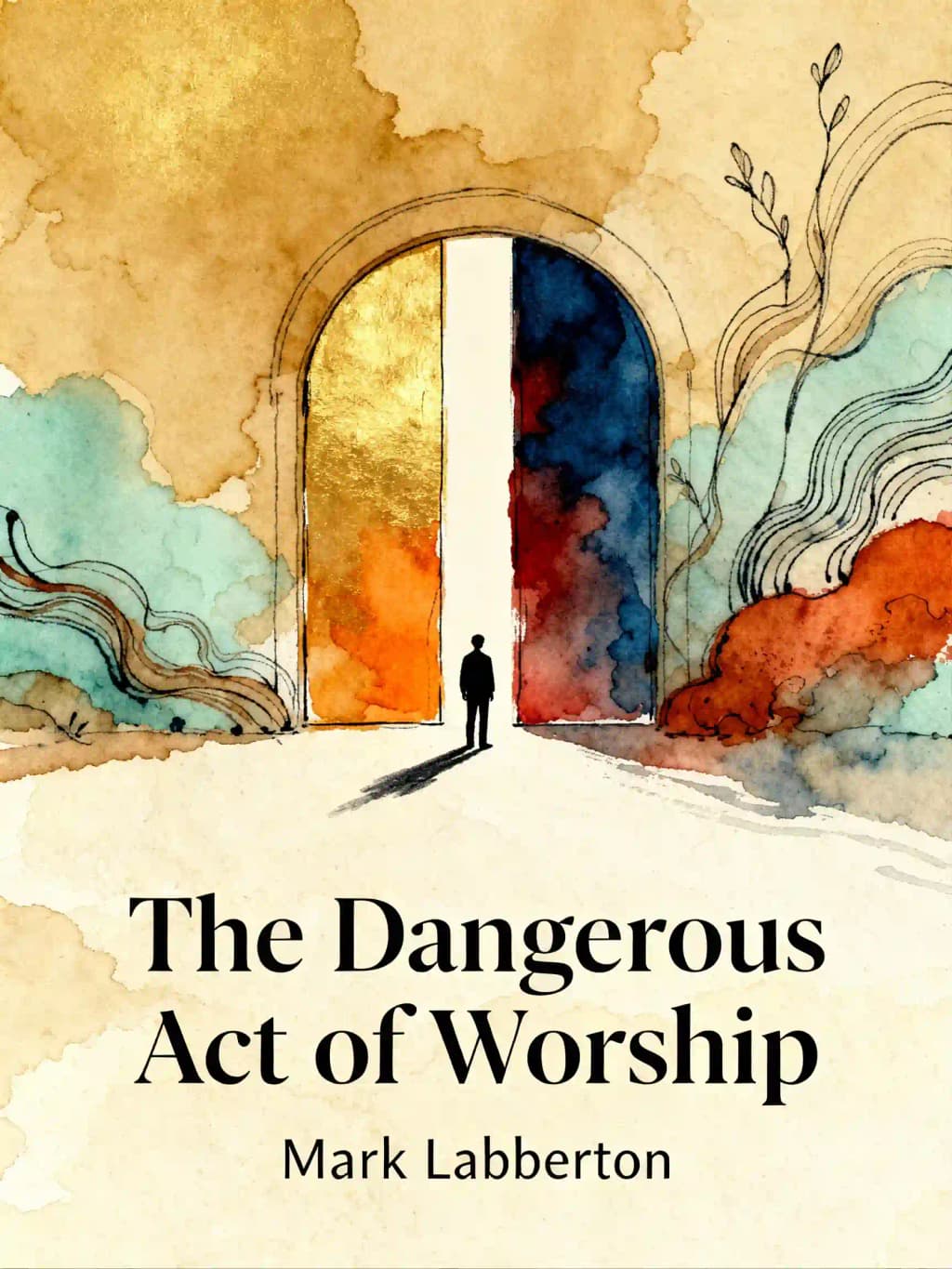
Have you ever considered that the most dangerous act you could perform might be worship? Not the kind that involves tigers or fire-breathing, but the simple act of gathering with others to acknowledge God. Mark Labberton's "The Dangerous Act of Worship" has become a quiet revolution in Christian circles, challenging comfortable church practices that keep us insulated from the world's suffering. Endorsed by diverse voices from Fuller Seminary's Richard Mouw to musician Michael Card, this book has garnered attention for connecting Sunday services with Monday-through-Saturday living. Labberton, who served sixteen years as pastor at First Presbyterian Church of Berkeley before becoming director of Fuller's preaching institute, brings both theological depth and pastoral wisdom to this conversation. The book's cultural impact has been particularly profound among justice-minded millennials and social entrepreneurs seeking authentic faith expression. What makes this work so compelling is its central claim: everything that matters is at stake in how we worship.
Chapitre 2
The Battle We're Actually Fighting
The disconnect between worship and neighborly awareness is perfectly illustrated by a worship leader who, while rapturously praising God with raised hands, repeatedly stepped on the feet of those behind him without acknowledgment. This metaphor captures our fundamental problem: we believe we can worship God while losing track of our neighbor.
The irony is that many worship debates are merely indirect ways of talking about ourselves rather than God. These debates devolve into preference lists about how we like our worship served-worship as consumption rather than offering, expressing human taste rather than reflecting God's glory.
When the disciples met Jesus, their world expanded to include the marginalized. To worship Christ means living like Christ, who said, "If any want to become my followers, let them deny themselves and take up their cross daily and follow me." This sacrificial worship should enlarge our hearts and minds as it did for the disciples.
Meanwhile, our suffering world waits for signs of God's presence through his people. Staggering statistics of slavery, starvation, disease and imprisonment stand in stark contrast to the preoccupations of North American Christians. Jesus' call to make disciples must address this reality, as the gospel encompasses every dimension of humanity and God's recreation of the world.
Scripture consistently demonstrates that loving God and neighbor are inseparable. Jesus makes justice central to his ministry, quoting Isaiah to announce his mission: "to bring good news to the poor... proclaim release to the captives... recovery of sight to the blind... let the oppressed go free." Throughout the Gospels, Jesus demonstrates this by embracing the marginalized-sinners, tax collectors, lepers, the paralyzed, and outcasts.
Our comfortable worship must be held accountable to the suffering of others, like Elisabeth, a seventeen-year-old Christian girl forced into prostitution who wrote Psalm 27:1 on her brothel wall: "The Lord is my light and my salvation; whom shall I fear?" True worship clarifies God's purposes and our role in them, while false worship leads to distorted mission and abuse of power.
Chapitre 3
The False Dangers That Distract Us
Though God calls us to the dangerous act of worship, most churches prefer safe worship services. This reveals our attempts to manage the danger of encountering the living God, causing us to focus on wrong dangers while missing the real ones. Unlike us, Shadrach, Meshach and Abednego embraced true worship's dangers, ultimately transforming Nebuchadnezzar and Babylon.
Churches across all traditions-from liturgical to charismatic to emergent-often prioritize safety in worship. While this can reflect positive values like faithfulness and biblical integrity, the real problem emerges when we domesticate God. Different worship styles simply represent different forms of control: traditional services with their predictable reliability, charismatic services with their orchestrated spontaneity, and emergent services that place control in individual worshipers' hands.
Most churches fear losing control in worship. From architecture to trained clergy, from liturgy to music-all can function as control mechanisms. This reflects our human desire to have worship our way, revealing our inflated sense of self-importance. We may fear truly meeting God or worry we won't get what we expect. Yet when we insist on controlling worship, we hamper the Spirit's freedom.
The pressure to appear relevant drives churches to adopt contemporary services, technology, and cultural trends. While the incarnation demonstrates God's relevant love, our anxious cultural mimicry often misses the point. Churches spend enormous resources on Christian subculture packaging designed to blend "seamlessly into pop culture." The real danger isn't pursuing relevance too much but too little-focusing on culture rather than God. As one Berkeley skeptic astutely asked, "Why doesn't the church look more like Jesus?"
Churches often function as service centers catering to congregational expectations, measuring success by customer satisfaction. Pastors anxiously juggle strategies to avoid upsetting people, asking "Did you like worship today?" rather than considering God's expectations. The unstated anxiety is financial-if people aren't satisfied, they might stop giving.
Beyond meeting expectations, churches build entire financial structures on continued popularity, leveraging buildings, programs and staffing on a leader's ratings. Jesus drew crowds but never pandered to followers; the popularity he sought was the Father's "Well done." Our fixation with popularity reveals how little we understand our own spiritual hunger.
Churches often assume people come for comfort and design worship accordingly-regular, rhythmic, pleasant. Yet true comfort may require facing pain, admitting wrong, confessing sin and showing weakness. While hospitality matters, Jesus confronted as often as he comforted. "Safe worship" fears discomfort, preferring padded pews, entertaining sermons and great lattes to the potentially uncomfortable work of justice.
Chapitre 4
The Real Dangers We Should Embrace
When Shadrach, Meshach and Abednego chose fire over idolatry, they recognized where the true danger lay. Unlike them, we often accommodate small, tasteful idols in our lives, not realizing how our beliefs order our existence. Our modern idols may look different from biblical times, but they still demand our allegiance. The primary idol in our culture is self-the entitlement to feel, be and do what we want.
Nothing is as dangerous as encountering the true and living God, who redefines everything we call normal and commands us to seek first his kingdom. God cannot be tamed or controlled-all who have had close encounters with God agree that meeting God means never being the same again. To worship God with this trajectory is to take hold of the fifty-thousand-volt line of the Spirit's power in the world.
Susan's story exemplifies this danger-after getting her Ph.D., she bought a home in a poor neighborhood to love troubled children, faced violence, moved to New York during 9/11, and eventually adopted twin boys from Ecuador. For her, it's simply the overflow of bowing before Jesus: "We love because God first loved us."
Of all worship qualities that matter to God, none exceeds truth-worshiping God as he truly is and showing that by how we live. From Genesis 3 onward, humans have believed lies about God and tried to pass deceptions to God himself. Our central lie is the discrepancy between worship language and worship actions. We confess "Jesus is Lord" but only submit to parts of Christ's authority that fit our grand designs, don't disrupt the American dream, don't draw us across ethnic divisions, don't require true forgiveness.
We also lie about God by misnaming him when our lives attribute to God what isn't his. Though claiming to be Yahweh's people, our failure to enact justice and mercy means people associate God with our injustice, impatience and self-interest. The watching world makes our weaknesses God's. We perpetuate this lie by portraying God as our nation's servant, fulfilling our wishes like a vending machine.
If we truly meet God, we'll never be the same. Yet our worship practices often leave us unchanged. We go through motions repeatedly, failing to meet God or unprepared to be affected. Millions of American Christians spend hours in worship yet lead lives indistinguishable from the broader culture. When we measure ourselves against neighbors rather than Jesus, we settle for minimal change.
What is God's response to evil? The love of Father through Son by Spirit. How do God's people embody that love and justice? By finding their lives in God through worship. Our worship should transform us into agents of change in the world. Imagine if the church's foremost reputation became "the people who endlessly love" or "the ones who always remember the poor."
Chapitre 5
Discovering Our New Address
As worship awakens us, God changes our address while we remain in the same dwelling. The reference points positioning our lives in relation to others are transformed, revealing a neighborhood both different and larger than we imagined.
A grocery store encounter revealed common American assumptions: we choose where we live, everyone can make "smart" choices, and it would be "stupid" to live in places of suffering. This captures how many Americans view themselves in relation to global need-"Their reality is not my reality." Yet Jesus would say this separation is precisely the problem. In Christ, those suffering are not just neighbors but family. "Where they live, I live. Where I live, you live."
Too often, American Christianity projects "God the Personal Shopper"-a theology of self-absorption affirmed in our worship practices. We need our lives reordered by the greater and no less personal love of God who loves the whole world. The equation works one way: God loves the whole world, which encompasses loving us individually-not the reverse.
When followers like Cameron, Elaine, and Juan encountered Christ, their neighborhoods expanded-Cameron moved beyond rationalism, Elaine left elitism to teach in inner-city schools, Juan stepped outside ethnic boundaries. Similarly, when International Justice Mission rescues sex trafficking victims like Elisabeth, they embody God's love tangibly.
Even at our new address, we can remain asleep. Waking up resembles struggling to emerge from anesthesia-wanting yet resisting consciousness. This parallels Paul's dilemma in Romans 7: "What I want to do, I don't do, and what I don't want to do, I do." We face a fundamental discipleship battle: will we truly wake up to the purposes for which we've been called?
Following Jesus means putting on Christ, being made alive after death, being born from above, living worthy of the gospel. This new context, "rooted and grounded in love," awakens us to abundant life in dimensions we might never have known existed. The God who said "Let there be light" is the context for all life-before redwoods and seas, before time and culture, before suffering and injustice, God is.
Christ's work fundamentally changes our human condition, restoring our relationship with God and adopting us into divine communion. We no longer simply live in the world with God, but by grace now dwell in God-Father, Son and Holy Spirit. The Trinity becomes our home-life's greatest wake-up call.
Living in the triune being of God reorders everyday reality. It's not mere theological poetry but a step into true reality that transforms everything. As C.S. Lewis writes, "Our Lord finds our desires not too strong but too weak... We are far too easily pleased." We settle for mud pies in slums when offered holidays at sea.
Chapitre 6
Justice Begins with Rest
A life that worships and does justice begins with rest. Though seeking justice involves considerable and costly action, justice rises from worship, which starts with rest, is sustained by rest, and returns to rest. This counterintuitive principle invites reconsideration.
Genesis reveals that God rested after creation, establishing a pattern of sabbath that sets us free to be human. This divine rest wasn't anxious or regretful-even after creation's freedom was misused. God commanded Israel to mirror this priority, resting every seven days to acknowledge their human limitations and remember who truly sustains the world.
This sabbath practice liberates us from the frantic pace that characterizes both our culture and many churches. Like Shadrach, Meshach and Abednego who resisted Nebuchadnezzar's mesmerizing rhythms, sabbath-keeping helps us remember who we truly belong to. When we practice stopping, we discover that our lives and the world don't depend on us-they belong to God alone.
Sabbath-keeping means saying yes to God's rhythms and no to the life-draining patterns around us-essential for doing justice. By stopping, we lay down our definitions of injustice and our power, creating space to hear from God who alone holds both the full scope of injustice and its resolution. We're merely ambassadors. Justice is fundamentally God's business, not ours.
This perspective saves us from the burnout that threatens justice work, from bitterness toward others' inaction, and from surrender to hopelessness when faced with overwhelming need. As Mother Teresa wisely noted, our contribution may feel like "just a drop in the ocean, but the ocean would be less because of that missing drop."
When our sabbath practices grow weak, we have less to offer others. We need "liberated sabbath-keeping" that unhooks us from cultural rhythms and reconnects us with God's heart. Without this worship-centered recalibration, we choose which neighbors to see rather than seeing those God wants us to notice: the forgotten, marginalized, poor and oppressed.
Sabbath-keeping involves two movements: saying no to cultural rhythms and saying yes to God's rhythms. We say no to our agendas, schedules, production drives, and cultivated blindness-unhooking from the mesmerizing patterns of daily life. The complementary movement is saying yes to God's presence, engaging with Scripture, and deepening relationships without hurry.
Chapitre 7
When Worship Confronts Power
True worship confronts and realigns power-a central gift we miss when avoiding worship's real dangers. Since injustice at its core involves power abuse-whether in extreme forms like slavery and poverty or everyday manifestations like gossip and manipulation-worship that acknowledges Jesus as Lord directly challenges these distortions. In worship, we cast ourselves upon God's just power, opposing all unjust power.
Middle-class American churches rarely question power structures because our cultural systems generally work for us, inoculating us against recognizing global power abuses. The statistics remain shocking: over 25 million people live in slavery worldwide; 40 percent of the global population lacks basic sanitation; in least developed countries, over half won't live to sixty; and per capita police spending in India is about twenty-five cents compared to over $250 in America-with some countries having no functional police protection at all.
The classical elements of Christian worship offer powerful tools for confronting power abuse. Liturgy-meaning "the work of the people"-can transform us when we let these elements speak to us, regardless of church tradition or style. These practices teach us about true power, help us recognize false power, and commission us in gospel power that equips us for justice and mercy.
God alone calls us to worship-an invitation beyond all other power. Unlike human power that manipulates, God's call comes as both command and invitation, placing everyone on equal ground regardless of status. This divine call reframes everything in worship and life, inviting all who are needy to "approach the throne of grace with boldness."
Adoration belongs to God alone-unlike thanks or praise which can be given to others. This act declares against all destructive uses of power, reproaching any government, culture or individual that oppresses others. When we adore God, we turn to the true power that gives abundant life to those suffering from infertility, addiction, inadequacy, or systems of abuse.
We can only confess because we worship a God with power to forgive. Like Nehemiah weeping over Jerusalem's devastation, confession names our failure before we can advance in hope. We take responsibility for our destructive uses of power, admitting we are both victims and perpetrators of abuse.
God's declaration of forgiveness demonstrates power stronger than any other-accomplishing what we cannot do ourselves. This assurance assumes our resolve to live repentantly, realigning power between individuals, humanity and God. The incarnation, death and resurrection give us power to "do justice, love kindness, and walk humbly with God."
The Eucharist embodies pure, self-offering communion with the triune God and fellow believers. At this table, we're invited-without any legitimacy of our own-to fellowship with God and others we wouldn't necessarily have chosen. Christ welcomes all unworthy participants, offering his body and blood as signs of belonging. This restructures power as the Host takes a towel, washes feet, and offers his body and blood.
Chapitre 8
Between Exodus and Exile
Like the earthquake fault lines that define life in Berkeley, two biblical fault lines shape God's relationship with his people: exodus and exile. While American Christianity has emphasized the exodus paradigm, it has muffled the exile paradigm, always ready for the promised land but less prepared for ambiguous exile living. Both paradigms reveal God's heart for justice-in Egypt, God's concern for Israel's suffering; in Babylon, God's concern for Israel's perpetrated injustice.
Israel's 400-year Egyptian slavery established their core identity. When a new Pharaoh who didn't know Joseph arose, he oppressed the Israelites with forced labor, making their lives bitter. God observed their misery, heard their cry, and sent Moses to deliver them to a land flowing with milk and honey. This exodus theme profoundly shaped American church identity, as the United States was founded by those fleeing various forms of bondage.
The danger comes when exodus becomes escapism rather than true deliverance. Like Israel, American Christians often see God's blessing as special anointing rather than responsibility. We selectively remember what's comfortable and forget what's problematic. Our consumerism represents a secular exodus trying to acquire promised land through stuff rather than finding rest in God.
Unlike the exodus paradigm, exile is complex. Israel isn't victimized by Babylon as it was by Egypt-they're being judged for becoming oppressors themselves. Babylon, epitomizing corruption, becomes God's instrument to discipline His people. Israel must now learn what it means to belong to Yahweh while living in a foreign land, demonstrating righteousness despite assimilation pressures.
Daniel and his friends exemplify this challenge. Though living in Nebuchadnezzar's house amid his conformity demands, they remember their primary allegiance to God, living with remarkable freedom and courage. Israel's exile vocation isn't escape but transformation-"Seek the shalom of the city where I have sent you into exile... for in its shalom you will find your shalom" (Jeremiah 29:7).
The American church largely fails at this exilic witness, becoming indistinguishable from surrounding culture. We seek cultural acceptance rather than redemptive peculiarity, defined more by Babylon's values than the cross. This explains our preoccupation with worship wars while neglecting global injustices like poverty, AIDS, and sex-trafficking.
Jesus calls us to embrace both exodus and exile paradigms simultaneously. Each offers distinct perspectives on worship and justice. In exodus, worship expresses profound gratitude for liberation from captivity, while justice means naming bondages, acknowledging suffering, and confronting oppressors with courage. In exile, worship means daily reclaiming our threatened identity through practices that remind us of our true allegiance, while justice involves standing at the intersection of worldly and divine kingdoms, practicing the difference between honor and worship.
Chapitre 9
Cultivating an Imagination for Justice
God's boundless creativity is evident throughout creation, from the lizard's eye to hundreds of hummingbird species. Each person bears God's unique signature as the source of all Beauty, Goodness and Truth. The incarnation represents God's ultimate creative act-self-offering love that begins the re-creation of a fallen world.
By contrast, human imagination is crippled by evil, which shrinks our vision to petty concerns. We become fixated on small appetites driven by fashion, competition, power or addiction. Our failure to pursue justice stems largely from this impoverished imagination-we simply cannot envision a world of justice. Safe, domesticated worship further diminishes our capacity to imagine God's kingdom.
A God-renewed imagination flourishes when we remember that God places us in the new environment of dwelling in his character and purposes. We must breathe the fresh, invisible air of the Holy Spirit daily, not just weekly on Sundays. The polluted cultural air we typically breathe can be poisonous, while justice flows from inhaling God's grace and mercy.
Prayer stimulates our imagination for God's concerns, helping us develop empathy and compassion-literally "suffering with" others. Though prayer can be difficult, especially when facing theological doubts or apparent unanswered prayers, it connects us to the God who shares our burdens.
The body of Christ provides another resource for stimulating our imagination for justice. Though the church can be challenging to love and may even block some people's path to faith, it functions as a school or laboratory for remaking humanity in Christ's likeness. This unexpected family includes people of every tribe, tongue, nation and personality-all created in God's image, all fallen, all invited into divine communion.
Within this community, we experience dual transformation: becoming more like one another in Christ-like character while simultaneously becoming more distinct in our created uniqueness. Cross-cultural friendships particularly demonstrate this paradox, as people from vastly different backgrounds grow to resemble each other in inner character while maintaining their unique cultural identities.
While economists argue all relationships have cost-benefit aspects shaped by scarcity, God's love operates differently. Agape love isn't natural to us but is natural to God, whose love can never be bargained for nor exhausted. Paul prayed the Ephesians would grasp the dimensions of this love that frees us from economic calculations in relationships.
We grow in experiencing God's unlimited love not by hoarding it but by giving it away. Like manna, stored love rots. Christian community-small groups, prayer partners, spiritual directors-helps us love beyond our comfort zones. We should seek to love others freely without expectations, praying for wisdom to love in ways they can receive.
Chapitre 10
Living Fully Awake
Living awake to God and God's purposes requires four essential practices. We must choose to live our worship authentically, develop the ability to truly see, and cultivate spiritual disciplines that transform our perspective and actions in the world.
No one can worship for us-we must decide to worship faithfully and fully. This means embracing a vision where God, not ourselves, is at the center. This radical awakening happens gradually as we lean into our new life in Christ through the Holy Spirit's power.
Community is essential-particularly relationships with believers who face persecution or suffering. These connections transform our perspective on risk and security. We begin to find our security in Christ rather than in wealth or withdrawal, becoming "God-wise" rather than merely streetwise.
Human vision is inherently limited-we're both finite and fallen. We see selectively and prejudicially. Yet we can choose to become better seers by deciding to live with eyes wide open to God and his purposes, even when what we see is uncomfortable or disruptive.
Scripture helps us see from God's perspective. Short-term mission trips can transform our vision if we pray for God to burn images of people and needs into our hearts. A Bangladeshi friend once showed me hovels where "people live because they have not yet been able to die"-forever changing how I see the world.
Hebrews 13:3 calls us to "remember those who are in prison, as though you were in prison with them"-a stunning call to empathy that characterizes the gospel. True engagement means practicing our exilic life by entering into someone else's reality as if it were our own. In Christ, it is our own.
Engagement transcends mere caring attitudes or recognizing needs-it demands demonstrable action involving our time, talent, money, effort, imagination and freedom. We must take both personal, particular steps and corporate, systemic ones, affirming that "Jesus is Lord" at every level.
Of all God's mysteries, none is more remarkable than his commitment to our freedom-central to love and therefore to our created purpose. Though our culture has sentimentalized love, making it seem dissonant with justice, these qualities are intertwined in God's character, each naming God's life differently but inseparable from one another.
Living awake in Christ means choosing to love openhandedly and openheartedly, allowing compassion to take us to people and places for their sake, advocating for their needs even when it means sacrifice for us. This is Christlike love, not sentimentality.
The pressing question is: are Christ-followers believing and acting out what God considers matters of first importance, or are we asleep to God's passions and the world's needs? Do our worship practices lead us to live in ways that matter to God?
What's at stake in worship? Everything. This book urgently appeals for Christians to heed God's call to worship through a lifestyle that does justice. This neglected calling is central to God's character, Christ's revelation, and the church's witness to God's kingdom.
The white, middle-class American church seems asleep to what Scripture says matters most to God. We engage in worship wars about form and cultural relevance rather than conforming to Christ's character. Often we're preoccupied with institutional existence, baptizing culture instead of living true discipleship that demonstrates justice, mercy, and humility.
We must live as exiles seeking to faithfully imitate the peculiar life of the One we follow. Right in our Babylon, we must show we seek to live in and live out the life of the God we worship through the dangerous act of worship-living God's call to justice.