Chapitre 1
Breaking Free: The Path from Codependency to Authentic Living
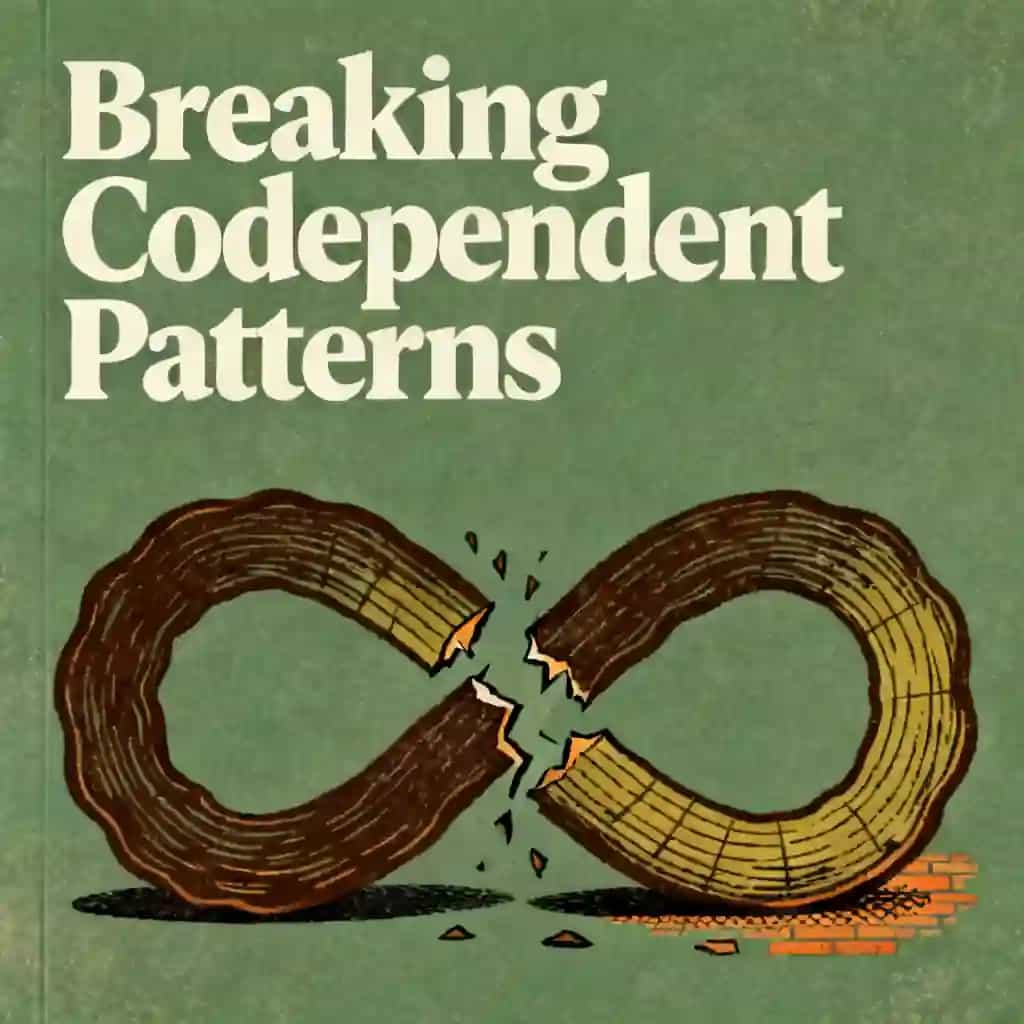
Have you ever found yourself constantly putting others' needs before your own, feeling responsible for everyone else's happiness, or staying in relationships that drain your energy? If so, you're not alone. Krystal Mazzola's groundbreaking book "The Codependency Recovery Plan" has become a lifeline for millions struggling with these exact patterns. This practical guide has garnered praise from psychology experts and celebrities alike, with figures like Oprah Winfrey and Brene Brown citing its transformative approach to healing relationship patterns. What makes this book particularly powerful is Mazzola's personal journey-having grown up in an alcoholic, abusive home, she intimately understands the path from codependent patterns to healthy interdependence. Her six-step framework has revolutionized how therapists approach relationship healing, making this one of the most influential psychology books of the past decade. But what exactly is codependency, and how can we break free from its grip?
Chapitre 2
The Hidden Epidemic: Understanding Codependency's Roots
Codependency manifests as an imbalanced relationship dynamic where one person consistently gives beyond reasonable limits while another takes inappropriately. At its core, codependency involves five key domains that create a perfect storm of unhealthy relating. The need to please others becomes paramount, making it nearly impossible to say "no" without overwhelming guilt - even in simple situations like declining extra work or setting basic boundaries. Self-awareness and self-worth deteriorate as we define ourselves solely through roles and others' judgments, often leading to complete loss of personal identity. Reality becomes distorted as we accept others' perspectives over our own lived experiences, frequently doubting our memories and perceptions of events. Our thinking patterns grow increasingly negative, with perfectionism and all-or-nothing thinking dominating our mental landscape, creating exhausting internal dialogues where nothing is ever "good enough." And perhaps most painfully, we simultaneously crave and fear intimacy, feeling desperate for connection while struggling to maintain healthy relationships, often sabotaging potentially healthy connections due to deep-seated fears of abandonment.
Contrary to early theories that linked codependency solely to alcoholic households, research reveals it develops in any high-stress family environment where emotional needs go unmet. This includes homes affected by mental illness, chronic physical illness, rigid religious beliefs, workaholism, or emotional unavailability. Family systems expert Virginia Satir identified that troubled families typically feature low self-worth, rigid rules, and unclear communication-the perfect breeding ground for codependent patterns. These families often maintain a facade of normalcy while harboring toxic dynamics beneath the surface. Children in these environments experience profound invalidation through minimized emotions and denial of their core sense of self. Messages like "I love you but I don't like you" or "You're too sensitive" communicate fundamental brokenness, while unrealistic expectations demand impossible perfection. The child learns that their worth is tied exclusively to their ability to meet others' needs while ignoring their own.
The wounds of emotional neglect run particularly deep, creating lasting impacts that affect all future relationships. Even physically present parents can be emotionally absent, leaving children to develop a false belief that they're fundamentally unlovable. This emotional abandonment creates a desperate need to prove one's worth through caretaking and people-pleasing-the hallmarks of codependency that often persist well into adulthood unless consciously addressed. The child learns to become hypervigilant to others' moods and needs, developing an almost supernatural ability to read subtle emotional cues while completely losing touch with their own emotional reality. This pattern of self-abandonment becomes so ingrained that many codependents struggle to identify basic feelings or needs well into adulthood, creating a cycle of emotional dysfunction that can span generations unless intentionally broken through awareness and healing work.
Chapitre 3
Family Roles: The Prison of Expectations
Within troubled families, rigid roles emerge that serve to maintain the status quo rather than support authentic development. These roles become prisons of expectation that shape how we relate to ourselves and others throughout life. The Enabler learns early to suppress their own feelings to support others, often functioning as a surrogate parent while internalizing shame for failing to perfectly care for everyone-an impossible standard even for adults. The Hero becomes the family's golden child who seemingly can do no wrong, learning they must remain charming and pleasing to maintain family pride.
The Scapegoat absorbs the family's emotional hostility, becoming the designated "problem child" despite often being the truth-teller who might expose family secrets like abuse or addiction. The Lost Child functions as an emotional orphan-invisible and neglected, providing relief to the family because "no one needs to worry about them." Without the intimate feedback necessary for identity formation, Lost Children often grow up disconnected from their authentic selves. The Mascot provides comic relief but is viewed as weak and immature, masking genuine feelings with humor which causes others to not take them seriously.
These roles create specific relationship dynamics within families that further entrench codependency. Parent-parent codependency occurs when one parent becomes fixated on keeping their partner happy at all costs, often at the expense of their children's needs. Parent-child codependency emerges when a parent subconsciously uses their child to meet their own emotional needs, or when children must assume parental responsibilities due to a parent's addiction or mental illness. Even sibling relationships can become codependent when one child develops an excessive sense of responsibility toward a brother or sister.
Breaking free from these roles triggers profound fears-the fear of being fundamentally inferior without our caretaking role, the terror of abandonment if we stop people-pleasing, and the crushing guilt that comes with setting boundaries. Yet recovery requires learning to detach-understanding that we cannot change others, that we can only solve our own problems, that caretaking doesn't define our worth, and that our way may not be the right way for others.
Chapitre 4
Rediscovering Your Authentic Self
Many codependents feel they've lost themselves or never knew who they truly were. Like Caroline, who feels reduced to a service role for her family, they've abandoned self-care and connection with friends, filling emptiness with external validation and unhealthy coping mechanisms. The good news is that our authentic self is never truly lost-it becomes hidden under layers of stress, pain, and trauma. Recovery begins with reconnecting to our innate wisdom through mindfulness practices that help us hear our true voice beneath the noise of codependent patterns.
A practical first step involves examining negative behavioral patterns, which offers concrete starting points for change. While changing thoughts or beliefs can feel overwhelming, behavioral changes are more tangible. For example, if you habitually say yes when wanting to say no, practice saying "Let me think about it" as a step toward self-respect. Approach this inventory with curiosity rather than self-criticism, recognizing these behaviors developed as responses to painful experiences.
Identifying authentic needs and wants is equally crucial for self-discovery. Basic needs (food, safety, shelter, sleep) must be met before pursuing higher fulfillment, as Maslow's hierarchy demonstrates. While wants aren't necessary for survival, they add joy and satisfaction to life. Many struggle to distinguish between authentic desires and what their "persona" believes they should want. Give yourself permission to experiment with activities until you discover what truly resonates with you, even if it contradicts what your ego says is valuable or productive.
Even those raised in rigidly codependent families typically discovered authentic passions in childhood or adolescence. Reconnecting with these early loves helps you "come home" to yourself. The emphasis is on play-having fun without needing to produce something tangible-which reduces stress, encourages creativity, and promotes self-connection. If these passions feel distant, look through old photos, mementos, or listen to music from your youth to reawaken memories of who you truly are beneath layers of codependency.
Chapitre 5
Rewriting Your Story
We create stories to make sense of our experiences, but these narratives often reinforce negative core beliefs while discarding contradictory evidence. By recognizing that you have codependency rather than being defined by it, you can externalize the problem and fight it instead of attacking yourself. This separation allows you to see neglected aspects of your authentic self and reconstruct healthier stories about who you truly are and your inherent worth beyond what you do for others.
Humans naturally create cohesive narratives from personal experiences, but these stories often form around negative beliefs. Like Caroline, who believed she existed only to serve others after becoming her family's caretaker at age eight when her mother became paraplegic, these narratives can become self-destructive. Our stories feel like absolute truth because we selectively remember evidence that supports our core beliefs while discarding contradictory information.
A crucial insight is understanding that you are not the problem-you have codependency, but codependency doesn't define you. This externalization helps fight the problem rather than attacking yourself. Visualizing codependency as something separate (like a "depression cockroach") allows you to recognize when codependent thoughts arise and challenge them as not reflecting your authentic self.
Externalizing codependency creates space to notice neglected aspects of yourself. Like recognizing your strength as a "goddess warrior" after surviving childhood abuse, you can challenge limiting beliefs by adopting new perspectives. Someone who feels inherently "invisible" might recall a friend's parents who showed genuine interest, revealing that their narrative of being universally overlooked isn't entirely accurate.
Brene Brown defines shame as "the intensely painful feeling or experience of believing that we are flawed and therefore unworthy of love and belonging." Acknowledging codependent behaviors can trigger shame, but fighting shame with self-criticism only fuels pain-like fighting fire with gasoline. The antidote is self-compassion. Shame convinces us we're not good enough as our imperfect selves, driving us toward impossible perfectionism and people-pleasing. These shame-based beliefs-"I must be accepted by everyone" or "I cannot make mistakes"-create anxiety and misery.
Chapitre 6
The Revolutionary Act of Self-Care
Early recovery requires shifting focus from others to yourself-a revolutionary act for codependents. While ideal for both people in a relationship to change together, this isn't always possible. Your partner may not recognize problems or support your efforts to change, possibly even scapegoating you as the problem. Remember you can't change them, but you can continue your journey of self-care and healing regardless.
Self-care can be challenging early in recovery as self-neglect is a hallmark of codependency. Begin with fundamentals: sleep, food, exercise, and routine medical care. Diet and exercise can shift mood immediately, allowing clearer thinking and behavioral changes. The gut acts as our "second brain" with 95 percent of the body's serotonin found there, affecting mood, sleep, and memory.
Self-care isn't selfish or indulgent but honors natural life rhythms-rest and play are as crucial as producing. Without it, codependents often experience frequent illness from self-neglect. Like a car needs maintenance to avoid breakdown, you deserve mental, emotional, and physical health through proper self-care.
A major barrier to self-care is not knowing what brings us joy. Self-care nourishes our whole self-social connections, mental stimulation, and spiritual practices. Initially, we may need time to discover what we enjoy beyond work, like cooking, music, or gardening. Small pleasures matter too-wind chimes, beautiful artwork, or scented candles. Integrating these elements into daily life provides ongoing nourishment.
Recovery involves shifting focus from what's not working to what's already good. Studies show gratitude improves happiness, reduces stress, and enhances relationships. Keeping a gratitude journal-listing three things daily-helps notice life's positives, from kind strangers to small pleasures. Mindfulness cultivates joy through present-moment awareness of positives. When rumination begins, challenge yourself to find good in any situation-the comfort of your clothes during a boring meeting, or the softness of fabric against skin.
Chapitre 7
Building Boundaries: Your Protective Fence
Establishing healthy boundaries transforms our lives like a fence around a house-protecting us while still allowing others in. In codependency, we swing between having no boundaries (letting others walk over us) and completely disconnecting. Healthy boundaries protect us so we can develop self-respect and self-love.
To identify our boundaries, we must pay attention to feelings of resentment, physical sensations in our body, and recognize what truly works for us versus what doesn't. Feelings of resentment or statements like "I can't stand it" signal a boundary violation. Our bodies provide valuable clues-a dropping stomach or tightening chest when someone suggests an arrangement that doesn't meet our needs indicates misalignment with our boundaries.
People with healthy boundaries know they bring value to relationships simply by being themselves. The foundation of their relationships isn't duty, obligation, or desperation. While early in recovery it's common to feel that setting limits is unkind, respecting boundaries is actually the most loving thing we can do. It's honest and prevents building unfair resentment toward others.
Boundaries reflect our personal values and perspectives of truth, making them unique to each person. They can be flexible depending on relationships, contexts, and how we're feeling. Material boundaries concern how we feel about others using our possessions and how our money is handled. Physical boundaries involve our body, including safety, affection, and comments about our appearance. Mental and emotional boundaries acknowledge our right to make our own choices, have our own reality, and experience our own emotions regardless of others' reactions. Sexual boundaries vary depending on relationships, timing, and settings, but fundamentally honor that we never owe anyone our sexuality.
Asserting boundaries requires self-awareness, commitment to self-respect, acknowledgment of our inherent worthiness, and effective communication. Many codependents rely on passive or passive-aggressive communication rather than being clear and direct. Setting boundaries is liberating and ultimately takes less emotional energy than coping without them. When asserting boundaries, avoid lengthy explanations or apologies. Boundaries are most effective when succinct and timely. For example, if someone makes a hurtful joke about your intelligence, simply state, "Please don't joke about my intelligence; it hurts my feelings."
Chapitre 8
Communication: The Bridge to Connection
Communication involves exchanging information through what we say, hear, and observe. When communication breaks down, participants often leave feeling misunderstood. Codependents often fear their emotions will burden others, developing indirect communication patterns. They avoid discussing thoughts and feelings, believing their perspective might cause problems. This passive approach becomes automatic when we learn to minimize our concerns even to ourselves.
Fearing rejection if they ask directly for needs to be met, codependents may resort to passive-aggressive communication-dropping hints while expecting others to guess their needs. When others inevitably guess incorrectly, passive-aggressive communicators express resentment through behaviors like eye-rolling while insisting everything is fine.
Stifling feelings over time can lead to explosive, aggressive behavior when we can no longer contain our emotions. John Gottman's research identified four behaviors that predict divorce: criticism, contempt, defensiveness, and stonewalling. Criticism differs from necessary negative feedback by using absolutes like "always" or "never" that label someone as universally wrong.
Gaslighting attempts to control others by confusing them about reality through lying or denying previous actions despite evidence. Codependents, already struggling with unclear reality, may tolerate this behavior longer than others, reinforcing confusion and shame. The gaslighter implies that questioning them stems from the victim's flaws, as when someone calls their partner "paranoid" instead of validating legitimate concerns.
To maintain open communication, we must recognize what triggers our passive, passive-aggressive, or aggressive communication patterns. By identifying personal triggers-certain people, situations, or times of day that elicit negative responses-we can develop strategies to manage them effectively. Physical issues like hunger, sleep deprivation, or pain can significantly impair our ability to communicate healthily.
Effective communication occurs when we clearly state what we want, actively listen, and willingly negotiate our needs and perspectives. Interdependent communication has no ulterior motives-we state our desires while accepting others may not fulfill them. Assertive communication requires honesty about who we are and what we need, allowing us to live with integrity by saying what we mean and meaning what we say.
Nonviolent communication (NVC), developed by Marshall Rosenberg in the 1960s, provides an effective alternative to passive-aggression or aggression during disagreements. The model includes four components-observation, feeling, needs, and request-structured as: "When I see [observation without judgment], I feel [emotion] because my need for [personal need] is unmet. Would you be willing to [request]?" This approach helps the other person remain less defensive than when faced with attacks or criticism.
Chapitre 9
The Courage to Be Intimate
Intimacy involves closeness and friendship that extends beyond just romantic relationships. In recovery, we often simultaneously crave and fear intimacy, as negative beliefs about our worth make us fear rejection. The path to healthy intimacy requires removing our masks and revealing our authentic selves, despite the vulnerability this creates.
Before recognizing our value, we often hide our true selves to avoid vulnerability. We might use defensive communication styles-shutting others out, being defensive, or showing contempt-as armor. These tactics make us feel less exposed but damage relationships. True intimacy requires risking vulnerability by removing our masks so others can recognize our authentic selves.
Touch is essential for human wellbeing yet requires interdependence since we cannot fully meet this need alone. Our culture often overemphasizes affection as primarily sexual or romantic, especially for men, but nonsexual touch provides crucial comfort during difficult times. Research shows that loving touch benefits human development from infancy through adulthood, improving cognitive and executive functions.
Revealing our authentic selves can be terrifying in early recovery. Intimacy-which can be thought of as "into me you see"-requires vulnerability that feels dangerous when codependency has taught us we're unworthy. The fear that "if you see who I really am, you'll reject me" can be paralyzing, but ultimately, living authentically with healthy boundaries requires less energy than maintaining facades.
When we don't value ourselves, we often push away those who treat us with respect and kindness. We might find it easier to spend time with people who treat us poorly because we share a common enemy: ourselves. Learning to let love in takes courage, especially since our most beautiful moments can activate the most vulnerability, as Brene Brown discovered.
Experiencing intimacy is fundamental to good mental and physical health. When we establish secure attachments-trusting others will be there for us and genuinely care-we become more self-confident, take healthy risks, and maintain better focus in our lives. Attachment theory suggests our desire to belong is both a physical and emotional need. Evolutionarily, humans survived better in communities, developing physiological systems that create calm when connected and distress when disconnected.
Unlike pleasurable solitude, loneliness is painful disconnection that can occur even when surrounded by others. Research by Naomi Eisenberger found that social isolation activates the same brain areas as physical pain. Loneliness damages health-studies show lonely husbands married to contemptuous wives experience more illness, and meta-analyses reveal loneliness carries a greater mortality risk than obesity. Loneliness is literally deadly.
Chapitre 10
The Journey Forward: Interdependence as Freedom
Recovery from codependency is possible with consistent commitment to all five steps, which work together to keep us fully awake and conscious in our lives. Though no step is more important than others, focusing on self-care first provides the strength needed for the remaining steps.
Recovery requires becoming firmly rooted like a tree, grounded in who we are regardless of life's challenges. Self-connection through mindfulness practices like deep breathing, yoga, meditation, or journaling helps us hear our true selves. Self-discovery is ongoing throughout life, allowing us to live with integrity-true wholeness-and offer genuine generosity to others.
Daily self-care nourishes us for interdependent living. There's no perfect approach, and occasional relapses into unhealthy coping aren't failures but reminders of self-neglect. Self-care isn't luxury but natural necessity-our bodies need both activity and rest, our minds both problem-solving and creative play.
Setting boundaries is the cornerstone of recovery, preventing resentment and overwhelm. Stay mindful of what feels good versus what leaves you feeling violated. Setting boundaries takes time and courage, and they naturally evolve with different relationships. Remember: boundaries aren't selfish but self-protective and loving toward others, showing them how to have healthy relationships with you free from resentment.
Codependency typically involves indirect or controlling communication. Recovery means practicing assertive communication-honestly and kindly expressing thoughts, feelings, and needs while respecting others' perspectives. We approach relationships as team efforts focused on mutual support rather than "winning."
Seeking connection isn't codependent but fundamental to healthy interdependence. Research shows social connection may be as important to health as proper nutrition and exercise. All relationships have nurturing potential-not just romantic ones. We benefit from feeling we belong to our community, even through simple interactions with neighbors. Interdependency requires balance-give-and-take and mutual care.
Recovery isn't a destination but an ongoing commitment to the life we want. Change is a slow process without perfect recovery. Mistakes are essential learning opportunities that help us problem-solve and improve. Remember: progress, not perfection. Some fear regressing to their worst codependency, but that's impossible-your recovery work has inherently changed you. As Heraclitus said, "No man can cross the same river twice, for it's not the same river and he's not the same man."
We live in a world where we're sometimes expected to stay quiet to keep others comfortable. As Madeleine Albright said, "It took me quite a long time to develop a voice, and now that I have it, I am not going to be silent." Claiming your power is revolutionary. You're never stuck-you always have options. The path from codependency to interdependence isn't easy, but it leads to the most authentic, connected life possible-one where you can both give and receive love from a place of wholeness rather than emptiness.




![Couverture du livre Facing Codependence [ABRIDGED]](/_next/image?url=https%3A%2F%2Fd1y2du6z1jfm9e.cloudfront.net%2Fcovers%2F1d91cc59-653c-487c-bb06-0a03ac09820d%2Fimage_resized.webp&w=1024&q=50)