Chapitre 1
The Eternal Dance of Apollo and Dionysus
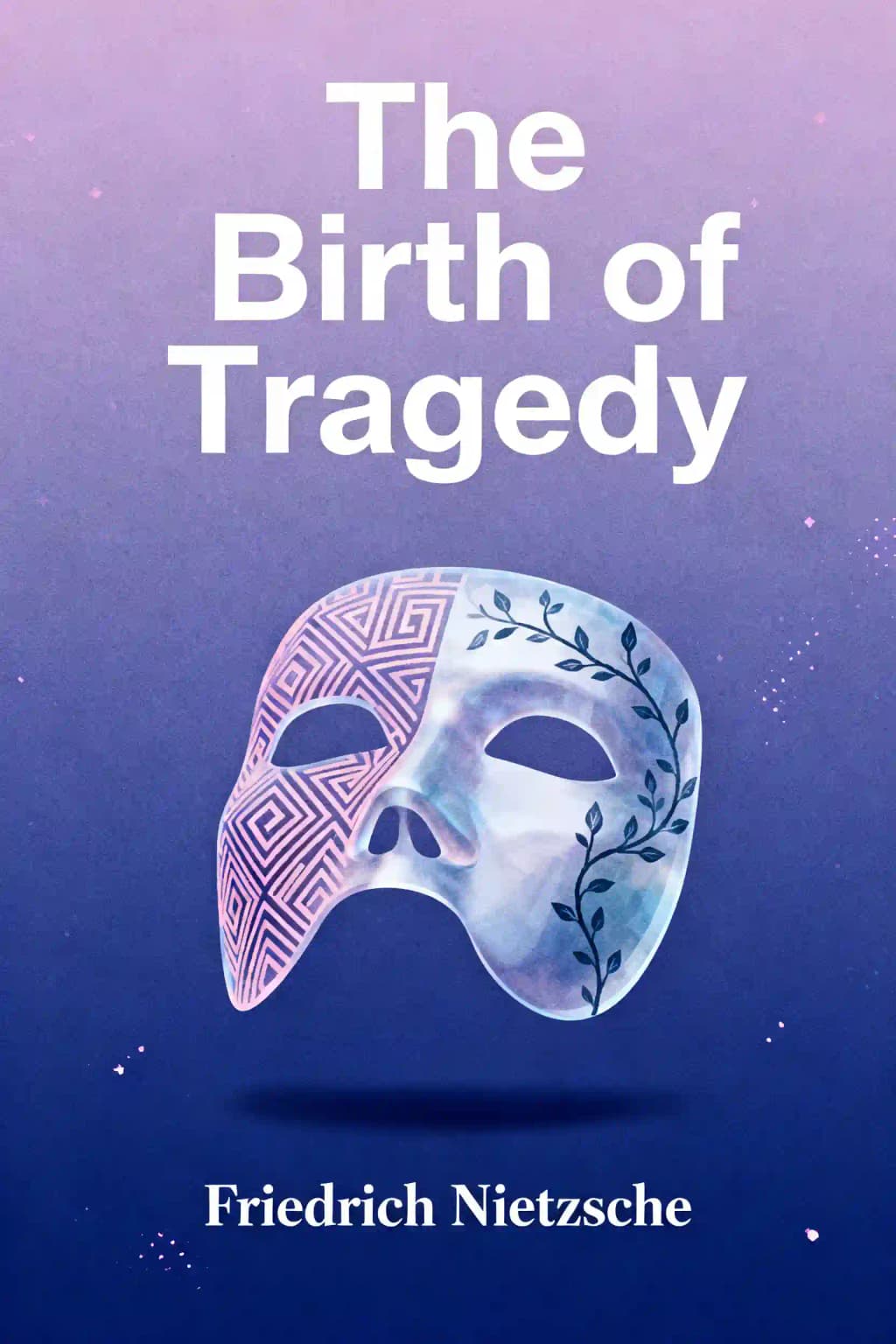
Have you ever wondered why we're drawn to tragedy? Why do we find pleasure in watching the downfall of heroes, in witnessing suffering that should, by all accounts, repel us? This paradox captivated Friedrich Nietzsche, whose first book "The Birth of Tragedy" (1872) revolutionized our understanding of art, culture, and human psychology. Written when he was just 27 years old, this groundbreaking work marked Nietzsche's transition from academic philologist to the philosopher who would later challenge the foundations of Western thought. Despite its academic reception as scandalous, the book's influence has been immense, inspiring artists from Thomas Mann to Michel Foucault. Even today, celebrities like Lady Gaga and Jordan Peterson cite Nietzsche's Apollonian-Dionysian framework as fundamental to understanding creativity. What makes this work so enduring is its radical proposition: that life's deepest truths are accessible not through reason but through art, and that existence itself can only be justified as an aesthetic phenomenon.
Chapitre 2
The Dual Origins of Art: Apollo and Dionysus
At the heart of Nietzsche's vision stands a revolutionary insight: all art emerges from the interplay of two opposing yet complementary forces, which he names after Greek deities. The Apollonian represents form, clarity, individuality, and rational knowledge. Like a dream that feels coherent while we're in it, Apollonian art creates beautiful illusions that make life bearable. This is the realm of sculpture, painting, and epic poetry-arts that create distinct forms and celebrate individual identity.
The Dionysian, by contrast, represents music, intoxication, formlessness, and the dissolution of boundaries. When we lose ourselves in ecstatic dance or become enraptured by music, we experience the Dionysian state where individual identity dissolves into a primordial unity. This dissolution is both terrifying and blissful-we touch something beyond our limited selves, experiencing both the horror of our insignificance and the joy of connection to something greater.
Imagine yourself at a concert where the music overwhelms you completely. Your sense of being separate from others temporarily vanishes; you feel merged with the crowd, the sound, the moment. This is Dionysian rapture. Now contrast this with standing before a perfect sculpture, appreciating its balanced proportions and clear boundaries-this is Apollonian contemplation.
The Greeks, Nietzsche argues, were unique in their ability to balance these forces. Their civilization began with predominantly Apollonian art (like Homer's epics), but they gradually incorporated the Dionysian element through music and tragic drama. The Apollo-worshipping Greeks initially resisted Dionysian cults spreading from Asia, building what Nietzsche calls a "Doric" culture of restraint and form. Yet eventually they recognized that without the Dionysian, their art remained superficial. Only by embracing both impulses could they create their greatest achievement: Attic tragedy.
Chapitre 3
The Birth of Tragedy: When Music Meets Myth
Greek tragedy emerged when the Apollonian and Dionysian forces achieved perfect union. Its origins lay in the dithyramb-a wild, musical chorus performed in honor of Dionysus. This chorus, Nietzsche argues, was tragedy's original form, with the dialogue and individual characters added later as Apollonian elements.
The chorus served a crucial function: it provided what Nietzsche calls "metaphysical consolation." Through music, the chorus expressed the Dionysian insight that despite individual suffering and death, life itself continues unabated. The chorus member, transformed into a satyr (half-man, half-goat), experienced a state beyond ordinary consciousness where social distinctions dissolved and nature's unity was revealed.
This Dionysian insight is profoundly disturbing. Like Shakespeare's Hamlet, who glimpses truths that paralyze action, the person who sees through the veil of individuation risks being overwhelmed by nihilism. Why act at all if individual life is merely a passing illusion? Here enters the Apollonian element: the tragic hero on stage provides a beautiful form, an image that makes the Dionysian wisdom bearable.
The tragic hero-whether Prometheus, Oedipus, or others-is actually a mask for Dionysus himself. All tragic suffering represents the god's dismemberment by the Titans, symbolizing how individuation itself causes suffering. Yet the hero's suffering, presented through Apollonian beauty, allows the audience to experience Dionysian wisdom without being destroyed by it.
Music plays the essential role in this process. Unlike words or images, which can only represent things, music directly expresses the will itself-the underlying reality beneath appearances. As Nietzsche writes, borrowing from Schopenhauer: "Music gives the tragic myth its profound significance." The music generates the myth, translating Dionysian insight into Apollonian images that the audience can comprehend.
This explains tragedy's paradoxical effect: we witness terrible suffering yet emerge feeling elevated, even joyful. The individual hero may be destroyed, but we glimpse the indestructible life force continuing beneath the surface of appearances.
Chapitre 4
The Death of Tragedy: Socrates and Euripides
If tragedy represented the perfect marriage of Apollo and Dionysus, what caused its demise? Nietzsche's answer is startling: Socrates, the father of Western philosophy, killed tragedy through his champion Euripides.
Euripides, the last great tragic poet, fundamentally altered tragedy's nature. Unlike his predecessors Aeschylus and Sophocles, who maintained the balance between Apollonian and Dionysian elements, Euripides subordinated everything to rational understanding. His characters explain their motives explicitly; his plots follow logical causality; his language aims at clarity rather than musical power.
Behind Euripides stood Socrates, whom Nietzsche portrays as a "monstrosity." In normal humans, instinct creates while consciousness merely criticizes. In Socrates, this relationship was inverted-his hypertrophied logical faculty dominated his creative instincts. Socrates believed that "to be beautiful, everything must be intelligible" and that "knowledge is virtue." These principles, which Nietzsche calls "aesthetic Socratism," destroyed tragedy's essence.
The Socratic worldview replaced tragedy's profound metaphysical consolation with shallow optimism. Instead of acknowledging life's inherent suffering and finding redemption through art, Socratic culture believed knowledge could correct the world's flaws. This optimistic delusion gave birth to theoretical man-the scientist, the scholar, the rationalist-who dominated Western culture from Alexandria to the present day.
Consider how this plays out in Euripides' work. His plays begin with explicit prologues that explain the situation clearly, often delivered by gods who guarantee the plot's reality. They end with the deus ex machina-a god descending to resolve conflicts logically. Between these bookends lies what Nietzsche calls "dramatized epic"-a form that looks like tragedy but lacks its metaphysical depth.
The result was that tragedy committed suicide through an "insoluble conflict." Music was driven from the stage, replaced by dialectical dialogue. The chorus, once tragedy's essence, became a mere accessory. Myth, which had provided the symbolic framework for tragedy's metaphysical insights, was destroyed by rational analysis.
Chapitre 5
The Alexandrian Age: Science Without Wisdom
With tragedy's death, Greek culture entered what Nietzsche calls the "Alexandrian age"-a period of scholarship, science, and rationalism without artistic vitality. This culture, named after Alexandria's great library and its scholarly tradition, spread throughout the ancient world and continues to dominate modern civilization, shaping our educational institutions and cultural values.
The Alexandrian man is fundamentally a librarian and critic rather than a creator, exemplified by the modern academic who specializes in analyzing others' works rather than producing original insights. He accumulates knowledge, catalogs past achievements, and believes that education consists of stuffing the mind with facts. This manifests in modern education's emphasis on standardized testing, memorization, and quantifiable metrics. He values clarity, logic, and utility above all else, often dismissing anything that cannot be measured or empirically verified. Most importantly, he believes that through knowledge, all of life's problems can be solved - a belief that drives our technological optimism and faith in scientific progress.
This optimistic delusion drives modern science, which Nietzsche does not reject entirely but sees as limited. While acknowledging science's practical achievements, he identifies its fundamental contradiction: Science cannot justify itself through its own methods-it requires an unexamined faith that truth is valuable and attainable. This faith is actually a form of metaphysics, though scientists rarely recognize it as such. The scientific method itself rests on unprovable assumptions about the nature of reality and the value of knowledge.
The Alexandrian age produces a distinctive type of art: opera. Nietzsche argues that opera emerged from an "unaesthetic need"-the desire to hear words clearly over music, reflecting the period's privileging of rational understanding over emotional experience. In opera, music becomes subordinate to text, serving merely as pleasant accompaniment rather than expressing Dionysian truth. This reverses the proper relationship, where music should generate text rather than follow it. Modern musical theater and film soundtracks often continue this tradition, using music primarily to support narrative rather than express deeper truths.
Modern culture, trapped in Alexandrian optimism, faces a crisis as science reaches its limits. When knowledge confronts its own boundaries-as in Kant's philosophy, which demonstrated that ultimate reality remains inaccessible to reason-the optimistic worldview trembles. Science cannot answer the fundamental questions of existence: Why suffer? Why live at all? Without myth or art to provide meaning, modern humans face a void. This crisis manifests in contemporary nihilism, depression, and the search for meaning in consumerism and entertainment. The Alexandrian age's promise of complete understanding through knowledge proves hollow, leaving humanity spiritually impoverished despite material abundance.
Chapitre 6
The German Spirit and the Rebirth of Tragedy
Despite this bleak diagnosis, Nietzsche offers hope through what he calls the "rebirth of tragedy" in German culture. This rebirth comes through music-specifically, the music of Bach, Beethoven, and above all, Richard Wagner.
Unlike the Italians, whose opera subordinated music to text, German composers maintained music's Dionysian power. Bach's chorales, Beethoven's symphonies, and Wagner's music dramas all express the metaphysical truth that words alone cannot convey. In Wagner's "Tristan und Isolde," Nietzsche finds the modern equivalent of Greek tragedy-a work where music expresses the Dionysian insight into life's suffering while beautiful forms make this insight bearable.
The German spirit, Nietzsche argues, has a special affinity with the Greek. Both cultures possess depth, seriousness, and a capacity for myth that the more "logical" Latin cultures lack. Just as the Greeks created tragedy as a response to their profound insight into existence's horror, the Germans might create a new tragic art form to counter modern nihilism.
This cultural renewal requires myth. Without myth, a culture loses its creative force and unity. Modern education, focused on historical knowledge and abstract concepts, has stripped away the mythic horizon that gives meaning to existence. The German spirit must reconnect with its mythic roots, rejecting foreign (especially French) influences to rediscover its authentic nature.
Music provides the path to this renewal. Unlike concepts or images, music speaks directly to the will, bypassing the intellect to touch something deeper. When combined with myth-as in Wagner's operas based on Germanic legends-music can recreate the conditions that gave birth to Greek tragedy, providing metaphysical consolation for a disenchanted world.
Chapitre 7
Beyond Good and Evil: Art as Life's Justification
Nietzsche's most radical claim appears almost casually: "existence and the world seem justified only as an aesthetic phenomenon." This statement challenges the moral foundations of Western thought, suggesting that life's value lies not in goodness or truth but in beauty. This aesthetic perspective represents a fundamental shift from traditional philosophical approaches that seek to justify existence through moral or rational frameworks.
The world, viewed honestly, appears neither moral nor rational. It contains immense suffering, apparent injustice, and meaningless destruction. Natural disasters strike indiscriminately, species go extinct, civilizations collapse, and individuals endure seemingly pointless hardships. Neither religion's promise of divine purpose nor science's mechanical explanations can fully justify this reality. Art alone offers a perspective from which life becomes valuable despite its horrors-not by denying them but by transfiguring them into aesthetic experience, much as a tragedy transforms suffering into sublime beauty.
This aesthetic justification transcends conventional morality. The truly Dionysian view is "beyond good and evil," recognizing that creation requires destruction, that joy and suffering are inseparable aspects of the same reality. Like a child building and destroying sand castles, the universe creates and annihilates without moral purpose, in a play of forces that can only be appreciated aesthetically. This cosmic dance of creation and destruction finds its parallel in natural cycles: forests burn to regenerate, stars explode to create new elements, cultures decline so others may rise.
Nietzsche illustrates this through musical dissonance. In music, dissonant notes create tension that makes resolution satisfying. A symphony without discord would be flat and uninteresting; it requires the interplay of harmony and dissonance to achieve its power. Similarly, life's dissonances-suffering, conflict, destruction-contribute to its overall aesthetic value. Without them, existence would lack depth and intensity. The greatest works of art often emerge from periods of turmoil and struggle, just as personal growth often follows periods of difficulty.
This perspective offers liberation from both religious moralism and scientific nihilism. Instead of seeking meaning beyond life (as religion does) or reducing life to meaningless mechanisms (as science tends to do), the aesthetic view affirms life precisely as it is, with all its terrors and joys. Art doesn't merely represent life; it transforms our relationship to it, allowing us to say "yes" even to suffering. This affirmation isn't naive optimism but a deeper acceptance that encompasses both light and shadow. Through artistic creation and appreciation, we become co-creators in life's ongoing aesthetic drama, participating in what Nietzsche calls "the eternal joy of becoming."
The aesthetic justification extends beyond traditional art forms to encompass life itself as a creative act. Every individual has the potential to transform their existence into a work of art through conscious style, choice, and the cultivation of a unique perspective. This approach treats life not as a problem to be solved but as a phenomenon to be shaped and experienced in all its tragic and joyful dimensions.
Chapitre 8
The Self-Creating Human: Becoming Who You Are
Beyond his analysis of Greek tragedy, Nietzsche's book contains the seeds of his later philosophy of self-creation. The Apollonian-Dionysian framework applies not just to art but to human development, serving as a metaphor for the fundamental tensions within human nature and personal growth.
Each person contains both impulses: the Apollonian desire for form, boundaries, and distinct identity, and the Dionysian longing for dissolution, connection, and transcendence. The Apollonian manifests in our need for order, rationality, and individual identity - seen in our career aspirations, social roles, and personal boundaries. The Dionysian emerges in moments of ecstasy, whether through music, dance, love, or spiritual experience, when we feel ourselves merging with something greater than our individual selves.
A life dominated entirely by Apollo becomes rigid and superficial, leading to an existence of empty formalities and superficial achievements without depth or passion. One surrendered completely to Dionysus risks madness and self-destruction, losing all sense of self and stability. The challenge is to integrate these opposing forces-to create a self that has both structure and depth, both boundaries and the capacity to transcend them. This integration might manifest in an artist who maintains disciplined practice while accessing deep creative flow, or in a leader who combines strategic thinking with passionate vision.
This integration doesn't happen automatically or easily. Like the Greeks, who had to struggle to incorporate the Dionysian element into their Apollonian culture, we must consciously work to balance these forces in ourselves. This requires courage-the willingness to face life's terrors without flinching, to look into the abyss without being consumed by it. It means embracing both our rational capabilities and our emotional depths, our need for structure and our yearning for transcendence.
The result of this struggle is what Nietzsche later called "becoming who you are"-creating a self that expresses your unique potentialities while connecting you to something larger than yourself. This self-creation is fundamentally aesthetic rather than moral; you shape yourself as an artist shapes a sculpture, guided by taste rather than rules. It involves continuous experimentation, refinement, and the courage to break and remake yourself. The goal is not to reach a final, fixed state but to engage in an ongoing process of growth and transformation, always balancing structure with fluidity, individual identity with universal connection.
Chapitre 9
The Wisdom of Silenus: Facing Life's Horror
At the heart of Nietzsche's book lies a disturbing story from ancient Greek mythology. When King Midas finally captured the woodland spirit Silenus (the drunken companion to Dionysus) and asked what was best for humans, Silenus laughed bitterly before delivering his chilling reply: "The very best is completely beyond your reach: not to have been born, not to be, to be nothing. But the second best is-to die soon." This stark pronouncement encapsulates what Nietzsche saw as the deepest truth about human existence.
This "wisdom of Silenus" expresses the quintessential Dionysian insight into life's fundamental suffering. Individual existence entails limitation, struggle, and inevitable destruction. Every living being is trapped in a cycle of desire, temporary satisfaction, and renewed want. We are conscious of our mortality yet powerless to escape it. We seek meaning but find ourselves in an apparently meaningless universe. From this perspective, non-existence seems preferable to being - a conclusion that anticipates much of modern existentialist thought.
The Greeks, Nietzsche argues, were unique in their full recognition of this terrible wisdom. Unlike modern optimists who deny suffering's depth, the Greeks looked unflinchingly at life's horror - the arbitrary nature of fate, the inevitability of death, the frequent triumph of injustice. Yet instead of surrendering to nihilism, they created art that transfigured this horror into beauty. This aesthetic transformation became their supreme cultural achievement and their gift to civilization.
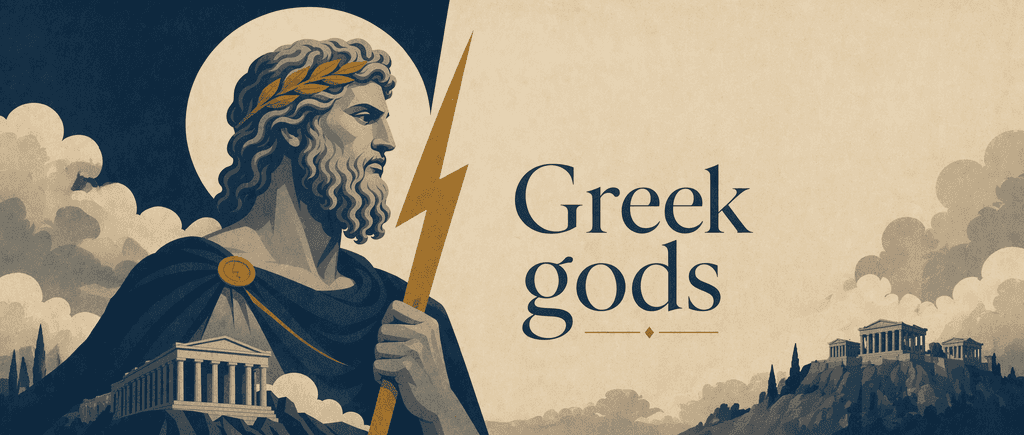
Their first response was the creation of the Olympian pantheon-gods who justified human existence by living it themselves. These deities weren't moral exemplars but rather amplified versions of humanity, experiencing the same joys and sorrows as mortals but with greater intensity. Zeus's infidelities, Hera's jealousy, Ares' bloodlust - all reflected and validated human nature. Later, they created tragedy, which acknowledged suffering's reality while providing metaphysical consolation through music and myth. Works like Sophocles' "Oedipus Rex" or Aeschylus's "Oresteia" showed humanity crushed by fate yet achieving dignity through endurance.
Modern culture, by contrast, evades this wisdom through various forms of optimism-religious belief in divine justice, scientific faith in progress, moral conviction that virtue brings happiness. Christianity promises heavenly compensation for earthly suffering. Science suggests all problems are solvable through reason. Liberal humanism preaches the inevitable triumph of good. These evasions, Nietzsche contends, prevent us from creating truly profound art or finding genuine consolation. They represent what he calls "Socratic optimism" - the delusion that understanding reality will make it less terrible. Only by recovering the Greeks' courage to face life's horror directly, without flinching or seeking escape in false comfort, can we hope to match their cultural achievements and create art that truly justifies existence.
Chapitre 10
The Eternal Return: Life as Aesthetic Experience
In the book's final sections, Nietzsche introduces what would become one of his most profound philosophical concepts: the doctrine of eternal return-the thought that everything recurs eternally, that we will live the same life countless times over. This idea first emerges in his description of the Dionysian state as one where we recognize "the eternal joy of becoming" despite all destruction. The concept represents not just a cosmological theory but a thought experiment that challenges our very relationship with existence.
The eternal return fundamentally transforms how we experience time and decision-making. Instead of seeing moments as merely passing away into nothingness, we must recognize each instant as eternally significant, eternally recurring. Every choice becomes magnified in importance-if you choose to do something, you are choosing to do it not just once but infinitely many times. This perspective intensifies life, making each experience, whether mundane or extraordinary, infinitely weighty. Even small decisions take on cosmic significance when viewed through this lens.
Crucially, Nietzsche presents this as an aesthetic rather than moral view of time. We affirm life's eternal recurrence not because it leads to moral improvement or cosmic justice, but because life itself, with all its terrors and ecstasies, is beautiful enough to be worth living again and again. This represents a radical departure from traditional philosophical and religious views that seek to justify existence through moral or metaphysical systems. Instead, Nietzsche proposes that life needs no justification beyond its own aesthetic value.
This affirmation represents the ultimate synthesis of Apollonian and Dionysian wisdom. We recognize both the beauty of individual forms (Apollo)-the structured, ordered aspects of existence-and the eternal flux that creates and destroys them (Dionysus). The eternal return teaches us to say "yes" to both creation and destruction, both joy and suffering, both individuality and its dissolution. This complete affirmation includes even life's most terrible aspects, transforming them into essential elements of existence's beauty.
The eternal return also changes how we view suffering itself. Rather than seeing it as something to be merely endured or eliminated, it becomes part of life's artistic whole. The final image Nietzsche presents is of an Athenian who, having experienced tragedy, might say: "How much this people must have suffered to become so beautiful!" This profound insight suggests that true beauty emerges not from ignoring or avoiding suffering but from transforming it through art into something worthy of eternal affirmation. Just as Greek tragedy transformed terrible myths into sublime art, we are challenged to transform our own lives into something we would willingly live again and again.
This concept ultimately serves as both a test of life-affirmation and a principle for living. It asks us whether we can embrace not just the pleasant aspects of life, but its entirety-including its pain and horror-as something worth eternally repeating. The truly life-affirming individual answers "yes" to this challenge, transforming even life's greatest difficulties into aspects of its beauty.