Chapitre 1
The Marketing Maverick's Blueprint: Cutting Through the Noise
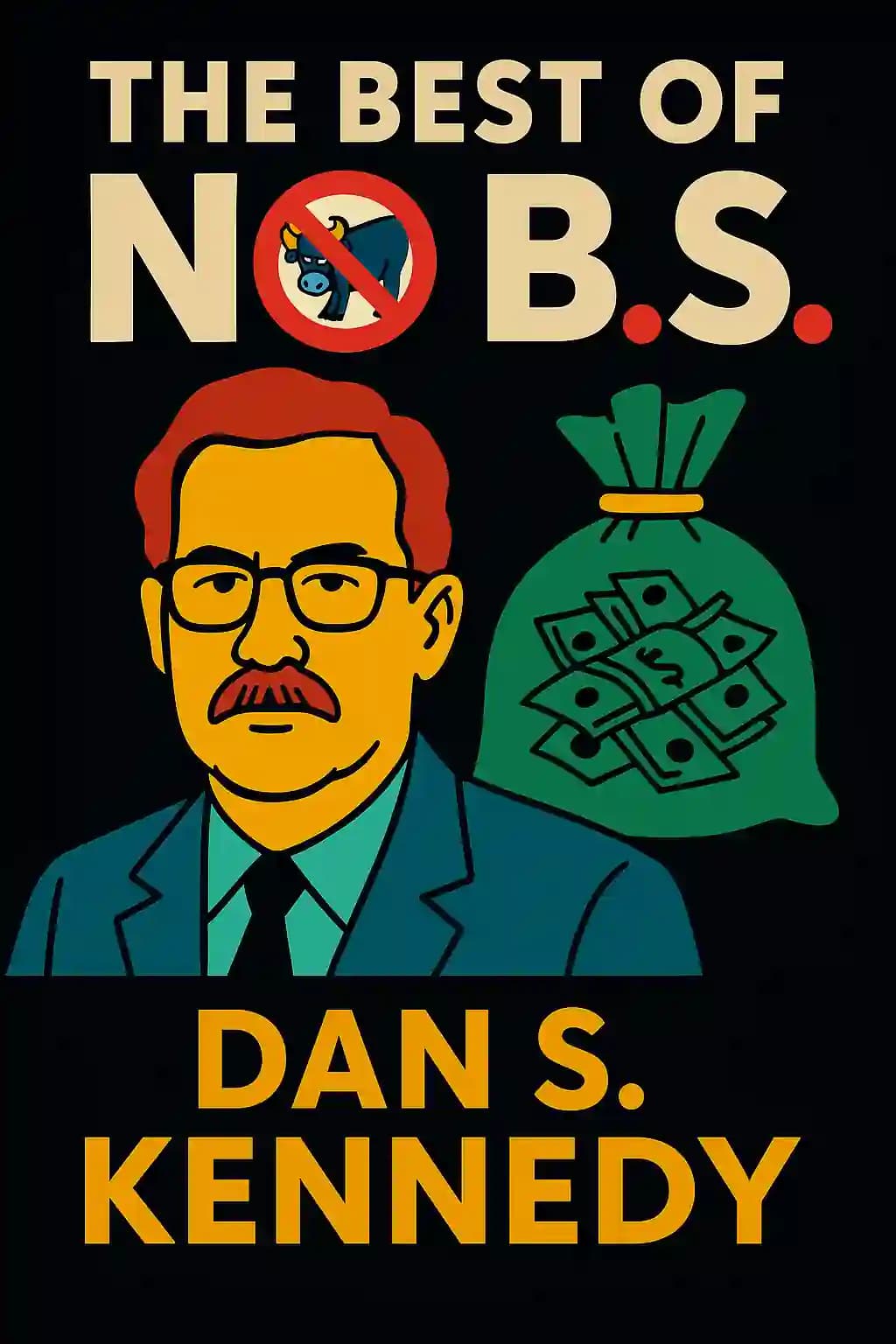
Ever wondered why some businesses thrive while others barely survive? Dan Kennedy, the self-proclaimed "highest-paid direct-response copywriter on the planet," has built his career on a simple premise: most marketing advice is pure garbage. In his no-nonsense style that has earned him the nickname "Professor of Harsh Reality," Kennedy delivers a wake-up call to business owners trapped in ineffective marketing cycles. The Best of No B.S. has become required reading for entrepreneurs seeking to escape mediocrity, with celebrities like Gene Simmons and Shark Tank's Daymond John publicly endorsing Kennedy's methods. What makes this compilation particularly powerful is its staying power - these principles have remained effective through economic booms and busts, technological revolutions, and changing consumer behaviors. Kennedy's contrarian approach has influenced an entire generation of marketers who've collectively generated billions in revenue by rejecting conventional wisdom and embracing his direct-response principles instead.
Chapitre 2
The Direct Marketing Revolution: Making Every Dollar Accountable
Traditional advertising is a black hole for small business owners - you pour money in with little idea of what comes out. This explains why so many entrepreneurs feel like "advertising victims," trapped in cycles of ineffective marketing based on what Kennedy calls "marketing incest" - copying what competitors do rather than seeking proven approaches from outside their industry. This mindset leads businesses to waste thousands on glossy ads in local magazines or sponsorships that generate no measurable return.
The solution? Direct marketing - a discipline derived from mail-order principles that demands accountability from every marketing dollar spent. While major corporations like Guthy-Renker and Fisher Investments have built billion-dollar empires on these principles, most local businesses remain oblivious to their power. Companies like Omaha Steaks and Publishers Clearing House have used direct marketing to dominate their markets, proving these methods work across industries.
Consider the Midwestern dental practice that implemented Kennedy's recommendation of sending 17 follow-up letters to prospects who didn't immediately proceed with treatment. Though this approach seemed excessive compared to normal practices, it generated six figures in additional annual revenue. Another example is a local real estate agent who increased listings by 300% using a systematic direct mail campaign to expired listings. This exemplifies Kennedy's core philosophy: "follow up until they buy or die" - often using physical mail that can't be easily ignored like emails.
The foundation of direct marketing rests on ten non-negotiable rules that Kennedy insists must govern all marketing activities regardless of media:
1. Always include an offer - specific, compelling reasons to respond
2. Give reason to respond now - genuine urgency or scarcity
3. Provide clear instructions - exact steps for taking action
4. Track and measure results - down to the penny
5. Only use no-cost brand-building - leverage results to build reputation
6. Always follow up - minimum of 7-12 contact points
7. Use strong copy - focus on benefits and outcomes
8. Make ads look like mail-order advertising - proven response formats
9. Let results rule - eliminate anything that doesn't produce
10. Be disciplined with marketing - stick to proven systems
Kennedy warns against new media promoters who dismiss these rules in favor of metrics like "views" or "likes" that can't be deposited in a bank. He cites numerous examples of businesses wasting fortunes on social media campaigns that generated engagement but no sales. His advice is brutally simple: skip any media that can't be used with these rules applied. Whether using direct mail, email, or social media, the key is transforming marketing from a mysterious expense into a predictable investment with measurable returns.
This approach has produced remarkable results across industries - from a chiropractor who grew his practice 40% in six months using targeted direct mail sequences, to an auto repair shop that increased customer lifetime value by 60% through systematic follow-up campaigns. The common thread is replacing hope-based marketing with systems that generate predictable responses.
Chapitre 3
Crafting Irresistible Offers That Drive Immediate Action
The heart of effective marketing isn't clever creativity or brand awareness - it's presenting specific offers that prospects can't refuse. This fundamental distinction separates direct marketers from traditional advertisers who merely talk about themselves without requesting specific action.
Kennedy identifies two fundamental offer types: direct purchase offers that request immediate buying action, and lead-generation offers that identify interested prospects and invite further communication. While direct purchase offers (like "Buy One, Get One Free") are straightforward, they have significant disadvantages: they sacrifice price integrity, train customers to only respond to deals, and can only attract people ready to buy immediately.
The more sophisticated approach Kennedy prefers is lead-generation offers that reduce advertising waste by converting a sales culture to a marketing culture. This approach acknowledges a critical concept called "Threshold Resistance" - the psychological barriers prospects experience when considering an offer.
High-threshold offers (free exams, estimates, seminars) intimidate consumers by requiring uncomfortable commitments or nearly-made decisions. Low-threshold offers, particularly free information delivered by mail or online, create less resistance. Kennedy champions "Information First Marketing" where businesses advertise valuable information rather than themselves - like karate schools offering free reports on bullying, mattress stores providing sleep guides, or IT consultants sharing cybersecurity books.
The most effective approach combines multiple offer types in the same advertisement to capture prospects at different stages of the buying journey. While some customers might "trade down" from immediate purchase to requesting information, Kennedy argues this is outweighed by the increased total response and opportunity to develop more leads.
Just as important as the offer itself is creating genuine urgency. Kennedy identifies hesitation and procrastination as marketing's greatest enemies, noting how people frequently intend to respond but never do - catalog shoppers who fold page corners but never order, TV viewers who note phone numbers but never call. He advises thinking of your prospect as "a gigantic somnambulant sloth" who needs compelling motivation to act now.
Effective urgency comes in two forms: contextual urgency through limited supply, household purchase limits, countdown clocks, and exclusive bonuses; and structural urgency created through group dynamics and visible scarcity - like auctions that make people buy things they wouldn't otherwise purchase for fear of losing out.
Chapitre 4
Clear Instructions: The Missing Link in Marketing Success
Most marketing failures stem from giving confusing directions or no directions at all. Kennedy emphasizes that customers need clear instructions and that anxiety increases when people are uncertain about what to expect. This anxiety manifests in various ways - from abandoned shopping carts online to unreturned phone calls and lost sales opportunities. The clearer your marching orders, the happier your customers will be, and research shows that clear instructions can increase conversion rates by up to 300%.
This principle extends beyond basic "call now" instructions to comprehensive guidance that reduces customer anxiety. For complex products like Proactiv's three-step acne treatment, marketers must "sell" the tolerance for complexity or face high return rates. This involves breaking down processes into digestible steps, using numbered sequences, and providing visual aids when possible. Kennedy demonstrates how detailed directions in marketing materials can dramatically improve response rates, sharing an example where a sales letter with comprehensive instructions (including specific phone numbers, call times, and names of representatives) more than tripled response compared to a simpler "Call 000-000-0000 to place your order" instruction.
Successful implementation requires attention to multiple touchpoints. For instance, a gym membership sale might include precise parking instructions, check-in procedures, locker room locations, and what to bring on the first visit. E-commerce businesses can reduce cart abandonment by clearly outlining shipping times, return policies, and what happens after purchase. Financial services companies often include step-by-step guides for account setup and first-time transactions.
The principle extends to post-purchase instructions as well. Customers quickly become unhappy when presented with complex products without clear guidance. Successful companies add explicit labels like "Read/Listen/Watch This First" to media or even place decals on packaging directing customers to call a recorded message before unpacking. Some businesses create welcome sequences with daily emails for the first week, each focusing on a different aspect of the product or service.
This attention to detail creates a powerful competitive advantage: while most businesses leave customers confused and anxious about what happens next, direct marketers who provide crystal-clear instructions create confidence and trust that translates into higher response rates and greater customer satisfaction. Companies like Apple have built entire brand experiences around clear, step-by-step guidance, from unboxing to setup. Studies show that businesses implementing detailed instruction protocols see up to 40% reduction in customer service inquiries and a 25% increase in customer retention rates.
To maximize effectiveness, instructions should be:
• Sequenced logically
• Written in simple, action-oriented language
• Reinforced across multiple channels
• Tested and refined based on customer feedback
• Updated regularly to address common points of confusion
Chapitre 5
Building Brand Value Without Breaking the Bank
Kennedy isn't opposed to brand-building but insists it should come as a free byproduct of direct-response marketing. His mantra: "buy response, gratefully accept brand-building as a bonus. NEVER buy brand-building and hope for direct response." He warns entrepreneurs against copying big brand advertisers who play with shareholders' money, noting that even established brands can fail (Sears, Holiday Inn, RadioShack). These cautionary tales demonstrate how even billions in brand investment can't guarantee long-term success.
Kennedy reveals the power of "un-branded advertising" - deliberately blind ads that generate stronger response by omitting company identifiers. He cites financial newsletter campaigns that broke records without disclosing company names, like the "EndOfAmerica.com" campaign that drove nearly a million subscribers, and the "Railroad Stocks" promotion that generated over $2 million without revealing the publisher. Sometimes established brands actually suppress response because prospects already know their story - "No mystique, no curiosity." His solution: use blind advertising with fresh promises, then reveal the established brand later in the sales process, after interest is secured.
For personal branding, Kennedy shares lessons from country star Toby Keith, who built a $500 million empire by focusing on a specific, loyal market segment. Keith masterfully integrates his brand across multiple platforms - his concerts function as epic infomercials for his sponsors and products. He drives a Ford truck onstage (part of a multimillion-dollar endorsement deal), promotes his Wild Shot tequila brand, and references his "I Love This Bar" restaurant chain in his performances. This integration creates a seamless experience where entertainment and marketing become indistinguishable.
Keith's approach demonstrates five key personal branding principles: synergy (integrating multiple revenue streams like music, merchandise, and restaurants), platform power (leveraging his audience to promote partners while securing profitable deals), ownership and control (maintaining authority over brand decisions and creative direction), polarization (taking strong political and cultural positions that strengthen core fan loyalty), and prolific output (releasing new music regularly while expanding business ventures).
Kennedy emphasizes that building a vibrant brand requires being extremely prolific, bringing "new" to the table frequently - whether through content, products, or experiences. He strives for omnipresence - having his brand visible everywhere in the customer's environment through multiple touchpoints like newsletters, books, speaking engagements, and digital presence. Beyond emotional bonds, he builds solid "fences" through membership programs, VIP clubs, and automatic recurring payments to maintain brand loyalty. These systematic approaches create what he calls "forced continuity," making it harder for customers to leave while delivering consistent value.
To achieve this without massive budgets, Kennedy advocates for strategic partnerships, joint ventures, and leveraging existing customer relationships. He recommends creating content that can be repurposed across multiple channels and focusing on building direct relationships with customers rather than relying on expensive mass media campaigns.
Chapitre 6
Trust-Based Marketing: The Ultimate Competitive Advantage
In our untrustworthy world where institutions regularly disappoint, the marketer who can "sell trust" before selling products will win big. Trust-based marketing creates both income and equity - transforming each new customer from a mere transaction into a permanent relationship, essentially taking title to an oil well rather than just grabbing money.
Kennedy identifies multiple sources of trust that businesses can leverage: Authority (professional credentials), Affinity (shared background), Credibility (factual basis), Longevity (years in business), Celebrity (being known), Familiarity (reassuring omnipresence), Frequency (being seen often), Second-Party Transferal (endorsements), Place (geographic targeting), and Demonstration (seeing is believing).
The breakthrough in trust-based marketing comes from abandoning rational thinking about why customers should trust you, and instead "decoding" how they actually process your information and propositions. Trust often spreads through "pass along" - you trust someone because someone you trust trusts them. This viral nature of trust explains why investing in relationships with key influencers in your target market is so valuable.
Kennedy emphasizes the power of "prescription" over "proposition" in marketing. While most salespeople face resistance even from interested prospects and must compete on price and features, over 70% of doctor-issued prescriptions are filled immediately. Selling a proposition means selling against resistance; prescribing bypasses it.
Financial advisor Matt Zagula demonstrates this approach by obtaining clients through trusted referrals, associating with credible media, and establishing authority through books and workshops. He positions himself as a "financial doctor" conducting diagnosis and prescription sessions rather than sales meetings. This approach isn't limited to professional services - even a carpet cleaner transformed his business by implementing what Kennedy called a "carpet audit" - a diagnostic process where technicians plant colored flags on carpets to identify different stains and soiling issues, walking homeowners through each flag and prescribing specific treatments.
The fundamental question becomes: what place do you want in your prospect's mind? The last thing you want is to be identified as a salesman engaged in selling propositions, products, and services. That automatically places you in a low-trust position. But if you position yourself as a "doctor" engaged in diagnosis and prescription, you minimize resistance by automatically ascending to a high-trust position.
Chapitre 7
Maximizing Customer Value: The Seven Profit Multipliers
With middle-class consumers shrinking and customer acquisition costs rising, power comes from making each customer more valuable than competitors can, allowing you to outspend them on acquisition. Kennedy presents seven specific ways to create maximum customer value that position you as "the most powerful beast in the jungle":
1. Increase Transaction Size: Small transaction increases compound dramatically over time. Adding just $5 more per transaction for a customer making 18 purchases yearly equals $90 annually or $450 over five years. Applied to 2,222 customers, that's an extra $1 million. Techniques include upselling, cross-selling, and adding complementary services.
2. Increase Transaction Frequency: Well-crafted monthly customer newsletters significantly improve transaction frequency, retention, and referrals. Kennedy notes that "frequency of purchasing has a lot to do with your frequency of friendly, interesting, informative communication."
3. Decrease Randomness of Spending: Most customers casually divide their spending across multiple businesses in the same category. While loyalty programs can help combat this, they must be actively marketed with deadlines, perks, and constant reminders - not just cards sitting in wallets.
4. Increase Retention: Kennedy emphasizes the critical importance of having an early warning system for customer defection. Different customer types have different visitation patterns that should trigger alarms when broken. For a regular diner customer who suddenly misses a day, immediate action is needed - "Don't wait to see if he shows up. Check on him."
5. Increase Profits from Each Customer: Implement three distinct marketing approaches: generic promotions for all customers, segment-specific campaigns tailored to different customer groups, and highly personalized messages based on individual customer data.
6. Recover Lost Customers: Kennedy's formula for effective lost customer campaigns includes: acknowledging something went wrong, reminding customers why they originally chose you, introducing "exciting news" about improvements, presenting exclusive irresistible offers, offering appealing free gifts, and imposing deadlines on all offers.
7. Generate Referrals: To create a true "Referral Culture," customers must understand that referrals are normal customer behavior, good customers refer often, best customers refer frequently, referrals are expected and appreciated, and not referring should feel uncomfortable.
Kennedy also advocates "ascension" as the ultimate retention strategy. When businesses structure themselves with membership levels that customers can progress through, retention dramatically improves. The pursuit of the next level, award, or benefit keeps customers engaged and committed. At Kennedy's GKIC organization, Diamond members (paying 450% more than Gold members) have inverse retention rates compared to Gold members - the best strategy to prevent losing Gold members is upgrading them to Diamond.
Chapitre 8
Time Management for Maximum Productivity and Wealth
Entrepreneurship is essentially converting your knowledge, talent, and guts through investment of time into money. Kennedy's time management philosophy boils down to time valuing: every working hour must be worth a certain amount, and you must do everything possible to create and protect that value.
If you target $200,000 annually and only one-third of your hours are directly productive (which is generous), your hourly value isn't $113.64 but $340.92. This number becomes crucial for evaluating every use of your time. Being hyper-conscious of your time's value forces you to think like an investor-entrepreneur, quantifying activities in terms of investment and expense.
Kennedy presents ten time management techniques worth implementing:
1. Tame ALL Interruptions: Free yourself from the tyranny of phone calls, texts, emails, and similar interruptions. If you refuse to limit and control access to you, you'll lose the time management war.
2. Minimize Meetings: Find every way possible to minimize time spent in formal meetings, which typically end where they begin. For many, meetings are hiding places or opportunities to preen, not places to accomplish work.
3. Practice Absolute Punctuality: Being on time shows respect for others and yourself.
4. Make and Use Lists: You cannot carry everything in your head. Kennedy operates with four basic lists: annual Schedule, prioritized Things to Do List, People to Call List, and Conference Planner for tracking topics to discuss with regular contacts.
5. Fight to Link Everything to Your Goals: The secret to greater personal productivity is having more good reasons to be productive. Constantly ask: "Is what I am doing, this minute, moving me measurably closer to my goals?"
6. Tickle the Memory with Tickler Files: For those with imperfect memories, Tickler Files serve as essential memory substitutes using 90 color-coded folders representing the next three months.
7. Block Your Time: Make inviolate appointments with yourself. Pre-allocate your time months to a year ahead, grouping similar activities into designated days.
8. Minimize Unplanned Activity: By reducing unscheduled time and unplanned activity, you automatically reduce waste. Create strict time budgets for every project based on its financial value.
9. Profit from "Odd-Lot" Time: Don't waste small pockets of time waiting in airports, stuck in traffic, or sitting in reception areas. Five minutes here, fifteen minutes there quickly adds up to months of wasted time.
10. Live Off Peak: Avoid predictable crowd patterns like banks on Fridays, grocery stores before holiday weekends, post offices before rate increases.
Kennedy emphasizes that productivity is fundamentally an "inside-out" game. You can have every time management tool and technique but remain unproductive if your "inner game" isn't under control. Dr. Maxwell Maltz's Psycho-Cybernetics techniques are crucial for peak productivity, particularly "clearing the calculator" - learning to store or clear away one problem before tackling another.
Chapitre 9
Strategic Pricing: Writing Your Own Paycheck
In over 40 years of business consulting, Kennedy has found no faster or surer way to improve an owner's income than focusing on pricing strategies. He attributes this to widespread "price cowardice" among business owners who fail to recognize the elasticity in their pricing.
Kennedy shares how he once offered to buy a client's entire $1,000 service offering to resell at $3,000, proving the client could double their price with no negative effects. This realization has earned them an extra $2 million annually ever since. Premium pricing actually improves positioning - Kennedy proudly tells prospects he's "the highest paid direct-response copywriter on the planet," which attracts better clients rather than repelling them.
Only 10-20% of consumers make decisions based solely on lowest price; the other 80-90% consider complex criteria like quality, reliability, and confidence in the seller. Successful businesses built on value outnumber successful discount businesses by at least 500 to 1.
When discounting is necessary, Kennedy insists on getting something valuable in exchange - what he calls "quid pro quo." For example, offering early registration discounts for seminars with the honest explanation that it saves marketing costs, or requiring referrals in exchange for price reductions.
For B2B marketers, Kennedy rejects competition-driven pricing, arguing that real warriors control their competitive environment through superior positioning, effective marketing, and unique value propositions. He reveals that only about 20% of B2B purchases are actually made based on lowest price, yet 80% of sellers behave as if price is the primary factor.
The ultimate pricing secret is understanding that a customer's reaction to price is fundamentally colored by the proposition attached to it. While businesses can't always control competition or costs to offer the cheapest price, they have complete control over the strength of their proposition. The most successful marketers create hybrid propositions combining multiple elements and, most importantly, escape "apples to apples" comparisons by changing one element to create a unique value proposition that justifies premium pricing.