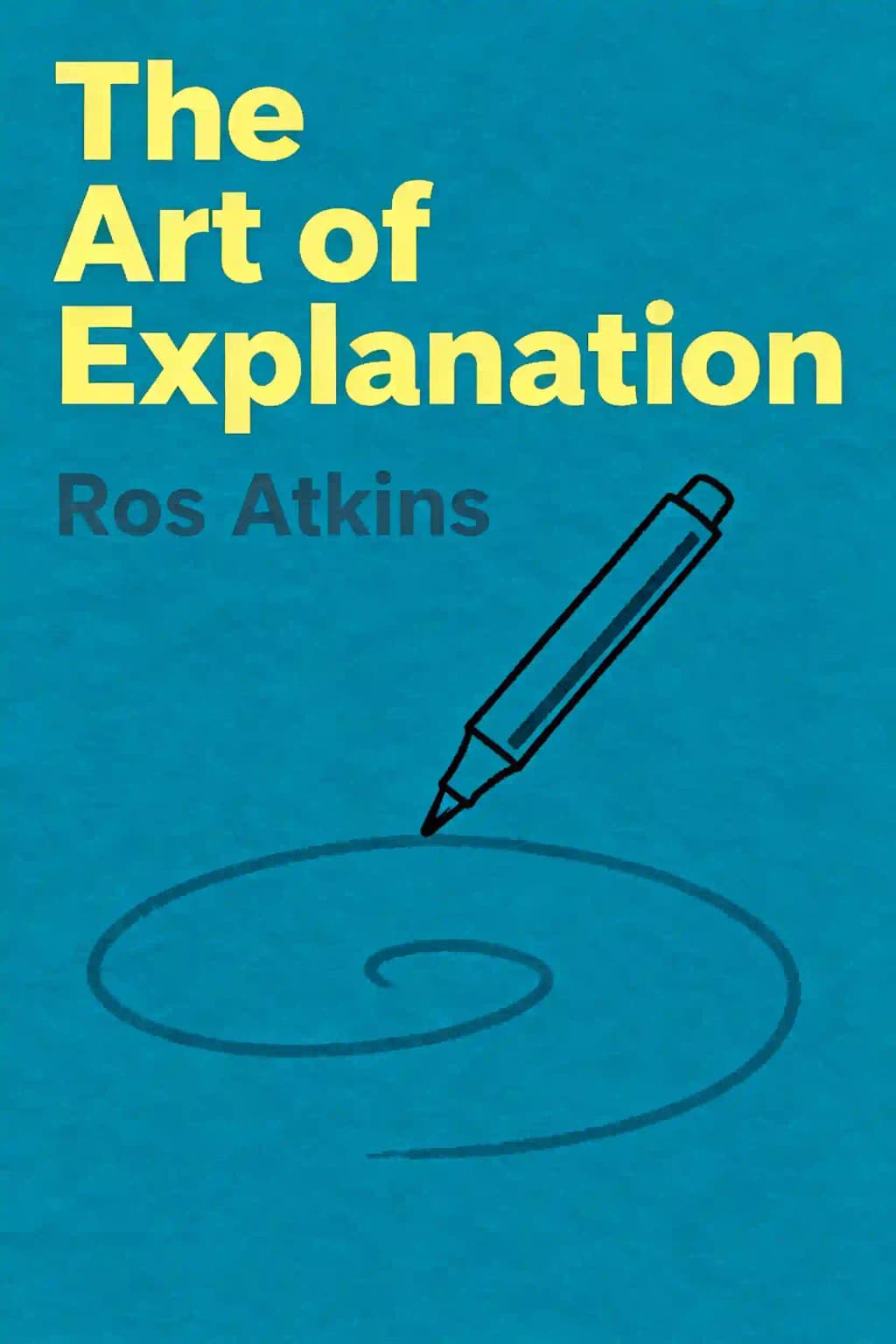
The Art of Explanation
How to Communicate with Clarity and Confidence
Aperçu de The Art of Explanation
BBC journalist Ros Atkins reveals his viral "Seven-Step Explanation" method that's transforming classrooms and boardrooms alike. Why did Forbes call it essential for "polishing communication skills"? Master the art that Jeremy Bowen praises for making audiences truly listen and understand.

Thèmes clés dans The Art of Explanation
- information synthesis
- audience calibration
- verbal precision
- complex storytelling
- knowledge distillation
Citations de The Art of Explanation
Simplicity is the key to understanding.
A poorly explained complexity undermines both understanding and credibility.
If your sentences are too long, your writing hasn't been disciplined enough.
Without context, we risk people neither caring about nor understanding what we're describing.
Eliminating distractions means being ruthlessly focused.
Personnages de The Art of Explanation
- Ros AtkinsAuthor and BBC journalist known for explainers
- Allan LittleBBC journalist who mentored Atkins on simplicity
- Ann PowersNPR critic who analyzed Joni Mitchell's precision
- Owen Bennett-JonesBBC presenter who demonstrated effective context
- Joni MitchellMusician studied for her precise emotional writing
Telecharger le resume de The Art of Explanation
Obtenez le resume de The Art of Explanation en PDF ou EPUB gratuit. Imprimez-le ou lisez-le hors ligne a tout moment.
FAQ sur ce livre
The Art of Explanation by Ros Atkins provides a systematic guide to crafting clear, concise, and engaging explanations. Drawing from his experience as a BBC journalist, Atkins outlines a seven-step method to break down complex ideas, prioritize simplicity, and tailor communication for diverse audiences. Key themes include distilling information, structuring narratives, and refining messages for maximum impact.
This book is ideal for professionals, educators, and content creators seeking to improve their communication skills. It’s particularly valuable for those in fields like journalism, marketing, or leadership, where conveying complex information succinctly is critical.
Yes. The book offers actionable strategies, such as the seven-step explanation framework and techniques for anticipating audience questions. Its blend of real-world examples (e.g., BBC reporting on the Greek debt crisis) and structured advice makes it a practical resource for mastering clarity in communication.
Atkins’ seven-step process includes:
- Set-Up: Define the purpose and audience.
- Find Information: Gather essential data.
- Distill: Simplify details to core elements.
- Organize: Structure information into logical strands.
- Link: Create a cohesive narrative.
- Tighten: Edit ruthlessly for clarity.
- Questions: Adapt explanations by anticipating queries.
Atkins emphasizes understanding the audience’s knowledge level and priorities. He advises creating a list of anticipated questions and using language that resonates with their context. For example, simplifying technical jargon for general viewers while retaining depth for experts.
Each chapter ends with a “Quick Check”—a self-assessment tool to ensure explanations align with the book’s principles. These checklists help users verify clarity, relevance, and structure, ensuring their message remains focused.
Absolutely. The book covers delivery techniques, such as rehearsing explanations, using visuals effectively, and refining tone. Atkins also shares tips for adapting content dynamically, such as during live broadcasts or Q&A sessions.
Some readers note the methodical steps may feel overly structured for spontaneous communication. However, most praise its practicality, especially for high-stakes scenarios like crisis reporting or technical presentations.
Unlike generic self-help books, Atkins’ approach is rooted in journalism and real-world application. It emphasizes rigorous editing and audience adaptation over abstract theories, making it a go-to for actionable frameworks.
Atkins identifies ten attributes, including simplicity, clarity of purpose, engagement, and relevance. He stresses avoiding redundancies, using relatable examples, and maintaining momentum.
Yes. Atkins uses case studies from his BBC career, such as explaining the 2015 Greek debt crisis. These examples demonstrate how to transform complex topics (e.g., economic policies) into accessible narratives.
The book teaches skills like distilling project updates into key points, structuring emails for clarity, and anticipating stakeholder questions. These techniques reduce misunderstandings and enhance collaboration.