Mastercard CMO Raja Rajamannar's "Quantum Marketing" unveils the Fifth Paradigm - where AI, AR, and multisensory experiences redefine consumer engagement. Featured on Bloomberg Originals, this bestseller equips marketers with revolutionary strategies for a tech-disrupted world. Ready to reinvent your marketing DNA?
Raja Rajamannar, bestselling author of Quantum Marketing: Mastering the New Marketing Mindset for Tomorrow’s Consumers, is a globally recognized marketing innovator and Chief Marketing & Communications Officer at Mastercard. A Wall Street Journal-bestselling authority on transformational marketing, Rajamannar blends three decades of executive leadership at Fortune 500 companies with groundbreaking work in AI, Web3, and multisensory brand experiences.
His book distills insights from Mastercard’s iconic Priceless platform—a case study at Harvard Business School and Yale School of Management—and addresses marketing’s evolving challenges in technology-driven consumer landscapes.
A Forbes Top 5 World’s Most Influential CMO and president of the World Federation of Advertisers, Rajamannar holds board roles at PPL Corporation, Bon Secours Mercy Health, and New York City Ballet. His thought leadership extends to frequent media commentary and global speaking engagements, where he explores topics like ethical AI integration and purpose-driven campaigns. Quantum Marketing has become essential reading for modern marketers, translated into 11 languages and praised by industry leaders for redefining marketing’s role in an era of unprecedented disruption.
Quantum Marketing explores the revolutionary Fifth Paradigm of marketing, driven by AI, IoT, and augmented reality. Raja Rajamannar argues classical strategies are obsolete and urges marketers to adopt hyper-personalization, real-time analytics, and trust-building to meet tomorrow’s consumer demands. The book provides frameworks to navigate rapid technological shifts while reimagining branding, customer engagement, and business growth.
This book is essential for CMOs, marketers, and business leaders seeking to future-proof their strategies. It’s also valuable for students studying marketing or professionals in tech-driven industries. Rajamannar’s insights help anyone grappling with AI’s impact on consumer behavior, branding, and data-driven decision-making.
Yes—endorsed by leaders at HSBC, Yale, and Dentsu, the book offers actionable strategies for the AI era. It blends Mastercard case studies with forward-thinking frameworks, making it a practical guide for navigating marketing’s “quantum leap”. Critics praise its balance of theory and real-world application.
Rajamannar positions AI as a transformative force for hyper-personalized campaigns, predictive analytics, and automated content creation. He argues AI enables real-time adjustments but cautions against over-reliance, emphasizing the need for human oversight to maintain brand authenticity.
Some argue the book’s focus on cutting-edge tech may overwhelm traditional marketers, while others note it lacks concrete steps for small businesses. However, most praise its visionary outlook and practicality for enterprises.
Unlike Contagious or This Is Marketing, Rajamannar’s work focuses specifically on AI-driven disruption. It complements Hug Your Haters by adding tech-centric strategies for customer engagement, while offering a Mastercard-backed perspective on global branding.
Rajamannar identifies trust as a rare differentiator in an era of data breaches and skepticism. He details how Mastercard built trust via privacy-focused campaigns, arguing it drives customer loyalty and long-term revenue.
Extremely relevant—as AI, AR, and IoT dominate marketing, the book’s strategies address real-time analytics, ethical AI use, and Gen Z engagement. Rajamannar’s forecasts about metaverse marketing and AI ethics remain timely.
Start by auditing existing strategies for AI readiness, invest in real-time data tools, and pilot hyper-personalized campaigns. Rajamannar advises incremental steps, like using chatbots for instant customer service, before overhauling entire systems.
Ressentez le livre à travers la voix de l'auteur
Transformez les connaissances en idées captivantes et riches en exemples
Capturez les idées clés en un éclair pour un apprentissage rapide
Profitez du livre de manière ludique et engageante
Advertising is shifting from interruption-based to permission-based models.
Ethics and privacy considerations have gained unprecedented prominence.
Traditional concepts of brand loyalty are being replaced by experience-based relationships.
Corporate purpose has evolved from a nice-to-have to an indispensable component of brand identity.
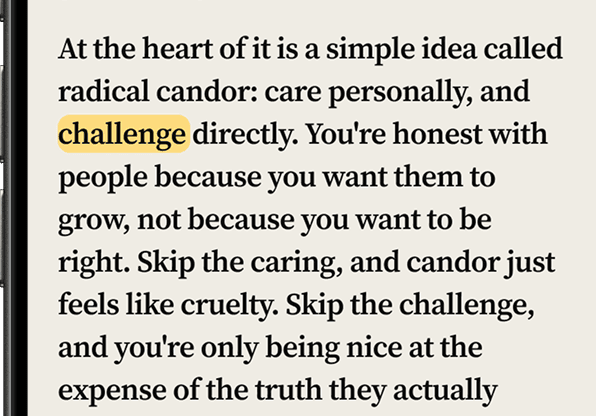
What makes this paradigm truly 'quantum' is that past models and best practices cannot explain or predict future reality.
Décomposez les idées clés de Quantum Marketing en points faciles à comprendre pour découvrir comment les équipes innovantes créent, collaborent et grandissent.
Condensez Quantum Marketing en indices de mémoire rapides mettant en évidence les principes clés de franchise, de travail d'équipe et de résilience créative.

Découvrez Quantum Marketing à travers des récits vivants qui transforment les leçons d'innovation en moments mémorables et applicables.
Posez n'importe quelle question, choisissez la voix et co-créez des idées qui résonnent vraiment avec vous.

Cree par des anciens de Columbia University a San Francisco
"Instead of endless scrolling, I just hit play on BeFreed. It saves me so much time."
"I never knew where to start with nonfiction—BeFreed’s book lists turned into podcasts gave me a clear path."
"Perfect balance between learning and entertainment. Finished ‘Thinking, Fast and Slow’ on my commute this week."
"Crazy how much I learned while walking the dog. BeFreed = small habits → big gains."
"Reading used to feel like a chore. Now it’s just part of my lifestyle."
"Feels effortless compared to reading. I’ve finished 6 books this month already."
"BeFreed turned my guilty doomscrolling into something that feels productive and inspiring."
"BeFreed turned my commute into learning time. 20-min podcasts are perfect for finishing books I never had time for."
"BeFreed replaced my podcast queue. Imagine Spotify for books — that’s it. 🙌"
"It is great for me to learn something from the book without reading it."
"The themed book list podcasts help me connect ideas across authors—like a guided audio journey."
"Makes me feel smarter every time before going to work"
Cree par des anciens de Columbia University a San Francisco

Obtenez le resume de Quantum Marketing en PDF ou EPUB gratuit. Imprimez-le ou lisez-le hors ligne a tout moment.
What if your coffee maker knew you needed beans before you did? What if billboards changed their message just for you as you walked past? This isn't a glimpse into some distant future - it's happening right now. Marketing has reached a revolutionary moment, one that makes the leap from radio to television look like a gentle step forward. Raja Rajamannar, the visionary behind Mastercard's transformation, calls this the Fifth Paradigm - a complete reimagining of how brands connect with humans. His radical move to remove Mastercard's name from its iconic logo seemed crazy at first, yet it worked brilliantly. Why? Because we've entered an era where the old rules don't just need updating - they need to be completely rewritten. Marketing didn't begin with Mad Men in the 1960s - it stretches back millennia. Ancient Chinese candymakers used bamboo flutes to create signature sounds announcing their arrival, essentially inventing sonic branding thousands of years ago. Roman merchants carved elaborate signs to distinguish their shops in crowded forums. Medieval town criers served as walking billboards, shouting news and advertisements through cobblestone streets. Fast forward to the Industrial Revolution, and the First Paradigm emerged - product-focused, rational, obsessed with features. Companies like Singer Sewing Machines assumed people made purely logical decisions based on benefits and specifications. Then came the Second Paradigm in the 1960s, when researchers discovered something revolutionary: people buy emotionally, then justify rationally. Suddenly, Coca-Cola wasn't selling sugar water - it was selling happiness. Nike wasn't selling shoes - it was selling athletic aspiration. The Third Paradigm arrived with the internet, transforming everything overnight. When the first banner ads appeared on HotWired in 1994, few imagined how profoundly digital would reshape commerce. Google revolutionized information discovery, Amazon changed shopping behaviors, and data analytics enabled targeting precision that would have seemed like magic just years earlier. Then the Fourth Paradigm exploded with smartphones and social media, creating constant connectivity. Our attention spans plummeted to eight seconds - officially less than a goldfish. Each paradigm built upon the previous one, evolving marketing step by step. Until now. The question isn't whether your business will adapt to this quantum shift, but whether you'll survive if you don't.