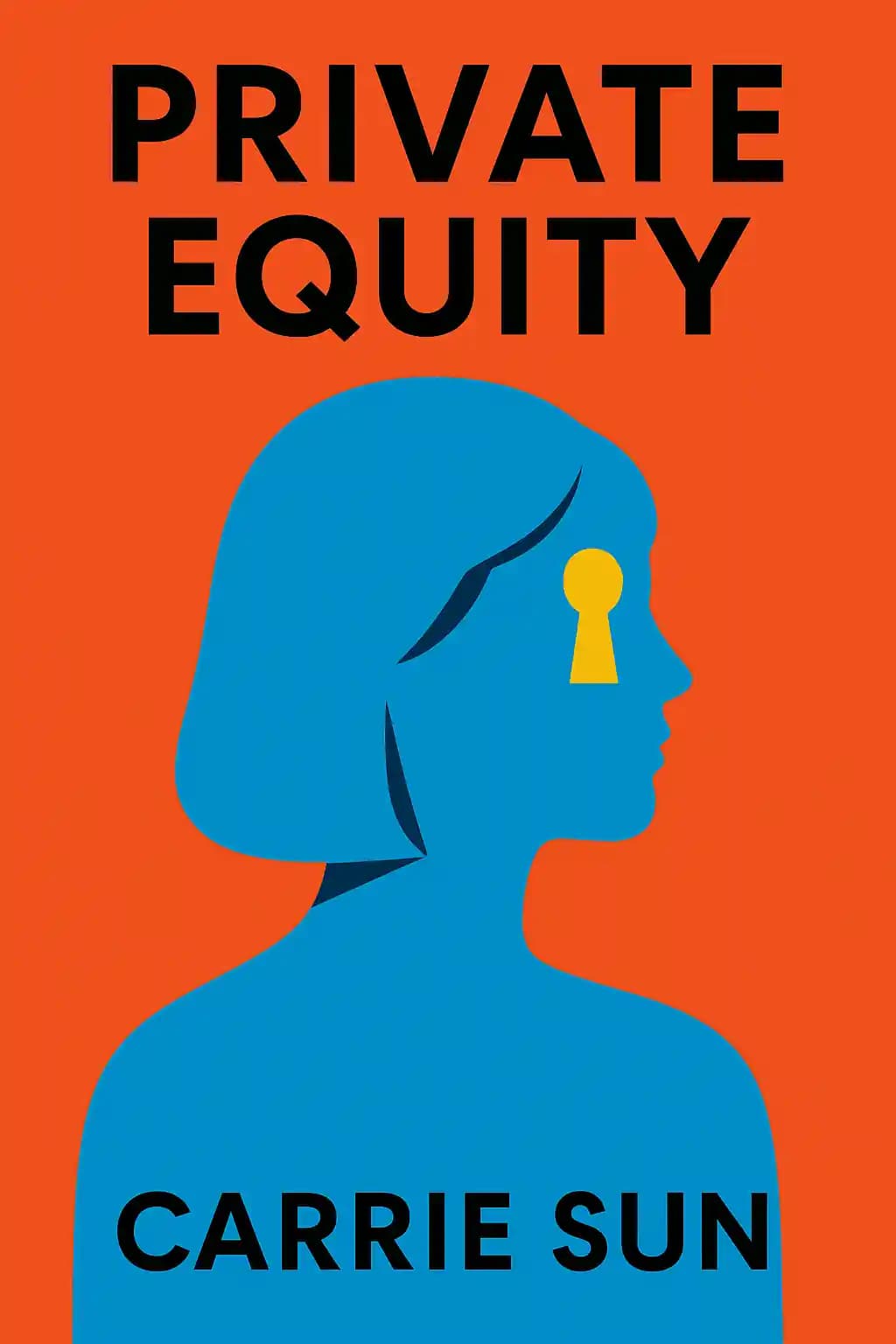
Private Equity
A Venture Capitalist's Take on Life, Love, and Startup Unicorns
Aperçu de Private Equity
In "Private Equity," Carrie Sun's TIME Magazine-acclaimed memoir exposes Wall Street's brutal underbelly. Like "a Sofia Coppola film," this riveting account of burnout and wealth has become a cultural Rorschach test - challenging readers to question what success truly costs.
Thèmes clés dans Private Equity
- toxic productivity
- high finance culture
- immigrant daughter expectations
- workplace burnout
- corporate indoctrination
Citations de Private Equity
Perfection is barely adequate.
This isn't just a job; it's an indoctrination into a particular worldview.
Information is currency, and proximity to power is status.
Personnages de Private Equity
- Carrie SunThe author and protagonist navigating high finance
- BooneA partner at Carbon and Carrie's demanding boss
- LenaA seasoned assistant and guide to office dynamics
À propos de l'auteur
À propos de l'auteur de Private Equity
Carrie Sun, acclaimed author of Private Equity: A Memoir, is an MIT-trained finance expert and former Wall Street insider whose work explores the intersection of extreme wealth, workplace culture, and personal identity.
Born in China and raised in Michigan, Sun draws on her experience as a personal assistant to the billionaire founder of Tiger Global Management to craft this searing critique of institutional burnout and privilege.
A dual graduate in mathematics and finance from MIT, she later pursued an MFA at The New School, blending analytical rigor with literary nuance. Her writing has been featured in TIME Magazine (which named Private Equity a Must-Read Book of the Year), Business Insider, and major literary platforms.
Sun’s insights on corporate toxicity and immigrant ambition have made her a sought-after speaker at institutions and media outlets. The memoir has garnered widespread acclaim for its unflinching examination of modern work ethics and its consequences.
Telecharger le resume de Private Equity
Obtenez le resume de Private Equity en PDF ou EPUB gratuit. Imprimez-le ou lisez-le hors ligne a tout moment.
FAQ sur ce livre
Private Equity: A Memoir chronicles Carrie Sun’s experience as a personal assistant at a elite Wall Street hedge fund (pseudonymously named Carbon), exploring workplace toxicity, extreme wealth, and identity loss. The memoir critiques corporate culture’s toll on mental health while documenting Sun’s journey from ambitious MIT graduate to burnout survivor reclaiming her self-worth.
Professionals in finance, readers interested in corporate workplace critiques, and fans of memoirs about self-discovery will find value. It resonates with those navigating career burnout or questioning societal definitions of success.
Yes, for its unflinching look at high-pressure finance culture, though reviews note uneven pacing. It offers rare insider insights into hedge fund operations and a relatable narrative about prioritizing well-being over prestige.
- Work-life imbalance: The crushing demands of billionaire executives.
- Privilege: The isolation of extreme wealth and its ethical dilemmas.
- Identity: Rejecting societal success metrics to reclaim personal agency.
As a Chinese immigrant and MIT graduate, Sun’s pursuit of the “American Dream” clashes with Wall Street’s toxic hustle culture. Her analytical finance career contrasts with her creative aspirations, fueling her critique of profit-driven environments.
Critics cite underdeveloped personal relationships, excessive focus on mundane tasks, and a self-indulgent tone. Some argue it lacks deeper systemic analysis of finance culture.
The book depicts a world where 80-hour weeks, constant availability, and emotional detachment are normalized. Sun describes physical ailments and anxiety as consequences of unsustainable expectations.
- “You made that promise with all the information available to you then...you’re allowed to change your mind.”
- “Money solved nearly everything—except the problem of being alive.”
These highlight Sun’s realization about reevaluating commitments and wealth’s limitations.
Unlike celebratory finance memoirs, Sun focuses on systemic critiques rather than personal triumph. It aligns more with Liar’s Poker in exposing industry flaws but adds a millennial feminist perspective.
The memoir exposes how elite firms insulate employees from real-world problems through private jets, luxury perks, and social stratification. Sun critiques this bubble as dehumanizing and ethically hollow.
Sun developed insomnia, hair loss, and panic attacks due to chronic stress. Her eventual breakdown forces confrontation with the physical cost of “high-status” jobs.
Yes. While using pseudonyms like “Carbon” for Tiger Global, Sun’s account reflects real experiences as assistant to billionaire Chase Coleman III. The memoir blends professional exposure with personal confession.