Chapitre 1
The Way of Jesus: A Journey Beyond Religion
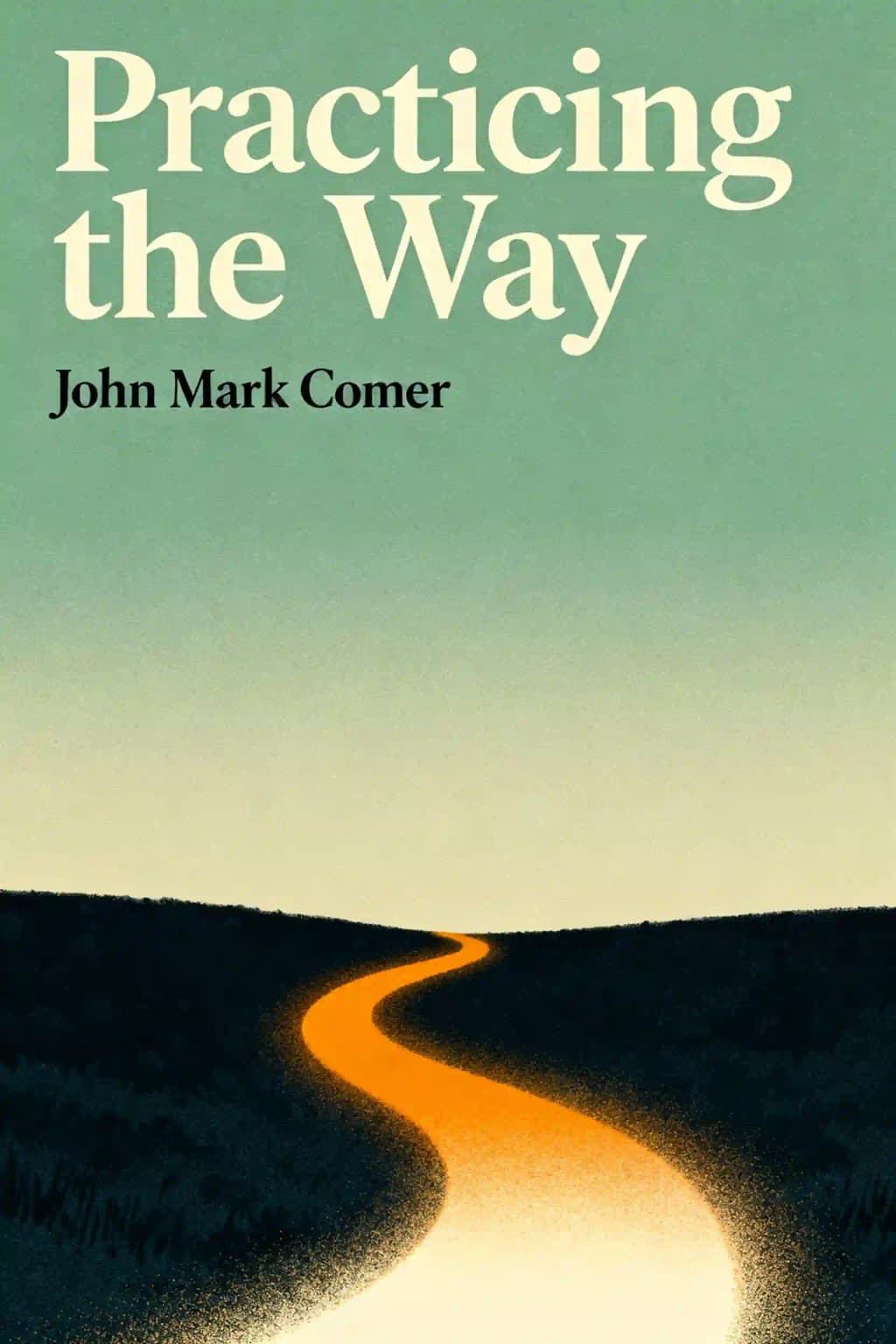
Have you ever wondered why so many people claim to follow Jesus yet so few actually resemble him? This question haunted John Mark Comer until he made a startling discovery: Jesus never invited people to convert to a religion-he invited them to apprentice under him. In "Practicing the Way," Comer reveals how this ancient understanding of discipleship offers a revolutionary path forward for modern believers. The book has resonated deeply with readers seeking authentic transformation, becoming a bestseller embraced by spiritual seekers across denominational lines. Even celebrities like Justin Bieber have praised its practical wisdom. What makes this approach so compelling is that it addresses our deepest human longing-not just to believe different things, but to become different people. As our culture grows increasingly disillusioned with performative religion, Comer's invitation to actually practice Jesus' way of life offers a refreshing alternative that speaks to both the spiritually curious and the religiously exhausted.
Chapitre 2
Who Are You Following? The Disciple's Fundamental Question
We're all disciples of something or someone. The real question isn't whether you're a disciple, but who or what you're following. This notion challenges our modern desire to believe we control our own destiny, that we lead rather than follow. But powerful forces have a vested interest in perpetuating this myth of autonomy. Cultural mantras like "be true to yourself" often mask the reality that we're being formed by external influences with their own agendas.
With social media algorithms providing direct access to our consciousness, what appear as mere ads and content are actually sophisticated behavior modification techniques designed to influence how we think, feel, and live. We're constantly being formed-the question is: into what?
Jesus didn't invite people to convert to Christianity. He invited them to apprentice under him into a whole new way of living. In first-century Jewish culture, rabbis were spiritual masters who attracted followers through their unique interpretation (or "yoke") of how to thrive in God's world. Disciples would leave everything to follow their rabbi, with three primary goals: to be with their rabbi constantly, to become like their rabbi in character and wisdom, and eventually to do what their rabbi did.
When Jesus said "follow me," he was inviting people into this transformative relationship-not just to believe certain doctrines, but to organize their entire lives around being with him, becoming like him, and doing as he did. This understanding dramatically reframes what it means to be Christian. While about 63 percent of Americans self-identify as Christians, only around 4 percent could be considered apprentices of Jesus who have restructured their lives around following him.
The crisis is that Western Christianity has created an environment where you can be a "Christian" without being an apprentice of Jesus. The gospel has often been preached in a way that separates becoming a Christian from becoming a disciple. But Jesus' actual gospel wasn't merely about getting into heaven after death-it was that the kingdom of God had come near and was available now to anyone who would trust and follow him.
This way of life-literally called "the Way" by early followers-isn't just theology or ethics, though it includes both. It's exactly what it sounds like: a way of life. And remarkably, Jesus extended this invitation to "whoever wants to be my disciple"-a revolutionary concept in his day when rabbis carefully selected only the elite students. This universal invitation still stands today, crossing all boundaries of background, education, and status. Before we believed in Jesus, he believed in us.
Chapitre 3
Cultivating Presence: The Art of Being With Jesus
The first and most fundamental goal of apprenticeship to Jesus is simply being with him. When Jesus called his original disciples, he invited them to "come and see" where he was staying. From a larger pool of followers, he specifically chose twelve "that they might be with him." This "with-ness" forms the baseline of the entire spiritual life.
But how do we be with someone who isn't physically present? Jesus taught that the Holy Spirit is how his apprentices are to "be with him" now. To be with the Spirit is to be with Jesus, and to be with Jesus is to be with the Father. It's entering the flow of love within the inner life of God.
Jesus instructed his apprentices to "abide in me"-to make their home in his presence and never leave. We're all abiding in something; the question is what? Whatever we abide in forms us-social media into anxious, distracted people; streaming platforms into restless, bored people. But abiding in God forms the fruit of the Spirit in us: love, joy, peace, patience, kindness, and more.
As we practice turning our minds toward Jesus, something miraculous happens. A. W. Tozer observed that setting "the direction of our hearts toward Jesus" creates "a habit of soul" that becomes "a sort of spiritual reflex requiring no more conscious effort." Frank Laubach noted this practice "grows easier as the habit becomes fixed."
This isn't merely mental hygiene or "think happy thoughts." It's about a level of with-ness to Jesus beyond thoughts and feelings-it's about love. This is contemplation: looking at God, looking at you, in love. As we direct our inner gaze at God's beauty, we become like what we behold-Jesus.
To reach the depth of life with God that Jesus modeled, we need a diversion-free place to be alone with the Father. Jesus's life template followed a rhythm of retreat and return-like breathing in and out. The Gospels repeatedly mention how he "often withdrew to lonely places" to pray. Whether you're an introvert who prays cross-legged in a quiet room or an extrovert who prayer-walks through a park at dawn, find what works with your personality and stage of life. But find your secret place. Go there often. Prioritize it.
The uncomfortable truth is that there's simply no way to follow Jesus without unhurrying your life. Dallas Willard famously called hurry "the great enemy of spiritual life in our day" and advised, "You must ruthlessly eliminate hurry from your life." Most of us live time-torn lives: wanting to be with Jesus but too busy to pray, desiring to grow in love but overwhelmed by to-do lists. This requires intentional steps to slow down, beginning with a formation audit where we cut out more than we add in.
Chapitre 4
Becoming Like Jesus: The Transformation Journey
When we die, what will matter most is who we became. David Brooks distinguishes between "resume virtues" (accomplishments) and "eulogy virtues" (character). The skull on my desk-a memento mori-reminds me to live for my eulogy, not my resume, to become a person of love through union with Jesus.
Spiritual formation isn't uniquely Christian-it's fundamentally human. To be human is to change constantly; our souls are dynamic, not static. The question isn't whether you're being formed, but who or what you're being formed into. Everyone undergoes spiritual formation-Mother Teresa and Hitler, Gandhi and Chairman Mao. We're all shaped by a complex alchemy of genetics, family patterns, childhood wounds, education, habits, decisions, relationships, and environments.
Spiritual formation in Jesus' Way is the process of being formed into people of love in Christ. This formation is a long, slow process, not a one-time event. Like physical growth, it happens gradually over a lifetime at an often imperceptible rate. As James Houston said, "Spiritual formation is the slowest of all human movements."
This challenges our instant-gratification culture that expects immediate results. If we lose sight of this slow pace, we'll either grow discouraged and give up or settle for mediocrity. But we cannot lower the horizon of possibility set by Jesus' extraordinary life.
Formation isn't something we do but something done to us by God as we yield to his transforming grace. This doesn't absolve us of responsibility-"Let go and let God" is insufficient. As Augustine said, "Without God, we cannot. Without us, God will not." We must cooperate with God's grace, but our job isn't self-salvation; it's surrender.
The acid test of spiritual formation is love. The single most important question isn't whether we're biblically educated or practicing disciplines, but whether we're becoming more loving. Progress is measured by the quality of our closest relationships-are we growing in love, joy, peace, patience, kindness, gentleness, faithfulness, and self-control?
Christlikeness is possible, but it doesn't happen automatically. The natural gravity of life pulls in the opposite direction. "Small is the gate and narrow the road that leads to life, and only a few find it," as Jesus said. Nobody wakes up at fifty thinking, "Wow, I accidentally became a saint!" Formation into Christ-likeness requires intentional choice, day after day.
Unfortunately, many Christians lack a working theory of change. Most Christians' theories of change tend to be unconscious rather than conscious, haphazard rather than intentional, secular rather than scriptural, and mostly ineffective rather than transformational. Three common but losing strategies are:
1. Willpower - It's insufficient for deep transformation. Small changes might be within its realm, but deeply ingrained habits, trauma, addiction, and fear easily overpower it.
2. More Bible Study - While Scripture is essential, information alone doesn't produce transformation. Knowing something isn't the same as doing it, which still isn't the same as becoming the kind of person who naturally does it.
3. The "Zap from Heaven" - This approach rightly values the Holy Spirit's power but can become spiritual laziness-chasing spiritual highs rather than doing the unglamorous daily work of discipleship.
Two fundamental obstacles to transformation are sin and prior formation. Sin has three dimensions: sin done by us (our wrongdoing), sin done to us (our wounds), and sin done around us (environmental influence). Additionally, we've already been formed by the stories we believe, our habits, and our relationships.
A working theory of change includes teaching (renewing our minds with truth), practices (training through spiritual disciplines), community (transformation happens in relationship), the Holy Spirit (the ultimate source of change), time (transformation is slow), and suffering (our deepest pain can become our moment of transformation).
Chapitre 5
Doing as Jesus Did: Continuing His Mission
The ultimate goal of apprenticeship is to carry on the master's work. Jesus' closing words to his apprentices were to "Go and make apprentices of all kinds of people"-exactly what a rabbi would say to students at the end of their training.
In Jesus we see both what the true God is like and what a true human being can become when reunited with God. Jesus promised his followers would do the works he did and even "greater things," because the same power that was on him is available to us as we surrender to the Father and open ourselves to the Spirit's promptings.
Jesus' ministry can be categorized into three basic rhythms: making space for the gospel, preaching the gospel, and demonstrating the gospel.
The first rhythm is hospitality-making space for the gospel through eating and drinking. In Luke's Gospel alone, there are over fifty references to food-Jesus is constantly going to, at, or coming from a meal. This practice of philoxenia (love of the stranger) creates space where strangers can become neighbors and neighbors can become family in God.
The second rhythm is preaching the gospel-not just about heaven after death, but that Jesus is Lord and life with him is available now. Through apprenticeship to Jesus, we can enter God's kingdom and participate in a new society of peace and justice. Five best practices for sharing this gospel in our secular culture include offering hospitality, finding where God is already working in people's lives, bearing witness as someone who has experienced something important, operating in spiritual gifts, and living a beautiful, compelling life among non-believers.
The third rhythm is demonstrating the gospel through four key signs that Jesus regularly performed:
1. Healing - Jesus became renowned throughout Israel as a healer who cured every kind of sickness and disease.
2. Deliverance - Jesus exposed demonic powers lurking in shadows and drove them away.
3. Prophecy - Jesus accessed information beyond normal human means, revealing people's secrets and deepest fears.
4. Justice - Jesus stood for justice, most dramatically when cleansing the corrupt temple.
If all this sounds overwhelming, remember Paul's image of the church as "the body of Christ." No one person can do everything. Thomas Kelly beautifully explains: "The Loving Presence does not burden us equally with all things, but considerately puts upon each of us just a few central tasks... We cannot die on every cross, nor are we expected to."
Chapitre 6
The Rule of Life: A Trellis for Spiritual Growth
For any journey, we need two things: a compelling vision of our destination, and a plan to get there. While most people have plans for money, time, career and family, few have a plan to be with Jesus and apprentice under him. As Pete Scazzero puts it, we need "a thoughtful, conscious, intentional plan for our spiritual lives."
A Rule of Life comes from the Latin regula, meaning a "straight piece of wood"-possibly referring to a trellis in a vineyard. Just as a vine needs a trellis to lift it off the ground, index it toward light, and guide its growth to bear fruit, apprentices of Jesus need a support structure to make space for life with God.
Everyone already has a Rule of Life-written or unwritten, conscious or subconscious, wise or foolish, based on long-term vision or short-term gratification. The question isn't whether you have one, but whether you know what it is and if it's giving you the life you want.
A Rule of Life must balance two sides: guarding and guiding. Like a gardener who both tends plants and removes weeds, we must decide what to put into our lives and what to keep out, what to grow and what to let die. This requires learning to say no based on a new criterion: not "Is this sinful?" but "Does this move me toward Jesus or away?"
A good Rule of Life provides four key benefits: it helps turn vision into reality, helps you experience peace by aligning your schedule with your values, helps you live at the right pace, and balances freedom and discipline.
The core spiritual practices based on Jesus' lifestyle include:
1. Sabbath - A full day set aside not just to stop working but to delight in and worship God.
2. Solitude - Making space for quiet and silence where the inner roar of distraction fades.
3. Prayer - All communication and communion with God, from talking to listening to simply being.
4. Fasting - Praying with your body, breaking the flesh's control and opening to the Spirit's power.
5. Scripture - Engaging with God's word to develop the "mind of Christ."
6. Community - Healing together through relationships that form us into Christlike love.
7. Generosity - Participating in the divine outflow of self-giving love.
8. Service - Following Jesus's example of serving rather than being served.
9. Witness - Sharing the good news through hospitality in a culture of hostility.
When creating your own Rule of Life, start where you are, not where you "should" be. Begin with small, joyful practices. Think subtraction, not addition-following Jesus is about doing less, not more. Take a balanced approach across different dimensions of spiritual life, and account for your personality, spiritual temperament, and season of life. Keep a healthy blend of practices you naturally love and those that challenge you. Remember that learning any new skill follows a J-shaped curve-you often get worse before getting better. Do this in community, as it simply works better together. And remember: there is no formation without repetition.
Chapitre 7
The Invitation: Take Up Your Cross
Following Jesus is not for everyone - a truth clearly demonstrated throughout the Gospels. While thousands were drawn to Jesus's compelling presence and message, historical records suggest only a few hundred ultimately became his dedicated apprentices. His invitation was never about religious conversion or joining a new belief system, but rather about apprenticing under him to learn and live in the reality of God's kingdom. Many were initially attracted to his teaching and miracles, but when confronted with the actual cost of discipleship, they created elaborate excuses to delay commitment. Jesus's approach was remarkably different from modern evangelistic methods - he never begged, manipulated, or used emotional pressure tactics. Instead, he simply extended the invitation and, notably, allowed people the dignity of their choice, even when they walked away.
The call to follow Jesus invariably demands leaving something behind - whether possessions, relationships, or deeply ingrained patterns of living. Jesus articulated this requirement with stark clarity: "Whoever wants to be my disciple must deny themselves and take up their cross daily and follow me." This surrender forms the bedrock of authentic spiritual life - not a occasional sacrifice but a settled, daily intention to put to death our self-will and autonomous living. This message presents a particular challenge in our contemporary culture, which celebrates self-actualization, personal autonomy, and individual fulfillment above all else. Yet here lies the beautiful paradox of Christian spirituality: in dying to our false self - our ego-driven, self-protective persona - we discover our true self, our authentic identity as beloved children of God.
When considering discipleship, we must weigh not only the cost of following Jesus but also the profound cost of not following him. While following Jesus requires significant sacrifice - comfort, control, sometimes relationships or career advancement - not following him ultimately costs far more. The price of non-discipleship includes missing out on life with God, access to the Trinity's inner life, transcendent peace that surpasses understanding, inexpressible joy amid circumstances, freedom from sin's bondage, deep emotional and spiritual healing, transformative forgiveness, and adoption into God's eternal family.
The spiritual journey unfolds not as a straight line but as a series of falls and recoveries. As a Finnish Orthodox monk wisely observed, "We fall and get up, fall and get up, fall and get up again" - a rhythm that becomes familiar to every serious apprentice of Jesus. We will fail not just daily but hourly, stumbling over our own weaknesses, prejudices, and blind spots. However, these failures don't disqualify us as apprentices; they simply confirm our humanity and need for grace. The key lies not in perfection but in persistence - in beginning again after each fall. As Frank Laubach insightfully noted, "One can begin all over instantly at any moment," highlighting the ever-present availability of God's grace.
For those embarking on this transformative journey, several practical guidelines prove helpful: daily contemplate and hold before your mind the beauty and reality of life in God's kingdom; take one small, concrete step immediately rather than waiting for perfect conditions; proceed slowly and sustainably without rushing the process; and when you inevitably fall, resist the pull of shame by leaning into God's endless mercy and grace. Remember that every significant journey begins with a single step, and when the path becomes challenging - as it certainly will - recall the wisdom of the ages: fall and get up, fall and get up, fall and get up. And always, begin again.
Chapitre 8
Practicing the Way: From Concept to Community
Following Jesus doesn't work as a hobby. We can't simply add Jesus to our overbusy, consumeristic, emotionally unhealthy, individualistic, digitally distracted lives. It won't work. Following Jesus must be the main point of life - centering him as the dominant voice over your own. This requires intentional restructuring of daily rhythms, priorities, and habits to create space for genuine spiritual formation.
This doesn't mean becoming a literal monk, but finding your "inner monk." As Ken Shigematsu wrote, "Every one of us has a monk or nun 'embryo' inside of us." There's a "monastic impulse" in all of us that craves quiet prayer, solitude, and contemplation alongside deep, vulnerable relationships with fellow travelers. This impulse manifests differently for each person - some may be drawn to early morning meditation, others to evening prayer walks, still others to regular sabbath practices or periodic retreats.
The monastic tradition offers timeless wisdom for modern disciples. Ancient practices like lectio divina (sacred reading), fixed-hour prayer, and contemplative silence can ground us in God's presence amidst our hectic world. These practices aren't about earning God's favor but creating space for transformation.
To support this journey, the Practicing the Way community offers practical resources including an eight-week course for churches and small groups, a structured Rule of Life framework, and digital tools for creating personalized spiritual practices. The Rule of Life helps believers establish sustainable rhythms in areas like prayer, scripture, community, rest, and service. These resources help believers move from concept to concrete application, providing structure without rigidity.
The community aspect is crucial - transformation happens best in relationship with others. Small groups provide accountability, encouragement, and shared wisdom as members navigate challenges and celebrate growth together. Regular gatherings create space for honest conversation about struggles and victories in living out these practices.
The journey of apprenticeship to Jesus is challenging but infinitely rewarding. As Benedict wrote in his Rule, though the path may be narrow at first, as we progress, our hearts will overflow "with the inexpressible delight of love." This is the promise of practicing the way of Jesus - not just believing different things, but becoming a different kind of person altogether. A person marked by love, joy, peace, patience, kindness, goodness, faithfulness, gentleness, and self-control. The practices themselves aren't the goal; they're the means through which we position ourselves to be transformed by God's grace into people who naturally and consistently embody the character of Christ.