Chapitre 1
The Mountain's Wisdom: Finding Balance in Life's Highs and Lows
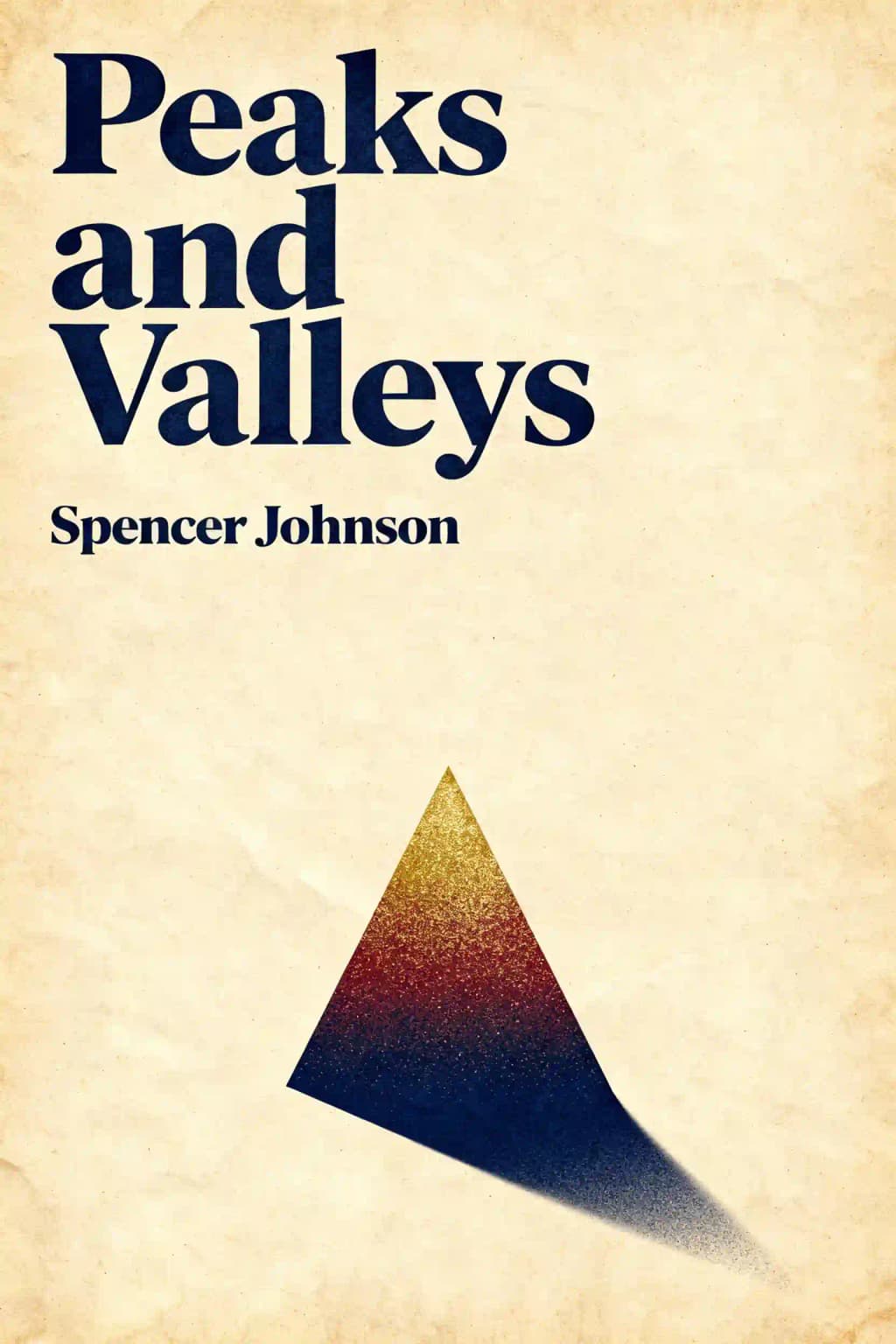
Have you ever felt like your life is a rollercoaster of spectacular highs and devastating lows? Imagine if there was a simple philosophy that could help you navigate these extremes with grace and purpose. "Peaks and Valleys" presents exactly this wisdom through a deceptively simple parable that has resonated with millions worldwide, including business leaders like Warren Buffett and celebrities such as Oprah Winfrey, who've praised its transformative insights. Written by Spencer Johnson-the mind behind the 46-million-copy bestseller "Who Moved My Cheese?"-this book distills complex psychological principles into accessible wisdom. What makes this work particularly powerful is how it's helped countless people transform their approach to both success and failure, offering a framework that applies equally to professional challenges and personal struggles. The book's enduring popularity stems from its universal truth: learning to navigate our peaks and valleys isn't just helpful-it's essential for a meaningful life.
Chapitre 2
The Valley of Discontent: When Everything Feels Wrong
Michael Brown's story begins in a place many of us recognize - a valley of discontent where nothing seems to go right. Once satisfied with his simple existence, Michael gradually falls into the trap of noticing what's wrong more than what's right. His professional life becomes a series of disappointments: projects that fall short of expectations, ideas that get overlooked in meetings, and achievements that feel hollow. Even when he achieves what should be success - becoming a department manager after five years of dedicated work - insecurity clouds his accomplishment, leaving him wondering if he truly deserves the position or if it was merely luck.
His personal life mirrors this professional dissatisfaction. Friends don't understand his struggles, offering well-meaning but simplistic advice like "just think positive" or "be grateful for what you have." Family dismisses his concerns as "just a phase," comparing his situation to their own past challenges while minimizing his emotional experience. Social gatherings become exercises in forced smiles and deflected questions about his career and life goals. Looking up at the metaphorical peaks above his valley, Michael imagines standing there, momentarily feeling better before sinking deeper into dissatisfaction with his current situation.
This valley represents a psychological state many of us experience - where we become trapped in negative thought patterns that color everything we see. It's not just that circumstances are difficult; it's that our perception becomes skewed toward seeing only problems. As research in cognitive psychology shows, this negative bias can become self-reinforcing, creating a downward spiral where each disappointment confirms our pessimistic worldview. Studies indicate that people in this state typically need to experience positive events at a ratio of 3:1 compared to negative ones just to maintain emotional equilibrium.
What makes Michael's situation particularly relatable is how ordinary it is. He hasn't experienced catastrophic failure or tragedy - just the slow erosion of satisfaction that can happen to anyone. His valley is built from accumulated disappointments, unfulfilled expectations, and the growing gap between how he imagined his life and how it actually unfolded. Small daily frustrations compound: unanswered emails, canceled plans, projects that never quite reach their potential, and relationships that slowly drift apart.
Despite discouragement from others who've never left their own valleys, Michael eventually overcomes his fears and begins the difficult journey upward. He starts with small steps - reading self-improvement books, joining a hiking group, and seeking professional counseling. As he climbs higher, he notices the stagnant air trapped in his valley below - a powerful metaphor for how limiting environments can become invisible until we gain some distance from them. Despite getting lost on unfamiliar paths, falling on a narrow ridge, and sustaining both physical and emotional injuries, he perseveres, growing happier as he leaves the valley behind. This journey represents the courage required to break free from familiar discomfort and seek something better, even when the path forward isn't clear and others question the wisdom of changing course.
Chapitre 3
Wisdom from the Peak: Understanding Life's Natural Rhythms
On the mountain peak, Michael encounters an old man who shares transformative wisdom about life's natural fluctuations. "Peaks and valleys are natural for everyone," the old man explains, defining these terms not just as external circumstances but as the emotional landscapes we experience-the highs and lows we feel at work and in life, which may last minutes or months.
This perspective shift is profound: our peaks and valleys aren't simply things that happen to us but how we feel inside and respond to events. Our perspective largely determines our experience-we can feel good about ourselves even during objectively difficult times if we maintain the right mindset.
When Michael protests that the old man's mountain life has nothing to do with his valley struggles, the old man helps him realize a crucial truth: peaks and valleys are connected-there's no gap separating them. This interconnection reveals a powerful insight: errors made in good times create tomorrow's bad times, while wise actions during bad times create future good times.
The definition of peaks and valleys becomes clearer: peaks are moments when we appreciate what we have, while valleys are moments when we long for what's missing. This distinction highlights how our focus determines our experience more than our circumstances. Michael had turned his peak achievement (reaching the mountain) into a valley by focusing on missing the sunset rather than celebrating his arrival-a perfect example of how perspective shapes reality.
Perhaps the most liberating insight is that while we can't always control external events, we can control our personal peaks and valleys through our beliefs and actions. Changing a valley into a peak requires either changing the situation or changing how we feel about it. The path out of a valley appears when we choose to see things differently and find the good hidden in bad times.
This wisdom echoes psychological research on resilience and cognitive reframing. Studies show that resilient individuals don't experience fewer hardships but interpret and respond to them differently. They look for opportunities within challenges and maintain perspective during difficulties. The old man's teachings aren't just folk wisdom but align with scientific understanding of how mindset affects our experience of life's inevitable ups and downs.
Chapitre 4
The Cycle of Forgetting: Success and Its Pitfalls
Returning to his valley with newfound wisdom, Michael feels energized and ready to apply what he's learned. His company faces a crisis with lost shipments and angry customers-a perfect opportunity to practice finding good in bad times. He proposes improvements to their order-tracking system, which his boss approves. His team develops a more reliable, less expensive solution that impresses customers and earns Michael a raise and improved reputation.
But success brings its own challenges. When Michael suggests expanding into new markets, his boss refuses, reminding him he's still young and should be satisfied with his recent raise. Michael notices most people in the company are complacent despite mounting problems-a common organizational blindspot where past success breeds resistance to necessary change.
As larger problems plague the company, income drops substantially, expenses are cut, and people are laid off. Though Michael keeps his position, something more insidious happens: he becomes caught up in his own success. He stops listening to others and forgets much of what he learned on the peak. His behavior changes subtly but significantly-he begins alienating those around him, with coworkers avoiding him and his boss criticizing him.
This pattern illustrates what psychologists call "success syndrome"-where achievement leads to overconfidence, decreased receptivity to feedback, and deteriorating relationships. Research shows that success can be more dangerous than failure because it's harder to learn from. When we succeed, we often attribute it entirely to our own brilliance rather than recognizing the role of circumstances, timing, and others' contributions.
Michael's experience demonstrates how easily we can slide from a peak into a valley without realizing it's happening. The very success that should sustain us becomes the seed of our next struggle when we mismanage it through arrogance or complacency. His confidence fades as he finds himself in an even deeper valley, unable to understand why things are going wrong despite his initial success.
This cycle of learning and forgetting is painfully familiar in both organizations and individual lives. We gain insight during difficult times, apply it successfully, then gradually abandon those very principles as things improve-setting ourselves up for the next decline. Breaking this cycle requires not just learning lessons but internalizing them so deeply that they become part of how we operate in both good times and bad.
Chapitre 5
The Plateau of Numbness: Escaping Reality
Feeling lonely and discouraged in his new valley, Michael remembers fragments of the old man's wisdom but can't seem to apply it effectively. Despite attempts to use the Peaks and Valleys approach, nothing makes him feel better. This experience reflects how principles that seem clear in theory can be difficult to implement when we're emotionally overwhelmed.
Exhausted from trying to figure things out, Michael makes a choice many of us make when overwhelmed-he escapes. He joins friends on what they call "the plateau," a barren, flat landscape with tepid weather where they go to "dull out." Initially, he feels relief in the numbness this place provides, recovering from the stress of his emotional ups and downs.
The plateau represents a psychological state we might recognize as emotional detachment or avoidance-a middle ground between peaks and valleys where we feel neither joy nor pain. It's the equivalent of numbing ourselves through mindless entertainment, substance use, or simply going through the motions of life without true engagement. In psychological terms, this represents emotional avoidance-a coping mechanism that provides short-term relief but prevents genuine healing and growth.
Soon Michael notices his friends' flat, lifeless eyes and wonders if he's beginning to look the same. This moment of self-awareness is crucial-he recognizes that while the plateau offers temporary escape from pain, it also robs him of vitality and authentic experience. Growing bored and restless, he questions whether he's taking a needed rest or merely escaping reality.
Looking toward the peak in the distance, he remembers the old man's bright, clear eyes-so different from the dullness he feels now. Despite doubts about being disappointed again, he makes a pivotal decision to return to his valley and prepare for another journey to the peak, hoping for better answers this time.
This section powerfully illustrates how tempting emotional numbness can be when we're struggling, yet how ultimately unsatisfying it is as a long-term strategy. True growth doesn't come from avoiding our valleys but from learning to navigate them skillfully. Michael's decision to leave the plateau represents choosing authentic experience-with all its potential for both pain and joy-over the false safety of emotional detachment.
Chapitre 6
The Deeper Wisdom: Managing Peaks and Valleys
Returning to the old man's peak with renewed determination, Michael discovers deeper insights about managing life's natural rhythms. The old man draws a heartbeat line, showing how peaks and valleys-like heartbeats-are essential parts of a healthy life. This powerful metaphor reframes the entire concept: without both highs and lows, there is no life-just as a flatline on a heart monitor indicates death, not health.
The old man explains that plateaus can be healthy times for rest and reflection when used purposefully, not just as escape. This nuance is important-temporary withdrawal to process and regroup differs fundamentally from chronic avoidance of life's challenges and joys.
When questioned about what went wrong with his initial success, Michael realizes his downfall came not from how he managed his valleys but how he managed his peaks. His success failed because he likely boasted about achievements and alienated others-a common pattern where ego distorts reality, making peaks seem better than they are and valleys worse.
Two crucial insights emerge: "The Most Common Reason You Leave A Peak Too Soon Is Arrogance, Masquerading As Confidence" and "The Most Common Reason You Stay In A Valley Too Long Is Fear, Masquerading As Comfort." These insights highlight how our self-deception keeps us trapped in destructive patterns. What we call confidence is often arrogance that blinds us to warning signs, while what we call comfort in difficult situations is often fear of change masquerading as acceptance.
The old man shares how he left a failing company to start his own successful business by focusing on the truth and asking "How can I be of more service?" rather than remaining complacent through arrogance. This principle of service-looking beyond self-interest to how we can contribute value-emerges as a powerful strategy for navigating both peaks and valleys.
Even more movingly, the old man reveals how he applied these principles when his wife became seriously ill. By asking "What is the truth?" and "What would be the most loving thing I could do?", he shifted focus from his fears to serving her needs. This approach transformed a deep valley into something more manageable as he became more thoughtful and loving. He realized many of his fears were self-centered, and by putting his ego aside, he found peace even amid difficult circumstances.
This wisdom extends beyond professional success to life's most profound challenges, showing how the same principles that help us navigate career setbacks can sustain us through personal tragedy. The emphasis on truth-seeking and service to others creates a framework for responding to any situation with greater clarity and purpose.
Chapitre 7
Conquering Fear: The Journey to Higher Peaks
Inspired by the old man's deeper wisdom, Michael spots a higher peak in the distance and decides to journey there, despite the deep valley between. The old man introduces him to the concept of a "sensible vision"-imagining a desired future in specific, believable detail using all five senses until it feels attainable and pulls you forward. This technique combines visualization with practicality, creating not just wishful thinking but a compelling internal guide.
Facing treacherous conditions in the valley, including a raging river that seems impossible to cross, Michael has a profound realization: "My Valley IS Fear." This insight reveals that while some valleys (like illness or loss) may be beyond our control, we create many of our own valleys through fear-fear of failure, rejection, or change. This distinction between external circumstances and our internal response to them is crucial for taking responsibility for our experience.
In his despair, Michael recalls the old man's wisdom about making reality your friend rather than believing things are better or worse than they truly are. Creating a sensible vision of standing triumphantly on the higher peak, he finds renewed determination. After multiple failed attempts, he successfully lassos a tree stump across the river and pulls himself across the dangerous current.
This victory reveals another insight: "A Personal Peak Is A Triumph Over Fear." Michael distinguishes between merely wishing for a better future versus following a sensible vision that motivates action. Wishful thinking remains passive, while a sensible vision engages our whole being and propels us forward even when the path is difficult.
Continuing his climb despite setbacks, he reaches the magnificent higher peak with its gorgeous lake and fresh breeze. Looking back at his journey and his life, he recognizes how fear has controlled him-fear of disapproval, rejection, failure-and understands that the Peaks and Valleys philosophy is both "a way of looking at things" and "a way of doing things." This integration of perspective and action is what makes the approach so powerful.
Michael's journey through the valley of fear illustrates how our greatest obstacles are often internal rather than external. The techniques he uses-creating a sensible vision, making reality his friend, and taking persistent action despite setbacks-provide practical tools for confronting our own fears. His triumph reminds us that conquering fear doesn't mean eliminating it but rather acting courageously despite its presence.
Chapitre 8
The Transformed Self: Living the Philosophy
When Michael returns to the old man's peak, the transformation is so profound that the old man hardly recognizes him. This external recognition of internal change highlights how deeply Michael has integrated the Peaks and Valleys philosophy. He shares his discoveries: that one must live this philosophy, not just know it; that both good and bad times are gifts with great value when managed well; and that he's looking forward to learning from friends and family.
The old man observes that Michael has gained humility, which will help him remain on peaks longer. This observation points to a crucial aspect of sustaining success-recognizing that achievements don't make us superior or invulnerable to future challenges. True humility isn't thinking less of ourselves but thinking of ourselves less, allowing us to remain open to feedback and continuous improvement even when things are going well.
Returning to his valley, everyone notices positive changes in Michael. However, his company is struggling financially. Remembering when the company was successful, he realizes they've lost their curiosity and urgency, replacing it with anxiety and blame-a common pattern in declining organizations where defensive reactions replace productive problem-solving.
When a larger competitor threatens their business with a similar but cheaper product, Michael asks his team two questions that embody the Peaks and Valleys approach: "What is the truth in this situation?" and "How can we use the good that's hidden in this bad time?" Through this approach, they discover their advantage: their expertise and customer knowledge. They create a sensible vision of developing a superior product that customers would love, and they succeed, improving the company's fortunes.
After receiving a promotion, Michael reflects on his past arrogance and how it damaged his relationships. Rather than repeating this mistake, he creates a sensible vision of becoming more humble and loving-the kind of person others would want to be with. He writes in his notebook: "You Get Out Of A Valley Sooner When You Manage To Get Outside Of Yourself: At Work, By Being Of Greater Service, And In Life, By Being More Loving."
This principle of getting outside oneself-through service at work and love in personal relationships-becomes Michael's guiding philosophy. His career flourishes, his relationship with his parents improves, and he grows closer to the young woman he cares about. As he ages, he passes through valleys with increasing grace, applying the simple principle of doing the opposite of what put him in a valley to get out of it.
When he learns of the old man's death, he initially feels deep loss, but soon realizes the old man's wisdom lives within him. He creates a summary of the Peaks and Valleys approach to share with others, fulfilling his promise to the old man and extending the legacy of this transformative philosophy.
Chapitre 9
Passing the Torch: Sharing Wisdom Across Generations
Decades later, Michael has become an old man himself, living on his own peak but occasionally returning to the valley. Reflecting on his life, he recognizes how he unknowingly created many of his good and bad times when he was younger, and appreciates the extraordinary difference the Peaks and Valleys approach made in his work and life.
Living in a beautiful home on the peak, he enjoys hosting friends and family, and has been happily married for many years to the special woman who grew to love him. He realizes that what matters isn't where one lives, but how one lives, understanding that a joyful life naturally includes changing landscapes of peaks and valleys.
One day, while sitting under a tree enjoying the view, he meets a young woman who has just arrived from her valley home. Sensing something special about him, she begins sharing her difficulties. Michael shares the Peaks and Valleys approach with her, hoping she'll apply these principles at a younger age than he did. When she asks if she can share these ideas with others, he enthusiastically encourages her to "Share It With Others."
This final scene completes the circle, with Michael now playing the role of the wise old man for a new generation. It illustrates how wisdom, when genuinely integrated into one's life, naturally flows outward to benefit others. The encouragement to share these principles reflects the book's core message that this isn't proprietary knowledge but universal wisdom meant to be passed along.
The story concludes with Ann finishing her telling of this parable to the real-world Michael Brown, who wonders how to apply these principles to his complicated life. Ann suggests that perhaps he's the one complicating things, as the story ultimately offers "great common sense." She gives him a summary card of the Peaks and Valleys approach.
Michael applies the principles first to his work situation, where his software company is sending jobs overseas, threatening his position. By asking "What is the truth?" and "How can I be of more service?", he forms a working group that finds innovative ways to better serve clients, improving the company's outlook.
He then addresses his strained marriage by remembering what made their relationship successful initially. By getting outside himself and being more loving, his relationship with his wife Linda improves. Next, he tackles his difficult relationship with his teenage son Kevin, who prefers music to academics. Instead of criticizing, Michael creates a sensible vision of being supportive, begins attending his son's band practices, and gradually their relationship heals.
Linda applies the principles at the school where she teaches, creating Peaks and Valleys study groups for students facing challenges. The program spreads to other schools, with Linda leading it. Though the couple knows they'll face future valleys, they now have practical tools to navigate both good and bad times, and they look forward to sharing these principles with others.
This conclusion demonstrates how these simple but profound principles can transform not just individual lives but ripple outward to benefit families, organizations, and communities. The wisdom of peaks and valleys isn't just for personal benefit but creates a legacy that can span generations, offering timeless guidance for life's inevitable ups and downs.