Chapitre 1
The Power of Deep Connection: Unlocking Extraordinary Partnerships
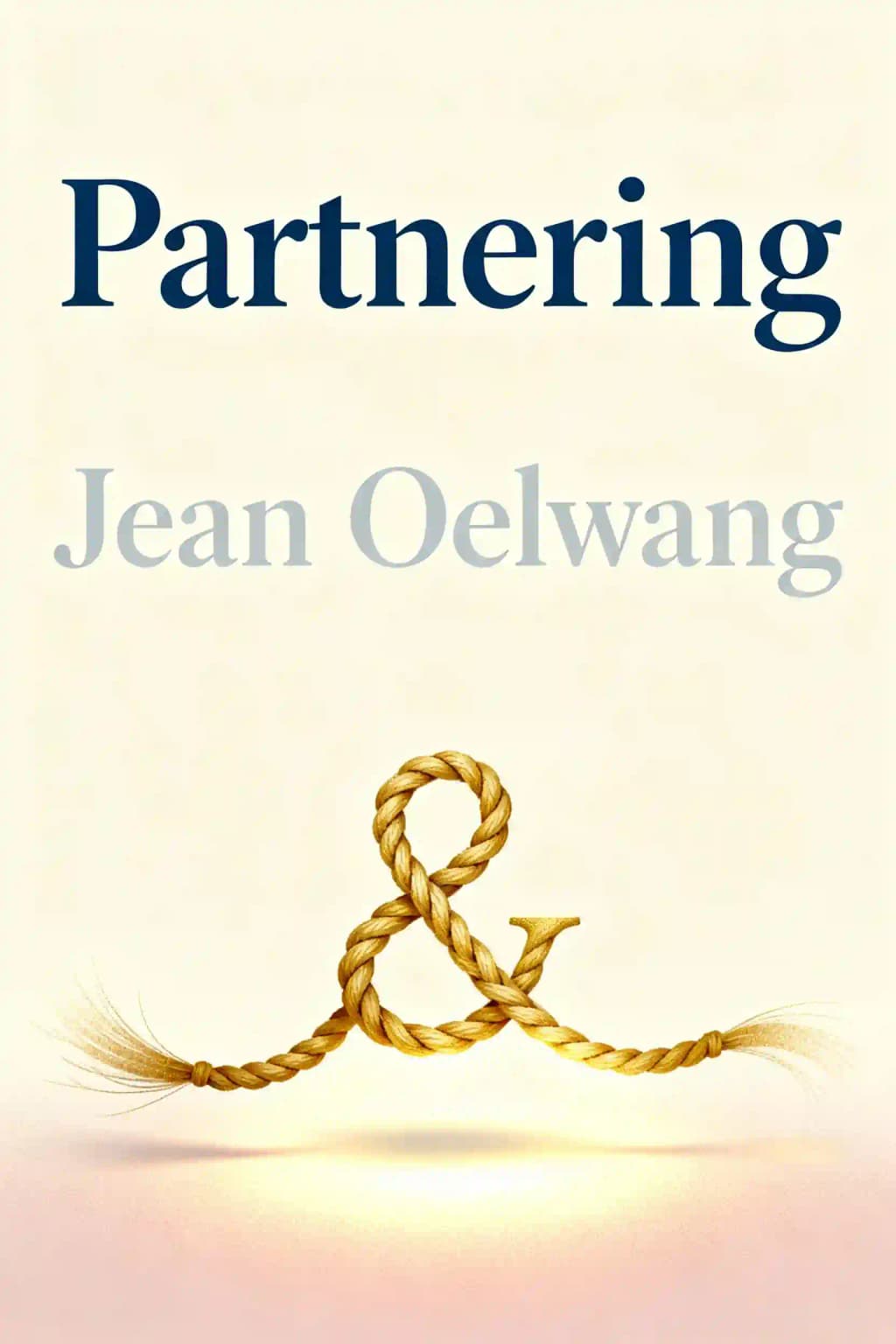
In 2006, Jean Oelwang found herself in Johannesburg with Richard Branson, meeting Nelson Mandela and Graca Machel to discuss The Elders initiative. Witnessing their profound connection, she experienced an epiphany that would transform her understanding of life's purpose. This moment launched her fifteen-year journey exploring extraordinary partnerships-relationships that multiply impact through collaboration rather than domination. "Partnering" has since become a cultural touchstone, endorsed by luminaries from Jimmy and Rosalynn Carter to Ben Cohen and Jerry Greenfield, and celebrated by Oprah's Book Club as essential reading for anyone seeking deeper human connection in our increasingly isolated world. Through interviews with over sixty remarkable partnerships representing 1,500+ years of collective wisdom, Oelwang discovered a framework for building relationships that not only enrich our lives but can literally save the world.
Chapitre 2
The Loneliness Epidemic and the Path to Connection
For decades, we've been conditioned to compete individually rather than connect deeply. The corporate world taught Oelwang that success meant to "bleed blue" and outshine everyone else. Her first boss gave her both "The Art of War" and "The Joy of Cooking"-business was battle, and women rarely survived it. This mindset permeated every aspect of professional life, from performance reviews that pitted colleagues against each other to bonus structures that rewarded individual achievement over team success. This led her through a successful but ultimately hollow career spanning six continents, changing partners with each country move and maintaining shallow connections she mistakenly believed were meaningful.
The consequences of our individualistic culture are devastating and far-reaching. As anthropologist Wade Davis notes, "When we liberated the individual from the collective, that was a sociological equivalent of splitting the atom." The resulting explosion has left us with widespread disengagement, loneliness, and a sense of purposelessness. Studies show loneliness is as damaging to health as smoking fifteen cigarettes daily, with 61% of Americans reporting feeling lonely despite our hyperconnected world. The health impacts extend beyond mental well-being - research indicates that chronic loneliness increases the risk of heart disease by 29% and stroke by 32%. Even more concerning is that young adults, despite being the most digitally connected generation, report the highest rates of loneliness.
What Oelwang discovered through her research was revolutionary yet simple: the path to a meaningful life lies in building Deep Connections-relationships that make both individuals better while making the world better. These connections follow discernible patterns that anyone can practice, summarized in the Six Degrees of Connection framework. The first degree, Something Bigger, focuses on elevating purpose through partnership, moving beyond self-interest to shared missions. All-In, the second degree, emphasizes creating complete safety and commitment in relationships, allowing vulnerability and trust to flourish. The Ecosystem maintains six essential virtues: humility, empathy, faith, courage, wisdom, and love. Magnetic Moments strengthens connections through intentional practices like shared rituals and meaningful traditions. Celebrate Friction transforms conflict into creative opportunity by embracing different perspectives. Finally, Collective Connections scales collaboration with Deep Connections at the center, creating ripple effects that extend far beyond individual relationships.
These principles apply equally in personal and professional contexts. Companies that foster deep connections among employees see increased innovation, reduced turnover, and higher productivity. Communities built on these principles show greater resilience during crises and more effective problem-solving capabilities. The framework provides practical tools for transforming surface-level networking into profound, lasting relationships that serve both individual growth and collective progress.
Chapitre 3
Something Bigger: Finding Purpose Through Partnership
The most powerful partnerships form when individuals shape and grow into something bigger-whether that's a personal mission or shared goal. This "something bigger" serves as both the foundation for enduring relationships and the catalyst for meaningful impact.
Consider the remarkable story of Professor Frank Sherwood "Sherry" Rowland and Mario Molina. When Mario joined Sherry's postdoctoral program in 1973, they discovered that chlorofluorocarbons (CFCs) were destroying the earth's ozone layer, threatening all life on the planet. Despite their different personalities-Mario being warm and soft-spoken while Sherry was confident though somewhat shy-they developed a deep friendship that enabled them to withstand fierce attacks from both industry and fellow scientists. Rather than remaining silent, they actively campaigned to alert the world to the danger, asking "What's the use of having developed a science well enough to make predictions if, in the end, all we're willing to do is stand around and wait for them to come true?" Their shared purpose bound them together in a lifelong connection that transcended their scientific work.
The anti-apartheid movement in South Africa provides another powerful example. At its center was a group including Walter Sisulu, Albertina Sisulu, Oliver Tambo, Ahmed Kathrada, Nelson Mandela, Archbishop Tutu, and Leah Tutu-friends bonded by decades of struggle who inspired a global resistance movement. Archbishop Desmond Tutu and his wife Leah, who celebrated their sixty-sixth wedding anniversary in 2021, demonstrate how Deep Connection sustains purpose through hardship. Their relationship, filled with laughter, mutual affirmation, and unwavering support, gave them strength during apartheid's darkest days.
Your purpose doesn't need to be earth-shattering-it simply needs to be bigger than yourself and make a positive difference in others' lives. Whether raising children, connecting people through technology, or creating a positive workplace, what matters is authenticity. True purpose can't be driven by ego, power, or money, but must focus on creating positive change that aligns with your unique skills and identity.
Some partnerships share a common purpose, some support each other's individual missions, and some blend both approaches. Chris Anderson (TED curator) and Jacqueline Novogratz (Acumen founder) exemplify this balance-they pursue individual purposes while sharing a commitment to human dignity. Their mutual support enables risk-taking: when Jacqueline was caught in crossfire in Pakistan, Chris responded not with fear but pride and support.
Chapitre 4
All-In: The Commitment to the Commitment
Going all-in means making "a commitment to the commitment" as Jacqueline Novogratz calls it-a conscious decision to be there for each other and your mission, no matter what. It creates a safe home where you can be vulnerable and take risks knowing someone will catch you.
When fourteen-year-old Tony Hicks killed Azim Khamisa's son Tariq during a gang initiation, Azim responded with extraordinary forgiveness. Rather than seeking vengeance, he invited Tony's family into his home and saw the boy as "a victim of society" rather than an enemy. Azim and Tony's grandfather Ples Felix-a Muslim former investment banker and Baptist former Green Beret-forged an unlikely friendship across profound differences. United by spiritual values of love and compassion, they built trust through consistent behavior toward their shared purpose: preventing youth violence.
Ben Cohen and Jerry Greenfield's partnership works precisely because of their differences: Ben is a boundless visionary while Jerry is an operational genius. Their secret to success? Being "all-in!" They built their business by doing whatever needed doing-scooping ice cream, hosting movie nights, even sleeping on freezers. Their mantra "friends before partners" underscores that authentic friendship and mutual hard work toward common purpose ground their all-in relationship.
All the partnerships interviewed emphasized that staying all-in requires consistent mutual hard work and self-sacrifice for collective goals. Nicholas Kristof discovered this when asking couples celebrating golden anniversaries about their secret-every couple said "hard work" makes relationships last. Nicholas and his wife Sheryl WuDunn exemplify this, acknowledging their complementary relationship requires compromise and hard work grounded in mutual respect, even when each is convinced they're right.
The greatest threat to all-in relationships is imbalance in commitment and engagement. Couples therapist Esther Perel identifies two patterns of growing apart: constant conflict or complete disengagement. John Gottman's research shows successful partners acknowledge each other's "bids for attention" 86% of the time, compared to just 33% in troubled relationships.
Embracing vulnerability is the fastest path to becoming all-in, often beginning by releasing fears. Keith Yamashita and Todd Holcomb's relationship transformed when Todd became severely ill with Lyme disease. Keith's sacrifice to care for Todd created a safe space where Todd could finally let go of his fears about the relationship and commit completely. "You have to be willing to love before being loved," Keith explained, "and you have to be willing to trust before being trusted."
Chapitre 5
The Ecosystem: Six Virtues That Sustain Connection
Values and virtues aren't just wall decorations-they must be lived consistently as a spiritual operating system guiding every action. The moral ecosystem that appeared in all successful partnerships creates an environment of kindness, grace, and compassion that makes being all-in both possible and sustainable.
The ecosystem thrives through daily practice of six essential virtues that create psychological safety in partnerships:
1. Enduring Trust: Trust forms the foundation of meaningful partnerships, requiring deliberate cultivation. At Airbnb, they normalize difficult conversations by discussing "elephants, dead fish and vomit"-the big unspoken issues, lingering past problems, and things people need to get off their chest.
2. Unshakable Mutual Respect: Robert P. George and Cornel West exemplify this virtue through their fourteen-year friendship despite polar opposite political beliefs. These intellectual rivals-one a conservative Christian thinker, the other a Democratic Socialist-speak of each other with reverence, demonstrating how respect transcends disagreement.
3. United Belief: This transforms seemingly impossible ideas into reality through collective confidence. When The Elders concept was initially rejected by President Carter, Jean Oelwang, Richard Branson, and Peter Gabriel regrouped with partners to co-create a stronger vision for global Elders working on peace, nuclear disarmament, and human rights.
4. Shared Humility: The Draper Richards Kaplan Foundation exemplifies this virtue-when Jean arrived to interview the three cofounders (Bill Draper, Robin Richards Donohoe, and Rob Kaplan), they insisted on including their entire leadership team, refusing to take sole credit for their work.
5. Nurturing Generosity: Wharton professor Adam Grant's research shows that while self-interested "takers" might win temporarily, they eventually exhaust their relationships. In contrast, "givers" achieve greater long-term success and happiness.
6. Compassionate Empathy: This goes beyond merely understanding someone's feelings-it involves taking loving action to alleviate suffering. Creating safe spaces for vulnerability allows partners to open up authentically. Jo Confino describes this as acting like a "tuning fork"-showing vulnerability gives others permission to be vulnerable too.
Living these virtues means making difficult trade-offs, like when Leah Tutu trusted Arch's decision to speak against apartheid despite potential imprisonment. Over time, these virtues become reflexive responses, creating an environment of kindness and unconditional love-a key factor in successful teams, as Google's Project Aristotle discovered.
Chapitre 6
Magnetic Moments: The Rituals That Deepen Connection
Deep Connection isn't spontaneous-it requires intentionally created "magnetic moments" that allow people to be present together. These carefully crafted moments take the form of rituals, traditions and daily practices that deepen wonder and love in relationships. From the Carters meeting daily on the Truman Balcony to discuss world affairs over coffee, to Richard Branson and Peter Gabriel's playful tradition of pouring water on each other when they take themselves too seriously, these rituals create the foundation for lasting bonds.
Cambridge University friends Richard, Adam, and Jon built Innocent Drinks on team-oriented rituals that strengthened their partnership and company culture. Their Home Juicing Guarantee wasn't just clever marketing - it was a genuine promise that if customers weren't satisfied, one of the founders would personally squeeze oranges at their home. Their quarterly off-sites evolved from casual meetings in local pubs to elaborate European "Nature Weekends" where teams would disconnect from technology and reconnect with each other through outdoor adventures and strategic planning. Their Big Knit initiative has raised 2.5 million for Age UK through volunteer-knitted bottle caps, creating a community ritual that extends beyond the company walls.
Magnetic moments fall into four essential categories that build and sustain deep connections:
1. Joy and Play: The most successful partnerships embrace joy and play as essential practices rather than frivolous diversions. Joy creates trust, relieves tension, and fosters vulnerability. Richard Branson and Peter Gabriel built The Elders while maintaining a friendship filled with laughter and pranks, once competing to teach Archbishop Tutu to swim. Other examples include Warren Buffett playing ukulele at company meetings or Google's tradition of April Fools' Day pranks that unite employees in shared humor.
2. Curiosity and Wonder: Magnetic moments that spark curiosity keep partnerships vibrant and in constant flow. Many successful partnerships prioritize asking questions over being "right." Mick and Caskey Ebeling extended this approach to their company, Not Impossible Labs, where they gather diverse teams to tackle "impossible" problems through naive questioning. Their projects, including creating 3D-printed prosthetics for Sudan war victims, began with simple questions like "Why not?" and "What if?"
3. Honest Communication: Jo Confino and Paz Perlman exemplify this with their "Friday Talk" ritual-a weekly practice where they discuss positives, regrets, and concerns without interruption. This prevents small grievances from calcifying into resentment. They maintain specific rules: no phones, no interrupting, and always ending with appreciation. Other partnerships use similar structured dialogue techniques, like the "rose, thorn, and bud" format, sharing a highlight, challenge, and hope from their week.
4. Community: The Okinawan "moais"-lifelong support groups of five friends who meet regularly-exemplify how community rituals foster healthy relationships. These groups commit to meeting for life, sharing meals, challenges, and celebrations. The Willis family maintains an open-door policy across generations, welcoming anyone with love regardless of background. Their Sunday dinners have become legendary, with an ever-expanding table that symbolizes their inclusive philosophy.
Taking care of yourself is also essential to building strong partnerships. Daily renewal practices create space for self-reflection and joy. These include walking in nature (preferably for at least 30 minutes), journaling specific observations and feelings, ensuring 7-8 hours of sleep, regular meditation or mindfulness practice, and maintaining healthy eating habits. Gratitude practices are particularly powerful; the author and her husband each write five things they're grateful for daily, forcing deeper appreciation. They review these together monthly, creating a shared archive of their relationship's positive moments and growth.
Chapitre 7
Celebrate Friction: Transforming Conflict into Growth
Even with perfect magnetic moments, friction is inevitable in partnerships. The key isn't eliminating it but harnessing it to deepen connection. Unlike media portrayals of dramatic conflict, successful partners approach disagreements as learning opportunities rather than personal attacks.
When Andre Borschberg and Bertrand Piccard completed the first solar-powered flight around the world in 2016, they credited their Deep Connection for their success. Early in their partnership, they faced tension when media recognized Bertrand as Solar Impulse's founder without mentioning Andre. Rather than letting this fester, they created private time to honestly share feelings without accusation. They developed a shared solution: Andre trained Bertrand to be a pilot while Bertrand trained Andre to be a speaker. They now consciously ensure each brings the other into the limelight.
They call conflicts "the sparkles"-opportunities to spark innovation through curiosity and humility, finding a third way that transcends their original positions. "We should never be the same after a discussion," Bertrand explained, "otherwise it means we learned nothing."
Twelve approaches help celebrate friction:
1. Understand the Why: Defusing conflict starts with compassionate, empathetic listening-prioritizing time together, hearing each other without judgment, and asking questions to understand rather than prove points.
2. What If the Other Person Is Right?: Andre and Bertrand always begin disagreements by asking, "What if the other person is right?" This creates space for deep listening and learning by acknowledging our own fallibility.
3. A Third Way: Beyond domination or compromise, great partners find a third way by "constructing a third idea" that combines the best of both perspectives.
4. A Courageous Space: Partners need courageous spaces for honest conversations. Azim created perhaps the most powerful example by inviting Ples, his son's killer's grandfather, into his living room.
5. Veto Power: Even the strongest partnerships need "correction mechanisms" for when celebrating friction feels impossible. Ben and Jerry established veto power for decisions either couldn't live with, using it rarely but protecting their friendship.
6. Humor: Peter Gabriel called humor "the best oil for any problems." A moment of laughter or self-deprecating joke brings lightness to difficult situations.
7. The Other 99 Things: Don't sweat the small stuff. Remember the ninety-nine things you love about someone when that one irritating thing happens.
8. Positive Amnesia: Many successful partners exhibit "positive amnesia"-they literally forget disagreements after resolving them.
9. Peace with Yourself: It's impossible to handle friction positively without inner peace. Jo and Paz stress "taking responsibility for your own buttons"-understanding your triggers from past experiences so you can manage them.
10. You Can't Read the Label from Inside the Jar: Be courageous enough to seek help when needed. Most successful partnerships occasionally need external perspective.
11. Finding Common Ground: Lawry Chickering and Jim Turner, lawyers from opposite political backgrounds, have spent twenty-five years reducing political conflict by focusing on common ground.
12. The Long Game: Enduring relationships require self-sacrifice. When both Gro and Arne Brundtland were rising political stars in opposing parties, Arne sacrificed his political career to "support the sum of the two of us."
Chapitre 8
Collective Connections: Scaling Impact Through Partnership
The Montreal Protocol, which banned ozone-depleting chemicals, stands as history's most successful global treaty. Without it, by 2050 people would suffer sunburns within five minutes, and the EPA estimates the U.S. alone would have faced 280 million additional skin cancer cases and 1.5 million cancer deaths.
This achievement wasn't the work of lone heroes but of thousands of people working together in a web of Deep Connections. The effort succeeded because it grew beyond a handful of copilots into global collaboration across sectors and borders. Though leaders like Thatcher and Reagan were important megaphones, the Montreal Protocol was delivered by thousands of people working together.
Six collaborative design principles, combined with the Six Degrees of Connection, create conditions for shared excellence in larger collaborations:
1. An Intoxicating "Something Bigger": What united Mostafa, Stephen, Sherry, and Mario was a sincere belief in saving humanity by closing the ozone hole, coupled with the humility to know they couldn't succeed alone.
2. Start and Strengthen: The Montreal Protocol began simply in a California lab with Sherry and Mario. Rather than being paralyzed by the enormity of engaging the entire world, Mostafa focused on starting with willing countries, building core circles of friends and gradually widening them.
3. Open Tent: Successful collaborations require independence from any single controlling entity. When one brand, individual, or set of interests tries to steer a collective effort, it crashes.
4. Unlikely Connections: The power of partnering different people with diverse backgrounds fueled wider collectives. The electric current of difference combined with equality within partnerships drove collaborative success.
5. Relational Scaffolding: Mostafa and Stephen created distributed leadership across thousands worldwide by architecting scaffolding that encouraged relationship-building and minimized conflict.
6. Culture of Service and Friendship: The Montreal Protocol's success hinged on a culture where adversaries became friends. When DuPont, the world's largest CFC producer, reversed its position in 1988 after new scientific evidence emerged, chief scientist Mack McFarland personally called Mario to share the news of their voluntary phase-out decision.
These same principles helped eradicate smallpox, a disease that killed 300 million people in the 20th century alone. In 1974, American doctor Larry Brilliant confronted Russi Mody, a Tata Group executive in India, about smallpox spreading from his company town. After an all-night conversation, Russi called CEO J.R.D. Tata, who committed $50 million, 500 jeeps, and 500 managers to combat the epidemic. Together, they built a collective of 180,000 people who went village to village vaccinating and isolating cases.
Chapitre 9
The Interconnected Future: From Me to We
We now face unprecedented global challenges that demand a fundamental shift in how we work together. Johan Rockstrom's Planetary Boundaries framework identifies nine critical Earth processes that maintain our planet's stability. Alarmingly, four of these boundaries have already been breached: climate change and land-use changes have entered the uncertainty zone, while biodiversity loss and nitrogen/phosphorus cycles have crossed into the high-risk zone. These aren't isolated problems - each boundary interacts with and amplifies the others, creating complex feedback loops that threaten Earth's operating systems.
With these planetary boundaries compromised, we face an urgent challenge requiring collaboration at a scale humanity has never attempted. Yet our cultural narratives remain stubbornly focused on individual heroes and lone innovators, overlooking the networks of collaborators who drive real systemic change. The COVID-19 pandemic starkly exposed both our global interconnectedness and our collective unpreparedness. However, it also sparked remarkable examples of cooperation, such as the African Union's coordinated pandemic response, where leaders like John Nkengasong united 55 nations to share resources, expertise, and medical supplies, demonstrating the power of prioritizing collective welfare over individual interests.
The transition from competition to cooperation requires fundamental changes in how we think and work. This means actively seeking out missing voices by asking "who's not at the table?" and challenging our tendency toward siloed thinking and tribal affiliations. Management consultant Keith Yamashita observes that organizations often waste enormous energy on internal power struggles when combining strengths could achieve extraordinary outcomes. He points to successful examples like the partnership between Apple and IBM, former rivals who joined forces to transform mobile enterprise computing.
The partnerships showcased throughout Oelwang's book illustrate how the Six Degrees of Connection framework can build transformative relationships that reshape businesses, communities, and global systems. Historical achievements prove our collective capability: the international cooperation that closed the ozone hole through the Montreal Protocol, the WHO-led global collaboration that eradicated smallpox, and the multi-national partnership that developed solar-powered flight through Solar Impulse.
Nothing matters more than the partnerships that shape our identity and impact in this world. As wrongfully imprisoned Ray Hinton reflected after 30 years on death row, his deepest wish was simply "for everyone to have a friend like Lester" - his best friend who visited him every week for three decades. In our current era of increasing polarization, digital isolation, and global challenges, this fundamental truth about human connection offers not just hope but a practical pathway forward. By building one meaningful relationship at a time, we can weave the collaborative networks needed to address our most pressing challenges and create a more sustainable, equitable future.