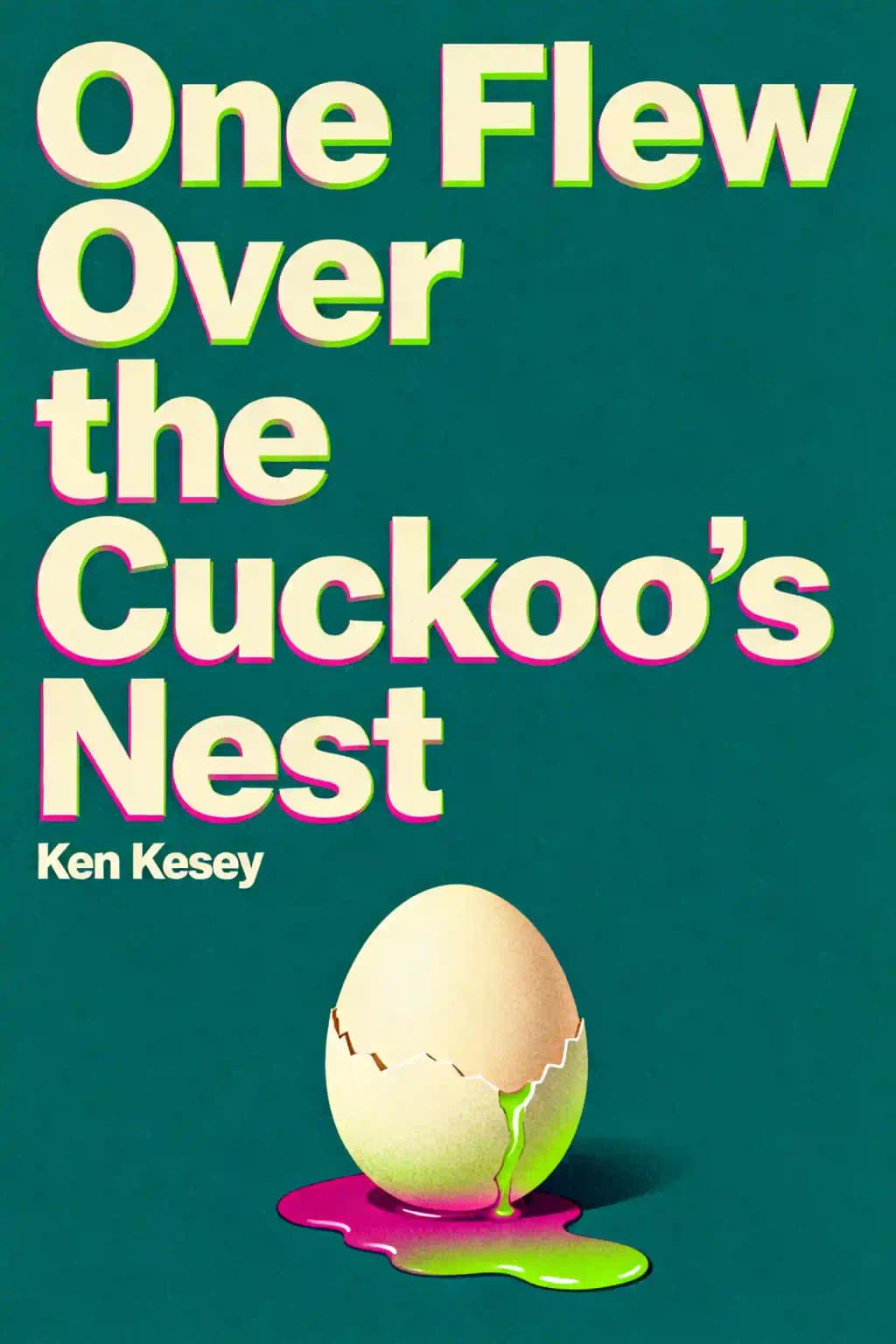
Kesey's rebellious masterpiece inspired a film that swept the "Big Five" Oscars - a rare feat that shocked Hollywood. Can a story about mental institutions challenge how we view freedom itself? The cultural phenomenon grossed $108 million on a $4 million budget.
Kenneth Elton Kesey (1935–2001) was the groundbreaking author of One Flew Over the Cuckoo's Nest and a seminal figure in American countercultural literature. Born in Colorado and raised in rural Oregon, Kesey studied creative writing at Stanford University, where he volunteered for government experiments with psychedelic drugs and worked as an aide in a psychiatric hospital. These experiences directly informed his debut novel, a searing psychological drama that explores themes of individuality, institutional oppression, and the abuse of power within the mental health system.
Published in 1962, the book became an immediate commercial and critical success, establishing Kesey as a master of social commentary and character-driven storytelling. His follow-up novel, Sometimes a Great Notion (1964), further cemented his literary reputation with its epic portrayal of Oregon loggers.
Beyond writing, Kesey became a countercultural icon, founding the Merry Pranksters and influencing the psychedelic movement of the 1960s. One Flew Over the Cuckoo's Nest was adapted into a 1975 film that swept all five major Academy Awards, solidifying its place as an American classic.
One Flew Over the Cuckoo's Nest by Ken Kesey is a novel set in an Oregon psychiatric hospital that explores themes of freedom, conformity, and institutional control. The story follows Randle McMurphy, a rebellious patient who challenges the oppressive authority of Nurse Ratched, inspiring other patients to reclaim their individuality and dignity in a system designed to suppress them.
One Flew Over the Cuckoo's Nest is ideal for readers interested in psychological fiction, social commentary, and stories about resistance against oppressive systems. It appeals to those exploring questions of sanity, institutional power, and human dignity, as well as anyone seeking to understand how societal conformity impacts individual freedom and mental health.
One Flew Over the Cuckoo's Nest remains a powerful, thought-provoking read that challenges perceptions of sanity, authority, and freedom. Ken Kesey's masterful storytelling and profound themes about institutional control versus human dignity make it a timeless classic that resonates with contemporary discussions about mental health, autonomy, and resistance to oppressive systems.
Ken Kesey wrote One Flew Over the Cuckoo's Nest drawing from his experiences working night shifts at a psychiatric hospital and participating in government-sponsored drug experiments. His firsthand exposure to institutional psychiatric care and the dehumanizing treatment of patients inspired him to critique how society defines sanity and exercises control over those deemed mentally ill.
The Combine in One Flew Over the Cuckoo's Nest represents Chief Bromden's concept of society as a massive, mechanized force that oppresses individuals and demands conformity. Ken Kesey uses this metaphor to illustrate how powerful institutions—government, medical systems, social structures—work together to regulate, control, and strip people of their autonomy and individuality.
Chief Bromden pretends to be deaf and mute as a protective strategy to avoid drawing attention and escape the oppressive control of the psychiatric institution. This deliberate act of invisibility allows him to observe the ward's power dynamics undetected while symbolizing his loss of voice and identity under institutional dehumanization. His pretense becomes both survival mechanism and metaphor for societal silencing.
Nurse Ratched represents institutional control and the destructive power of authoritarian systems that prioritize conformity over human dignity. Ken Kesey portrays her as a metaphor for oppressive forces—government, society, medical establishments—that manipulate, shame, and punish individuals to maintain order. Her mechanical precision and emotional manipulation strip patients of autonomy, making her one of literature's most iconic antagonists.
Randle McMurphy challenges the psychiatric ward's oppressive system by introducing gambling, laughter, rebellion, and individuality to inspire patients to reclaim their dignity. He organizes unauthorized activities like watching the World Series and a fishing trip, directly defying Nurse Ratched's control. McMurphy's resistance empowers patients to question authority, though his ultimate sacrifice—receiving a lobotomy—demonstrates the brutal cost of challenging institutional power.
The ending of One Flew Over the Cuckoo's Nest shows Chief Bromden smothering the lobotomized McMurphy as an act of mercy, then escaping the hospital by throwing a control panel through a window. This climax represents both tragedy and triumph: while McMurphy is destroyed by the system, his spirit liberates Chief Bromden, who reclaims his voice, strength, and freedom by finally breaking free from institutional confinement.
The fog in One Flew Over the Cuckoo's Nest symbolizes Chief Bromden's hallucinations and represents the confusion, powerlessness, and obscured reality created by institutional control. Ken Kesey uses fog as a metaphor for how oppressive systems cloud patients' perceptions and strip away their sense of self. As Chief regains strength through McMurphy's influence, the fog dissipates, symbolizing clarity and restored agency.
One Flew Over the Cuckoo's Nest questions who defines sanity and insanity, suggesting the psychiatric institution itself may be insane. Ken Kesey portrays patients as damaged individuals who don't fit rigid societal norms rather than truly insane. The novel challenges readers to consider whether systems designed to "cure" mental illness actually perpetuate harm by labeling nonconformists as crazy to justify control and suppress individuality.
Critics note that One Flew Over the Cuckoo's Nest portrays Nurse Ratched as a one-dimensional villain, potentially reinforcing gender stereotypes about domineering women. Some argue the novel's masculine-focused narrative marginalizes female perspectives and sexuality. Additionally, the book's 1960s counterculture lens and treatment of mental illness may feel dated to modern readers familiar with contemporary psychiatric care and more nuanced discussions of institutional reform.
Ressentez le livre à travers la voix de l'auteur
Transformez les connaissances en idées captivantes et riches en exemples
Capturez les idées clés en un éclair pour un apprentissage rapide
Profitez du livre de manière ludique et engageante
Man, when you lose your laugh, you lose your footing.
I been silent so long now it's going to roar out of me like floodwaters and you think I'm shouting.
That nurse ain't some kinda monster chicken, buddy, what she is is a ball-cutter.
The ward exists in a perpetual fog...where men hide from reality rather than face it.
Décomposez les idées clés de One Flew Over the Cuckoo's Nest en points faciles à comprendre pour découvrir comment les équipes innovantes créent, collaborent et grandissent.
Condensez One Flew Over the Cuckoo's Nest en indices de mémoire rapides mettant en évidence les principes clés de franchise, de travail d'équipe et de résilience créative.

Découvrez One Flew Over the Cuckoo's Nest à travers des récits vivants qui transforment les leçons d'innovation en moments mémorables et applicables.
Posez n'importe quelle question, choisissez la voix et co-créez des idées qui résonnent vraiment avec vous.

Cree par des anciens de Columbia University a San Francisco
"Instead of endless scrolling, I just hit play on BeFreed. It saves me so much time."
"I never knew where to start with nonfiction—BeFreed’s book lists turned into podcasts gave me a clear path."
"Perfect balance between learning and entertainment. Finished ‘Thinking, Fast and Slow’ on my commute this week."
"Crazy how much I learned while walking the dog. BeFreed = small habits → big gains."
"Reading used to feel like a chore. Now it’s just part of my lifestyle."
"Feels effortless compared to reading. I’ve finished 6 books this month already."
"BeFreed turned my guilty doomscrolling into something that feels productive and inspiring."
"BeFreed turned my commute into learning time. 20-min podcasts are perfect for finishing books I never had time for."
"BeFreed replaced my podcast queue. Imagine Spotify for books — that’s it. 🙌"
"It is great for me to learn something from the book without reading it."
"The themed book list podcasts help me connect ideas across authors—like a guided audio journey."
"Makes me feel smarter every time before going to work"
Cree par des anciens de Columbia University a San Francisco

Obtenez le resume de One Flew Over the Cuckoo's Nest en PDF ou EPUB gratuit. Imprimez-le ou lisez-le hors ligne a tout moment.
In the sterile halls of an Oregon psychiatric hospital, a perfectly calibrated machine runs under Nurse Ratched's meticulous control. Her starched uniform, rigid posture, and calculating smile embody the mechanical precision she demands. The ward hums with perpetual Muzak playing through hidden speakers, while the clock runs at deliberately altered speeds-all designed to keep patients docile and compliant. Through the eyes of our narrator, Chief Bromden-a half-Native American patient feigning deaf-muteness-we see beyond the antiseptic facade to what he calls "the Combine," a vast mechanized conspiracy processing humans into conformity. The fluorescent lights buzz constantly, the floors gleam with unnatural shine, and the air feels sanitized of human warmth. Nurse Ratched's most insidious tool is the group therapy session, which she transforms into what newcomer McMurphy accurately labels a "peckin' party." During these orchestrated meetings, patients are manipulated into attacking each other's vulnerabilities while staff clinically document each emotional wound. When patient Pete Bancini briefly rebels, crying out that he's "born dead," the response is swift-he's efficiently sedated, becoming "like an old clock that won't tell time but won't stop neither." In this carefully constructed environment, patients have surrendered their humanity, becoming what intellectual patient Harding describes as "rabbits" too afraid to challenge the "wolf" that rules them. The ward exists in perpetual fog-both literal in the Chief's hallucinations and metaphorical in the patients' chemically dulled consciousness.