Chapitre 4
The Silent Language of Family Fracture
My parents separated when I was five, my sister just a baby. I remember them as happy once-birthdays, hide-and-seek, shared adventures. Then came winter, fighting, a hot water bottle thrown against the wall. When they split, I cheered: "no more fighting." Our new life meant damp walls, credit at the local shop, weekend visits with Dad who made toasted sandwiches on a machine you had to stand on.
After my parents split, they initially maintained a civil relationship. Then my father stopped speaking to my mother, and I became their go-between. I arranged visits, delivered letters, and shouldered impossible burdens-like the night my ten-year-old self received my father's suicide threat by phone. Without divorce being legal in Ireland, our family existed in limbo. We had no legal protections, no regular child maintenance. My mother supported us alone while my father spent his money on drinking.
At eighteen, I voted in my first referendum-on legalizing divorce in Ireland. The bill passed by just 9,114 votes, allowing divorce after three years of separation. My parents had been separated fifteen years by then. That spring, I was moved to tears by a travel agent's sign: "Package Holiday Deal: 1 Parent + 2 Kids." For the first time, I saw my family reflected publicly. We existed.
In my mid-twenties, my father asked me to ask my mother for a divorce. When I relayed the question, Mom joked she was "still hoping for reconciliation." Though I told Dad she would grant the divorce, nothing happened-his engagement ended, he moved to Greece, and the divorce slipped everyone's mind. Years later, when Mom's solicitor worried about property claims, I helped Dad sign a new separation agreement. At the time of writing, they remain married-qualifying for twelve divorces.
After thirty years of silence, my parents finally spoke again in January 2013, brought together by the death of my sister's baby daughter. For my sister, who'd been a baby when they split, seeing her parents talk for the first time was revolutionary. Mom later revealed they discussed Dad's liver failure, a mutual friend's death, and even a miscarriage they'd never spoken about before. Though they now speak regularly and even meet for coffee, I'm surprised by my anger at this new parental status quo-confused, relieved, but also resentful that their decades of silence could simply end without anyone ever apologizing to me or my sister.
Chapitre 5
Blood and Taboo: The Female Body Speaks
The male-centric metaphor of "bleeding onto the page" for good writing contrasts sharply with my actual experience of menstrual blood that society demands be hidden and contained. I was mortified getting my first period during geography class when a friend pointed out blood on my dress and chair. In the girls' toilets, I wadded toilet paper to protect myself, later shoplifting tampons rather than discussing it with my mother. At twelve, I felt betrayed by my body and dreaded the lifetime of bleeding ahead.
The term "feminine hygiene" frames menstrual blood as dirty, something to sanitize. Advertisements use blue liquid instead of showing actual blood, making our bodies' reality taboo. Even modern ads with their uplifting rock songs and smiling teenagers celebrating while menstruating still avoid showing blood. The feminist slogan that "a woman can do anything a man can do, and do it while bleeding" makes me laugh but also wonder-what if I can't? Sometimes my hormones leave me doubled over in pain, wanting only to return to bed.
Blood becomes most taboo during sex. While some men desire menstrual sex, my experiences have been humiliating-like when a partner screamed upon seeing blood, or when another claimed to be "fine with it" but rushed to wash the sheets immediately after. As months of trying to conceive stretched into years, my period became a curse marking my infertility. I couldn't even say "I'm bleeding" to my boyfriend, instead channeling my grief into shopping sprees.
Now I check my body with dread, hoping for blood that increasingly doesn't come. The gradual shift toward menopause in my late thirties signals my childbearing years ending-a greater loss because there was no actual childbearing, only miscarriage. My symptoms include orgasms that cause elephant-flooring cramps, less perky breasts, unpredictable temperature regulation, worse PMS, days of despair, and rare, unpredictable bleeding. When a friend called us "middle-aged," I resisted fiercely-perhaps because if getting my period meant "becoming a woman," its end feels like the end of womanhood itself.
I'm questioning what part of me is constituted by my body. Women are trapped in rituals of bodily self-appraisal, constantly comparing ourselves to others with a negative internal cheerleader telling us our bodies aren't acceptable. Getting truly naked means not just removing clothes but reversing the dialogue that my body is a source of grief. If my body could tell its own story, it would speak of blood's flow and ebb, of touch and pleasure, of illness and recovery, of joy and transformation. It would sound strong, loud, and proud. And I am finally listening.
Chapitre 6
The Dissociation of Adolescent Survival
"I'm not here." This is what I'm thinking as his hands are on me, his hands and his mouth and the rest of him, all telling me that he wants to be inside me. I'm not here. Because I shouldn't be here. I'm only sixteen, my mum doesn't know where I am, it's a school night, I should be tucked up in my own bed, not being fucked on someone else's.
After my parents separated, we had very little money, a fact I was constantly aware of. At ten years old, I discovered the power of not eating. I refused the free school sandwiches, then my packed lunch, satisfying myself with just an apple before stopping that too. I found I had a talent for hunger. Not eating made me feel clean, light and powerful. Though I stayed thin and got sick often, I maintained this secret control, eating just one meal daily.
By thirteen, I'd finally found friends who seemed to like me, though my thinness remained my most valued attribute. I discovered new ways to use my body, learning that boys' attention could give me that same feeling of triumph I'd found through not eating. I craved affection but settled for physical encounters, afraid of being labeled "frigid" while desperately wanting to be touched with kindness.
When I was fourteen, my mum's job took us to London where I became the audacious girl in lipstick and short skirts, lying about my age to get into clubs. I partied with music promoters, drank neat vodka, and smoked high-tar cigarettes. Despite my recklessness, I maintained boundaries-no crack or heroin-believing this would keep me safe. Yet danger followed: aggressive men, head injuries from violence, chronic undernourishment, and dangerous encounters with predatory drivers.
I spent nights at nightclubs, going home with strangers after drinking until I could barely stand. During these encounters, I mentally repeated "I am not here," separating body from self. I thought I was trading my body advantageously, but I was really assigning myself no value at all. Though I maintained a happy facade, I became emotionally cold and distant, developing an internal fault-finding dialogue that still keeps me awake at night.
At fourteen, a man sexually harassed me on the Tube while I cried openly, yet no adults intervened. By eighteen, I'd heard that one in four women would be raped, but didn't count myself among them until age thirty-nine when I finally recognized two experiences as rape. The first was by a boyfriend who forced himself on me despite my protests, his hand on my throat. The second was by an older man who pinned me down at a friend's flat. When I asked the second man why he'd done it, he said "It's just something about you, a vibe you give off"-a damaging explanation I internalized for decades before realizing the "vibe" was simply being young, vulnerable and female.
Despite my damage, I made it through school and earned a place at an Irish university where I finally felt at home. College gave me control over my life, which helped ease my eating disorder. Learning about sexual pleasure in my twenties was revolutionary; discovering that sex could be fun transformed my relationship with my body. Only in my thirties did I fully embrace the radical notion of physical pleasure and agency, finally able to say "I am very much here" instead of my former mantra of absence.
Chapitre 7
Academia's Hidden Costs: Gender, Power, and Burnout
As a child without friends or a bicycle, I convinced myself I preferred walking and staying home reading. In my thirties, living alone in a new country, I finally attempted to learn. After days of practicing balance on a pedal-less bike, I experienced the exhilarating sensation of flying. This accomplishment left me wondering why I'd been so frightened and why I couldn't "just let go" more often in life.
As a university lecturer, I aspire to create safe spaces where students can take intellectual risks. I worry particularly about female students who remain silent in class despite having brilliant ideas in private conversations. This silence stems from societal conditioning-girls taught they're not good enough to be heard. I experienced this myself: at twelve, discovering a school where girls took home economics while boys got extra math, and later losing 1% on exams to male classmates for no apparent reason.
Working in a male-dominated academic field, I've experienced casual sexism despite avoiding overt discrimination. I've been talked over, shouted at in meetings, and called a "feminazi" by a photographer who expected me to pose cozily with male colleagues. When men tell me I "look young," they strip away my professional experience under the guise of complimenting me. After giving a lecture on women's testimonies about rape, a Faculty Chair commented on my appearance being at odds with my subject matter, calling me "cute."
I've recently learned something surprising about myself: apparently, I lack empathy. The HR consultant explained I focus on solving problems rather than connecting emotionally. I realized I've internalized the idea that showing feelings at work is feminine and therefore weak. After my miscarriage, I didn't share my sadness with colleagues, instead maintaining a professional facade. I've come to see how my antipathy toward emotion reflects my own internalized sexism, despite my outward feminism.
Like most women, I've always craved being likable-it's expected of us. Yet this desire holds us back professionally, as we take on pastoral care and paperwork while men advance by being "bold" and "uncompromising." Success increasingly means bringing in money. When I secured funding, I didn't realize I was taking on a second job managing a large project. I kept accumulating responsibilities-journal editorship, book contracts, conferences-smiling when people asked if I ever slept because this overwork looked like success.
My breakdown started during conference season. At the airport, forgetting my jacket triggered a panic attack. I was exhausted but high on the hypomania of constant work, flying between countries giving lectures while finishing a funding application. After submitting it, I realized I was alone in the building, couldn't remember my last meal. The next evening, I crashed my car into a wall. My first thoughts were for my nephew and the damage-only later wondering if I was alright.
I once took a "Mindfulness for Academics" course where twenty of us voiced the same complaint: our jobs are too stressful. In hindsight, we needed less work, not more mindfulness. We were cannibalizing ourselves-or the university was cannibalizing us. There's no mechanism to tell university leadership (mostly men) that employees need to slow down.
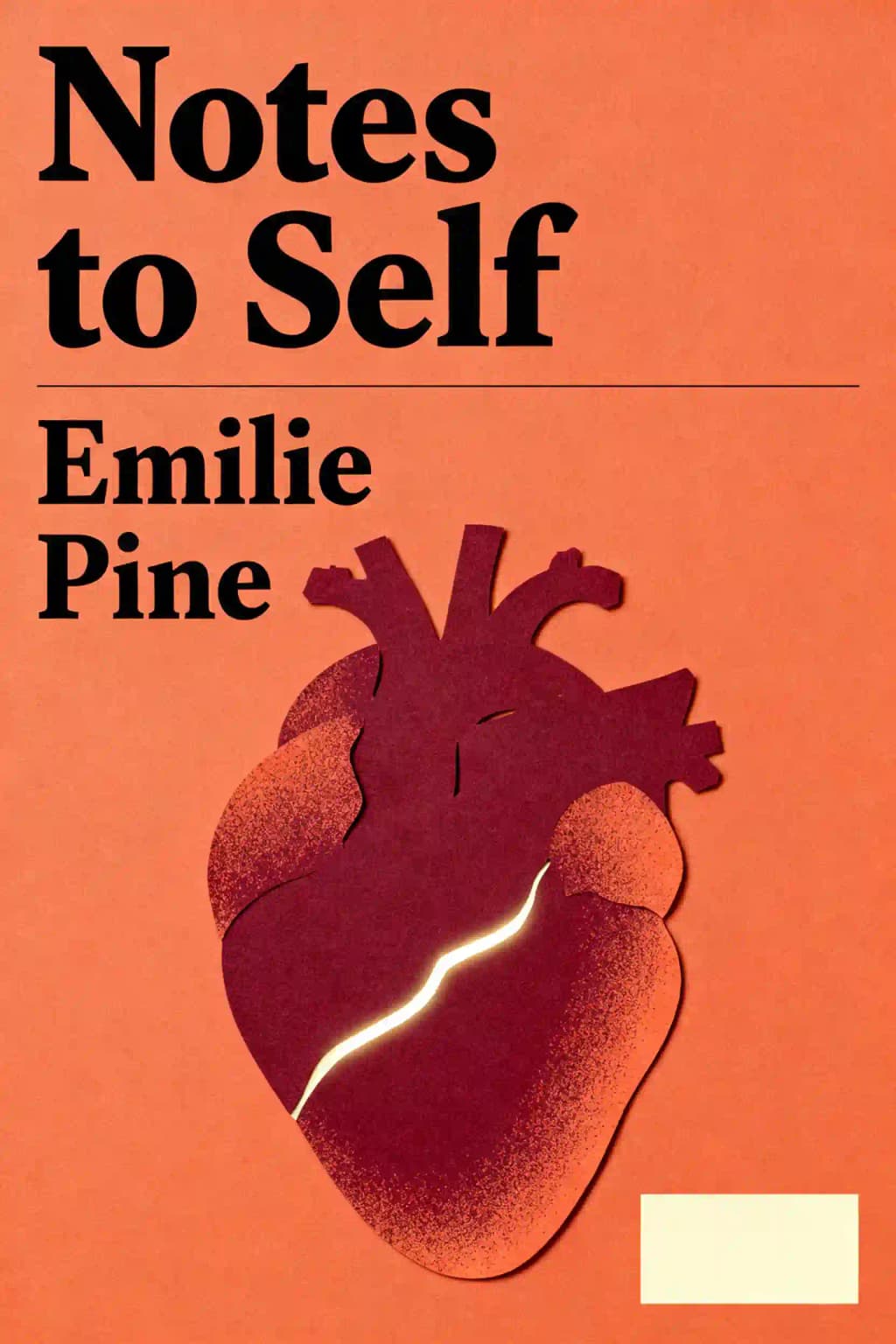
After the crash, I created a new kind of to-do list-notes to self. I will value my ideas and feelings. Write daily. Teach passionately. Say "rape" aloud regardless of my attire. Call out misogyny. Fight internalized sexism. Be kind to colleagues whose struggles remain hidden. Eat proper meals (not at my desk). Pay attention to my middle-aged body. Spend time with loved ones. I'm afraid to write about vulnerability, breakdown, and depression-afraid it makes me seem weak, confirms I'm young, cute, and powerless. I'm afraid, but I'm doing it anyway.
Chapitre 8
Breaking the Silence: From Private Pain to Public Voice
What began as private notes hidden in a drawer-Emilie Pine's attempt to process her contradictory feelings about her father's illness-evolved into something far more significant. When her partner discovered these pages and encouraged her to share them, Pine began writing about experiences she'd never shared before, painful to excavate but necessary to reclaim denied parts of herself. These raw, unfiltered thoughts became the foundation for "Notes to Self," a collection of essays that resonated deeply with readers who responded with their own stories of pain and vulnerability, creating an unexpected dialogue about shared human experiences.
Pine's essays tackle subjects often shrouded in silence-alcoholism, infertility, sexual violence, family dysfunction, menstruation, and professional burnout. By breaking these silences, she demonstrates that vulnerability isn't weakness but strength. When she writes about her father's alcoholism, she's not just telling a personal story but illuminating the complex dynamics of loving an addict: the constant anxiety, the cycle of hope and disappointment, and the exhausting dance between enabling and tough love. When she details her miscarriage and fertility struggles, she's challenging the cultural taboo against discussing women's reproductive experiences, from the clinical sterility of IVF clinics to the profound loneliness of pregnancy loss. When she recounts her adolescent self-destructiveness, she's examining how young women learn to disconnect from their bodies as a survival mechanism, revealing the subtle ways society teaches girls to doubt and deny their own experiences.
Throughout these essays, Pine shows how silence perpetuates suffering. The silence between her parents that lasted thirty years, creating a chasm that shaped their children's understanding of relationships. The silence around menstruation that makes women feel ashamed of natural bodily functions, forcing them to navigate professional spaces while hiding fundamental aspects of their existence. The silence that prevented her from recognizing sexual assault for what it was, illustrating how lacking the language to name our experiences can trap us in confusion and self-doubt. The silence in academic settings that allows sexism to flourish unchallenged, from subtle microaggressions to overt discrimination.
What Pine ultimately offers isn't just her personal story but a masterclass in how writing can be an act of reclamation. "Breaking the silence isn't about bravery," she writes, "it's about what we choose to do with our vulnerability." Through these essays, she transforms private pain into public voice, isolation into connection, showing how personal narratives can become powerful tools for social change. She demonstrates that the very act of writing about our experiences can reshape them, turning moments of shame into sources of strength, and private struggles into bridges of understanding. What began as an attempt to make sense of her own life became a beacon for others, proving that our most personal stories often hold universal truths. We have so many stories to tell, and Pine shows us that in telling them, we not only free ourselves but create space for others to do the same.