Chapitre 1
Gods and Monsters: A Journey Through Timeless Mythological Tales
In a world where superheroes dominate our screens and fantasy novels fill our bookshelves, we often forget that our modern obsession with extraordinary beings has ancient roots. Edith Hamilton's "Mythology" has remained a cultural touchstone since its publication in 1942, beloved by readers from Stephen King to Taylor Swift, who once cited it as formative reading. This masterful compilation doesn't merely retell ancient stories-it resurrects them with vivid clarity, making gods and heroes breathe again across millennia. As Neil Gaiman once noted, "Hamilton's work is the gateway through which countless readers have discovered their love for classical mythology." In a time when we seek meaning in our own chaotic world, these ancient tales continue to resonate, reminding us that humans have always used stories to make sense of the inexplicable.
Chapitre 2
The Divine Human: How Greeks Revolutionized Our Understanding of Gods
Greek mythology stands as a revolutionary departure from earlier religious traditions. While Egyptian and Mesopotamian deities were deliberately unhuman-cat-headed figures, monstrous sphinxes, and bestial hybrids-Greek gods were strikingly, beautifully human. This transformation represented a profound philosophical shift: placing mankind at the center of the universe.
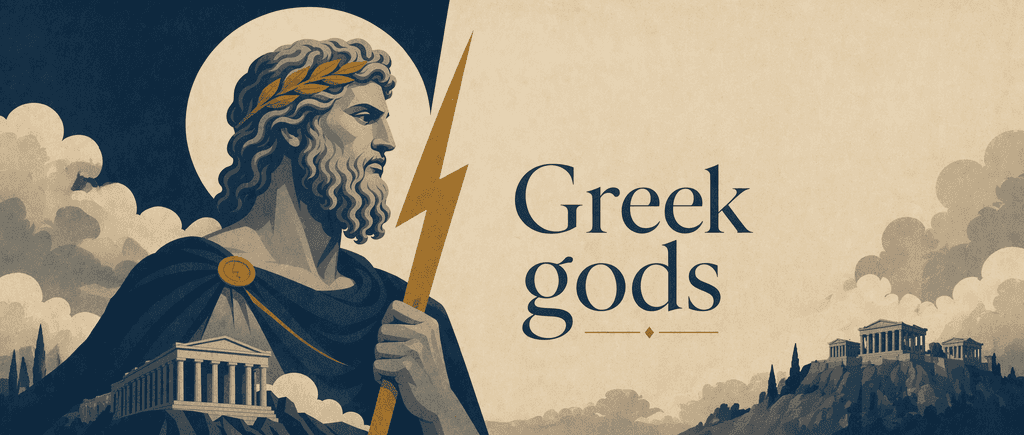
The Greeks created a pantheon of deities who looked like humans, felt human emotions, and even displayed human failings. Zeus, supreme ruler and Lord of the Sky, wielded the awful thunderbolt yet could be deceived by his wife Hera. The poets portrayed him falling in love with numerous women and using tricks to hide his infidelities. Despite these low tales, Zeus maintained grandeur as the storm-cloud god who demanded right action from mortals: "Father Zeus never helps liars or those who break their oaths."
This humanization of the divine made the universe rational and heaven familiar. Greeks could even laugh at their gods, like Zeus hiding his affairs from Hera. The gods populated earth too, as lovely youths and maidens in harmony with nature. Even the most fantastic stories took place in a rational world-Hercules lived in Thebes, Pegasus stabled in Corinth. Magic was almost nonexistent, witches were beautiful rather than hideous, astrology absent, and priests unimportant.
What makes Greek mythology miraculous is how it created a humanized world freed from paralyzing fear of the unknown. Though traces of earlier savagery remained in beast-gods and human sacrifice myths, the Greeks transformed a world of terror into one of beauty. Their mythology wasn't religious scripture but contained early science, entertainment, and evolving religious thought.
Behind these stories lies a deepening religious consciousness. Zeus evolved from a rain-god to a divine protector of the weak and dispenser of justice. As Hesiod wrote, "To man, Zeus has given justice. Beside Zeus on his throne Justice has her seat." Through centuries of Greek thought, the thunder-god gradually transformed into what Dio Chrysostom called "the common father and saviour and guardian of mankind."
Imagine walking through ancient Athens and hearing these stories not as quaint myths but as living traditions that explained everything from why the seasons change to why humans suffer. The Greeks' persistent longing for the divine and excellent eventually elevated their conception of deity from nature forces to universal father-a conceptual leap that would influence Western thought for millennia to come.
Chapitre 3
Earth's Bounty: The Gods Who Sustained Human Life
Unlike the capricious Olympians who were often harmful or undependable to mortals, two gods stood as mankind's true friends: Demeter (Ceres), Goddess of the Corn, and Dionysus (Bacchus), God of Wine. These deities represented the fundamental elements of human sustenance and celebration-bread and wine-and were worshipped through everyday acts rather than distant rituals.
Demeter's story, told with characteristic Greek simplicity and love of nature, explains the changing seasons. When her daughter Persephone was abducted by Hades, Demeter's grief caused her to withhold her gifts from earth, turning it into a frozen wasteland. After searching desperately, she learned the truth and abandoned Olympus to dwell on earth disguised as an aged woman. At Eleusis, she was welcomed into a family's home where she attempted to make their son Demophoon immortal by placing him in fire at night. When discovered and interrupted, she revealed herself as the goddess and commanded them to build her a temple.
While Demeter dwelt in her temple, nothing grew on earth. Zeus finally sent Hermes to retrieve Persephone from the underworld. Though joyful to return, Persephone had eaten pomegranate seeds, binding her to return to the underworld for four months each year. Demeter accepted this compromise and restored earth's fertility, explaining why winter comes when Persephone returns to the underworld.
Dionysus similarly experienced profound suffering. When he came to establish his worship in Thebes, King Pentheus mocked and imprisoned him. After escaping, Dionysus drove the women of Thebes mad, including Pentheus' mother, who tore her son limb from limb before the god restored their senses. This terrible story reveals Dionysus' dual nature as god of wine-both benefactor and destroyer. Wine cheers hearts but also drives men to atrocities.
What makes these earth deities special is their connection to human suffering. Unlike other immortals who dwelled carefree in Olympus, Demeter and Dionysus knew profound pain connected to the seasonal cycle-their joy at harvest giving way to sorrow during winter's death. Through their resurrection stories, they became centers of belief in immortality. As Plutarch wrote after his daughter's death, the soul is "incorruptible and immortal," and the dead "pass into a better place and a happier condition."
Have you ever noticed how the most profound religious stories often involve death and rebirth? This pattern, embodied by Demeter and Dionysus, would later influence Christianity's central narrative of resurrection and eternal life.
Chapitre 4
Origins: How the Greeks Explained Creation and Humanity
In the beginning was only Chaos-a vast, immeasurable abyss, "dark, wasteful, wild." From this formless confusion came Night and Erebus, the unfathomable depth where death dwells. Then came a marvel: from this boundless vacancy, Love was born. As Aristophanes described it, "Black-winged Night into the bosom of Erebus dark and deep laid a wind-born egg, and as the seasons rolled forth sprang Love, the longed-for, shining, with wings of gold."
With Love's birth, order and beauty began replacing confusion. Love created Light with its companion, radiant Day. Next came Earth, though no one explained how-it simply happened naturally with the coming of love and light. As Hesiod wrote, "Earth, the beautiful, rose up, broad-bosomed, she that is the steadfast base of all things." Earth then bore "the starry Heaven" to cover her.
In these early creation stories, no distinction existed between places and persons. Earth was both solid ground and vaguely a personality. The Greeks personified everything that showed signs of life through movement and change-earth in different seasons, the shifting sky, the restless sea-seeing the universe as alive with the same kind of life they knew in themselves.
Earth and Father Heaven's first children were monsters with overwhelming strength like earthquakes and volcanoes. Three had hundred hands and fifty heads each. Three others, the Cyclopes, had a single enormous wheel-sized eye in their foreheads. Last came the Titans, gigantic but not purely destructive.
Heaven imprisoned his hundred-handed sons within Earth, enraging her. The Titan Cronus ambushed and wounded his father, from whose blood sprang the Giants and the Furies. Cronus then ruled the universe until his son Zeus rebelled after Cronus swallowed his children to prevent his prophesied overthrow. Zeus conquered with help from the hundred-handed monsters and the wise Titan Prometheus, binding the defeated Titans beneath the earth in Tartarus.
Two stories explain mankind's creation: Prometheus fashioned humans in noble shape and stole fire from the sun to protect them. Alternatively, the gods created five successive races-golden (who lived like gods), silver (less intelligent), brass (violent), heroic (noble warriors), and the current iron race, destined to grow increasingly wicked until Zeus destroys them.
Both stories agree that women came later. Zeus created them as punishment after Prometheus tricked him in sacrificial offerings. The first woman, Pandora ("gift of all"), was a "beautiful disaster" from whom "comes the race of women, who are an evil to men."
What's fascinating about Greek creation myths is how they differ from other ancient traditions. Rather than gods creating the universe, the universe creates the gods. This inversion suggests a proto-scientific worldview where natural forces precede divine beings-a radical concept that would eventually lead toward rational inquiry rather than pure religious explanation.
Chapitre 5
Heroes Among Us: The Human Ideal in Greek Mythology
Greek mythology celebrated heroes who embodied the highest human potential while remaining distinctly mortal. Unlike the gods, heroes faced death and suffering, making their courage all the more remarkable. Their stories reveal what the Greeks valued most: intelligence, strength, and above all, the determination to face impossible odds.
Theseus, the great Athenian hero, chose the dangerous land route to Athens over the safe sea voyage, determined to become a hero like his cousin Hercules. Along the way, he killed notorious bandits by subjecting them to their own cruel methods. In Athens, he volunteered to be among fourteen Athenian youths sent as tribute to Crete, where the monstrous Minotaur devoured them in the inescapable Labyrinth. With help from King Minos' daughter Ariadne, who gave him a thread to mark his path, Theseus killed the Minotaur with his bare hands.
As king, Theseus established Athens as a democracy, keeping only the role of Commander in Chief for himself. His heroism extended beyond Athens-he helped bury the dead after the War of the Seven against Thebes, sheltered the aged Oedipus when all others rejected him, and stood by Hercules after his terrible madness.
Hercules stands as Greece's greatest hero, embodying what most Greeks valued-overwhelming physical strength that gave him supreme self-confidence. His defining characteristic was considering himself equal to the gods. He once seized Apollo's oracle tripod when denied an answer, willing to fight the god himself until Zeus intervened.
While physically invincible, Hercules lacked intelligence and emotional control. His powerful feelings often overwhelmed him, leading to disastrous outbursts of rage followed by humble penitence. His true greatness lay not in his courage or strength, but in his willingness to accept responsibility and endure punishment for his wrongdoings.
After Hera drove him temporarily insane, causing him to murder his wife and children, Hercules prepared to kill himself but was stopped by his friend Theseus, who reached out to clasp his bloodstained hands. "Do not keep me from sharing all with you," Theseus told him. "Men great of soul can bear the blows of heaven and not flinch."
Eurystheus, with Hera's urging, devised twelve near-impossible labors for Hercules as penance. From killing the invulnerable Nemean lion to capturing Cerberus from the underworld, each task seemed impossible until Hercules' strength and determination prevailed.
Think about how these hero stories continue to influence our modern narratives. From Superman to Batman, from Luke Skywalker to Iron Man, our contemporary heroes still embody the Greek ideal of extraordinary individuals who rise above their limitations to achieve the seemingly impossible. The enduring appeal of these ancient tales lies in their exploration of what makes us human-our capacity for both terrible failure and magnificent achievement.
Chapitre 6
Love's Transformative Power: Mythological Romance
Greek mythology is filled with tales of love so powerful it transforms reality itself. These stories reveal how the Greeks viewed love as both the most sublime and most dangerous of human experiences-capable of elevating mortals to divine heights or destroying them completely.
The tale of Cupid and Psyche exemplifies love's transformative potential. When Venus, jealous of Psyche's beauty, commanded her son Cupid to make Psyche fall in love with something vile, Cupid himself fell in love with her. He established her in a magnificent palace where invisible servants attended her, visiting only at night and warning her never to look upon him.
When Psyche's envious sisters convinced her that her husband must be a monster, she lit a lamp while he slept, discovering he was actually Cupid himself. A drop of oil fell on him; he awoke and fled, saying "Love cannot live where there is no trust." Heartbroken, Psyche began searching for him.
Venus set impossible tasks for Psyche: sorting mixed seeds, gathering golden fleece from fierce sheep, collecting water from the Styx, and retrieving beauty from the underworld. Each time, Psyche received miraculous help. When she delivered Proserpine's beauty box to Venus, Cupid found her and wiped away the deadly sleep that had overcome her curious nature. Jupiter formally married them and granted Psyche immortality. Thus Love and the Soul, after sore trials, found each other in a union that could never be broken.
Other love stories show its destructive potential. Orpheus, whose music moved rocks and tamed wild beasts, descended to the underworld when his beloved wife Eurydice died from a viper's bite. His music charmed even the most fearsome inhabitants, moving Hades and Persephone to tears. They granted his request to return with Eurydice on one condition: he must not look back at her until they reached the upper world. As they neared the surface, Orpheus, desperate for reassurance, turned too soon. Eurydice slipped back into darkness with a faint "Farewell."
Pygmalion's story shows love's creative power. This gifted sculptor created a statue of a woman so perfect it appeared to be living flesh. He fell deeply in love with his creation, dressing it in fine clothes and kissing its unresponsive lips. At Venus's feast day, he asked for a maiden like his statue. When he returned home, he found his statue warming under his touch. The ivory softened, blood pulsed in her wrist, and she smiled into his eyes. Venus herself attended their marriage.
What makes these love stories endure is their psychological truth. They explore timeless questions: Can we truly know those we love? What happens when we doubt them? Can love survive separation, betrayal, or even death? The Greeks understood that love is not merely a pleasant emotion but a transformative force that can elevate us to our highest potential or plunge us into our deepest despair.
Chapitre 7
Epic Journeys: Quests That Defined Heroes
The Greeks understood that character is revealed through challenge. Their greatest myths center on epic journeys where heroes face impossible odds, confront terrifying monsters, and ultimately discover their true nature through trial and suffering.
The Quest of the Golden Fleece marks Europe's first great heroic journey, undertaken a generation before Odysseus's travels. Jason and his Argonauts faced countless perils to retrieve the Golden Fleece from Colchis. Their journey was fraught with trials: on Lemnos, they encountered women who had murdered all their men; they lost Hercules when his beloved companion Hylas was drawn underwater by an enamored nymph; they faced the Harpies-foul flying monsters who defiled food; and they narrowly escaped the Clashing Rocks with only the ship's stern ornament shorn off.
In Colchis, King Aeetes set Jason an impossible task: yoke fire-breathing bronze-footed bulls, plow a field, and defeat the armed men who would spring from sown dragon's teeth. Hera and Aphrodite conspired to help Jason by having Cupid make the king's daughter Medea fall in love with him. A powerful sorceress, Medea gave Jason a magic ointment that made him invincible for a day and instructed him to throw a stone among the armed men to make them fight each other.
During their escape, Medea committed a terrible deed-killing her own brother Apsyrtus who led the pursuit. Some say she dismembered him and scattered the pieces to delay her father. This foreshadowed Medea's later vengeance when Jason betrayed her for another woman, sending a poisoned robe that killed his new bride before murdering her own children with Jason.
Odysseus's journey home from Troy represents the ultimate test of intelligence and endurance. For ten years, he wandered the Mediterranean, facing the one-eyed Cyclops Polyphemus, the enchantress Circe who turned his men to swine, the deadly Sirens whose song lured sailors to their death, and the monsters Scylla and Charybdis. All the while, faithful Penelope waited at home, fending off suitors who consumed Odysseus's provisions and demanded she choose one of them to marry.
When Odysseus finally returned to Ithaca, Athena disguised him as a beggar. After observing the suitors' behavior and proving his identity by stringing his old bow and shooting through twelve rings, he revealed himself and, with his son Telemachus, slaughtered them all. Only then could he reunite with Penelope, who tested him one final time by claiming to have moved their marriage bed-which Odysseus knew was impossible since he had built it around a living olive tree.
These epic journeys continue to resonate because they speak to universal human experiences. Don't we all face our own Cyclopes, Sirens, and impossible tasks? The hero's journey is ultimately our journey-leaving the familiar, facing trials, and returning transformed. As Joseph Campbell would later articulate, these mythic patterns form the backbone of stories across cultures and throughout time.
Chapitre 8
The Price of Pride: Tragic Tales of Hubris
The Greeks were keenly aware that excessive pride-hubris-inevitably led to destruction. Their mythology is filled with cautionary tales of those who overreached their mortal limitations or challenged the gods, only to suffer terrible consequences.
The House of Atreus demonstrates how hubris creates a cycle of violence that spans generations. It began when Tantalus, son of Zeus and favored beyond all mortals, repaid divine hospitality by killing, cooking, and serving his son Pelops to the gods. The Olympians punished him eternally in Hades, where water recedes from his parched lips and fruit trees withdraw from his grasp whenever he reaches for them.
His sister Niobe inherited this fatal arrogance. Though blessed with fourteen beautiful children, she demanded worship above Leto, who had "merely" two children-Apollo and Artemis. The divine twins swiftly answered this blasphemy, slaying all fourteen children. Niobe's grief transformed her to stone, forever weeping.
The curse continued through Pelops' sons, Atreus and Thyestes. When Thyestes seduced Atreus' wife, Atreus served Thyestes his own children at a feast. The horrified father cursed the house, ensuring the evil would continue through generations.
Agamemnon, Atreus's son, sacrificed his daughter Iphigenia to gain favorable winds for Troy. Upon returning victorious from the Trojan War, he was murdered by his wife Clytemnestra in revenge for their daughter's death. Their son Orestes then faced an impossible choice: avenge his father by killing his mother or betray filial duty. After killing both Clytemnestra and her lover Aegisthus, Orestes was haunted by the Furies until seeking judgment from Athena in Athens, finally ending the curse.
Oedipus represents perhaps the most famous tragic figure in Greek mythology. Despite his attempts to avoid the prophecy that he would kill his father and marry his mother, his very efforts to escape this fate led him directly to it. After solving the Sphinx's riddle and becoming king of Thebes, he married the widowed queen Jocasta, not knowing she was his mother. Years later, when plague devastated Thebes, the truth emerged through a series of revelations. Upon learning he had killed his true father Laius and married his mother, Jocasta hanged herself, and Oedipus blinded himself, preferring darkness to seeing the world with his shame-filled eyes.
His daughter Antigone later defied King Creon's edict that her brother Polyneices remain unburied, performing burial rites despite knowing the penalty was death. When caught, she defended her actions: "Your law, but not the law of Justice who dwells with the gods. The unwritten laws of heaven are not of today nor yesterday, but from all time."
What makes these tragic tales so powerful is their psychological truth. They recognize that human greatness often contains the seeds of its own destruction. The same qualities that make heroes exceptional-ambition, confidence, determination-can become fatal flaws when taken to excess. These stories remind us that wisdom includes recognizing our limitations and respecting forces greater than ourselves.
Chapitre 9
The Northern Shadow: Norse Mythology's Stark Vision
While Greek mythology celebrates beauty and order, Norse mythology embraces a harsher reality where even the gods face inevitable doom. This somber worldview reflects the harsh northern environment where these stories evolved.
The Norse mythological world stands apart from other heavens-Asgard offers no joy or bliss, only solemnity beneath inevitable doom. The gods know they face eventual destruction when they will battle their enemies and fall. Despite this hopeless cause, they fight evil to the end.
Unlike Greek gods, Norse gods could be heroic because they weren't immortal or invincible. They could experience courage and face danger, knowing that in the final battle of Ragnarok, they would be defeated. This knowledge weighed heavily on all in Asgard, especially their chief, Odin.
Odin was solemn and aloof, even at feasts giving his food to the two wolves at his feet. On his shoulders perched two ravens named Thought (Hugin) and Memory (Munin), who flew daily through the world bringing him news. As All-father, Odin sought to postpone Ragnarok, the day of doom when heaven and earth would be destroyed. He constantly sought wisdom, sacrificing one eye to drink from Mimir's Well of Wisdom and learning the powerful magical Runes through mysterious suffering.
The Norse creation story begins with nothingness-"no earth, no heaven above, only the yawning chasm." To the north was Niflheim, the cold realm of death, and to the south was Muspelheim, the land of fire. Twelve rivers from Niflheim froze in the chasm, while fiery clouds from Muspelheim turned the ice to mist, forming frost maidens and Ymir, the first Giant.
Odin and his brothers killed Ymir and created the world from his body-the earth from his flesh, the sea from his blood, and the heavens from his skull. The universe was supported by Yggdrasil, a great ash-tree with roots extending through different worlds.
The most famous Norse hero, Sigurd (similar to Siegfried from the Nibelungenlied), embodies the Norse ideal of facing inevitable doom with courage. After awakening the Valkyrie Brynhild from enchanted sleep by riding through flames, he is later tricked into forgetting her and marries Gudrun instead. When the truth is revealed, Brynhild arranges Sigurd's murder, then kills herself to join him in death.
The Norse combined awe-inspiring heroism with practical wisdom. The Elder Edda contains collections of proverbs showing shrewd insight: "A paltry man and poor of mind is he who mocks at all things" and "Brave men can live well anywhere. A coward dreads all things." Some sayings show deeper wisdom: "Moderately wise each one should be, not overwise, for a wise man's heart is seldom glad" and "Cattle die and kindred die. We also die. But I know one thing that never dies, judgment on each one dead."
This stark vision offers one pure good: heroism, which depends on lost causes. Good is shown not through triumph but through continued resistance against certain defeat. A heroic death represents triumph, not defeat. The hero who laughs while enemies cut out his heart proves himself superior to his conquerors.
What makes these northern myths so compelling is their unflinching acceptance of life's harshness while still finding meaning in courage and honor. In a world where the gods themselves will fall, the only true immortality comes through facing one's fate with dignity and determination.