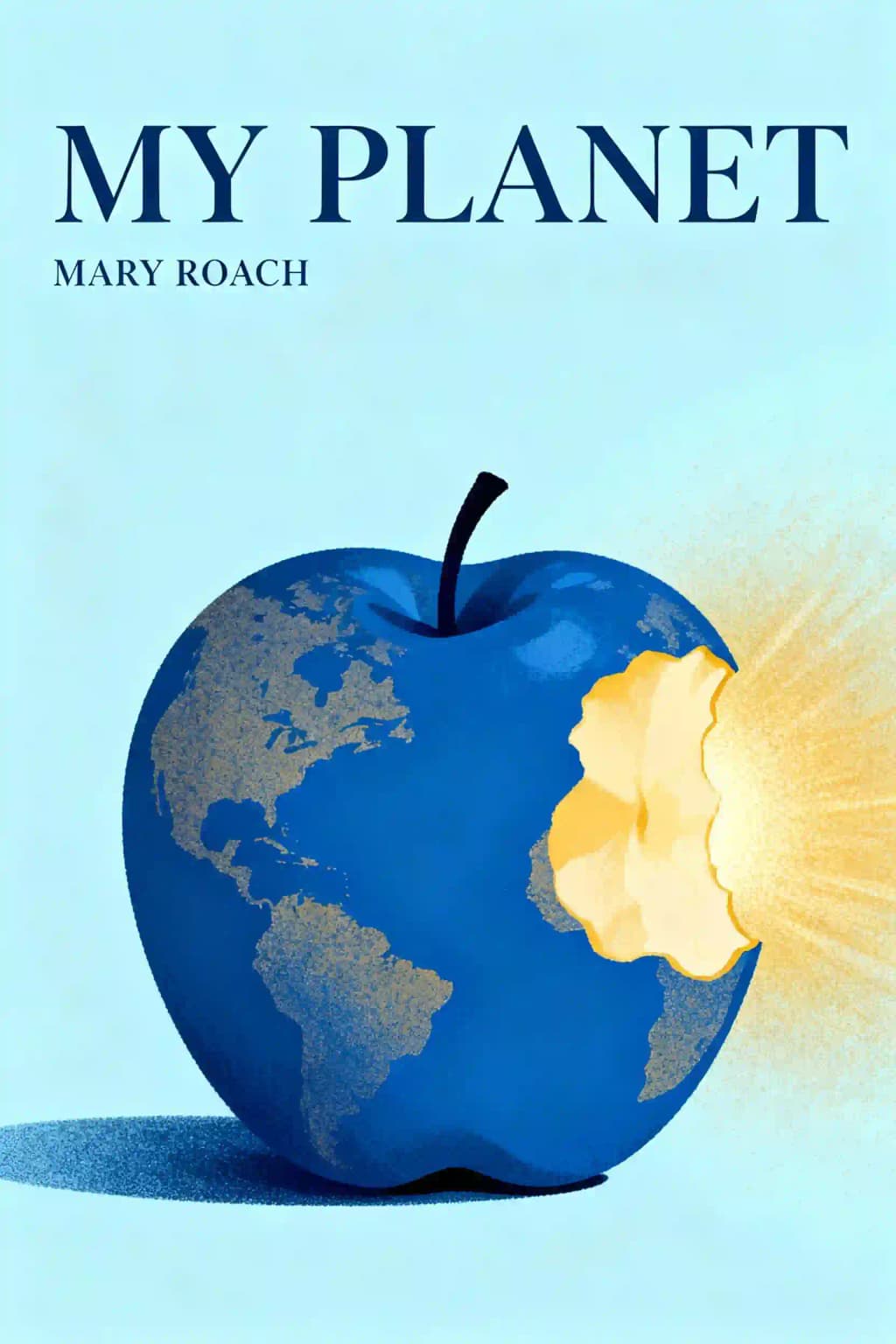
My Planet
Finding Humor in the Oddest Places
Aperçu de My Planet
Mary Roach's "My Planet" transforms mundane moments into laugh-out-loud revelations. Ever wonder why everyday life can be so absurdly funny? This Reader's Digest collection delivers what one fan called "actual chuckles" - a rarity in humor writing that makes the ordinary extraordinary.

Thèmes clés dans My Planet
- domestic friction
- marital compromise
- hygiene habits
- everyday absurdities
- personality differences
Citations de My Planet
I don't notice filth until it develops sentience and introduces itself.
Bathroom air is contaminated.
Humans aren't raccoons.
Compromise in marriage often means embracing what makes us uncomfortable.
Men don't want to admit they can't remember everything.
Personnages de My Planet
- Mary RoachThe author and narrator of the essays
- EdMary's husband and hygiene-conscious foil
À propos de l'auteur
À propos de l'auteur de My Planet
Mary Roach, acclaimed author of My Planet, is a New York Times bestselling writer celebrated for blending humor with scientific inquiry across her seven critically acclaimed books.
A pioneer in popular science writing, she explores unconventional topics—from human cadavers (Stiff) to wildlife conflicts (Fuzz)—with wit and rigor. Her work, including Bonk: The Curious Coupling of Science and Sex and Grunt: The Curious Science of Humans at War, has been translated into 26 languages and featured in National Geographic, Wired, and The New York Times Magazine.
A TED Talk alumna, her 2009 lecture remains among the platform’s most-watched. Roach’s background in psychology and knack for immersive reporting inform her unique perspective, which has earned accolades like the American Engineering Societies’ Journalism Award.
My Planet continues her tradition of demystifying complex scientific themes through engaging storytelling, solidifying her reputation as a master of curiosity-driven nonfiction. Her books collectively have spent over 200 weeks on bestseller lists, captivating readers worldwide.
Telecharger le resume de My Planet
Obtenez le resume de My Planet en PDF ou EPUB gratuit. Imprimez-le ou lisez-le hors ligne a tout moment.
FAQ sur ce livre
My Planet is a collection of humorous essays exploring the comedy hidden in everyday situations like marriage, household chores, and quirky habits. Mary Roach dissects mundane topics—such as debates over dishwasher loading or hypochondria-fueled internet searches—with sharp wit, revealing how ordinary moments shape relationships and personal dynamics.
Fans of lighthearted, observational humor and readers seeking relatable anecdotes about modern life will enjoy this book. It’s ideal for those who appreciate Roach’s signature blend of humor and insight into domestic absurdities, from cluttered homes to marital quirks.
Yes, for its clever take on universal experiences like shared living spaces and odd personal habits. Roach’s essays—originally published in Reader’s Digest—offer bite-sized, laugh-out-loud reflections perfect for casual reading or anyone needing a comedic escape.
Roach highlights relational dynamics through absurd yet relatable scenarios, like her husband’s “crud vision” (noticing filth she ignores) or debates over bathroom etiquette. These stories use exaggeration and self-deprecation to underscore the compromises and joys of cohabitation.
Themes include the chaos of shared spaces, the irony of modern conveniences (like flawed internet diagnoses), and the sentimental value of clutter. Roach frames these topics as microcosms of broader human behavior, blending humor with subtle social commentary.
Unlike her deep dives into science (Stiff, Gulp), My Planet focuses on personal essays. It retains her trademark humor but trades research-driven narratives for intimate, everyday observations, making it more accessible for casual readers.
Roach uses irony to expose contradictions in daily life, such as arguing over “efficient” chores that waste time or collecting sentimental junk while preaching minimalism. These moments highlight the gap between intention and reality in domestic life.
She humorously critiques tech’s pitfalls, like search engines amplifying hypochondria or gadgets complicating simple tasks. Roach frames technology as both a helper and a source of modern absurdity, relatable to anyone overwhelmed by digital life.
Its strength lies in elevating trivialities—dental floss, ants, mismatched socks—into laugh-out-loud stories. Roach’s ability to find profundity in the mundane sets it apart from broader humor collections, offering fresh perspective on routine experiences.
Each essay starts with a quirky premise (e.g., toilet-seat hygiene) and escalates into broader reflections on human behavior. The humor disarms readers, while the underlying insights—about compromise, patience, or nostalgia—add depth without preaching.
“Ed has crud vision, and I don’t. I don’t notice filth. Ed sees it everywhere.” This line encapsulates Roach’s humor in contrasting perspectives, turning a marital disagreement into a metaphor for broader relationship dynamics.
Its themes—navigating shared spaces, digital overload, and clutter—resonate in an era of hybrid living and Marie Kondo trends. Roach’s witty take on these evergreen struggles ensures the book’s enduring appeal.