Chapitre 1
The Paradox of Modern Love: When Security Kills Desire
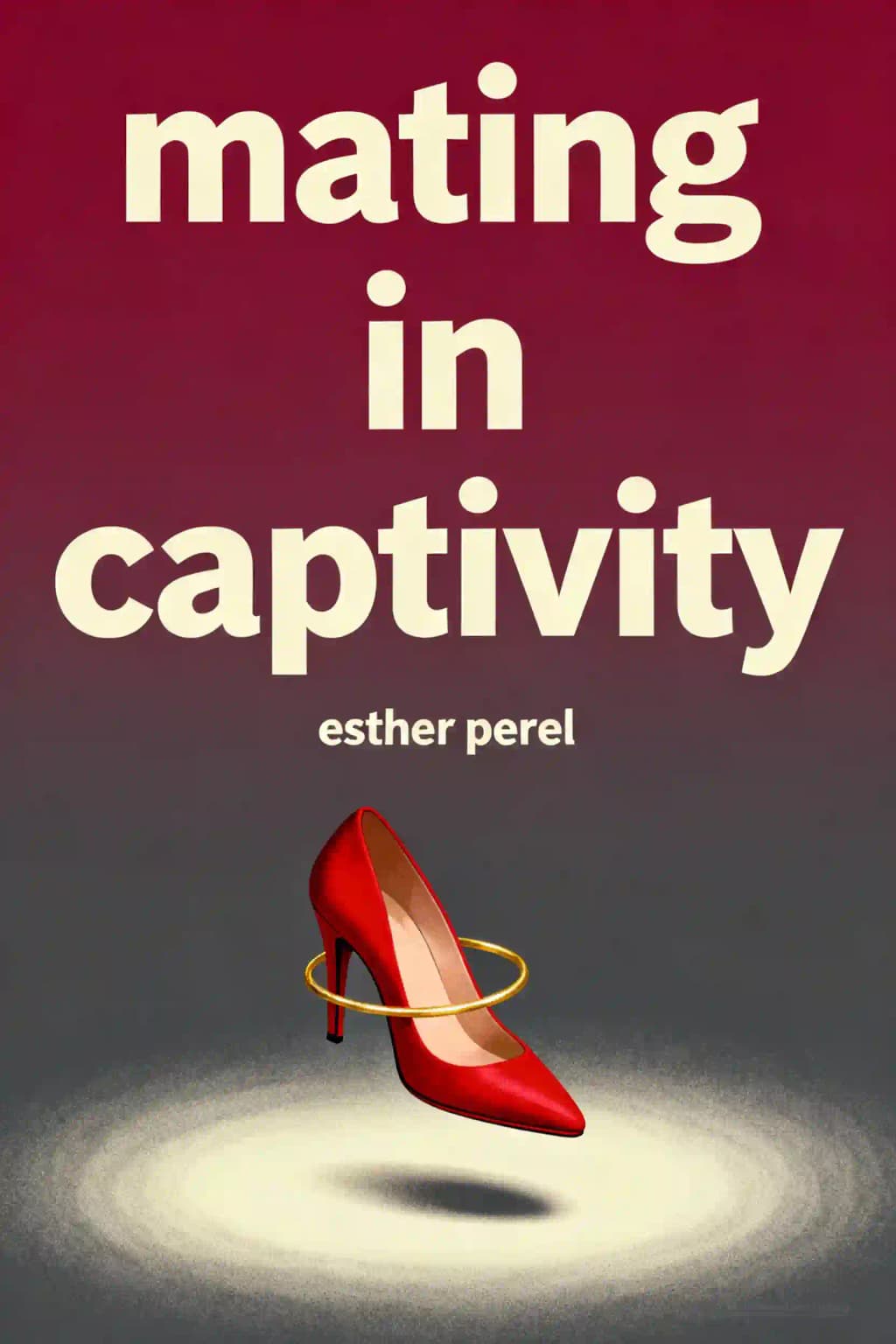
In a world where we expect one person to fulfill our needs for both stability and passion, many couples find themselves caught in a painful dilemma. As Esther Perel observes in her groundbreaking work, we want our partners to offer the comfort of home and the thrill of adventure simultaneously-a nearly impossible demand. This cultural phenomenon has made Perel's insights a touchstone for couples worldwide, with her TED talks garnering millions of views and her ideas referenced by celebrities from Kristen Bell to Dan Savage. Beyond relationship advice, Perel's work speaks to a fundamental modern anxiety: how do we maintain excitement in a world that prizes predictability? Her exploration of this tension has transformed her into one of the most influential voices in contemporary discussions of intimacy, making "Mating in Captivity" essential reading for anyone seeking to understand why passion fades and how it might be rekindled.
Chapitre 2
The Fundamental Tension: Security Versus Desire
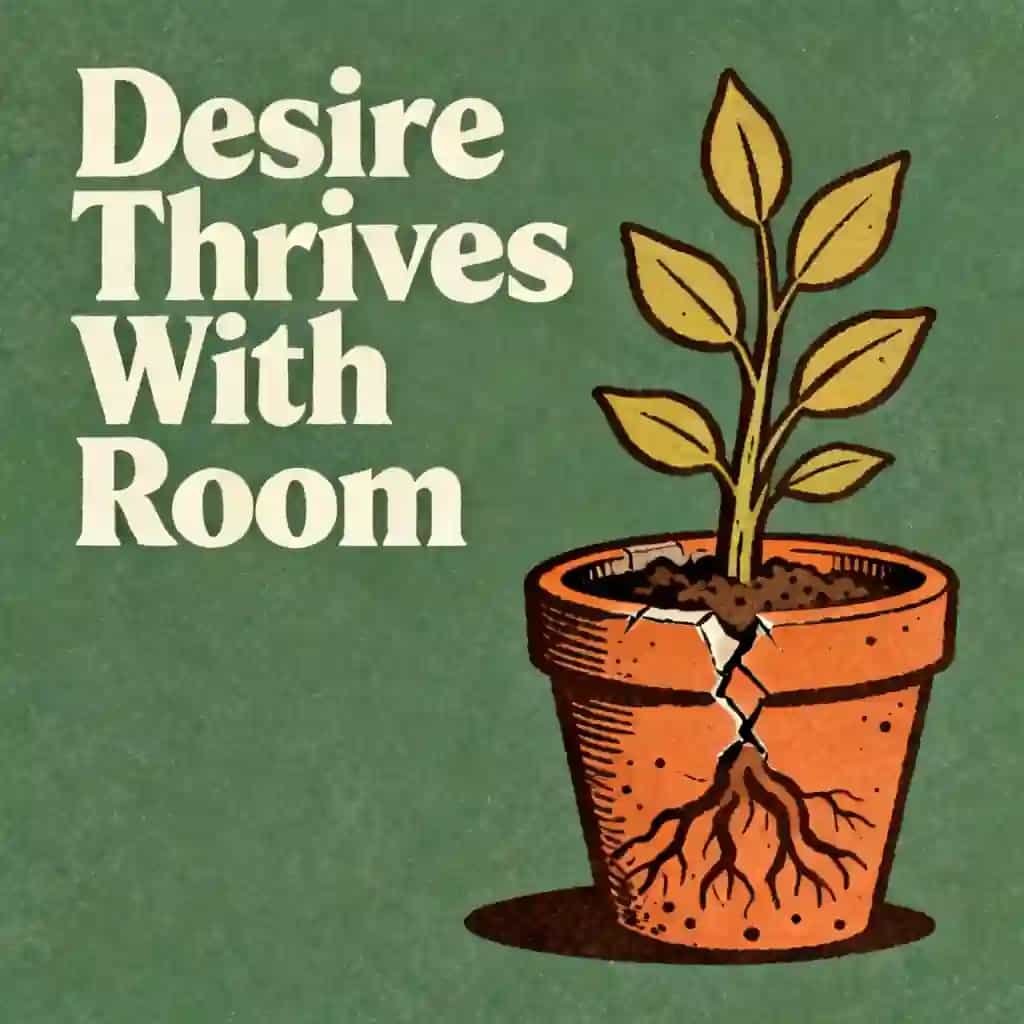
Love seeks closeness while desire needs distance. This central paradox shapes the landscape of modern relationships. We crave security, permanence, and reliability, yet simultaneously yearn for novelty, risk, and adventure. Like children who explore then return to safety, adults fluctuate between boldness and grounding.
The challenge for modern couples lies in reconciling these opposing needs. While some rare partnerships seamlessly integrate commitment and excitement, most struggle to maintain passion within permanence. Unfortunately, many relationships develop by sacrificing excitement for stability, creating what Stephen Mitchell calls "the flaccid safety of permanent coziness."
This tension manifests as an anchor and waves-we seek reliable grounding while craving transcendent experiences. All living organisms require alternating periods of growth and equilibrium; systems facing constant change risk chaos, while those too rigid eventually die.
Consider Adele, a 38-year-old lawyer in her second marriage. She's happy with Alan "80 percent of the time" and recognizes her good fortune. Yet she misses the excitement of early romance-"that fluttery feeling, the butterflies." Though she understands biologically why passion fades and values their security, she still yearns to be appreciated "as a woman, not as a mother, wife, or companion."
Historically, marriage and passion existed in separate realms. Only with the emergence of romantic love in the late nineteenth century did these domains begin to merge. The social transformations of the past fifty years-sexual revolution, feminism, birth control, gay rights-have fundamentally redefined relationships. These developments created unprecedented freedom but also anxiety-we've dismantled traditional institutions that provided meaning, leaving us freer but more alone.
We now burden our romantic relationships with expectations once fulfilled by extended families, communities, and religion. We seek in one person protection from modern life's uncertainties, turning love into a bulwark against existential vulnerability. This creates a pattern: love begins with chemistry and possibility. You feel powerful, enthralled, lifted from mundane life. But as attachment deepens, fear grows-the more you have, the more you might lose. So you seek security, trading freedom for stability. You create comfort through rituals and habits, but in taming love's uncertainty, you drain its vitality.
The excitement was tied to insecurity; by controlling the risks, you've extinguished the passion. Eroticism thrives on unpredictability, yet long-term relationships favor the predictable. Without uncertainty, there's no longing, no anticipation-passion in relationships is proportional to the uncertainty you can tolerate.
Chapitre 3
When Intimacy Extinguishes Desire
The prevailing belief in American couples therapy is that good communication and emotional connection should naturally produce good sex. For many, a loving relationship indeed enhances desire, as acceptance and safety allow erotic freedom. But paradoxically, what creates good intimacy doesn't always create good sex.
Many couples report loving relationships with minimal sexual desire-an inverse correlation where increased emotional intimacy accompanies decreased sexual desire. Rather than viewing sex exclusively as an outgrowth of the emotional relationship, it stands as a separate entity with its own parallel narrative.
Sexual problems often stem not from insufficient closeness but from too much closeness. Love requires both surrender and autonomy-our need for togetherness exists alongside our need for separateness. With excessive distance, connection becomes impossible, but too much merging eliminates the distinct individuals necessary for connection. When two become completely fused, there's no one left to connect with. Paradoxically, separateness is essential for connection.
This tension between dependence and independence shapes our developmental histories from childhood. We bring these emotional vulnerabilities into adult relationships, typically choosing partners whose proclivities match our vulnerabilities. While we crave closeness as a basic need, it carries anxieties that can inhibit desire when it becomes overwhelming or confining.
Consider John, whose intimacy carries the threat of entrapment stemming from his childhood with an alcoholic father and a mother who made him her emotional caretaker. Though he craves closeness, love has always felt confining to him, carrying responsibility and obligation. This pattern isn't unique to those with unhappy childhoods-many experience love as constricting.
John's sexual inhibitions worsen as his emotional involvement deepens-the more he cares for Beatrice, the less he can lust after her. Ironically, even good sex creates closeness that can trigger sexual difficulties, as the merging of bodies evokes fear of engulfment.
Relationship dynamics are always complementary, with both partners contributing to established patterns. Beatrice's attempts to increase closeness by matching her interests to John's, abandoning activities that don't include him, and stopping seeing friends have backfired erotically. Her eagerness to please and sacrifice her autonomy increases John's emotional burden and exacerbates his sexual withdrawal. It's difficult to desire someone who has abandoned their autonomy.
Rather than constantly striving for closeness, couples benefit from cultivating separate selves-what French psychologist Jacques Salome calls "personal intimacy." While partners share essential parts of their lives, not everything needs to be revealed. Everyone should maintain a private zone-physical, emotional, and intellectual-that belongs only to themselves. Love thrives on knowing everything, while desire needs mystery; love shrinks distance while desire is energized by it.
Chapitre 4
The Limits of Talk Therapy
Our conception of intimacy has narrowed to glorify verbal communication-"I speak; therefore I am." Modern intimacy is defined primarily as a discursive process involving self-disclosure of feelings to a nonjudgmental partner who listens empathetically. This shift toward "talk intimacy" emerged alongside women's growing economic independence, as marriages became less about financial obligation and more about emotional connection.
Family therapist Lyman Wynne observed that "intimacy became recognized as a 'need' only when it became more difficult to achieve." Industrialization and urban living created social disconnection, making us hungrier for meaningful contact. Today, intimacy has become our antidote to isolation, evidenced by our technological frenzy to stay connected-phones, computers, and devices that promise stronger connections while masking our profound hunger for human contact.
The emphasis on "talk intimacy" creates problems, particularly for men who are socialized for performance and stoicism rather than emotional expression. In this regime, many men suffer from a chronic intimacy deficiency. However, these verbal restrictions often lead men to other forms of self-expression-particularly through their bodies. For many men, sex offers a restorative experience for their tender side, as the body becomes a vital language for emotional intimacy when words feel inadequate.
Excessive disclosure can damage intimacy rather than foster it. When intimacy becomes mandatory, it transforms into intrusion-partners demand access to each other's private thoughts as if entitled. Some couples confuse intimacy with control, engaging in surveillance disguised as care through constant questioning about mundane details. This transparency kills curiosity and desire: "Where there is nothing left to hide, there is nothing left to seek."
The supremacy of verbal communication as the primary path to intimacy disadvantages men and traps women in repressed sexuality. Historically, women's sexuality and intellect were never integrated-femininity was associated with purity while vigorous sexuality was considered the exclusive domain of men. When we privilege speech over physical expression, we inadvertently reinforce this patriarchal split between virtue and lust.
True intimacy isn't monolithic but occurs in discrete moments, and can be expressed through many languages beyond words-from building a bookshelf to cooking a family recipe. The path forward involves recognizing that intimacy can take many forms, including the physical expression that comes more naturally to some than endless talking.
Chapitre 5
Power Dynamics and Erotic Life
America's best qualities-democracy, equality, and fairness-can lead to boring sex when applied too rigidly in the bedroom. While feminism rightfully fought against gender inequalities, the emphasis on completely egalitarian sex-purged of power dynamics-can be antithetical to erotic desire.
Consider Elizabeth, a hyperresponsible school psychologist who discovers her desire for sexual submission with her husband Vito. For Elizabeth, submission offers a vacation from responsibility, allowing her to feel sexy and wild. Eroticism allows us to step outside ourselves and safely experience taboos. In fantasy, we can transcend moral constraints and access disavowed parts of ourselves. What might be problematic in daily life-power imbalances, dependency, jealousy-can become exciting in the erotic realm.
Rather than seeing power dynamics in sex as merely reinforcing patriarchy, sexual role-play can actually subvert traditional power structures. Marcus, a high-powered executive, enjoys being spanked by his girlfriend. For him, sexual submission provides relief from constantly being in control. Playing with roles indicates freedom from being controlled by them, and such play can disrupt gender categorization.
Power dynamics from childhood shape adult relationships. We learn power tactics early-demanding, bargaining, resisting, surrendering-and gender influences these expressions, with men typically becoming skilled at direct power and women at indirect forms. In adult relationships, our dependence creates vulnerability that triggers control mechanisms. The greater our need, the stronger our potential rage when disappointed.
Many couples neutralize these tensions by avoiding conflict, but this creates a reassuring yet passionless relationship. As Stephen Mitchell notes, "The degradation of romance is due not to the contamination of love by aggression, but to the inability to sustain the necessary tension between them."
Jed, a mild-mannered architect in daily life, discovered S-M as a teenager and uses eroticism as an outlet for aggression. Growing up shy and fearful of hurting others, he found sexual domination provided a safe, negotiated space to express power. Coral, his partner of six years, struggles to understand his desires, feeling they aren't about her.
Most practitioners of kinky sex are drawn to power dynamics rather than violence or pain. The carefully negotiated contracts guarantee both pleasure and safety, allowing people to experience relations they avoid in daily life. These sexual dramas offer catharsis-if we shun dependence in daily life, we might welcome it erotically.
While acknowledging the real dangers of power disparities in society, aggression cannot be purged from human interactions, especially between lovers. In couples therapy, the goal is to uncover power dynamics, redress inequities when problematic, but also recognize that some harmonious imbalances form a couple's basis of compatibility.
Chapitre 6
The Challenge of Parenthood
The transition from couple to parents delivers a profound challenge to erotic connection. Children, the embodiment of the couple's love, often threaten the very romance that created them. The shift from two to three changes everything-identity, relationships, bodies, finances, and priorities. We fall in love with our babies, and like all love affairs, this consumes resources previously available to the couple: time, communication, sleep, money, freedom, touch, intimacy, and privacy.
When children enter our lives, safety and stability take on profound new meaning. Parenthood demands we become steady, dependable, and responsible-we plant ourselves firmly so our children may learn to fly. Family life flourishes in consistency, yet eroticism thrives on spontaneity and risk. This fundamental tension creates a paradox: what nurtures family stability often suffocates erotic connection.
Stephanie's creative energy didn't disappear when she became a mother-it simply redirected. Her life brims with novelty and adventure, but exclusively with her children, leaving Warren longing. The physical pleasure mothers experience with children-caressing silky skin, cradling, rocking, nibbling toes-provides sensuous experiences strikingly similar to lover connections.
The sensuous parent-child bond is natural and evolutionarily advantageous, but today's culture has inflated this connection to unprecedented levels. Modern parenting has sanctified childhood to the point where one adult's complete self-sacrifice for flawless child development seems reasonable. American individualism creates a paradoxical trap: we idealize children while lacking social support systems for families. Without extended family networks or affordable childcare, isolated parents struggle under enormous pressure.
Warren and Stephanie's home life actively undermines their intimacy: weekends consumed by children's activities, kids who barely go to bed before parents, an open-door bedroom policy, and no couple time alone. In six years, they haven't spent a single weekend away together, treating babysitters as luxuries rather than necessities. This child-centrality isn't just practical but emotional-they've turned to their children to fulfill needs once met by each other.
For Warren and Stephanie to revive their connection, they must carve out protected erotic territory. While spontaneity sounds ideal, family life requires planning. "Planning implies intentionality, and intentionality conveys value," I tell them. "Think of it as prolonged foreplay." For Stephanie, planning helps her transition from mother to lover: "Knowing we have a date helps me anticipate it. I pamper myself, shower, shave, put on makeup. I give myself permission to be sexual."
While mothers losing desire is common, fathers who can't eroticize the mothers of their children suffer silently. Leo's sexual withdrawal began during his wife Carla's first pregnancy. When asked what changed, Leo explained that his wife's significance transformed from lover to mother, making him more cautious and less passionate. This Madonna/whore complex has deep psychological roots-many men find it difficult to express raw desire toward the mother of their children, feeling it's too incestuous or inappropriate.
The couples who maintain erotic connections amid parenthood are those who value it enough to make intentional, diligent efforts to keep desire alive. They understand that children don't extinguish passion-adults do when they fail to nurture the spark.
Chapitre 7
The Power of Fantasy
In the sanctuary of our erotic minds, we create fantasies that heal past wounds, express forbidden desires, and provide direct routes to pleasure. Catherine, once an overweight, sexually invisible teenager, now enacts fantasies with her husband where she's a high-priced prostitute so desirable that men risk everything for her time-triumphantly avenging adolescent humiliations.
Until recently, sexual fantasy was viewed negatively-as sin by Christianity and as perversion by psychology. But fantasy is a natural component of healthy adult sexuality-a valuable imaginative resource that provides freedom, healing, and renewal. Fantasies bridge the gap between the possible and permissible, transforming our inhibitions into erotic arousal. They allow us to overcome conflicts around desire by creating psychological safe spaces where we become irresistible, powerful, or free from responsibility.
Despite our openness about many intimate matters, most of us remain remarkably tight-lipped about our erotic thoughts, especially with our partners. This silence stems from embarrassment and early teachings that turned curiosity into shame. Without knowing what others think, we fear being deviant. Our reluctance deepens when our fantasies collide with our self-image or moral convictions-the feminist who longs to be dominated, the husband fantasizing about the au pair, the survivor infusing trauma into erotics.
Erotic fantasies brilliantly resolve multiple conflicts simultaneously. While Joni's fantasies address her personal struggles with dependency, they also navigate cultural taboos against female sexuality. Throughout history, women's sexual desire has been constrained, yet women's imagination has grown increasingly resistant. Though Joni consciously identifies with the women in her fantasies, she created all the characters and plays every part. Through her cowboys, she vicariously experiences aggression, selfishness and power-attributes she associates exclusively with masculinity.
While some couples find erotic charge in sharing fantasies, disclosure isn't necessary for everyone. Some prefer keeping their imaginings private-not from shame, but knowing exposure might cause them to wither. Others recognize they aren't on the same erotic wavelength as their partner. Our fantasies often feature personifications of unbridled sexuality that help us sidestep the ambiguities of desire and contingencies of love.
When we shut down imagination, sex becomes truncated and dull. Our erotic imagination keeps desire alive and helps us overcome obstacles to pleasure. Understanding our fantasies helps us understand what we're seeking sexually and emotionally.
Chapitre 8
The Shadow of the Third
When couples form, they establish intricate boundaries that define what's shared within the relationship and what remains private. While society has evolved to embrace diverse marital configurations including gay marriages, domestic partnerships, and blended families, we maintain surprisingly rigid views about monogamy. As relationship expert Michele Scheinkman astutely observes, American culture readily tolerates divorce but harshly condemns sexual infidelity. Most couples avoid discussing exclusivity openly, treating monogamy as an unspoken absolute despite statistics showing high divorce rates and frequent occurrences of affairs.
Historically, monogamy served primarily as a social construct to control women's reproduction for property inheritance and lineage purposes. Today, it's fundamentally transformed into a matter of love and emotional connection. Modern marriage promises an ambitious combination of everything-financial security, children, shared property, deep emotional intimacy, and lasting passion with one perfect partner. This idealistic view perpetuates the belief that love itself is easy, but finding the right person is the real challenge. Our intense desire for exclusivity often stems from our earliest experiences of intimacy as infants. We unconsciously seek to recapture that primordial sense of oneness experienced with our mother-being loved completely and unconditionally without effort.
At every couple's boundary lives the shadow of the third-that compelling presence that takes many forms: the high school sweetheart who got away, the attractive cashier at the local store, the charismatic teacher at your child's school, or simply the mysterious smiling stranger on the train. The third represents our fundamental desire for what lies beyond the relationship's fence, the forbidden fruit that seems sweeter precisely because it's off-limits. As psychoanalyst Adam Phillips insightfully notes, "The couple is a resistance to the intrusion of the third, but paradoxically, to form a couple, we need to be three." Many couples refuse to acknowledge the existence of the third, desperately clinging to the illusion that perfect love exists in isolation and needs no others.
The threat of the third is intrinsically woven into the fabric of love, triggering anxious questions that hover in the delicate space between intimacy and intrusiveness: "Where have you been exactly?" "Who else was there?" "Did you think about me?" "Why didn't you answer my text?" Couples establish elaborate rules hoping to secure faithfulness-no close friendships with the opposite sex, restrictions on clothing choices, no fond reminiscing about past relationships. When anxiety overwhelms, many resort to surveillance tactics-scrutinizing credit card statements, examining browser histories, monitoring social media activities, checking cell phones. However, these controlling strategies ultimately fail to address our fundamental fear: the possibility that our beloved might desire someone else.
Some couples find ways to subvert the power of forbidden desire by openly acknowledging its existence. They create safe spaces to share fantasies, admit to harmless attractions, and allow controlled flirtation within clearly defined boundaries. When couples validate each other's freedom within the relationship framework, they often find themselves less inclined to search for excitement elsewhere. Recognizing "the third"-accepting that our partner has desires and thoughts not necessarily about us-can actually add spice rather than inhibiting sexuality. It serves as a healthy reminder not to take partners for granted, allows us to see them with fresh eyes through others' appreciation, and ultimately reaffirms our conscious choice to be together. Perhaps true relationship maturity isn't about achieving passionless love but rather developing love that acknowledges other passions while choosing not to pursue them.
Chapitre 9
Rekindling Erotic Intelligence
People willingly experiment sexually outside relationships yet remain surprisingly puritanical at home. Many maintain domestic lives devoid of excitement while pursuing rich sexual fantasies elsewhere-through affairs, pornography, or daydreams. They've created a dichotomy: security inside, adventure outside.
Many patients fear expressing intense sexual excitement with those they love and respect. Philip hides behind what I call the "decency alibi," believing certain sexual behaviors inappropriate with his wife, despite their pre-marriage enjoyment of toys, lingerie, and graphic talk. This segregation of lust happens for psychological and cultural reasons-the fear of rejection from someone we depend on makes sexual risk-taking feel dangerous. As Mitchell notes, "It is not that romance necessarily fades over time, but it does become riskier."
Desire often diminishes when we possess what we once yearned for. As Oscar Wilde noted, tragedy comes both from getting and not getting what we want. The thrill of pursuit gives way to the reality of having. Yet unlike material possessions, we never truly "have" our partners-their separateness and mystery remain ungraspable. This realization makes sustained desire possible.
We cling to the myth that great sex must be spontaneous-unplanned, impulsive, and effortless. This belief keeps us from consciously willing our desire and expressing it with intent. Yet even in new relationships, what seemed "spontaneous" actually resulted from hours of preparation-choosing outfits, planning dates, setting moods. In ongoing relationships, whatever will "just happen" already has. Committed sex requires intentionality-transforming "I couldn't resist" into "I don't want to resist."
Anticipation is a crucial ingredient of desire that planning helps generate. For Sarah and Nile, parents of three children, planning their Saturday nights allows Sarah to look forward to transitioning from mother to lover. They've learned that waiting for "the mood" is futile; their ritual of spending ample time together as man and woman, temporarily escaping reality, has sustained them for twelve years.
When couples complain about listless sex, they're seeking intensity, not just frequency. Eroticism-sexuality transformed by imagination-is exclusively human. Like poetry, it meanders and reveals another world inside this one. Eroticism intertwines with play, creating an alternative reality where we experiment and reinvent ourselves. True play is carefree, unself-conscious, and purposeless-qualities increasingly difficult to embrace in our efficiency-obsessed culture.
Some couples maintain playfulness both in and out of the bedroom, keeping their desire alive despite our culture of immediate gratification. They see seduction as valuable in itself. For all these couples, playfulness is central and eroticism extends beyond sex. Their lovemaking varies-ceremonious or sudden, soulful or utilitarian-but remains pleasurable rather than dutiful. They experience dormant periods but don't panic, knowing desire naturally waxes and wanes. With attention, they can revive the frisson.







![[mating-in-captivity-by-esther-perel:c0000] Mating in Captivity p1-1](/_next/image?url=https%3A%2F%2Fd1y2du6z1jfm9e.cloudfront.net%2Fassets%2Fpodcast%2Fpurple.png&w=1024&q=50)
![[mating-in-captivity-by-esther-perel:c0002] Mating in Captivity p1-1](/_next/image?url=https%3A%2F%2Fd1y2du6z1jfm9e.cloudfront.net%2Fassets%2Fpodcast%2Fblue.png&w=1024&q=50)