Chapitre 1
The Cinematic Maestro's Handbook: Lumet's Vision Revealed
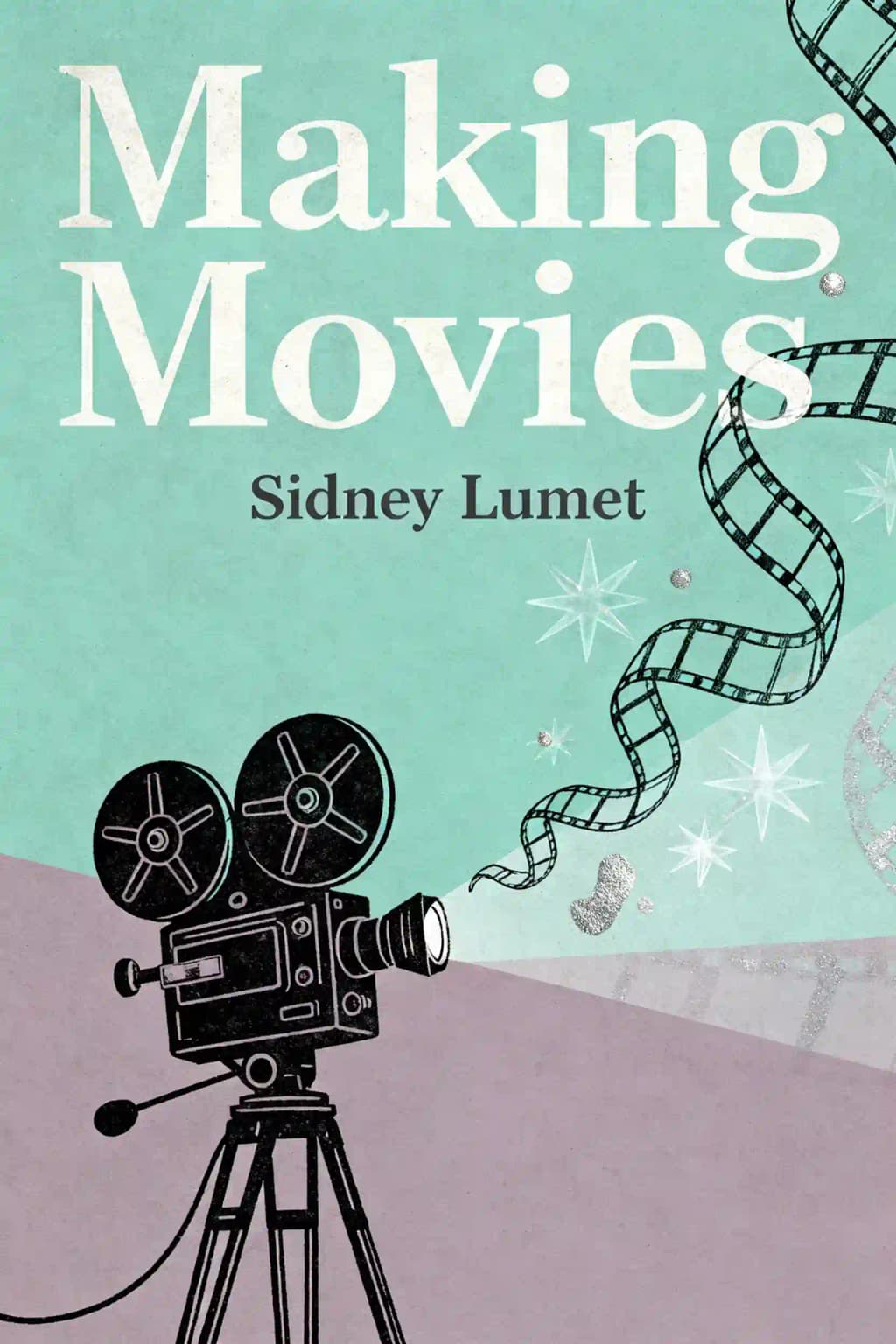
Sidney Lumet's "Making Movies" has become the filmmaking bible for directors like Christopher Nolan and Ava DuVernay, who cite it as their constant companion on set. What makes this memoir so enduring? Perhaps it's because Lumet-the four-time Oscar nominee behind classics like "12 Angry Men," "Dog Day Afternoon," and "Network"-strips away Hollywood glamour to reveal filmmaking's true essence: a delicate dance between artistic vision and practical constraints. While most filmmaking books get lost in technical minutiae, Lumet's insights transcend technique to explore the fundamental question: how does one transform words on a page into emotional truth on screen? His book remains required reading at film schools worldwide, not just for its craft insights but for its rare glimpse into the mind of a director who could make stars like Al Pacino, Paul Newman, and Katharine Hepburn deliver their most vulnerable performances.
Chapitre 2
The Director's First Decision: What Is This Movie About?
The most crucial decision I make is determining what the movie is about emotionally-its theme, spine, and arc. This single question shapes every subsequent creative choice from casting to camera angles. When approaching "Murder on the Orient Express," I realized it wasn't just a murder mystery but a nostalgic tribute to a glamorous world that perhaps never existed. This concept affected every department's work, resulting in six Oscar nominations.
I decide completely instinctively whether to make a movie, often on just one reading. Material comes from many sources-studios with firm offers, writers, agents, stars, or my own development projects. My reasons for accepting films vary widely. Sometimes it's magnificent material like "Long Day's Journey Into Night." Other times it's to solve a creative challenge, as when I did "The Appointment" to work with cinematographer Carlo Di Palma and overcome my "color block." I've made films for money, and others simply because I love to work.
Critics have noted my interest in the judicial system and my theater roots. Some accuse me of being "all over the place" without an overwhelming theme. But when I open a script, I'm a willing captive with no preconceived notion about fitting it into some grand life theme. I don't examine what my life is about-my life defines itself as I live it, and my movies define themselves as I make them.
I've never believed any film is truly "un Film de Sidney Lumet." I'm the one who says "Print," determining what goes on screen, but I'm dependent on weather, budget, actors' moods, and a hundred different people's talents. The joy lies in shared experience. I need my creative community desperately, and they need me. That's why I hire the best people in each department-not sycophants, but artists who challenge me to work at my best.
Chapitre 3
Style: The Visual Language of Storytelling
Critics often discuss cinematic style as something detached from content, which infuriates me. Style isn't separate from story-it's precisely how you choose to tell that particular story. After determining what a story is about, the most crucial decision becomes how to tell it. Every visual choice, from camera angles to lighting to costume design, should serve the narrative's deeper purpose and emotional resonance.
The auteur argument holds that directors maintain consistent styles across films. With Hitchcock, this worked because he essentially made the same picture repeatedly-melodramas with light comedy using glamorous actors, often the same cameraman and composer. His style was consistent because what he was doing remained consistent. Consider his signature techniques: the "Hitchcock blonde," the high-angle shots creating vulnerability, and his masterful use of suspense rather than surprise. These weren't merely stylistic flourishes but essential tools that served his storytelling approach.
For me, determining a film's style happens in three ways. First, through elimination-as with "Prince of the City," where I knew it wouldn't be naturalistic despite being a true story. The theme ("In a world of secrets, nothing is what it seems") eliminated certain choices. I deliberately avoided casting stars like De Niro or Pacino whose personas would eliminate ambivalence, instead choosing the excellent but less-known Treat Williams. The documentary-style cinematography, muted color palette, and claustrophobic framing all reinforced the story's paranoid atmosphere and moral complexity.
For "Long Day's Journey Into Night," I took the opposite approach, seeking "giants"-not just stars but great actors with powerful personas like Katharine Hepburn, whose fall needed to feel like "a giant oak falling." The theatrical staging, dramatic lighting, and longer takes allowed these towering performances to breathe and emphasized the play's operatic scale. Every visual decision amplified the sense of tragic grandeur inherent in O'Neill's text.
Sometimes style becomes apparent immediately upon first reading, as with "Murder on the Orient Express," where I knew we needed romantic nostalgia achieved through an all-star cast. The stars made the implausible plausible. We emphasized this through rich production design, sweeping camera movements, and careful attention to period detail. The glamorous lighting and costume choices created a heightened reality that allowed audiences to accept the story's elaborate plot mechanics.
Making a movie is like creating a mosaic-each setup a tiny tile you shape and polish before pasting together. Every decision about composition, movement, color, and rhythm must serve the larger picture. The greatest compliment on set is "We're all making the same movie." That's style - not as decoration, but as the fundamental language through which we communicate the story's essence to the audience. When every creative choice aligns with the story's core truth, style and substance become inseparable.
Chapitre 4
The Camera: Your Most Versatile Storytelling Tool
The camera is your most versatile ally-it can't talk back or ask questions, yet it can enhance performances, create mood, capture essence, stop time, change space, define character, provide exposition, make jokes, create miracles, and tell stories. If my movie has two stars, the camera is always the third.
Different lenses tell stories differently. No lens truly sees what the human eye sees, though midrange lenses (28mm-40mm) come closest. Wide-angle lenses (9mm-24mm) distort space, making objects seem farther apart and vertical lines converge. Longer lenses (50mm+) compress space, making objects appear closer together. These distortions become storytelling tools.
In "12 Angry Men," I created increasing claustrophobia through a "lens plot"-gradually shifting to longer lenses (28mm to 100mm) as the film progressed. I also lowered the camera position from above eye level to below, making the ceiling appear toward the end. For the final exterior shot, I used the widest lens yet from a high position, finally letting us all breathe.
For "The Fugitive Kind," I assigned specific lenses to characters. Brando's character received longer lenses for a softer, gentler aura. Anna Magnani's character began with shorter lenses but gradually shifted to longer ones as her character softened through love.
In "The Hill," we chose contrasty Ilford stock and shot everything on three progressively wider lenses (24mm, 21mm, 18mm), even close-ups. This distorted faces but kept the prison and desert visible in every shot, reinforcing that these men would never escape their surroundings.
For "Network," we "corrupted the camera" to match the theme. Starting naturalistically, we gradually made lighting more artificial and camera setups more rigid and formal, until the climactic boardroom scene was lit like a commercial.
In "Long Day's Journey Into Night," we created a visual journey from light into darkness. Starting with normal lenses and lighting that "could have been used for an Andy Hardy movie," we gradually transformed each character's appearance. For Hepburn, lighting became softer and gentler while using progressively longer lenses as she slipped into her "dope-ridden fog." For the men, we used increasingly wider lenses, harsher lighting, and lower camera positions as their world crumbled.
Chapitre 5
Art Direction and Costumes: Creating Visual Identity
Nothing affects actors more than their costumes. Ann Roth's designs can transform the most ordinary clothes into character-defining elements. Sean Connery once emerged from a fitting with her saying, "She's bloody marvelous. She's given me the whole bloody character now"-the highest compliment an actor can give, confirming we're all making the same picture.
Along with camera work, art direction and costume design are the most crucial elements in creating a film's visual identity. Every decision matters, from fabric choices to color palettes to architectural styles. I select locations carefully, following Carlo Di Palma's wisdom to find places that require minimal alteration.
In "Murder on the Orient Express," we thrust audiences into an unfamiliar world of glamour. Betty Bacall appeared in a full-length peach-colored bias-cut velvet dress with matching hat and egret feather, while Jacqueline Bisset wore blue silk with white ermine collar. Tony Walton knew nobody actually boards trains dressed this way, but historical accuracy wasn't the point-creating a feeling of lost glamour was.
We faced an interesting problem: train compartments are small, leaving little space for the backlight essential to glamorous photography. Tony discovered the original Wagon-Lits railway cars in Belgium storage sheds, more glamorous than anything he could design. We disassembled the interior wood paneling, shipped it to England, and reassembled it on movable plywood flats. The painters polished the wood until it reflected light, serving as backlight.
"Prince of the City" featured a deliberate visual progression paralleling the protagonist's journey. Early scenes had "busy" backgrounds-crowded streets, office walls covered with bulletin boards and diplomas, courtrooms filled with casually dressed spectators. As the story progressed, we tightened the visual reins-fewer decorations, emptier streets, spectators in dark clothes. By the final third, sets were stripped bare: nothing on walls, empty streets, and for a climactic courtroom scene, no spectators at all. This subtly reinforced Ciello's increasing isolation as he betrayed one partner after another.
Art direction profoundly affects performance. When Kate Hepburn entered the "Long Day's Journey Into Night" living room set, she immediately asked which chair was hers, noting "Each person always develops a fondness for her own chair." We'd anticipated this, placing period women's magazines and knitting beside her rocker.
Chapitre 6
Shooting the Movie: Where Vision Meets Reality
After months of preparation-sets, clothes, camera concepts, script, casting, rehearsals, scheduling, financing, insurance, locations, tests, hiring key personnel-we're finally shooting the movie. My day begins with a disciplined 7 AM wake-up, giving me an hour for coffee, bagel, newspaper, and mental preparation before my 8 AM pickup.
The call sheet is our bible-if it's not listed there, we don't need it. It details everything: shooting day number, crew call time, shooting call time, set descriptions, scene numbers, character numbers, page counts, actor pickup times, reporting times, makeup schedules, stand-in requirements, background actors, prop lists, and crew reporting times.
Proper handling of background actors can make or break a scene's reality. For "Dog Day Afternoon," we had minimum five hundred extras daily for three weeks, each given specific character backgrounds-sixteen "yentas" with personal histories, teenagers playing hooky, truck drivers positioned to start fights with arriving gay demonstrators. I spent over an hour explaining their roles from atop a ladder, and by the second week, they reacted naturally without direction.
I position myself as close to the lens as possible-either on the dolly beneath it or tucked behind the operator's shoulder-to get the camera's view while staying out of the actor's eyeline. During the take, I'm completely immersed-saying lines in my head, sensing movements, feeling emotions alongside the actors. If my concentration breaks, something's gone wrong and we'll need another take.
For emotionally demanding scenes, I create conditions that help actors reach their deepest potential. On "Dog Day Afternoon," I needed Al Pacino to make two phone calls in one continuous take that would run nearly fifteen minutes-beyond the camera's eleven-minute capacity. I positioned two identical cameras side-by-side with matching lenses, rolling the second camera when the first reached 850 feet, with real phone connections so Al could actually hear the off-camera actors.
I cleared the set and blocked it with black flats to eliminate distractions, even hiding the camera operators in a black tent with only the lenses visible. When the first extraordinary take finished, I immediately called for another, despite Pacino's exhaustion. By the second take's end, Pacino was emotionally spent, looking directly at me with tears streaming down both our faces before collapsing at his desk-creating some of the best film acting I've ever seen.
Chapitre 7
Rushes: The Daily Reckoning
At Technicolor in New York, we gather in a dismal screening room to view yesterday's work-"rushes," so named because the lab does quick one-light printing to show results as fast as possible. Despite the unglamorous setting, this moment remains both thrilling and terrifying. Even veteran cinematographer Ossie Morris admits to crossing his fingers each time the lights dim for rushes, even after hundreds of films.
The fundamental challenge is maintaining both passionate investment and brutal honesty-praying the work succeeds while objectively evaluating whether we've achieved what we intended. Sometimes takes I thought perfect during shooting disappoint me at rushes, while others exceed expectations.
On special projects, rushes can reveal either devastating problems or unexpected magic. But occasionally, usually around the third week, rushes reveal something extraordinary-the film developing its own life beyond what writer or director envisioned. When this happens on films like "Dog Day Afternoon" or "Prince of the City," I surrender control, following instinct rather than rigid plans.
In good drama, characters should determine the story, creating an inevitability that feels right yet still surprises. I examine whether each scene contributes to theme, story, and character development. The story must reveal the characters' essence-like in "Prince of the City," where Danny Ciello's fatal flaw as a manipulator led to his inevitable downfall when facing a situation too complex to control.
After establishing the screenplay's intention, we examine each scene and line. Does it contribute to theme and story? Is tension increasing? Are characters driving the story? I typically defer to writers on dialogue disagreements-after all, they wrote it.
"Dog Day Afternoon" presented unique challenges. Despite Frank Pierson's excellent script, I worried about audience reaction to its "exotic" gay themes in 1975. With Pierson's agreement, I had actors improvise dialogue using their own personalities, recording and incorporating their words while maintaining his structure. About 60% was improvised, yet Pierson deservedly won an Oscar-the actors spoke with his intention, even when not using his exact words.
Chapitre 8
The Cutting Room: Where Films Find Their Rhythm
For decades, the cliche that "Pictures are made in the cutting room" persisted, though no editor ever put anything on screen that hadn't been shot. This notion emerged from the studio system's rigid compartmentalization, where directors rarely cut their own films. The editing department had complete control-the chief editor saw the cut before the director, who might be off shooting another project.
The cutting room's blessed silence contrasts sharply with the constant noise of production. For me, editing involves two main elements: juxtaposing images and creating tempo. Sometimes a single shot captures a film's essence, like the train leaving Istanbul in "Murder on the Orient Express," conveying all the mystery and glamour I wanted. But the real power comes from juxtaposition-how shots relate to each other.
In "The Pawnbroker," we created a groundbreaking editing technique to show memory intrusion. The subway-to-railway car transition stretched over a minute, with two-frame cuts gradually replacing subway frames with railway car frames until the memory fully emerged. Both sequences were filmed in matching 360-degree pans, creating seamless visual continuity. The technique proved so effective we never changed it from the first cut. Within a year, television commercials widely adopted this "subliminal cutting" approach.
Editing tempo is critical-every splice changes the point of view like beats of a visual metronome. Fast tempo creates energy, but maintaining the same pace throughout makes a film feel increasingly slower. The key is changing tempo. In "12 Angry Men," I accelerated cutting pace throughout, using 387 setups with over half in the final thirty minutes. For "Long Day's Journey Into Night," I used tempo to reinforce character-Hepburn received sustained legato takes to convey her narcotized world, while Robards got staccato editing to feel erratic and disjointed.
The cutting room can transform problematic scenes. In "Daniel," two hospital scenes weren't working until I realized the first scene emphasized Daniel rather than his sister. By rebalancing the first scene to highlight the sister's pain, both scenes gained emotional power. This illustrates how editing decisions ripple throughout a film-changes in reel 2 affect reel 10.
The first complete screening is nerve-wracking-revealing whether the film works emotionally, whether sections drag, whether opening and closing land effectively. I take 24 hours away from the film before screening it at night with a small "brain trust" of friends who understand filmmaking. After screening, we discuss the film over pasta and wine, though I can usually read their true reactions when their eyes first meet after the lights come up.
Chapitre 9
The Final Touches: Sound, Music, and Color
The mix is where all sound tracks combine into the final soundtrack-a tedious process that balances the director's joy with necessary pain. We start with dialogue tracks, which often require extensive "balancing" between actors recorded in different conditions. Sound effects require adding everything from clothing rustles to footsteps. A simple car crash might use twelve separate tracks-glass breaking, metal tearing, tires on macadam, impact sounds with echo effects.
The one pleasure in mixing comes when music is added. After running the movie foot by foot at least seventy-five times, everything has become incredibly boring-favorite scenes look dated, and star performances seem wooden. But music pumps life back into the picture.
I distinguish between memorable scores and effective ones, citing Prokofiev's "Battle on the Ice" from "Alexander Nevsky" as the rare score that works independently while remaining visually evocative. Conversely, I praise Howard Shore's work on "The Silence of the Lambs" as imperceptible yet emotionally potent.
For "The Verdict," I instructed Johnny Mandel to create music suggesting Paul Newman's character's religious childhood, providing "the state of grace from which to fall" for his eventual resurrection. "The Pawnbroker" required a more complex approach, with two distinct musical themes representing Europe (classical, soft, old) and Harlem (percussive, brassy, wild jazz). These themes would gradually shift in dominance as the protagonist's emotional walls crumbled.
Sound effects are as vital to a film's audio power as music. In "Prince of the City," we started with maximum sound and gradually reduced it as the story progressed. Sound can carry subtle dramatic weight, as in "Serpico" where a barking dog created tension during an arrest scene.
In a darkened screening room, I sit beside the timer from Technicolor who's flown in on the red-eye from Los Angeles. With notepad and footage counter, he meticulously analyzes every shot, marking what's too dark, too light, too yellow, too red, too blue, or too muddy.
The color printing process is complex. In "Daniel," we used filters to give Daniel's childhood scenes golden, warm tones while his present-day scenes were blue. As Daniel resolved his past trauma and returned to life, the colors gradually normalized. The timer had to understand these intentions precisely; otherwise, the visual storytelling would be compromised.
Chapitre 10
The Studio: Art Meets Commerce
After months of rigid control over a film, handing it over to studio executives creates enormous tension. The financial landscape of studios has evolved dramatically-from fighting television to embracing ancillary rights including videocassettes, cable television, free television, airline in-flight use, and international distribution.
Studio previews begin with executives screening the film, often with a preview already scheduled for that same night. The viewing hierarchy is rigid-the studio head speaks first, followed by comments traveling down the chain of command with remarkable unanimity. But nothing is decided until the audience preview.
Preview audiences are carefully recruited from shopping malls, with every demographic group represented according to the film's anticipated rating. After the screening, a "focus group" of twenty demographically diverse viewers discusses their reactions. When asked what they didn't like, a feeding frenzy often ensues, with stronger personalities dominating. Studio executives absorb every comment, treating even isolated criticisms as consensus.
I've never found correlation between "numbers" and financial success. Despite using previews on several films, I've never successfully solved a picture's problems through preview-indicated changes. The industry's fixation on altering endings stems from "Fatal Attraction's" success after changing its conclusion based on preview feedback. But most pictures aren't very good, and fixing the ending rarely helps.
The conflicts between art and commerce are endless. After making "The Hill," I was devastated to find the distributor had created an idiotic ad featuring Sean Connery with a belly dancer thought balloon and the nonsensical tagline "Eat it, Mister!" I burst into tears at dinner that night, exhausted from fighting for every aspect of the film only to see it undermined by marketing.
The economic landscape is changing. Films are now part of the information highway, multinational corporate assets with significant impact on America's balance of payments. The need for content might help independent production and smaller-audience films. But I've seen these trends before-smaller companies expand, need wider distribution, and eventually get absorbed by majors.
Movies have become vital components of enormous financial empires, yet they remain uniquely compelling as the only art form using people to record something larger than life. It's the artistic achievements of great directors from Fellini to Kurosawa that create the world's fascination with film-not just commercial success. My job is to care about every frame, while somewhere young filmmakers are saving for their first cameras, a few of them dreaming not of fame but of making good movies.