Chapitre 1
The Mental Traps That Hold Us Back
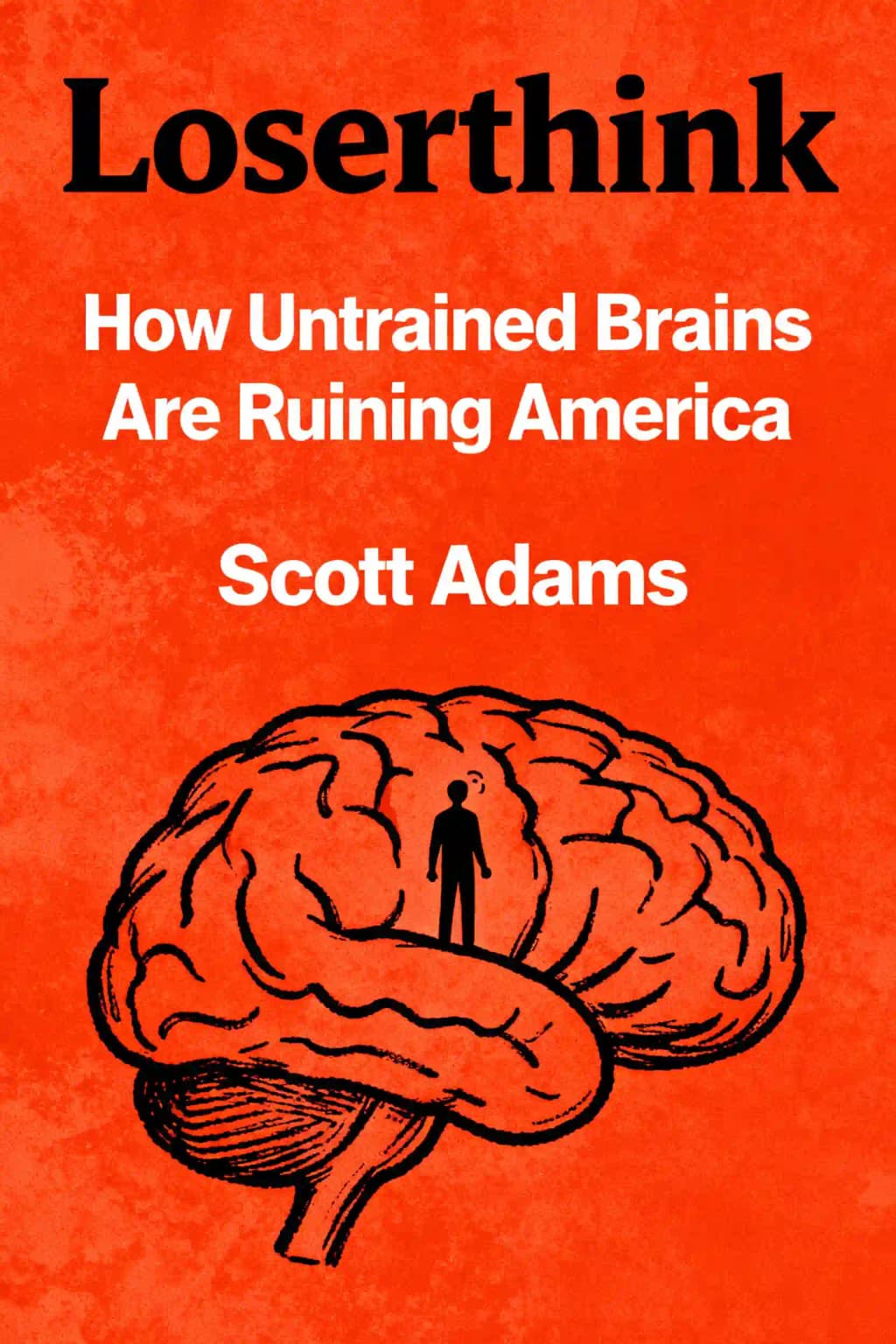
Have you ever found yourself stuck in circular thinking patterns, unable to break free from perspectives that no longer serve you? Scott Adams, the creator of the wildly successful Dilbert comic strip, has a term for this: loserthink. But don't be misled by the provocative name-this isn't about intelligence or education. It's about unproductive thinking habits that plague even the brightest minds. In "Loserthink," Adams draws on his unique background as a trained hypnotist, successful entrepreneur, and cultural commentator to identify the invisible mental prisons limiting our potential.
The book has resonated with readers across the political spectrum, becoming a favorite of business leaders like Elon Musk, who reportedly keeps a copy on his desk. Its cultural impact extends beyond business circles-Adams' framework for identifying mental traps has been referenced in psychology courses and leadership seminars nationwide. What makes this book particularly valuable is how it transcends political tribalism at a time when America seems more divided than ever, offering a toolkit for clearer thinking regardless of ideological affiliation.
Chapitre 2
Breaking Free from Disciplinary Blind Spots
We all have blind spots in our thinking based on our educational and professional backgrounds. Engineers think differently from artists, economists differently from psychologists, and medical doctors differently from sociologists. These disciplinary differences create distinct mental frameworks that shape how we process information, make decisions, and approach problem-solving. Each field develops its own specialized language, methodologies, and accepted truths that can become intellectual constraints.
Consider climate change discussions as a prime example of how disciplinary perspectives clash. Those with arts and humanities backgrounds often find scientific consensus compelling enough to settle the matter, focusing on narrative and broad implications. However, people with economics or statistical training recognize that multivariate prediction models regularly fail-they're not pure science but complex combinations of scientific thinking, mathematics, human judgment, and inherently incomplete data. These models follow patterns seen in well-known scientific and financial scams: failed predictions get quietly discarded while successful ones receive outsized attention and publicity. When money, academic prestige, and complexity intersect, the conditions become perfect for bias or fraud, as demonstrated by Duke University's $112 million research grant scandal, decades of incorrect nutrition science, and the replication crisis in psychology.
This disciplinary divide extends to other crucial debates. Medical doctors might approach mental health primarily through a biochemical lens, while psychologists emphasize behavioral patterns, and sociologists focus on environmental factors. Each perspective holds validity, but none captures the complete picture. Similarly, urban planning challenges reveal how architects, economists, and sociologists each bring valuable but incomplete perspectives to solving housing crises.
This doesn't mean we should dismiss expertise within disciplines. The basic chemistry and physics behind climate science are sound-greenhouse gases trap heat, and this mechanism is well-understood. But prediction models about complex systems with countless interacting variables deserve appropriate skepticism and benefit from multiple analytical approaches. A multidisciplinary thinker can simultaneously accept the underlying science while questioning the reliability of specific predictions and proposed solutions.
The key insight is that no single disciplinary approach provides a complete picture of complex real-world challenges. Engineers excel at practical problem-solving and systems thinking but might miss psychological nuances and social dynamics. Artists have powerful imaginations that help them see possibilities others miss but might lack analytical rigor and quantitative tools. Economists understand incentives and market forces but sometimes overlook human irrationality and cultural factors. By borrowing thinking tools from multiple disciplines - the precision of science, the creativity of arts, the behavioral insights of psychology, the systematic analysis of engineering - we expand our mental toolkit and avoid the trap of disciplinary myopia.
Success in today's interconnected world increasingly requires this kind of intellectual cross-pollination. The most innovative solutions often emerge at the intersection of different fields, where diverse perspectives combine to create new insights and approaches.
Chapitre 3
Political Warming: How Media Shapes Our Reality
We live in a world where reality's guardians have abandoned their posts. The technological ability to measure audience reactions to every headline, click, and engagement metric has transformed news from information presentation to sophisticated brain manipulation. Media organizations now employ advanced analytics to track real-time responses, adjusting their content strategy accordingly. This isn't evil-it's capitalism working as designed when something is both legal and profitable, driven by advertising revenue and engagement metrics.
The result is what Adams calls "political warming"-a continuous state of fight-or-flight anxiety making us more scared and angry than we've been since World War II. Nearly every major news story is exaggerated to the point of falsehood to generate fear and engagement. Stories about crime, political conflicts, and environmental threats are amplified beyond their actual significance. Despite doom-and-gloom narratives, humanity has never been better off - global poverty is declining, life expectancy is increasing, and technological advances are solving previously insurmountable problems. The future, contrary to popular media narratives, looks promising across multiple metrics.
Our understanding of reality is dissolving as fake news and conspiracy theories become building blocks of our perceived world. Social media algorithms create echo chambers where similar viewpoints are reinforced while opposing views are filtered out. We're trapped in bubble-realities that don't communicate with other bubbles, leading to increasingly polarized perspectives on everything from politics to science. The press business model thrives on negativity, making us believe the world is falling apart through constant coverage of disasters, conflicts, and crises.
Your best defense is intentionally seeking positive thoughts and stories-what Adams calls "managing your mental shelf space." This involves specific strategies: Toggle between news sources with different biases to gain balanced perspectives, avoid pharmaceutical commercials that list health problems and create nocebo effects, and deliberately fill your mind with uplifting content such as innovation stories, scientific breakthroughs, and human achievement narratives. Science confirms that negative thoughts release cortisol, suppressing immune function, digestion, and growth while affecting mood and motivation. Studies show that chronic exposure to negative news can lead to increased anxiety, depression, and feelings of helplessness. By training yourself to seek good news and positive interpretations, you'll feel happier, less anxious, and develop a more accurate filter on reality.
Remember: being absolutely right and being spectacularly wrong feel exactly the same. This humbling insight should make us all more open to reconsidering our most cherished beliefs. It's essential to maintain intellectual humility and recognize that our strongest convictions might be based on incomplete or distorted information filtered through media bias and our own cognitive limitations.
Chapitre 4
The Psychology of Mental Prisons
Those with psychology backgrounds are better equipped to see past common perceptual illusions that dominate social media and news. Understanding these thinking patterns helps navigate our world more successfully.
One of the most pervasive illusions is our belief that we can accurately deduce others' thoughts when in reality we're terrible at it. This mind-reading illusion appears across the political spectrum. When Ron DeSantis called his African-American opponent "articulate" and used the phrase "monkey this up," critics accused him of racism through "secret dog whistles." But many educated people were unaware these terms could be offensive in certain contexts. Both sides assumed DeSantis's mind worked like theirs-either knowing or not knowing the offensive implications.
The reality is we can observe someone's words and actions but can't reliably know their thoughts. Politicians routinely have knowledge gaps. When your opinion requires mind-reading strangers, you're likely experiencing loserthink. The most ordinary explanation for events is generally preferable to extraordinary ones.
Another psychological trap is branding others as "evil" through labels like racist, troll, or apologist. While labeling truly horrific criminals might be justified, we cross into dangerous territory when we believe we can see evil in others' souls. Most disagreements involve different approaches to achieving a better world, not evil intentions. People with strong arguments use reasoning; those without resort to labeling.
Psychological projection-accusing others of flaws we ourselves possess-is another common trap. While trained psychologists who've spent time with clients might diagnose projection accurately, social media users diagnosing strangers with projection are engaging in loserthink.
Perhaps the most important psychological insight concerns our relationship with ego. There are two ways to view ego-one productive, one loserthink. The productive approach treats ego as a tool rather than your core identity. This allows you to dial it up when needed and down when it's an obstacle. The sweet spot involves believing you can do more than evidence suggests, but not so much that it's delusional.
Chapitre 5
The Artist's Imagination and the Historian's Context
Artists have strong powers of imagination that help keep them out of mental prison. When we lack imagination, we make poor assumptions about others' motives. Political discourse often suffers from this failure, as shown by CNN articles that ignore multiple possible explanations for why racists might support Republicans.
The most ordinary explanations include racists believing CNN's fake news just like Democrats do, racists preferring Trump's stated goal of treating all Americans equally over what they perceive Democrats offer, or racists and Republicans supporting border security for entirely different reasons. People can support the same candidate for wildly different reasons, just as people visit Las Vegas for different purposes.
This failure of imagination affects both sides, as seen with Q conspiracy believers who can't imagine ordinary explanations for coincidences. As we age, we gain experience with being wrong and surprised about it, which helps us understand there can be multiple explanations for facts.
Historians contribute another important perspective: history isn't real in two important ways. First, whoever is in power writes history to keep themselves looking awesome, meaning different countries present vastly different accounts of the same events. Second, history can have too strong a hold on us, trapping us in mental prisons of past trauma.
The Middle East exemplifies this problem, with endless cycles of blame rooted in historical grievances. If you could erase historical knowledge from everyone there, peace might be easier to achieve. While history can be a useful persuasion tool through guilt, it shouldn't control your present choices.
The saying "history repeats" is particularly problematic-we never know which historical patterns will be predictive in our complex world of competing variables. We face multiple competing historical patterns in every situation and rarely know which ones matter most. Even investment experts with trillions at stake can't consistently predict which companies will succeed, which is why index funds outperform stock-pickers.
Chapitre 6
Engineering Solutions and Leadership Thinking
Engineers approach problems with practical solutions free from emotional constraints, teaching us valuable lessons about expertise, problem-solving, and complex analysis.
During his corporate career, Adams noticed a reliable pattern: whoever gets hired to work on a software upgrade will inevitably call the previous programmer an idiot. This "professional jealousy" serves multiple purposes-it boosts the new person's perceived value while targeting someone who isn't present to defend themselves. This phenomenon extends beyond tech workers to virtually every profession and politics. When experts routinely dismiss other experts' work, we should maintain healthy skepticism about expert opinions, especially on complicated matters requiring judgment calls.
Engineers understand that solutions don't need to be coupled with causes. Non-engineers often fall into the mental prison of believing whoever caused a problem must fix it. With 72,000 drug overdose deaths in 2017 alone-exceeding American casualties in Vietnam, Iraq, and Afghanistan combined-waiting for addicts to solve the opioid crisis is loserthink. Similarly, if your home is burglarized, the fault lies with criminals, but solutions involve better locks and security systems.
Engineers also recognize that multiple variables typically matter simultaneously in complex situations, while the public often seeks one-variable shortcuts. Climate change skeptics fall into one-variable thinking, claiming either that scientists follow grant money or that climate change is a globalist conspiracy. Both explanations are too simplistic for such a complex topic.
Leadership involves more than business analysis and rational decision-making-persuasion is at least half of what leaders do. Leaders understand that humans are fundamentally irrational creatures who believe they use logic but actually make emotional decisions they later rationalize. This explains why political opponents seem "bonkers" to each other.
Leaders also recognize that truth has two dimensions: accuracy and direction. While precision matters in fields like math and engineering, often getting the direction right is more important than perfect accuracy. A personal trainer who helps reduce your body fat from 35% to 20% instead of the promised 15% was directionally accurate, and you still benefited significantly.
Perhaps most importantly, leaders understand the difference between goals and systems. Thomas Edison didn't just have a goal of inventing a practical light bulb; he had a system of continuous testing that eventually led to success. While goals offer only one path to success, systems create multiple opportunities. The key insight: "Goals are for loserthinkers. Systems are for winners."
Chapitre 7
Scientific Thinking in an Unscientific World
Scientists approach the world with healthy skepticism, particularly regarding coincidences that seem meaningful but are often just random occurrences.
Humans are terrible at distinguishing meaningful coincidences from random ones. Adams shares numerous personal examples: buying Sharpies while hearing someone praise them on TV, organizing flashlights before a power outage, having a plumber fix his shower the same day he watched a show featuring shower repairs. Despite these striking occurrences, most coincidences mean absolutely nothing. While some coincidences might indicate something meaningful (like a spouse booking a flight before a domestic murder), we're particularly susceptible to misinterpreting coincidences when emotions are involved.
We often make the mistake of treating individual situations as representative of broader patterns. This observational "evidence" is anecdotal and shouldn't be considered persuasive. If someone wearing a green hat punches you, it would be irrational to conclude all green-hat wearers are dangerous. The problem worsens when media outlets slant coverage to create perceived patterns, focusing on stories that support their political leanings.
German mathematician Carl Gustav Jacob Jacobi believed problems are often easier to solve when expressed as their opposite. Investor Charlie Munger applies this by first understanding what failure would look like before considering success. As a cartoonist, Adams regularly reverses assumptions to create humor-imagining doctors as legal serial killers dispensing bad advice rather than healers. This mental exercise helps in everyday situations too. When suspecting a loved one's bad intentions, consider they might actually be trying to help.
Scientists understand that individual stories can be persuasive yet misleading. In politics, Democrats accuse Republicans of being racists because some are, while Republicans label Democrats as socialists or anarchists because some are. This unethical branding can effectively generate hatred toward opponents. Believing millions of fellow citizens share despicable traits despite contrary evidence is loserthink that makes you less happy and effective.
Arguments requiring critics to "prove it isn't true" represent cult-like thinking. It's generally impossible to prove things don't exist-we can only show we can't detect something's existence. People trained in decision-making recognize that demanding others prove a negative is irrational and constitutes loserthink.
Chapitre 8
The Entrepreneur's Mindset and Economic Clarity
Entrepreneurs approach problems with a unique mindset that breaks through mental barriers and creates forward momentum.
As a trained hypnotist, Adams sees humans as "moist robots" whose minds can be rewired. "Couch lock" describes the feeling of being unable to motivate yourself to action-your brain wants to do something productive but can't command your body to move. The solution is focusing on the smallest possible step rather than the entire project. Move your pinky finger first-this tiny action restores your sense of agency and builds momentum.
The advice to "stay in your lane" might be the most loserthinkish advice in history. Adams points to influential figures like President Trump (a real estate developer) and Representative Alexandria Ocasio-Cortez (a former bartender) who succeeded precisely because they didn't limit themselves to their original professions. Similarly, Adams' own success with Dilbert came from leaving his corporate cubicle. While people with world-class skills in areas like sports or music might benefit from specialization, most people should regularly leave their comfort zones to build complementary skills.
While luck plays the biggest role in success, the second defining characteristic of successful people is their sense of personal control. People who believe they can steer their fate through their actions put more effort into doing so. Unsuccessful people often see themselves as victims of circumstances beyond their control, like the chronically late person who always blames traffic. Meanwhile, consistently punctual people believe timeliness is 90% under their control.
Understanding economics provides a deeper comprehension of the world, helping you "see around corners" that others cannot. Adams demonstrates this with examples from real estate and financial advising, where understanding economic incentives reveals hidden truths. Bad behavior is almost guaranteed when there's money to be made, detection risk is low, and many people are involved-as with insider trading.
When someone asks if "the ends justify the means," they're setting a word trap to paint you as immoral. Instead of answering directly, reframe the question as "Are the benefits greater than the costs?" This approach acknowledges that good decision-makers consider all relevant factors-including ethical and moral considerations-as part of a comprehensive cost-benefit analysis.
Chapitre 9
Breaking Free from Mental Prisons
It would be unkind to show you the walls of your mental prison without showing how to break out. The tools and techniques Adams shares will make almost every part of your life easier and help you understand the world at a level most never appreciate.
Every culture has feelings about success-what Adams calls "cultural gravity." Low cultural gravity celebrates success, allowing you to rise according to talents and efforts. High cultural gravity disapproves of success, dragging you down when you try to succeed. If you allow unsuccessful people's opinions to hold you back, that's loserthink.
If you don't know the right way to do something, try doing it wrong (when it's not dangerous). Doing things wrong is an excellent way to figure out how to do things right. People who know better will jump in with free advice. Adams became a successful cartoonist and high-paid speaker by starting terribly and improving. Waiting until you know how to do something perfectly before starting is loserthink.
Getting priorities right isn't easy. Make yourself your top priority, focusing on health and finances until they're in good shape. Then expand your generosity outward in this order: you, family, friends, employer, town/city, country, world. There are exceptions (like solving major world problems), but typically, choosing the gym over working late is the right call.
Perhaps the most common way people fall into mental prisons is by not knowing a situation's context. Many "news stories" are nothing but people misunderstanding what someone said or did because some context was missing. News reports about famous people are wrong or misleading about 60% of the time, often lacking crucial context. It's wise to wait a few days before forming strong opinions about breaking news.
While experts shouldn't be ignored, sometimes accomplishing meaningful things requires violating their advice. Four out of five syndication companies-staffed by top experts-rejected Dilbert, which went on to become one of the most successful comic properties ever. Experts are most reliable when situations are simple with clear historical precedents. For complex situations without predictive patterns, treat expert opinions as educated guesses at best.
One of Adams' most useful systems involves routinely flipping between CNN and Fox News. People stuck in either left or right information silos often lack awareness of opposing viewpoints. News that's reported the same way across ideological lines is probably true.
Rather than viewing your ego as your identity, treat it as a tool. This is difficult because our egos control us through fear-often illusory fear. To prevent your ego from becoming your jailer, regularly put yourself in potentially embarrassing situations for practice. With practice, you can evolve from being embarrassed about everything to having almost no sense of shame.
Chapitre 10
The Golden Age Ahead
Despite the media's constant dire warnings about impending doom, the world is actually doing well by historical standards, with the rate of improvement increasing. This provides a counterbalance to the mental prison of negativity created by the press's business model of selling fear.
Extreme poverty has plummeted from 50% of the world's population in 1966 to just 9% by 2017. As people escape poverty, they tend to have smaller families, providing population control as a natural consequence. While the middle class struggles with rising costs, innovations are emerging to address these challenges.
Technology is making it increasingly difficult to commit crimes without being caught. Security cameras, smartphones, digital trails, and DNA analysis mean almost any crime in public will be recorded and solved if enough resources are applied.
While experts debate whether war is truly declining, several forces are aligning to make conflicts less likely. Mutually assured destruction continues working, conquest is no longer economical, guerrilla resisters have better weaponry, and economic warfare provides a superior alternative to physical conflict.
The healthcare field is seeing incredible breakthroughs that promise to lower costs while improving care. Telemedicine through email and video calls provides convenient, efficient doctor access at reduced costs. Smartphone health testing devices and affordable lab tests are bringing diagnostic capabilities directly to consumers.
If you follow the news, you might think race relations in the United States have deteriorated alarmingly. Adams believes this is mostly an illusion created by media business models that prioritize negative coverage. From his perspective in California, race relations on a person-to-person level are better than ever, with more interracial marriage, historically high employment rates for minorities, and improved comfort with each other.
The business model of the press guarantees you'll see more negativity than facts support-things are often better than they seem, especially long-term. Fear is a great motivator, and when humans fear something, we get to work solving the problem. Our current biggest problems are likely to go the same way as past ones-we'll figure out how to deal with them.