Chapitre 1
Unlocking the Science of Lasting Learning
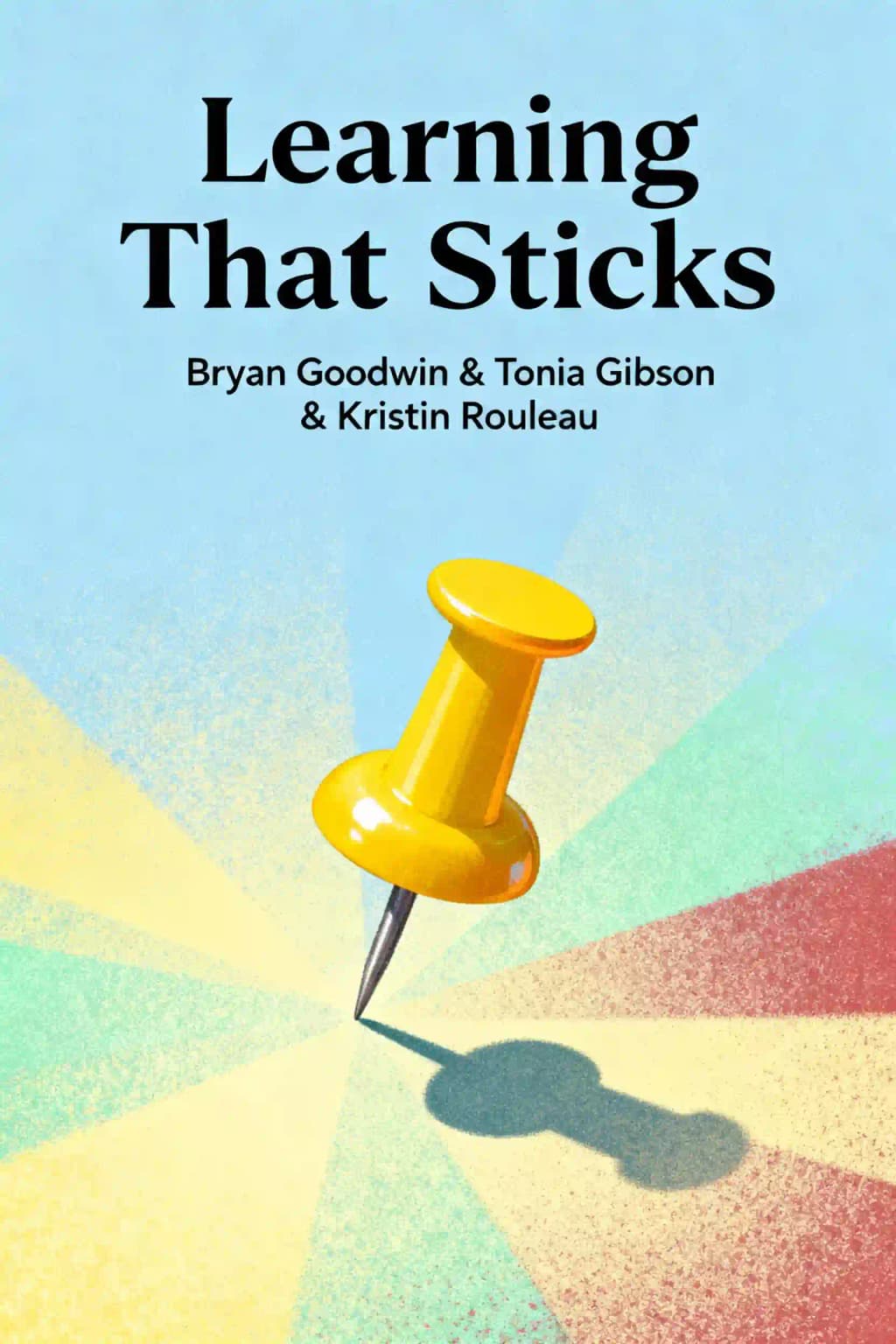
Ever wondered why you can vividly recall the lyrics of a song from decades ago but struggle to remember what you read in a textbook last week? The mystery of how our brains decide what information to keep and what to discard has fascinated cognitive scientists for generations. Bryan Goodwin's "Learning That Sticks" cracks open this black box of learning, offering educators a revolutionary framework based on decades of cognitive science research. Since its 2020 publication, this book has become a cornerstone text in teacher preparation programs across the country, with educators praising its practical translation of complex brain science into classroom strategies. Goodwin, president of McREL International and a former teacher himself, bridges the gap that has long existed between neuroscience laboratories and classroom practice. The result is a roadmap that transforms how teachers design instruction by focusing not on what they do, but on what happens in students' minds when real learning occurs.
Chapitre 2
The Brain's Information Processing System: How Learning Actually Works
Our brains are paradoxical organs-capable of storing vast amounts of information while simultaneously designed to forget most of what we encounter. This selective memory isn't a design flaw but a crucial feature that prevents cognitive overload. Understanding how information travels through the brain's processing systems is fundamental to effective teaching.
When information first enters our sensory register, it has mere milliseconds to catch our attention before being discarded. This filtering evolved as a survival mechanism, helping our ancestors focus on threats while ignoring distractions. Information that passes this initial filter enters immediate memory, where it lasts approximately 30 seconds and has extremely limited capacity-George Miller's famous research showed we can juggle about seven bits of information at once, though more recent studies suggest the number is closer to four.
With conscious focus, information moves to working memory, where it can remain for 5-20 minutes. Working memory combines short-term storage with mental effort, activating different brain regions when we manipulate rather than simply rehearse information. This is where the real work of learning begins.
For information to transfer to long-term memory, where it can potentially remain for a lifetime, we must revisit it through repetition, rehearsal, contextualization, or application. The brain creates more and larger dendrites to store these memories, with stronger connections forming when we engage multiple sensory inputs related to the same concepts. During sleep, our subconscious sorts the day's events, embedding important information and pruning what it deems useless.
This understanding of memory stages translates into a six-phase learning model that aligns with how our brains naturally process information:
1. Become interested - Information that stirs emotions or curiosity passes through our mental filters
2. Commit to learning - Students must see how knowledge connects to their lives and set attainable goals
3. Focus on new learning - Active engagement helps information enter working memory
4. Make sense of learning - "Chunking" information and connecting it to prior knowledge organizes it before details fade
5. Practice and reflect - Distributed and retrieval practice prevents the brain from pruning new information
6. Extend and apply - Developing multiple connections to knowledge creates retrieval pathways
Each phase corresponds to specific cognitive processes and requires different instructional strategies. By understanding this sequence, teachers can select appropriate tools from their classroom toolkit at the right time, making learning more efficient and effective.
Chapitre 3
Capturing Attention in an Age of Distraction
In today's hyper-stimulated world, capturing students' attention has become increasingly challenging. Modern students receive the equivalent of 174 newspapers worth of information daily, yet their brains can only process about 120 bits per second - barely enough to follow two conversations simultaneously. This cognitive overload manifests in shorter attention spans, increased distractibility, and difficulty retaining information. The situation is compounded by students' growing attunement to screens rather than people, with the average teenager spending over seven hours daily on digital media, rewiring their brains for rapid-fire stimulation rather than sustained focus.
The emotional landscape students bring to class adds another layer of complexity. Nearly half of American students under 17 have experienced at least one adverse childhood experience (ACE), with 22.6% having multiple traumatic experiences. These ACEs range from physical abuse and neglect to witnessing violence or having an incarcerated parent. Neuroscience shows that trauma physically alters the brain - reducing hippocampus size by up to 12% (critical for memory formation) and increasing amygdala activity while decreasing prefrontal cortex function. These changes leave affected students in a constant state of high alert, making concentration difficult and impairing verbal declarative memory-the foundation of academic learning.
To break through these barriers, teachers must understand and work with the brain's filtering hierarchy. Our brains prioritize information through three main channels:
• Emotional Valence: The brain gives immediate priority to perceived threats (raised voices, sudden movements) or highly appealing stimuli (food, social acceptance)
• Novelty Detection: New or dynamic elements capture attention while familiar ones fade into neural background noise
• Curiosity Triggers: The brain naturally focuses on incomplete patterns, unexplained phenomena, and situations that challenge existing mental models
Effective strategies for capturing and maintaining student interest include:
1. Creating an "oasis of safety and respect" through consistent routines, clear expectations, and positive teacher-student relationships. This might include morning check-ins, calm-down corners, and predictable response protocols for student needs.
2. Connecting learning to positive emotions by incorporating humor, celebration, personal relevance, and social connection. For example, turning grammar practice into a game show format or relating historical events to current student experiences.
3. Sparking curiosity through structured mystery (evidence-based prediction activities), cognitive conflict (presenting contradictory facts), and strategic questioning techniques that prompt deeper thinking.
4. Activating prior knowledge while revealing gaps through pre-assessment activities, misconception checks, and "what do you notice/wonder" protocols that make learning needs visible.
5. Structuring academic controversy through debate formats, perspective-taking exercises, and problem-solving scenarios that require evaluating multiple viewpoints.
6. Introducing novelty through varied presentation methods, movement-based learning, surprise elements, and regular changes in classroom setup or routine.
Research reveals a stark decline in natural curiosity within traditional school settings - student-initiated questions drop from 100-300 per day in toddlers to fewer than 10 by middle school. However, studies show that when teachers invest time in curiosity-sparking strategies, student engagement increases by up to 40%, and information retention improves by 30%. The neurotransmitter dopamine, released during states of curiosity, helps create stronger neural pathways for learning. When students are genuinely interested, their brains remain in an optimal state for learning - alert but not stressed, focused but not rigid, engaged but not overwhelmed.
Chapitre 4
The Motivation Equation: Why Students Commit to Learning
As students progress through school, engagement plummets dramatically-from 80% of elementary students feeling engaged to just 40% of high school juniors. This disengagement occurs precisely when students should be discovering the wonders of science, history, literature, and mathematics. The problem stems partly from students' inability to see value in what they're learning.
Learning requires what cognitive scientist Daniel Kahneman calls "effortful thinking," which our naturally lazy brains resist unless convinced the effort is worthwhile. For students to commit to learning, they need both expectation of success and perceived value in the outcome-what educational psychologist Jere Brophy described as the motivation formula of "expectancy x value."
Students who commit to learning-whether in academics, athletics, or arts-have identified personal purpose in their efforts, making even repetitive practice meaningful rather than tedious. Harvard professor Jal Mehta found that many students see no value in what they're learning, with only those aiming for selective colleges having clear external motivation.
While extrinsic rewards (gold stars, grades) can initially motivate students, research shows they ultimately undermine intrinsic motivation. When researchers rewarded children with cookies for drawing (previously done for enjoyment), they became less likely to draw for pleasure afterward. By bribing students for learning-something naturally rewarding-we inadvertently frame learning as an unpleasant chore.
To help students commit to learning, teachers can:
1. Provide a clear WIIFM ("What's In It For Me?") by showing how learning connects to real life
2. Frame learning as an investigation of big, significant questions that engage deep thought
3. Provide clear learning objectives (what students will learn and why) and success criteria ("I can" statements)
4. Show students the path to mastery by connecting individual lessons to larger goals
5. Encourage personal learning goals that trigger dopamine release when achieved
6. Help students understand the link between effort and achievement
Perhaps the most valuable gift we can give students is developing what psychologist Martin Seligman calls "learned optimism"-the belief that success comes from effort rather than luck or innate ability. This internal locus of control has more influence on achievement than any other school-controlled factor and can counteract the effects of stereotype threat for marginalized students.
Chapitre 5
Dual Coding: How Our Brains Process New Information
Working memory consists of our conscious thoughts, which can be held for 5-20 minutes before either decaying or moving to long-term memory. Psychologists Alan Baddeley and Graham Hitch's model identifies three key systems: the phonological loop (handling verbal information), the visuospatial sketchpad (processing visual images), and a central executive system coordinating these components.
These systems explain why we can process verbal and visual information simultaneously (like reading road signs while driving) but struggle with two streams of the same type (like reading while someone talks nearby). Since our working memory has separate visual and verbal channels, combining graphics with words significantly enhances learning effectiveness. Research shows we retain only 10% of purely verbal information after three days, but when accompanied by powerful images, retention jumps to 65%.
We more easily recall concrete nouns than abstract ones, and better remember abstract concepts when we can visualize them. Classroom experiments confirm that providing both abstract concepts and concrete examples enhances learning by engaging both channels of working memory. For instance, understanding a food chain requires both the abstract definition and visual examples like "insects -> birds -> bobcats."
Studies also show that students learn mathematics and science more effectively when alternating between solving problems independently and studying worked examples. This approach creates "desirable difficulties" that engage multiple brain regions. When students bounce between solved and unsolved problems, they internalize dual coding while thinking through problems with self-talk.
To help students focus on new learning, teachers can:
1. Support visual learning through mind maps, physical models, mental imagery, and kinesthetic activities
2. Both tell students abstract concepts and show what they look like in practice
3. Model processes step by step while thinking aloud to demonstrate both what to do and why
4. Alternate between worked examples and independent problem-solving, gradually fading support
5. Teach self-questioning techniques that maintain active engagement during learning
6. Encourage handwritten note-taking, which activates more regions of the brain than typing
As cognitive scientist Daniel Willingham notes, "we only learn what we think about"-students must actively engage with material, not passively absorb it. This active processing prevents the "MacGruber effect" where distraction causes learning to be discarded before it's properly encoded.
Chapitre 6
Making Connections: How Our Brains Organize Information
Making sense of new information involves the mysterious process of encoding-where our brains convert sensory inputs into stored electrical patterns that become memories. While emotionally charged experiences encode automatically, academic learning requires "effortful processing" to gather scattered information pieces into coherent understanding.
The encoding process remains somewhat mysterious to cognitive scientists. As John Medina describes it, information entering the brain is "like a blender left running with the lid off," with content "sliced into discrete pieces" and "splattered all over the insides of our mind." Brain scans reveal that even simple visual elements like diagonal and vertical lines are stored in different brain regions.
Our brains encode verbal learning in three distinct ways: semantic encoding (processing word meaning), phonemic encoding (processing word sounds), and structural encoding (processing word appearance). Research shows that deeper encoding-especially when we consider meaning and personal relevance-dramatically improves recall.
Rather than filing memories like papers in cabinets, our brains store information in messy neural networks, connecting memories, ideas, and experiences. This explains why one memory often triggers another. Learning requires connecting new information to prior knowledge-the more connections made, the better the recall.
Working memory has strict bandwidth limitations-typically seven items (or possibly as few as four). This limitation means teachers must help students mentally cluster information into larger conceptual units to avoid cognitive overload. Our brains naturally seek patterns, but this pattern-seeking tendency can lead us astray when we identify nonexistent patterns in random events.
Like MacGyver working against a ticking time bomb, our working memories time out after 5-10 minutes for preadolescents and 10-20 minutes for adults. Learning must be "chunked" into shorter segments with mental processing opportunities between intervals.
To help students make sense of learning, teachers can:
1. Design learning experiences with frequent processing pauses-5 minutes for young learners and maximum 10 minutes for older students
2. Ask probing questions that help students activate prior learning, connect ideas, and examine misconceptions
3. Provide wait time of at least three seconds after asking questions to allow for thoughtful responses
4. Use cooperative groups during the processing phase of learning, not when students are first encountering new material
5. Help students identify similarities and differences through comparing, contrasting, classifying, and creating metaphors
6. Invite students to summarize their learning by sorting, selecting, combining, and rephrasing information
The key to helping students make sense of learning isn't showing them how ideas are categorized or connected, but engaging them in asking their own processing questions about what they're learning. This taps into their natural curiosity and creates deeper, more lasting understanding.
Chapitre 7
The Science of Memory Formation: Practice That Makes Perfect
Studies show students forget about 90 percent of what they learn in school within a month. Understanding why some memories stick while others fade is crucial to effective teaching. After students become interested in learning, focus on new information, and make sense of it, they must embed that learning into long-term memory through effective practice.
Memories aren't stored in a single neuron but across networks connected by neural pathways. When we revisit memories, these pathways get coated with myelin, an insulating material that makes future activation easier. This leads to the first principle of memory storage: repetition is essential. Studies show students need to rehearse a new skill at least 24 times to reach 80% competency.
Research dating back to Hermann Ebbinghaus shows that spacing practice sessions over days or weeks is far more effective for long-term retention than cramming. When high school students learning French vocabulary were tested, those who studied in three 10-minute sessions over three days retained significantly more than those who studied in one 30-minute session.
Interleaving practice-mixing up different types of problems or skills rather than practicing one type repeatedly-creates more robust learning. Though initial learning may be slower with interleaving, long-term retention improves significantly. In a study with 4th graders learning to calculate geometric properties of prisms, students who practiced with mixed problem types initially performed worse but a day later retained twice as much.
The act of trying to recall information-retrieval practice-significantly strengthens memory more than rereading or reviewing. Studies across all grade levels show retrieval practice's power: students who read text once but practiced recalling it three times performed four times better than those who read the material four times.
To help students practice effectively, teachers can:
1. Observe and guide initial practice to prevent misconceptions from forming
2. Check understanding frequently (every 5-10 minutes) with revealing questions that probe deeper understanding
3. Provide specific, actionable, nonevaluative feedback that prompts students to think about their learning
4. Interleave and space practice according to Ebbinghaus's forgetting curve-reviewing after 20 minutes, 1 hour, 1 day, 2 days, 1 week, and 1 month
5. Teach students effective practice strategies like retrieval practice, spaced repetition, and deliberate practice
During sleep, our brains selectively preserve neural networks we've reinforced during the day while pruning away less important memories. This "smart forgetting" helps reduce mental noise and consolidate important learning, but only if we've sufficiently repeated new information through deliberate practice.
Chapitre 8
From Knowledge to Understanding: Building Mental Models
The final phase of learning requires extending and applying knowledge to create deep, lasting understanding. There's a crucial difference between storing memories and retrieving them. Storing typically requires repetition and sometimes strong emotions, while retrieving demands multiple pathways or "hooks" to access the stored information.
Making personal connections to new learning dramatically improves recall. Research consistently shows the power of this "self-reference effect" across various learning tasks and age groups. In one study, students who related reading material to their personal experiences outperformed those using more elaborate study methods like SQ4R or highlighting.
Elaborative rehearsal or inquiry takes retrieval practice further by encouraging students to ask complex how, why, and what if questions about their learning. This strategy works by connecting new learning to prior knowledge and existing mental models, creating multiple retrieval hooks.
While elaborative inquiry helps with declarative knowledge (facts and concepts), self-explanation supports procedural knowledge (skills and processes). This involves talking aloud through steps and choices while solving problems. Research shows students who verbalize their thinking while solving problems maintain 90% accuracy when transferring learning to new contexts, while those who don't verbalize drop to just 27% accuracy.
Mental models (or schema) are coherent patterns that serve as fundamental building blocks of deep learning. These interweaving networks of declarative and procedural knowledge distinguish experts from novices across fields. Experts categorize problems, construct mental representations, search for strategies, apply them, evaluate effectiveness, revise if needed, and store successful solutions.
To help students extend and apply their learning, teachers can:
1. Create challenging but achievable learning tasks in students' "Goldilocks" zone
2. Support inquiry-based learning centered on driving questions that tap into students' curiosity
3. Make student thinking visible through elaborative interrogation, self-explanation, and asking the "Golden Question" ("What makes you say that?")
4. Teach critical thinking explicitly within content knowledge through classroom discussion, complex problem solving, and mentoring
5. Use writing to help students organize scattered thoughts into coherent ideas
6. Anchor learning to performance assessments that require students to demonstrate they can apply knowledge in real-world contexts
The ultimate goal is helping students develop rich mental models, which are inextricably linked with critical thinking. This dispels two common educational myths: first, that students don't need to learn facts in the Google age (in reality, critical thinkers accumulate substantial knowledge in the form of mental models); and second, that students learn best by "discovering" solutions to complex problems without guidance.
Chapitre 9
Learning That Sticks: Bringing It All Together
The human brain is naturally wired for learning, especially when motivated by curiosity. Before formal education, children learn thousands of words and complex motor skills driven by their innate desire to explore and understand. A toddler masters walking, basic language, and social interactions without formal instruction, purely through observation, trial and error, and internal motivation. Unfortunately, typical classrooms often create unnatural learning conditions that either underwhelm or overwhelm students' brains, running counter to cognitive science. Traditional lecture-based instruction, rigid pacing, and standardized approaches can suppress this natural learning instinct.
The learning model presented in "Learning That Sticks" isn't meant to be a rigid formula but a blueprint to help teachers develop their own expertise and mental models. It emphasizes flexibility and adaptation while maintaining core principles of how the brain learns best. By applying this model, teachers focus on what should happen in students' minds during learning, not just following a teaching playbook. This helps diagnose classroom issues and make real-time adjustments when learning gets off track. For example, when students struggle with new content, teachers can assess whether the challenge lies in insufficient background knowledge, weak connections to prior learning, or inadequate processing time.
When learning opportunities align with the brain's natural learning propensity, education becomes both easier and more joyful. Students engage more deeply when lessons incorporate elements of discovery, social interaction, and personal relevance. The teacher's role is to accelerate this process by introducing interesting, important concepts that maintain curiosity, making learning unfold as naturally for an 18-year-old as for an 18-month-old. This might involve using inquiry-based approaches, incorporating relevant real-world problems, or creating opportunities for peer teaching and collaboration.
A shared learning model enhances professional collaboration through common vocabulary and understanding. When teachers speak the same "language" about learning, they can more effectively share strategies, analyze student work, and problem-solve together. This enables meaningful professional dialogue, efficient lesson planning, and effective peer coaching focused on what matters most for student learning. Professional learning communities become more productive when discussions center on specific cognitive processes rather than just activities or content coverage.
The most powerful insight from cognitive science may be that learning doesn't have to be arduous or unpleasant. Research shows that stress and anxiety can actually inhibit learning by blocking access to higher-order thinking. When we tap into students' natural curiosity and design instruction aligned with how their brains actually work, we create classrooms where learning sticks not through force or repetition, but through engagement, connection, and purpose. This might involve using storytelling to make content memorable, incorporating movement and hands-on experiences, or allowing students to pursue personally meaningful projects. As Hawthorne's Hester Prynne "had not known the weight until she felt the freedom," our students can be unburdened from both meaningless learning and self-doubt when they find purpose in their education and believe in their ability to achieve through effort. This transformation occurs when learning becomes a natural, engaging process rather than an imposed obligation.



![MAKE IT STICK , BROWN, PETER C. [Hardcover] HARVARD UNIVERSITY PRESS](/_next/image?url=https%3A%2F%2Fd3lvzgn0lx7rb2.cloudfront.net%2Fcovers%2Fa3c49b6b-abd7-4c1b-afb2-09b323ee76c0%2Fimage_resized.webp&w=1024&q=50)