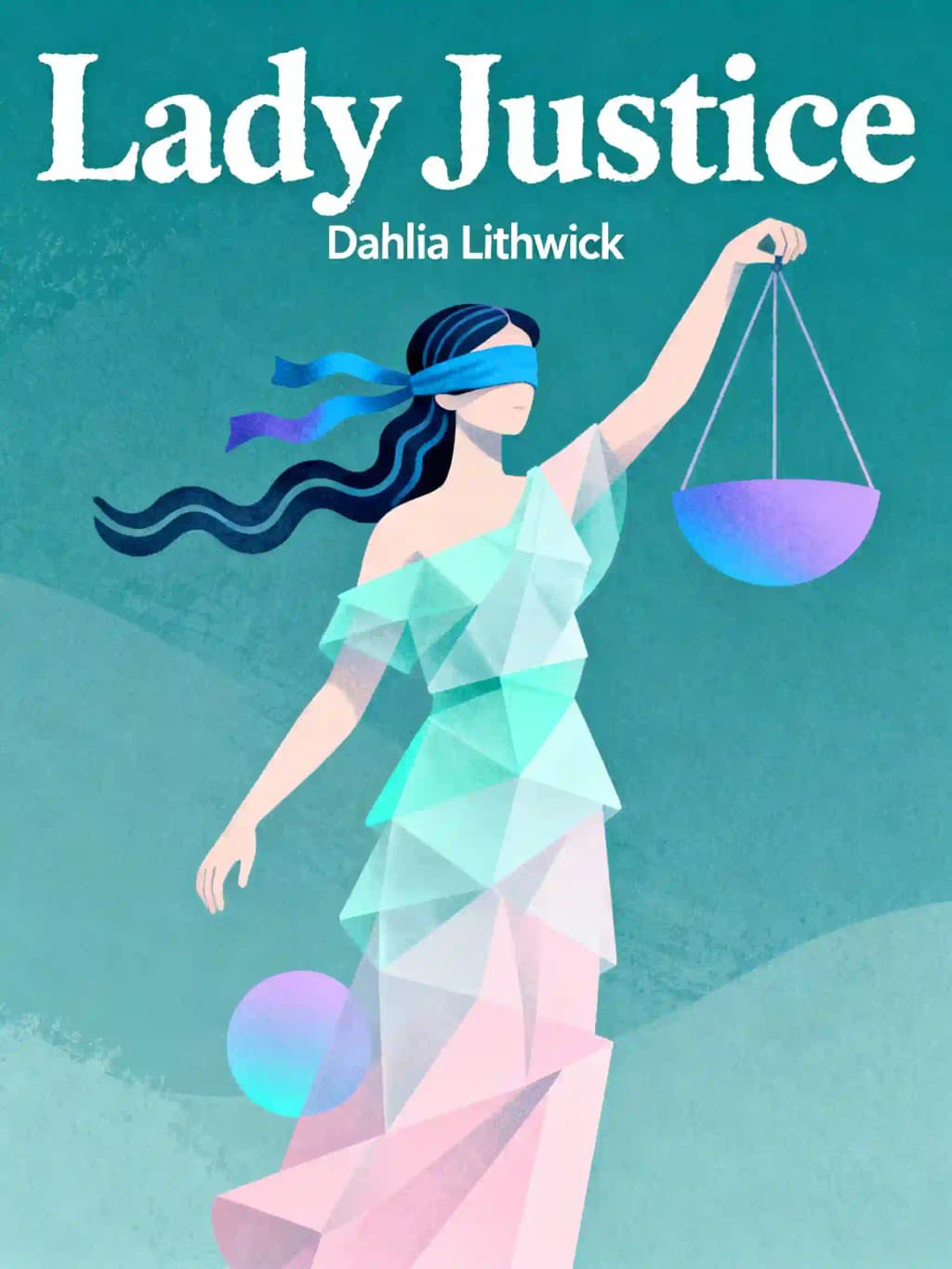
In "Lady Justice," Dahlia Lithwick profiles the fearless women lawyers who battled Trump's policies, proving that "women plus law equals magic." This New York Times bestseller moved readers to tears, revealing how unsung legal heroines preserved our freedoms when democracy trembled.
Dahlia Lithwick, New York Times bestselling author of Lady Justice: Women, the Law, and the Battle to Save America, is a leading legal journalist and Supreme Court analyst. A senior editor at Slate, she has written the outlet’s "Supreme Court Dispatches" and "Jurisprudence" columns since 1999 and hosts its award-winning podcast Amicus.
A Yale-educated lawyer and Stanford Law School graduate, Lithwick’s expertise in constitutional law and social justice stems from her decades covering landmark cases and her visiting faculty positions at universities like the University of Virginia School of Law.
Her work intersects law, gender equity, and democracy, themes central to Lady Justice, which chronicles women’s transformative impact on American jurisprudence. Lithwick co-authored Me Versus Everybody and I Will Sing Life, and her writing has appeared in The New York Times, The New Yorker, and The Washington Post. A frequent commentator on MSNBC and The Rachel Maddow Show, she has testified before Congress on judicial transparency and received honors including the Hillman Prize and a National Magazine Award. Lady Justice became an instant New York Times bestseller, solidifying her reputation as a vital voice in legal discourse.
Lady Justice by Dahlia Lithwick chronicles the pivotal role of women lawyers who fought to uphold civil liberties during Donald Trump’s presidency. It highlights landmark battles like the Muslim travel ban injunction, the Charlottesville neo-Nazi lawsuit, and voting rights advocacy, emphasizing how these women leveraged legal frameworks to counter systemic injustices. The book blends legal analysis with personal narratives to showcase their resilience and strategic ingenuity.
This book is essential for readers interested in legal history, social justice, or women’s leadership. It appeals to law students, activists, and anyone seeking inspiration from grassroots legal victories. Lithwick’s accessible storytelling makes it engaging for both legal professionals and general audiences passionate about democracy and equality.
Yes—Lithwick’s sharp legal insights and vivid profiles of unsung heroes offer a timely exploration of law’s dual power to constrain and enable progress. Its blend of drama and analysis makes it a compelling read for understanding contemporary legal battles and the women who shaped them.
Key cases include:
Lithwick argues that law simultaneously restricts and enables progress. She praises her subjects for navigating this tension—using existing legal tools creatively while acknowledging systemic flaws. For example, Becca Heller’s rapid-response legal aid for immigrants exemplifies pragmatic idealism.
Some reviewers note uneven pacing and a reliance on “Great Man” (or woman) narratives despite Lithwick’s critique of such frameworks. However, the book’s firsthand accounts of harassment and institutional failures add depth to its celebration of legal advocacy.
The book dissects how women lawyers countered Trump-era policies through litigation, public advocacy, and grassroots organizing. Lithwick details their responses to family separations, voter suppression, and extremist violence, framing these efforts as a blueprint for legal resistance.
Unlike her shorter legal commentaries, Lady Justice offers sustained narratives blending biography and jurisprudence. It expands on themes from her Slate and Amicus podcast coverage, providing deeper context on post-2016 legal crises.
Its examination of legal resilience against authoritarianism remains urgent amid ongoing debates about judicial reform, voting rights, and anti-discrimination laws. The book serves as both a historical record and a call to action for future advocates.
The book highlights how race, gender, and class shaped its protagonists’ experiences. For example, Stacey Abrams’ voting rights work explicitly addressed systemic racism, while Latina lawyers faced dual biases while fighting family separations.
Ressentez le livre à travers la voix de l'auteur
Transformez les connaissances en idées captivantes et riches en exemples
Capturez les idées clés en un éclair pour un apprentissage rapide
Profitez du livre de manière ludique et engageante
The law could be weaponized against women.
Lady Justice has found her voice in a new generation of women lawyers.
The Attorney General has a responsibility to uphold the Constitution.
You just get to work.
Jews will not replace us.
Décomposez les idées clés de Lady Justice en points faciles à comprendre pour découvrir comment les équipes innovantes créent, collaborent et grandissent.
Condensez Lady Justice en indices de mémoire rapides mettant en évidence les principes clés de franchise, de travail d'équipe et de résilience créative.

Découvrez Lady Justice à travers des récits vivants qui transforment les leçons d'innovation en moments mémorables et applicables.
Posez n'importe quelle question, choisissez la voix et co-créez des idées qui résonnent vraiment avec vous.

Cree par des anciens de Columbia University a San Francisco
"Instead of endless scrolling, I just hit play on BeFreed. It saves me so much time."
"I never knew where to start with nonfiction—BeFreed’s book lists turned into podcasts gave me a clear path."
"Perfect balance between learning and entertainment. Finished ‘Thinking, Fast and Slow’ on my commute this week."
"Crazy how much I learned while walking the dog. BeFreed = small habits → big gains."
"Reading used to feel like a chore. Now it’s just part of my lifestyle."
"Feels effortless compared to reading. I’ve finished 6 books this month already."
"BeFreed turned my guilty doomscrolling into something that feels productive and inspiring."
"BeFreed turned my commute into learning time. 20-min podcasts are perfect for finishing books I never had time for."
"BeFreed replaced my podcast queue. Imagine Spotify for books — that’s it. 🙌"
"It is great for me to learn something from the book without reading it."
"The themed book list podcasts help me connect ideas across authors—like a guided audio journey."
"Makes me feel smarter every time before going to work"
Cree par des anciens de Columbia University a San Francisco

Obtenez le resume de Lady Justice en PDF ou EPUB gratuit. Imprimez-le ou lisez-le hors ligne a tout moment.
When the 2016 election results rolled in, a new chapter in American legal resistance began. As chants of "Lock her up" echoed through campaign rallies, women across the legal profession recognized the dangerous weaponization of law against women and minorities. Rather than surrender to despair, they rose in unprecedented numbers to defend constitutional principles. These weren't just any women-they were seasoned attorneys, judges, and activists who understood the dual nature of American law: its power to protect and its capacity to oppress. Their resistance draws from a rich lineage including pioneers like Pauli Murray, whose groundbreaking legal theories laid foundations for landmark civil rights decisions despite facing triple barriers of racism, sexism, and homophobia. Today, as the Supreme Court shifts dramatically rightward, these modern legal warriors continue fighting with renewed urgency, reminding us that Lady Justice may be blindfolded, but her voice grows stronger through their advocacy.