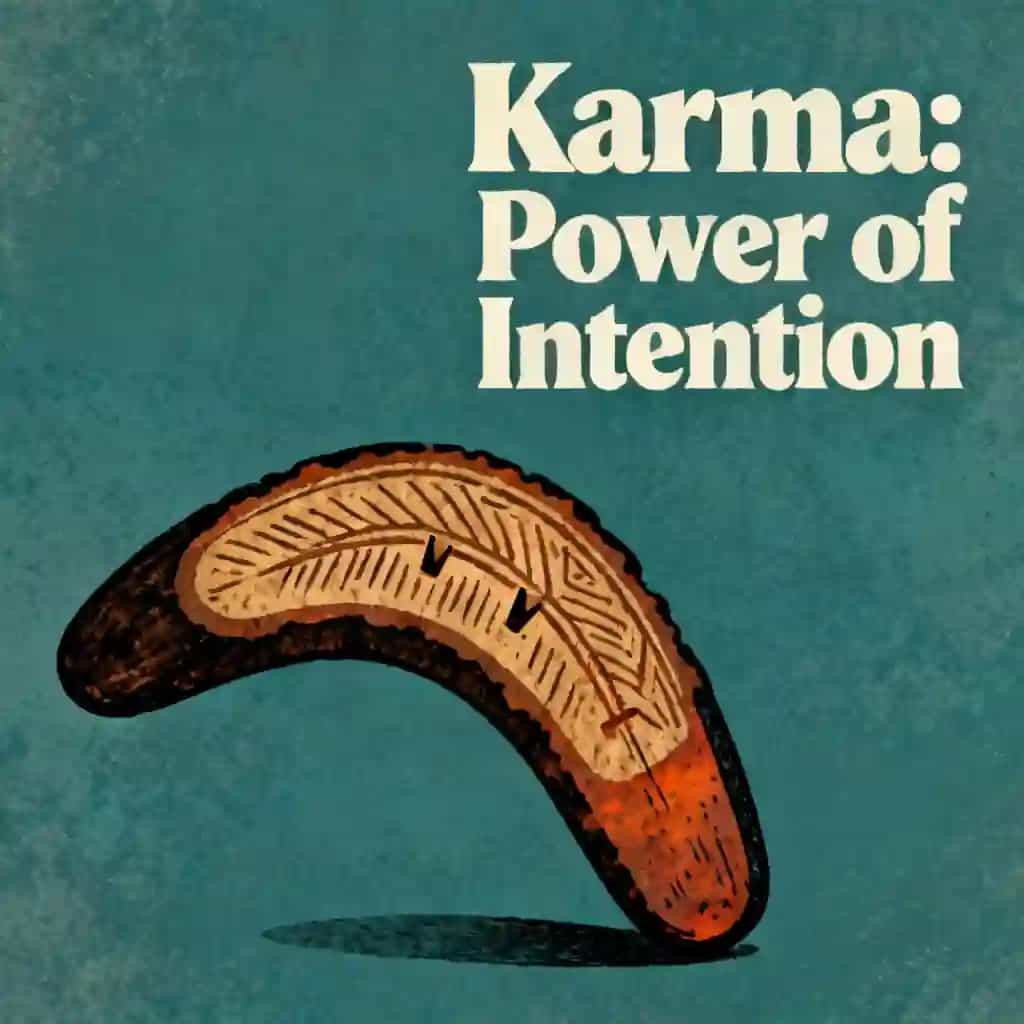
Aperçu de Karma
Sadhguru redefines karma beyond punishment and reward, offering a practical guide to conscious living. Endorsed by Will Smith and Tom Brady, this NYT bestseller reveals how your actions shape your destiny. What memories are secretly controlling your life right now?
- Karma is inner programming from past emotions, thoughts, and actions—not cosmic punishment.
- Sanchita Karma accumulates across lifetimes, while Prarabdha Karma shapes current existence.
- Intention determines karmic impact—actions rooted in love create lighter imprints than fear-driven deeds.
- Vasana (energetic imprints) attract specific life situations based on your dominant energy frequencies.
- Physical, mental, and emotional karma can be transcended through conscious energy work and yogic practices.
- Karma operates like gravity—a universal law governing consequences regardless of belief systems.
- 90% of karma dissolves through self-awareness; remaining 10% requires advanced spiritual tools.
- Collective karma forms through shared cultural, familial, and societal belief patterns.
- Kriyas (conscious actions) dismantle karmic residue, while unconscious reactions reinforce cycles.
- Freedom from karma comes not by erasing past imprints but expanding beyond physical/mental limitations.
- Every thought emits an energetic fragrance that shapes future experiences and relationships.
- Self-transformation begins when you stop identifying with karmic patterns and become the observer.
À propos de l'auteur de Karma
Sadhguru Jaggi Vasudev, renowned yogi, mystic, and bestselling author of Karma: A Yogi’s Guide to Crafting Your Destiny, merges ancient wisdom with modern practicality in this transformative exploration of karma’s role in shaping human consciousness. A foundational voice in contemporary spirituality, Sadhguru founded the Isha Foundation, which has impacted millions through its yoga programs and environmental initiatives like Rally for Rivers. His New York Times bestseller Inner Engineering and seminal work Adiyogi: The Source of Yoga establish his authority in bridging Eastern philosophy with global relevance.
Frequently featured on platforms like The Joe Rogan Experience and The Will Smith Podcast, Sadhguru brings spiritual insights to mainstream audiences while addressing forums at the United Nations and World Economic Forum. Honored with India’s Padma Vibhushan, his teachings have been translated into over a dozen languages, with Karma debuting as a #1 nonfiction release.
The book reframes karma as a dynamic tool for self-empowerment rather than cosmic retribution, drawing from his five decades of yogic mastery to offer actionable pathways to emotional freedom.
FAQ sur Karma
What is Karma by Sadhguru about?
Karma by Sadhguru dismantles misconceptions about karma as fate, reframing it as a tool for conscious living. The book explores how past actions, thoughts, and emotions shape present experiences, offering practical methods to break free from cyclical patterns. Sadhguru emphasizes living intentionally in the present moment to transform destiny, blending yogic philosophy with actionable steps for empowerment.
Who should read Karma by Sadhguru?
This book suits spiritual seekers, those feeling stuck in life’s challenges, and readers interested in self-mastery. It’s ideal for anyone seeking to understand karma beyond pop-culture clichés or wanting tools to navigate stress, relationships, and personal growth. Professionals like Will Smith and Tony Robbins have praised its relevance for modern life.
Is Karma by Sadhguru worth reading?
Yes—the book combines ancient wisdom with modern practicality, offering fresh insights into karma as a mutable force. Critics highlight its piercing logic and actionable frameworks, though some find Sadhguru’s claims sweeping. With endorsements from Tom Brady and neuroscientist Steven Laureys, it’s a compelling read for personal transformation.
What are the main concepts in Karma by Sadhguru?
Key ideas include:
- Sanchit vs. Prarabdha karma: Collective past actions vs. present destiny
- Annamayakosha, Manomayakosha, Pranmayakosha: How karma affects physical, mental, and energy bodies
- Conscious action: Replacing reaction with mindful response to break karmic cycles
How does Sadhguru redefine karma in the book?
Sadhguru rejects karma as cosmic punishment, defining it instead as “inner programming” from past memories. He argues karma isn’t fate but a malleable energy shaped by conscious choices. By reframing karma as a tool for liberation, he empowers readers to craft their destiny.
What practical steps does Karma offer for personal growth?
The book provides methods like:
- Observing thoughts/emotions without attachment.
- Daily mindfulness practices to stay present.
- Energy-management techniques rooted in yogic traditions. These tools aim to dissolve karmic patterns and enhance self-awareness.
What are notable quotes from Karma by Sadhguru?
- “The present moment is the only moment you can truly live.”
- “Karma is not your enemy—it’s your creation.”
- “To be free, understand what ropes are holding you.” These lines encapsulate the book’s focus on presence and self-responsibility.
How does Karma address overcoming past traumas?
Sadhguru advises against letting past experiences dictate reactions. By cultivating detachment and conscious response, readers can avoid embedding new karmic impressions. The book includes case studies, like his work with prisoners, showing how mindset shifts alter life trajectories.
What criticisms exist about Karma by Sadhguru?
Some readers find the content overly abstract or dismissive of systemic societal issues. Critics note that while the book demystifies karma, its reliance on yogic terminology may challenge newcomers to spirituality.
How does Karma compare to other spiritual books?
Unlike passive “law of attraction” guides, Karma stresses proactive self-transformation. It shares themes with The Power of Now but adds yogic frameworks for energy management. Compared to academic texts, it balances depth with conversational storytelling.
Can Karma help with workplace stress?
Yes—the book’s emphasis on conscious action over reaction applies directly to professional challenges. Sadhguru’s methods for detaching from outcomes and refining decision-making align with modern leadership and resilience strategies.
What is the “energy body” concept in Karma?
The energy body (pranmayakosha) refers to the non-physical layer where karmic impressions are stored. Sadhguru explains how unprocessed emotions here create repetitive life patterns, offering breathwork and meditation techniques to purify this layer.
How does Sadhguru’s background influence Karma?
As a yogi and mystic, Sadhguru draws from 40+ years of spiritual teaching. His Isha Foundation’s work with millions globally informs the book’s blend of philosophy and pragmatism, distinguishing it from theoretical discourses.
Ressentez le livre à travers la voix de l'auteur
Transformez les connaissances en idées captivantes et riches en exemples
Capturez les idées clés en un éclair pour un apprentissage rapide
Profitez du livre de manière ludique et engageante
Personnages de Karma
- SadhguruAuthor and spiritual teacher
Thèmes clés dans Karma
- conscious destiny
- volitional action
- karmic memory
- internal responsibility
- psychological suffering
Citations de Karma
You are the architect of your own destiny.
Karma isn't cosmic punishment.
We create our own blueprint for life.
The primary cause of human suffering isn't physical handicap...it's oneself.
Explorez Votre Façon d'Apprendre
 Mode Résumé Rapide
Lisez ou écoutez le résumé de Karma en 9 minutes
Décomposez les idées clés de Karma en points faciles à comprendre pour découvrir comment les équipes innovantes créent, collaborent et grandissent.

 Mode Fun
Leçons de Karma Racontées en Histoires de 21 Min
Découvrez Karma à travers des récits vivants qui transforment les leçons d'innovation en moments mémorables et applicables.
 Mode Personnaliser
Découvrez Karma dans votre propre style d’apprentissage
Posez vos questions, choisissez votre style d’apprentissage et co-créez des idées qui vous correspondent vraiment.
Cree par des anciens de Columbia University a San Francisco
"Instead of endless scrolling, I just hit play on BeFreed. It saves me so much time."


"I never knew where to start with nonfiction—BeFreed’s book lists turned into podcasts gave me a clear path."


"Perfect balance between learning and entertainment. Finished ‘Thinking, Fast and Slow’ on my commute this week."
"Crazy how much I learned while walking the dog. BeFreed = small habits → big gains."
"Reading used to feel like a chore. Now it’s just part of my lifestyle."

"Feels effortless compared to reading. I’ve finished 6 books this month already."
"BeFreed turned my guilty doomscrolling into something that feels productive and inspiring."

"BeFreed turned my commute into learning time. 20-min podcasts are perfect for finishing books I never had time for."
"BeFreed replaced my podcast queue. Imagine Spotify for books — that’s it. 🙌"

"It is great for me to learn something from the book without reading it."
"The themed book list podcasts help me connect ideas across authors—like a guided audio journey."
"Makes me feel smarter every time before going to work"
Cree par des anciens de Columbia University a San Francisco
"Instead of endless scrolling, I just hit play on BeFreed. It saves me so much time."
"I never knew where to start with nonfiction—BeFreed’s book lists turned into podcasts gave me a clear path."
"Perfect balance between learning and entertainment. Finished ‘Thinking, Fast and Slow’ on my commute this week."
"Crazy how much I learned while walking the dog. BeFreed = small habits → big gains."
"Reading used to feel like a chore. Now it’s just part of my lifestyle."
"Feels effortless compared to reading. I’ve finished 6 books this month already."
"BeFreed turned my guilty doomscrolling into something that feels productive and inspiring."
"BeFreed turned my commute into learning time. 20-min podcasts are perfect for finishing books I never had time for."
"BeFreed replaced my podcast queue. Imagine Spotify for books — that’s it. 🙌"
"It is great for me to learn something from the book without reading it."
"The themed book list podcasts help me connect ideas across authors—like a guided audio journey."
"Makes me feel smarter every time before going to work"
"Instead of endless scrolling, I just hit play on BeFreed. It saves me so much time."
"I never knew where to start with nonfiction—BeFreed’s book lists turned into podcasts gave me a clear path."
"Perfect balance between learning and entertainment. Finished ‘Thinking, Fast and Slow’ on my commute this week."
"Crazy how much I learned while walking the dog. BeFreed = small habits → big gains."
"Reading used to feel like a chore. Now it’s just part of my lifestyle."
"Feels effortless compared to reading. I’ve finished 6 books this month already."
"BeFreed turned my guilty doomscrolling into something that feels productive and inspiring."
"BeFreed turned my commute into learning time. 20-min podcasts are perfect for finishing books I never had time for."
"BeFreed replaced my podcast queue. Imagine Spotify for books — that’s it. 🙌"
"It is great for me to learn something from the book without reading it."
"The themed book list podcasts help me connect ideas across authors—like a guided audio journey."
"Makes me feel smarter every time before going to work"
"Instead of endless scrolling, I just hit play on BeFreed. It saves me so much time."
"I never knew where to start with nonfiction—BeFreed’s book lists turned into podcasts gave me a clear path."
"Perfect balance between learning and entertainment. Finished ‘Thinking, Fast and Slow’ on my commute this week."
"Crazy how much I learned while walking the dog. BeFreed = small habits → big gains."
"Reading used to feel like a chore. Now it’s just part of my lifestyle."
"Feels effortless compared to reading. I’ve finished 6 books this month already."
"BeFreed turned my guilty doomscrolling into something that feels productive and inspiring."
"BeFreed turned my commute into learning time. 20-min podcasts are perfect for finishing books I never had time for."
"BeFreed replaced my podcast queue. Imagine Spotify for books — that’s it. 🙌"
"It is great for me to learn something from the book without reading it."
"The themed book list podcasts help me connect ideas across authors—like a guided audio journey."
"Makes me feel smarter every time before going to work"

Telecharger le resume de Karma
Obtenez le resume de Karma en PDF ou EPUB gratuit. Imprimez-le ou lisez-le hors ligne a tout moment.